Sunday, November 15, 2026

MEET THE VOWEL FAMILY

Here's a song that introduces the long and short sounds for the vowels. Making manual signs for the letters or holding up letters will help add the visual connection as you sing.

The Vowel Song (Tune: “Are You Sleeping?” 
A makes two sounds. (Echo each line.)
/A/ and /a/.
/A/ for apron, /a/ for apple.
/A/ and /a/.
/E/ and /e/ - eagle and elephant…
/I/ and /i/ - ice cream and inchworm…
/O/ and /o/ - open and octopus…
/U/ and /u/ - ukulele and uncle…


The long vowel sounds are easier for children to remember because "they just say their name." Here's a song that will help put those short vowel sounds in the brain. Of course, the letter U will be their favorite!

The Vowel Family (Tune: "BINGO")
Aunt Aggie had an allergy
and she would always sneeze-o (Pretend to sneeze.)
/a/a/a/a/a/ /a/a/a/a/a/ /a/a/a/a/a/
And she would always sneeze-o.

Grandpa Eddie stayed in shape
and he would exercise-o (Pretend to lift weights.)
/e/e/e/e/e/ /e/e/e/e/e/ /e/e/e/e/e/
He liked to exercise-o.

Baby Izzi had chicken pox
and she would always itch-o. (Scratch body.)
/i/i/i/i/i/ /i/i/i/i/i/ /i/i/i/i/i/
And she would always itch-o.

Cousin Otto’s throat was sore
And this is what he’d say-o. (Put hand on throat.)
/o/o/o/o/o/ /o/o/o/o/o/ /o/o/o/o/o/
And this is what he’d say-o.

Uncle Unk wore underwear
and it did stink-o. (Hold nose.)
/u/u/u/u/u/ /u/u/u/u/u/ /u/u/u/u/u/
And it did stink-o.

Let the children use the attached sheet to make vowel puppets. Tape the letters to craft sticks or glue to an envelope that's been cut in half.


https://drive.google.com/file/d/0B1SnEagA4jljRjhzN3oxNFliSEU/view?usp=sharing


Five Little Vowels
(Adapted from "Monkeys and the Alligator")
Five little vowels swinging from a tree (Hold up 5 fingers.)
Teasing Mr. Alligator, “Can’t catch me! (Point finger.)
You can’t catch me!”
Along came Mr. Alligator quiet as can be (Open and close arms.)
And snatched that A right out of the tree.
/a/ /a/ /a/ /a/ /a/ /a/ /a/ /a/ /a/ (Make sign language A with hand.)

E…I…O…U

*Draw a tree on a magnetic board and remove magnetic letters as you say the chant.

Saturday, November 14, 2026

STEM WITH A NATURE CENTER

Children love to collect things. Aren't they always bringing you rocks or leaves or flowers or nuts? A nature center would be a perfect place to display their treasures and give them the opportunity to observe and investigate natural items.

Getting Started
Take a plastic tub and fill it with objects from a natural area in your community. It's as simple as that! Invite the children to bring in other interesting items that they find in nature to add to your center.


Materials:
leaves, rocks, shells, pine cones, sticks, nuts, or other natural items (rotate for different seasons)

magnifying glass
clipboard, pencils, paper
ruler
field guide book (leaves, rocks, shells, etc.)

Activities:
*free exploration
*sorting
*counting
*seriating by size
*measuring
*observing with a magnifying glass
*sketching with a clip board
*identifying with a field guide book
*non-fiction writing
*PLAYING!


How about a new video about the moon?


Moon Phases Video:


Moon Phases Download Link:

Friday, November 13, 2026

WANT AN OREO?

Here's another great idea some teachers from Nebraska shared with me years ago. You know how those two letter words are difficult for children to learn because they don’t always follow the rules (phonics rules, that is!). Well, here’s a yummy idea to help them taste better.


First, have the children brainstorm all the two letter words they can think of and write them on the board. Encourage them to look in books, look at classroom print, and so forth.

Second, give them a double stuffed Oreo cookie and show them how to open it. Hold one half in each hand. Lick the left side as you say the first letter in a word. Lick the right side as you say the second letter in the word. Then say the word. Continue with all the two letter words on the board.
*If you are in a school where food is not allowed, just pretend you have a cookie in each hand.

Third, follow up with a class book. Write individual letters on 3” circles as shown. Write the two letter word on a 4 ½” circle. Read through the book as you demonstrate how to lick your left hand and say one letter. Lick the right hand and say the other letter. Clap hands and say the word.
Hint! Remind the children that they don’t want to really lick their dirty hand. Just pretend!!!


You can also sing two letter words to the tune from “If You’re Happy and You Know It.”
If you want to spell me, say M –E.
It’s easy as can be when you sing and spell with me.
If you want to spell me, say M –E.


Duplo Letters and Words
Here is a photo a teacher sent demonstrating how she integrates blocks with phonics and sight words. She said she asked the parents to donate the Duplo blocks and the children thought they were "playing" instead of "learning."

And you get an "oreo" cheer for visiting my blog today. Pretend to lick your right hand. Pretend to lick your left hand. Clap them together! And that's an "oreo" cheer!

Thursday, November 12, 2026

GIVE A "TOOT" FOR OLD IDEAS

I was looking through some old photos and found a few ideas I wanted to share with you today.

Good-Bye Book
Leaving a school in the middle of the year can be heart wrenching to children. Before they leave let each classmate draw a picture and write or dictate something special about them. Put their drawings together and add a class photo to make a book. It will give the child leaving a special memory they can take with them.


Chalk Board Table
Is this cool? Ms. Smalls found an old table they were going to throw away. She painted the top with chalkboard paint and let the children write special messages, draw pictures, write sight words, etc. on it. The kids LOVED it!


Stickies
You know all those seasonal sticky designs you can put on windows. What a great center activity using cookie sheets!
*The alphabet ones would be perfect for writing words.


Toot a Roo
I don't know why I got such a kick out of this idea a teacher shared, but it's right up my alley. Cut paper towel rolls in half and let children decorate them with markers and stickers. When you want to celebrate or cheer an accomplishment all the children get out their "toot a roos" and go "toot toot toot toot toot toooo!"

Wednesday, November 11, 2026

JUST DO IT!!!

"I don't want to do this!" Sound familiar? One teacher told her students, “I don’t want to do it either, so let’s just get it done and then we can do something fun.” 

There’s an important life lesson here. We all have to do things we don’t want to do. The best thing is to just do it and then you can focus on the things you want to do! Task initiation and delayed gratification are also characteristics of the executive function that we want to encourage. I like to use personal stories that children can relate to when teaching social behaviors. "You know, I really don't enjoy cleaning my house. However, I've learned to just get started and do it and then I can do something fun. Has that ever happened to you?"

JUST DO IT!
Here's a song to the tune of "Three Blind Mice" that might help your students "git 'er dun"!
Just do it!
Just do it!
Put on a grin
And start right in.
If there’s something you don’t want to do.
I have a little trick for you.
Just get started and soon you’ll be through.
Just do it!
Just do it!


Happie Sticks
 

Write special things children can do if they finish their work early on sticks. Children can choose one at a time and do the activity.
For example: make a book, play a computer game, read a story, do a job for your teacher, play a board game, make something in the art center, etc.


You Get What You Get

Have you ever heard your students say, "I don't want that one!" Here's a tune to "The Farmer in the Dell" with a positive twist. Smile and sing and ignore the negative comments.
You get what you get.
Just like in the gum machine,
You get what you get.


Tuesday, November 10, 2026

RALPH THE RAG AND MY QUIET FRIENDS

You know, I really miss being in the classroom. O.K., I don’t miss everything, but I sure miss having fun with the kids. They were my best audience and I loved coming up with tricks to capture their interest. One of my favorites was Ralph the Rag. I took an old towel and knotted it at the top and used it like a puppet to focus the children’s attention. I would let Ralph sit on my hand and say:

This is my buddy Ralph the Rag. Let’s see if you can do everything that Ralph does. (I’d lean Ralph one way and wait for them to follow. Then I’d lean Ralph the other way. I’d shake his head, move him backwards, etc. Then I’d have Ralph stand up. The children would follow along as I made him turn around, jump, and so forth. I always ended by having Ralph sit quietly back in my hand.)

If the children didn’t follow along with Ralph or if they kept talking I’d pretend to cry and be Ralph. “The boys and girls aren’t listening to me so I’m just going to go away.” They’d say, “No, Ralph. We’ll be quiet and listen to you. Don’t go away.”

It was fun and it worked for a week or so.


Quiet Friends
Another trick I used was the Quiet Family. I placed some little toy figures in a lunchbox and said “I have some little friends that would like to visit our class. However, the friends have teeny tiny ears so you’ll have to use teeny tiny voices today.” The class would agree to this and I would open the lunch box and take out the friends. If someone got too loud I could count on another classmate to say, “Shhh! Remember our friends and their little ears!”


Puppet
Cut the top and bottom off a food box, insert the puppet on your hand, and then let the puppet pop out the box and sing a song, talk about an event, or say a rhyme.
                           

Note!   The children might know a puppet isn’t real when you put it on your hand, but they’ll want to pretend and play along.

Monday, November 9, 2026

BLAST FROM THE PAST

Note!  Here are some awesome ideas that teachers shared with me in Louisville ten years ago!


Brain Dough

Call play dough “brain dough” when using it to reinforce skills (like make objects that start with a sound, make an animal you are studying, create geometric shapes, etc.).


Counting Hands
Fill surgical gloves with rice and tie at the bottom. Children will enjoy using these to count and work out simple math problems.


Pat Gusoff
Pat shared more good ideas than I could use in a dozen blogs. She’s a teacher of 4-5 year olds at Temple Trager Early Childhood Center and she is passionate about helping children sing, dance, explore, and express!!! Check out some of her amazing HANDS ON learning fun!

Personal Puzzles
Ask each family to send in a picture of their child the dimensions of 4 duplo blocks. Use clear packing tape and add the child’s number and name to other sides of the blocks. Save puzzles in individual berry baskets.


Scoop and Match
Foam letters, trays, and measuring cups from the dollar store.
Say It and Spell It


Yard Sale Teepee for Buddy Reading

5 Little Turkeys to Retell


Shower Curtain Bean Bag Toss

Unifix Cubes and Feather Fun


Shower Curtain Rings with Ribbon


Sunday, November 8, 2026

NATIONAL YOUNG READERS WEEK

Monday, November 9 to Friday, November 13 is NATIONAL YOUNG READERS WEEK.

As educators, we understand the importance of being able to read, but it’s equally important that children ENJOY reading. Teachers need to be sales people and SELL their students on reading.

I remember visiting a kindergarten classroom one day and the children eagerly came up to me with books that they wanted to read to me. I looked at the teacher and said, “I am so impressed! Your students are wonderful readers!” The teacher smiled and said so all could hear, “My children have discovered how much fun it is to read and they just want to read all the time!!!” That’s what you call good brainwashing!!!

Another teacher said that when a child first opened a book and had that “Ah-ha” moment of “I CAN READ!” she would shut the door, climb up on the table, and do the happy reading dance. “Josie can read! Josie can read!”

Unfortunately, testing and standards have overshadowed some of the JOY of reading. But, you can do something about it this week!

*Invite your students to discuss WHY it is important to read. Emphasize that learning to read really does make you smarter and happier.

*Discuss why you LIKE to read. Let children complete this sentence: I like to read because…

*Have children ask their parents how reading helps them do their job.

Let children interview family members, friends, and school helpers about reading. They might want to ask the following:
*Why do you like to read?
*When do you like to read?
*Where do you like to read?
*What do you like to read?
Compare results.

Persuasive Poster
s
Divide children into small groups and challenge them to make posters to encourage others to read. Hang these around the school.


DEAR (Drop Everything And Read)
This is a perfect day to yell “DEAR” and let children read what they want and where they want in the classroom. 
 

Step Into a Book

Children can take off their shoe and trace around their foot on construction paper. After cutting it out they can decorate it and use it as a bookmark.

*Let children do rubbings of the bottoms of their shoes and use these for bookmarks.

 
Envelope Bookmark
Cut off the corner of an envelope as shown. Children can decorate it and then use it on the corner of a book to save their spot.


*Hint! Let them mark their favorite picture or page they’d like to read to classmates.
 
*Mark a vocabulary word or other detail in the book.

Saturday, November 7, 2026

WHERE ARE YOUR MANNERS?

Manners can take you a long way in this world - although they are not included in most state standards! Manners are part of the “hidden curriculum” that we can nurture daily in little ways. This is a perfect time of year to talk about thanking others and what it means to be polite. Here’s a simple echo song to encourage children to use their “magic words.”

I Have Manners (Tune: “Are You Sleeping?” - Children repeat each line.)
I have manners,
I have manners,
Every day,
Every day.
If I want something
If I want something
“Please,” I’ll say.
“Please,” I’ll say.

I have manners,
I have manners,
Every day,
Every day.
When someone is nice
“Thanks,” I’ll say.
“Thanks,” I’ll say.

*Role play when to say, “please,” “thank you,” “you’re welcome,” and “excuse me.”

*Teach children these signs and use them as prompts:
Please - palm open on chest and circle around
Thank you - fingers on chin and then down to palm

*Let the children use puppets to model what to do in similar situations:
How do you greet a new student?
How do you call a friend and invite them for a play date?
What do you do when someone pays you a compliment?
What do you do when someone gives you a gift?
What do you do when someone has a book that you want?


Table Manners
There are several good books about manners, but I liked to use a stuffed animal to demonstrate negative behavior. I’d ask the children to help me show the toy the correct thing to do.
“Coco always chews with his mouth open. Who can show Coco the correct way to chew your food?”
"Coco just grabs food that he wants. What is the polite thing to do when you want someone to pass you food?”
“Coco eats his food and then runs out to play. What should Coco say before he leaves the table?”


Here's another great article from Laura Pearson to share with your families!

Fun Weekend Ideas That Boost Kids' Learning and Spark Creativity

For parents of school-age children, weekends can feel like a tug-of-war between rest, errands, and the nagging worry that kids are losing momentum between school days. Many families want supporting children’s learning at home to happen naturally, but “doing more school” on Saturday sounds like a recipe for pushback and burnout. The encouraging truth is that weekend educational activities can be light, playful, and genuinely enjoyable while still building real skills. With simple family learning routines centered on child development through play, weekends can become a steady source of confidence and curiosity.

Understanding Play-Based Learning

Play-based learning means kids learn best when they’re actively doing something enjoyable, not just being told information. In fact, play-based learning is designed to help children explore, discover, and make meaning in a natural way. When fun and learning happen together, skills build almost as a side effect of play.

This matters because weekends can support growth without triggering the “more homework” fight. Play invites focus, problem-solving, and flexible thinking, which strengthens child cognitive development over time. It also helps kids practice communication and persistence in low-pressure moments.

Think about a scavenger hunt at home: your child is moving, noticing details, sorting clues, and remembering steps. The game feels like pure fun, yet their brain is organizing information and testing ideas through active exploration. That same playful energy works beautifully in a guided digital portrait project.

Create a Character Portrait, Then Build a Story Around It

When play leads the way, kids often feel more willing to try new ways of expressing what’s in their heads. AI painting tools can be a fun, supervised way to help children explore creativity and share their ideas visually, often sparking curiosity and a real love of learning through the arts. With an AI portrait generator, they can turn either a photo or a simple text description into a realistic or stylized digital portrait, then tweak details until it matches what they imagined. Encourage them to play with options like lighting, camera angle, and artistic effects to shape the mood and style of their character; the choices they make become part of the creative voice they’re developing. If you’d like a kid-friendly starting point, you can explore tools like this free AI portrait generator and use the finished image as inspiration for a story your child tells in their own words.

Weekend Activities That Match Your Child’s Interests

When kids get to start with what they already love, weekend learning feels like play, and you can still sneak in plenty of subject reinforcement. Mix and match the ideas below based on your child’s current “obsession,” school goals, and your energy level that day.

  1. Use an “interest hook” to choose the activity: Start by asking, “What do you want to learn more about right now?” Then connect that interest to a school subject on purpose, for example, taking your student to the zoo can turn animal love into biology vocabulary, observation notes, and a short informational paragraph.

  2. Turn your character portrait into a weekend story studio: Reuse the character your child designed (or redraw it on paper) and set a 20-minute “author time.” Give one clear writing challenge: add dialogue, describe a setting using the five senses, or revise one paragraph to show emotions without naming them. This reinforces narrative writing, sequencing, and revision skills, without the blank-page stress.

  3. Build a scavenger hunt that practices a school skill: Keep it simple: 10 clues, 30–45 minutes, one learning focus. For reading, use riddle clues and synonyms; for math, require estimating, measuring, or totaling prices from shelf tags; for science, hunt for things that float/sink or attract a magnet. Let your child create the second round of clues for you or a sibling, making the activity instantly harder in a fun way.

  4. Make a “kitchen lab” to introduce new concepts: Pick one recipe and assign roles: “measurer,” “timer,” “recorder,” and “quality tester.” While cooking, sneak in fractions, temperature changes, and cause-and-effect (“What happens if we mix longer?”). Extend it with one quick graph, rate the snack on taste/texture and make a bar chart.

  5. Try a tabletop game day with one learning target: Choose two games and announce the skill you’re practicing: probability, mental math, vocabulary, strategy, or patterning. After each game, do a 2-minute recap: “What strategy worked?” or “What’s one new word you used?” This keeps educational games and projects focused without turning them into homework.

  6. Create a mini project sprint (60–90 minutes) with a clear deliverable: Offer three project options and let your child pick one: build a marble run (physics), design a paper bridge that holds coins (engineering), or make a “museum exhibit” poster on a topic they love (research + writing). Keep supplies limited and rotate what’s available, rotate materials so old items feel “fresh and new” when they reappear.

  7. End with a “two-sentence reflection” instead of a full debrief: Ask your child to finish two prompts: “Today I discovered…” and “Next time I want to…” Write it down, snap a photo, or add it to a weekend folder. This tiny routine helps reluctant kids participate, helps siblings take turns being heard, and gives you a ready answer when someone says, “I’m bored.”

Weekend Learning Q&A for Busy Families

Q: How do I fit a learning activity into an already packed weekend?
A: Keep it tiny: aim for 20 to 45 minutes and call it a win. build time buffers so you are not racing the clock when plans shift. If the day gets away from you, do a 2-minute reflection and count that as your “learning moment.”

Q: What if my child refuses because it feels like homework?
A: Offer two choices and let them pick the theme, not whether learning happens at all. Start with the fun part first, then sneak in one skill like measuring, describing, or sorting. Stop while it is still going well so they remember success.

Q: How can I keep kids engaged without constant prompting?
A: Use a simple visual schedule with 3 steps: start, make, share. Set a timer they can see, and assign one “job” they own (recorder, builder, clue-reader). Independence usually rises when the next step is obvious.

Q: Should I push through when they get frustrated?
A: Pause and shrink the task, not your expectations. Try “one more try,” switch roles, or change the materials, then end with a quick share-out. Kids build resilience when quitting is replaced with adjusting.

Q: Can I do this with siblings of different ages?
A: Yes, give everyone the same theme but different difficulty levels. One child can create clues while another solves, or one measures while another illustrates. Rotate who gets to be the “teacher” so everyone feels capable.

One Small Weekend Activity That Strengthens Learning Over Time

Between chores, errands, and everyone’s different energy levels, it’s easy for weekends to slip by without the kind of learning time parents want. The sweet spot is a light, flexible mindset: choose one idea, follow your child’s curiosity, and treat it as motivating educational play rather than a lesson to “finish.” Over time, the impact of weekend activities shows up in stronger child learning outcomes, better focus, richer language, more confidence trying hard things, because the benefits of creative exploration keep stacking. Playful weekends build real skills when adults show up with steady support.


Friday, November 6, 2026

VETERAN'S DAY

Veteran’s Day is November 11th, but we should thank our veterans every day! One teacher told me that she taught her children how to recognize veterans by their hat or clothing. Whenever they see a veteran they go up, shake their hand, and say, "Thank you!" You can't teach your students anything more important than that!!!

Veteran’s Day
(Tune: “Danny Boy”)
Today’s the day we celebrate our veterans,
The men and women who fought for our great land.
We’ll raise our flags and hold a moment of silence
And we will carry poppies in our hands.
Because we want to thank you for your service;
You traveled far to keep us safe at home.
You fought with pride and honor for our country.
Our veterans, oh how we love you so.


*You'll find this book on drjean.org
And here's a link to the video:
https://www.youtube.com/watch?v=QV_UrfgjvRI 


Vocabulary – What is a veteran? For homework, have children interview their parents to find out about veterans in their family.


Poppies – Take three 7” circles cut out of red tissue paper and fold them like a fan. Twist a green pipe cleaner around the middle. Open layers to resemble a poppy. Do a search on the internet to discover why the poppy is symbol for Veteran’s Day.


Guest Speaker – Call a local military recruiting office and invite a guest speaker to share with the children what it’s like to have a job in the armed forces.


Letters to the Armed Forces
Here's a website where you can get information about writing letters to current military members and veterans. What a great way to show appreciation for our servicemen and women!
https://www.operationgratitude.com/writeletters/

Thursday, November 5, 2026

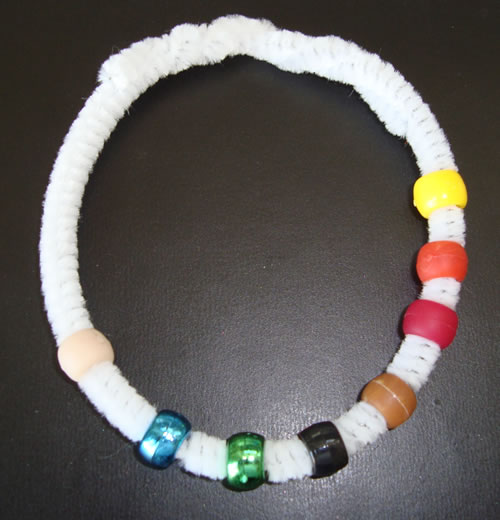
THANKSGIVING STORY BRACELET


This has been one of the most popular posts on my website. Anyone who has made this story bracelet will attest to the fact that it is a BIG HIT with children and families. It's also a natural way for children to practice retelling a story.

Hint! It's going to be an "investment" when you buy the beads, so this might be a project to hand over to a parent. You can buy individual bags of beads or just buy a large container of beads at Walmart and let the children pick out the colors they will need. The only color I had difficulty finding was brown, so I just bought a little package of brown wooden beads.


Materials: white, blue, green, black, brown, red, orange, yellow beads, pipe cleaners

Directions: Say the poem and demonstrate how to insert the beads when the appropriate color is mentioned. Model this several times and encourage the children to recall the colors and fill in words that rhyme.

Write the colors in order and put the pipe cleaners and beads in a center for the children to construct independently. You could also do this as a small group activity with younger children. Practice telling the story as the children touch the beads for a prompt. Make sure to send home a copy of the poem with the bracelet so parents can reinforce this activity at home.

Thanksgiving Story Bracelet

With this bracelet you will know (Start with a pipe cleaner.)
The first Thanksgiving that was long, long ago.
The Pilgrims set sail from far away
On the Mayflower with tall white sails. (Insert a white bead.)
They sailed many days across the ocean blue. (Add a blue bead.)
The seas were rough, but the ship came through.
At last they spotted land so green. (String on a green bead.)
They were so happy they cheered and screamed.
The first year was so hard and black. (Now a black bead.)
Many died and wished that they could go back.
But the Native Americans gave them a hand
And helped them survive in the strange new land.
They decided to celebrate in a special way
And that became the first Thanksgiving day.
They prepared a feast with turkeys brown (Add a brown bead.)
And red cranberries that they had found. (Time for a red bead.)
Yellow corn that they had learned to grow (Insert a yellow bead.)
And orange pumpkin pies, don’t you know! (Last an orange bead.)
But before they ate the turkey and dressing,
They all held hands for a thankful blessing.
(Twist the ends of the pipe cleaner to make a bracelet.)


Grateful Bracelet
Here's a new idea for those of you who teach at a faith based school.

Last year I ordered a "grateful" bracelet (aka blessing bracelet) online and I wear it every day. You are suppose to touch each bead daily and say something that you are grateful for. I adapted this for the girls in my Sunday school class by using a pipe cleaner and some beads I got at Walmart. I let the girls choose 4 large beads for the "grateful" beads and smaller beads for in between. It's a tangible way for us to count our blessings!

Wednesday, November 4, 2026

LET'S TALK TURKEY


Albuquerque Turkey
(Tune: “My Darlin’ Clementine”)
Albuquerque is a turkey (Put hands on hips like wings.)
And he’s feathered and he’s fine.
And he wobbles and he gobbles (Strut and wiggle.)
And he’s absolutely mine.

He’s the best pet you can get, (Pretend to stroke a turkey’s head.)
Better than a dog or cat.
He’s my Albuquerque turkey,
And I’m awfully proud of that.

Albuquerque is a turkey,
And he’s happy in his bed. (Lay hands on palms as you smile.)
Cause for our Thanksgiving dinner,
We’ll have pizza pie instead! (Palm up in the air like a pizza.)

Here's the link so you can download the book. Make four copies of the song and put it in the listening center so children can follow along.
http://www.drjean.org/html/monthly_act/act_2007/11_Nov/1booksNov/albuTurkey.pdf

You can also follow-up with this YouTube video:
http://bit.ly/drjeanTurkey


Handprint Turkey

This idea is old as the hills, but it will be new to the children in your classroom. Have children place their hand on a sheet of paper extending all the fingers. Trace. Children turn the thumb into the head of the turkey and color the other fingers to look like feathers. Add legs, and there’s your turkey! You can also do this with paint. Paint brown paint on the child’s palm, red on the thumb, and a different color on each finger. Press firmly on a sheet of paper. Add legs and other details.


Turkey Glyph
What a fun math project for a small group of a center. Each child will need a cut out of a turkey's body. Provide them with paper feathers in the following colors. Children can add feathers to their turkey according to the foods they plan to eat for their Thanksgiving Dinner:
green – beans or peas
yellow – corn
white - mashed potatoes
orange – pumpkin pie
red – cranberries
purple – gravy
blue – dressing
brown – turkey
black – roll

*Challenge children to identify what their friends will eat from their turkeys.

Tuesday, November 3, 2026

TURKEY TALES

Here's a video I made for your children.


Many things go in and out of style, but a good story is everlasting. I've got two of my favorite turkey tales for you today. I first heard Timmy Turkey about 50 years ago. In the original story grandmother turns Timmy into a color that "everyone will like" and you pull out a picture of a roasted turkey on a platter. I thought that might be a little too graphic for the kiddles, so I adapted it to be "kinder and gentler." The alliteration and oral language, as well as the sequencing skills, are perfect for engaging children. I guarantee they'll want to hear the story again and again.

Directions: Download the pattern and cut the turkey's body out of the front of a file folder. Insert colors of construction paper inside the file folder according to the story. (brown, blue, red, green, yellow, purple, and multi-color) Glue the words to the back of the folder so you can just read it and remove one sheet of paper at a time.

         
*Encourage the children to join in on the chorus!
  

TIMMY TURKEY                             
Once upon a time there was a beautiful brown turkey named Timmy. One day as he strutted down the road he heard a bluebird say:

Ha, ha, ha! He, he, he!
You’re the funniest turkey I ever did see.
Timmy Turkey replied: Oh, dear, oh, dear! Oh, me, oh, me!
Why am I the funniest turkey you ever did see?
The bluebird answered: You should be blue like me. It’s such a peaceful color.
So Timmy went home a dyed himself blue. (Remove the brown paper to reveal a blue turkey.)

                                       
The next day as Timmy strutted down the road he heard a red hen say:
Ha, ha, ha! He, he, he!
You’re the funniest turkey I ever did see.
Timmy replied: Oh, dear, oh, dear! Oh, me, oh, me!
Why am I the funniest turkey you ever did see?
The redbird answered: You should be red like me. It’s such a bright color.
So Timmy went home and dyed himself red. (Remove the blue paper to reveal a red turkey.)

The following day as Timmy was strutting down the road he heard a green frog croak:
Ha, ha, ha! He, he, he!
You’re the funniest turkey I ever did see?
Timmy sadly replied: Oh, dear, oh, dear! Oh, me, oh, me!
Why am I the funniest turkey you ever did see?
The frog croaked: You should be green like me. Green is the color of life!
So what do you think Timmy did? That’s right! He went home and dyed himself green.
(Remove the red paper to reveal a green turkey.)

Timmy was strutting down the road a beautiful shade of green the next day when he heard a yellow cat say: Ha, ha, ha! He, he, he!
You’re the funniest turkey I ever did see!
Timmy answered: Oh, dear, oh, dear! Oh, me, oh, me!
Why am I the funniest turkey you ever did see?
The cat laughed and said: Who ever heard of a green turkey?
You should be yellow like me. It’s such a happy color.
Yes, you’re right! Timmy went home that night and dyed himself yellow. (Remove the green paper to reveal a yellow turkey.)
 
The next day Timmy was strutting down the road again when he heard a purple parrot squawk:
Ha, ha, ha! He, he, he!
You’re the funniest turkey I ever did see!
Timmy said: Oh, dear, oh, dear! Oh, me, oh, me!
Why am I the funniest turkey you ever did see?
The parrot squawked: Yellow’s no color for a turkey.
You should be purple like me. Purple is the color of royalty.
Timmy went home immediately and dyed himself purple. (Remove the yellow sheet of paper to reveal the purple turkey.)
 
Once again Timmy was walking down the road when he heard his turkey friends laughing. They said: Ha, ha, ha! He, he, he!
You’re the funniest turkey we ever did see!
Timmy cried and said: Oh, dear, oh, dear! Oh, me, oh, me!
Why am I the funniest turkey you ever did see?
The other turkeys replied: Who ever heard of a purple turkey?
You look so silly!
Timmy slowly walked home and as he walked he thought to himself, “I have dyed myself blue, red, green, yellow, and purple, and I have pleased no one.” Then he got a brilliant idea! He got all the bottles of dye and made all his feathers different colors. (Remove the purple sheet of paper to reveal the turkey with the colorful feathers.)
The next day as Timmy Turkey strutted down the road everyone laughed and cheered!
Ha, ha, ha! He, he, he!
You’re the most beautiful turkey we ever did see!
And that’s why you always see turkeys with beautiful tail colors!


Timmy Turkey Download
https://drive.google.com/file/d/0B1SnEagA4jljdVlScjd2UlZzdGc/view?usp=sharing
Note!  To make the final turnkey I cut little feathers and glued them to make a collage as shown.
 

OWATAGOOSIAM 
This next story is a tell and draw story.  After you do it several times invite the children to retell the story and draw along with you.
Once there was a little old lady who lived out in the country.

Her house was shaped like an oval.  (head)

It had a little window that was a circle.  (eye)

She had a garden beside her house.  (beak)

And she planted seeds there.

Near her house there was a lake.  (body)

And there was a little island in the lake.  (wing)

Campers from the city would come and pitch tents by the lake.  (feet)

They would walk to the lake to look at the fish in the water.  (legs)

They would also watch the geese on the island.

But the people made so much noise they scared the geese and away they flew.  (feathers)

The little old lady heard all the commotion and went down to the lake to see what was going on.  (neck)

What do you think she saw?

When she got home she laughed and said, “OWA TAGOO SIAM!”

Say this faster and faster and it will sound like, “Oh, what a goose I am!”

Here’s a copy that might be a little easier to follow:

https://drive.google.com/file/d/0B1SnEagA4jljTmk0bTZxTF9nNmM/view?usp=sharing

Monday, November 2, 2026

MR. TURKEY AND MR. DUCK

I don't know why children enjoy doing this old finger play, but they do. I think it's the "music" of the words.


Mr. Turkey and Mr. Duck
Mr. Turkey went for (Start with hands behind your back.)
A walk one day (Bring right thumb out in front of you.)
In the very best
Of weather.
He met Mr. Duck (Bring left thumb out in front.)
Along the way
And they talked (Have thumbs look at each other.)
Together.
“Gobble, gobble, gobble.” (Wiggle right thumb.)
“Quack, quack, quack.” (Wiggle left thumb.)
“Good-bye.” (Bow right thumb.)
“Good-bye.” (Bow left thumb.)
And they both walked back! (Wiggle thumbs behind your back.)

Gobble, Gobble
Gobble, gobble. (Teacher says.)
Who is that? (Children respond.)
Mr. Turkey (Children and teacher say together.)
Big and fat!

He is big and fat and he (Spread arms wide.)
Gobble, gobble, gobbles. (Wiggle from side to side with hands on hips.)
He spreads his tail and he (Fan arms behind you.)
Gobble, gobble, gobbles. (Wiggle from side to side with hands on hips.)
But when Thanksgiving Day is here, (Point finger.)
Then it’s our turn to
GOBBLE! GOBBLE! GOBBLE! (Pretend to spoon food in your mouth!)


Turkey Handshake


One child makes a fist and sticks out her thumb to make the head and body of a turkey. The other child opens his palm, spreads the fingers apart, and puts it next to their partner’s fist to make tail feathers.


Turkey Soup
Make turkeys from lunch sacks by making strips from the middle of the bag to the end as shown. Have children paint or color the strips. Cut on the lines to make tail feathers. Fill a zip baggie with 1 cup rice. Put it in the bag. Twist the sack around the bag of rice to make the body. Add a head and dangly feet. Attach the recipe for turkey and rice soup and send home for a table decoration.


TURKEY AND RICE SOUP!
remains of turkey
3 quarts water
1 medium onion, chopped
1 cup celery, chopped
1 carrot, diced
1 ½ tsp. salt
½ tsp. pepper
1 cup rice
1 cup frozen peas

Place turkey in a large pot with 3 quarts water and bring to a boil. Turn the heat down and simmer 30-45 minutes until the meat falls off the bone. When it cools, debone the turkey and strain the broth. Cook the onion, celery, and carrot in the broth for 30 minutes. Add turkey meat, rice, and peas and simmer 30 minutes more.


How to Cook a Turkey
Let each child dictate how to cook a turkey. Write down exactly what they say! Type their recipes up and run off a copy for each child to take home and share with their families.