photo 3am_dj_home_zps919fb85e.png photo 3am_dj_about_zps7cce4c75.png photo 3am_dj_website_zps73051235.png photo 3am_dj_ss_zps6759ec2a.png photo 3am_dj_bs_zps43e27832.png

Monday, November 18, 2013

IDEAS COAST TO COAST


I went coast to coast last week from Corning, New York, to Los Angeles, to Phoenix, and back to Charleston.  Don't you love my new BFF's?  You're also going to love some of these ideas you can use this week in your classroom.

Connecting with Books (Audrey Yoshioka)
As you read books have students touch index fingers to show that they have a personal connection with the book or whatever you are talking about.  You can quietly acknowledge individual connections without stopping the story.
*Students love to make connections and you will know that they are listening!

How Do You Feel?  (Bonnie Lewis)
Teacher:        How do you feel?
Children:       We feel good.  Huh!  (Children bend over slightly and flex their muscles.)

Who Let the Letters Out?  (Angela Curtiss)
Write letters on dog bones.  Have children stand in a circle and place a dog bowl in the middle of the floor.  When they hear their letter sung in the song they place their bone in the dog bowl.

Attendance Activities (Claudia Castaneda)
*While taking attendance say a rhyming word for each child's name.  Maudia instead of Claudia...or Dr. Mean instead of Dr. Jean.
*Say a sound and children respond if their name starts with that sound. /m/. Mary!  Manuel!
*Say a letter and they must answer with a word that begins with that sound.

Chapstick (Judi Little)
You can reward children with a dab of scented Chapstick on their hand.  Call it a scentacular or  smellicious!

Right Hand (Kathy Crowe)
Always put the Chapstick on children's right hand.  By the end of the year they will know their right from their left.

Build a Bear Hangman (Judi Little)
Play a game similar to hangman except building a bear is so much more positive than a noose!  Put blanks on the board for each letter in a word.  Children take turns calling out letters.  If the letter is not in the word draw the bear's head, body, ears, arms, legs, etc.

My Little Thumbs Keep Moving (Judi Little)
(Tune: "The Bear Went over the Mountain")
My thumbs wiggle around, my thumbs wiggle around,   (Wiggle thumbs.)
My thumbs wiggle around and then I tell them STOP!
My hands wiggle...my head...my tongue, etc.

Name Rhymes (Nicole Cracco)
Think of a silly rhyme with each child's name.

Ziplock Baggie Book (Jennifer Nelson)
Put a few baggies together and sew them along one side opposite the zipper.  This creates a refillable book that you can use for letters, sounds, numbers, etc.  Students can also illustrate things that start with that letter.

Peek a Boo Book (Heather Wade)
Fold a piece of paper into fourths.  Open and fold in half.  Cut slits to the crease as shown.  Open and fold in to the middle to make little flaps.  Use for compound words, letters, etc.

The Olden Days  (Amanda Baroody)
Do a unit on the "Olden Days" and bring in a record player, typewriter, rotary phone, old camera, etc.  Churn butter for snack, say nursery rhymes, wash clothes on a wash board, etc.

Voting Pictures (Kirsta Gilliam & Megan Shelanskey)
Print children's names and glue their photos to cards.  Let them vote for snacks, books, and other activites by placing their picture by the one they want to vote for.  This allows children to see what they (and their friends) voted for and they get excited to tell their families about it
when they get picked up.

Letter Tickets  (Kieren Pennypacker)
Put the first letter of children’s names on a piece of paper and that is their
"ticket" to the carpet.  When they come to the carpet they must identify their
letter and make it's sound.  Put their letter in a "treasure box" and that's their ticket to go home.  Letters are saved in the cubby until the next day.

THIS IS WHY I LOVE WHAT I DO!!!  
Ilene and Gayla from Sierra Vista made books from Super Hero napkins (instead of doing worksheets) with their students on Friday.  "They loved it...they ate it up and wanted to share!"

Sunday, November 17, 2013

NAEYC AND CCSS


Hmm!  This policy statement from the National Association for the Education of Young Children is very insightful!

Have you ever considered the variance in length of the school day and the enrollment age and how that impacts CCSS.   How can children be judged by the same standards??  "That's not fair!" as our children would say.

This well-researched article reaffirmed that children in full day programs did have better learning outcomes.  Children from high-risk groups and those that are English language learners seemed to have the greatest benefit from a full day.

The age of enrollment also seemed to vary from state to state.  Not surprisingly, the older children seem to score higher on achievement tests, but the effects seem to fade over time.
Note!  These tests focus on cognitive abilities, while most teachers would argue that social, emotional, and physical factors are still significant.

One more area addressed in this paper was the variance in teacher preparation.  Licenses vary from K-3, to K-6, to K-8.

In 2010 only 43 states required districts to offer kindergarten.  How can Common Standards be reached from such "uncommon" kindergarten experiences???

The article concludes with CONSIDERATIONS for POLICYMAKERS.  So, your job is to make sure that your administrators, school board, and others read this and open their eyes!!

My dear teachers, I am in the trenches with you!  We have little impact on what our leaders tell us to do, but we must keep on trying and fighting the battle for the sake of children!   As always, my best advice is to SHUT YOUR DOOR!  Sing like no one can hear you...dance like no one is watching...and love those children!!

If you are attending the NAEYC National Conference in DC this week I hope you'll stop by my session Wednesday afternoon where I will show you how to "Sing and Dance with the Standards."  I'll also be doing a session on 21st Century Skills Thursday morning.  (Just look in the program for room numbers and details.)

Saturday, November 16, 2013

WE GIVE THANKS!

Oh, my goodness!  Thanksgiving is just a little over a week away!  How could I not remind you of a song I learned as a little girl.  And, I bet you learned it, too!  Time to keep the tradition alive and pass it on to your students.

Over the River
(Traditional Tune:  Happy Everything CD)
Over the river and through the woods       (Pretend to hold reins of a sleigh
To grandmother’s house we go.                  and drive as you bounce up and down.)
The horse knows the way                           (Put hands behind back and nod
To carry the sleigh                                        like a horse.)
Through the white and drifted snow.                 
Over the river and through the woods,        (Pretend to drive sleigh.)
Oh, how the wind does blow.                        (Wrap arms around self and shiver.)
It stings your toes and bites your nose        (Touch nose and point to toes.)
As over the ground we go.

Through the country and cities far               (Pretend to drive a car.)
In sun or wind or rain.
We might go by train                                    (Pull down on train whistle.)
We might take a plane.                                (Fly hand like a plane in the air.)
Or maybe a bus or car.                                (Hold out right hand, then left.)
Through low valleys and mountains high    (Look down low and then up.)
Now, grandmother’s house I spy.                  (Hand over eyes.)
Hurrah, for the fun!                                       (One fist in the air.)
Is the turkey done?                                   
Hurrah for the pumpkin pie!                        (Cheer with other fist.)

Comparisons – Use a Venn diagram to compare what it would be like to visit grandmother a long time ago and how we visit now.  How are things the same?  How are they different?

Graphs – Make a graph of how they will travel to their Thanksgiving dinner.  Car?  Plane?  Train?  Bus?  Boat?  Stay at home!


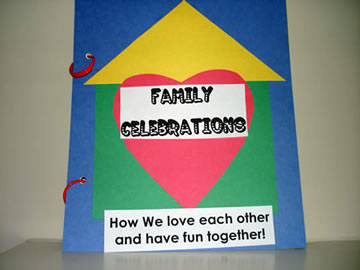
Family Celebrations – Holidays are a good time to talk about diversity.  Not all families celebrate Thanksgiving, but most families do celebrate something.  Ask children to bring in photos of celebrations they have in their home.  Put their pictures together to make a class book.

We Give Thanks
(Tune:  “Michael, Row Your Boat Ashore” – HAPPY EVERYTHING CD)
We give thanks for food we eat.
Hallelujah.
We give thanks for food we eat.
Hallelujah.

We give thanks for families…
We give thanks for friends so dear…
We give thanks for all the earth…
http://www.drjean.org/html/monthly_act/act_2007/11_Nov/1booksNov/weGiveThanks.pdf
*Let children suggest other things they are thankful for and insert the words in the song.
*Make a language experience chart of things children are thankful for.

Thankful Books – Make blank books for the children so they can draw pictures of what they are thankful for.


Friday, November 15, 2013

SAVE THE TEACHERS!


Last week Melinda Cook joined us at the seminar in Dallas.  She works for ESGI, which is an educational software company developed by Greg Gorman, a former kindergarten teacher.  I was skeptical the first time I talked to Greg, but after watching his video, I was IMPRESSED!  So, if you are tired of collecting data and confused about what you’re suppose to do with it…you just might want to check out ESGI.  Here’s a message from Melinda: 

Friends,
I want to tell you about an amazing resource created by a good friend and a former Kindergarten teacher!  Greg Gorman, founder of Educational Software for Guiding Instruction (ESGI), is making a difference with early learning teachers all across the country and around the world. Although it's been around for awhile, I recently just understood the real power of this instructional resource.

Greg created ESGI because he wanted to be able to use all the student data he was required to collect as a teacher.  The end result is ESGI, an amazing time saver which is very simple to use.  What started as a grassroots effort, with Greg driving around to different schools in his district to share this great new assessment tool, has turned in to a worldwide success. Initially, 60 fellow teachers were using the program, and for 4 consecutive years, every single one of them asked if they could use it again "next year." Their reaction was so powerful and emotional, that it changed the course of his career, and resulted in this chance for you to make a significant impact on yours! 

The reality is that almost all kindergarten teachers are still using paper and pencil for valid one-to-one assessments.  Others, who have tried the technical route, are disillusioned by various K-12 assessment programs selected at the district-level, but are not appropriate for early learners.  These negative experiences have left them wondering if they will EVER have a solution that will work exactly the way they need it to everyday - with every student.

Just check out the 3-minute Teacher Testimonials - ESGI Intro Video  using the link below, and find out how ESGI helps PK - 2nd grade teachers save time, communicate to parents, and understand all of the assessment data they collect.  We also include a FREE version of “Parent Conferencer” with every license, which allows teachers to streamline the scheduling and communication for parent conferences.

Please visit ESGI to check it out for yourself with their special 6-month free trial, and discover that ESGI is NOT another assessment!  It is a teacher's tool; a tool, complete with 25 standard skills inventory tests, and the capacity for you to quickly & easily automate all of the tests that you're currently using.  It truly takes you only a few minutes to add a new test, and immediately start saving about 75% of the time that you've been spending administering and managing assessments and student data.

After realizing that ESGI is SUCH a great idea and truly IS a resource that "SAVES THE TEACHERS," I immediately had to tell Greg to "Kiss his brain!"  Tooty ta!!


Thursday, November 14, 2013

LEARNING IS MORE FUN WITH A FRIEND!


So, what can children do with a partner?  Here are just a few ideas that can be adapted for preschool through elementary...middle school...high school...college!  

Read together.

Look at books or magazines together.

Retell a story.  They can also discuss who, what, where, when, why, the problem, resolution, what might happen next, etc.

Whisper a prediction in each other’s ear.

Review information after a science lesson, social studies, etc.

Clean up a center or each other’s desks.

Read around the room.   Give them pointers and empty glasses frames for more fun.

Write the room.  Give them clipboards and ask them to write words that would reinforce a skill you are working on.  For example, they could write compound words, words with the “th” diagraph, two syllable words, etc.

Sing a song or say nursery rhymes together.

Help with dressing, such a zipping coats and tying shoes.

Draw a picture together.  They could draw their favorite part of a story, illustrate a poem, draw a picture of their teacher, and so forth.

Build together with blocks, Legos, etc.

Play with play dough or clay together.  They make objects that begin with a certain sound, shapes, sets, etc.

Play a computer game.

Review flashcards.

Guess who I am?  Children dramatize or pantomime favorite books, rhymes, animals, etc. while their partner tries to guess.

Make shapes and letters with their fingers or bodies.

Do puzzles together.

Check each other’s work.

Edit each other’s writing.

Work on vocabulary.  One child calls out a word while the other child gives the definition.

Practice spelling words.  One friend calls out a word for their partner to spell.

Play “Mirror.”  One child is the leader and the other child is the “mirror” and must mimic what the leader does.  Switch roles after a minute.

Do a graphic organizer (Venn diagram, web, T-chart, time line, etc.).

Write on each other’s backs.

Do exercises together.

I bet you can add to the list.  Shoot me an email with your ideas and I'll share them.

Wednesday, November 13, 2013

BUDDY TIME


Having children work with a partner can be a powerful teaching strategy.  Through partner activities children can develop social skills, cooperation, problem solving, independence, oral language, and creativity - all skills of the 21st Century.  Scaffolding commonly occurs when one child with advanced skills helps a fellow classmate attain a higher level.   To avoid common behavior problems that can occur when children pick their own partner, try one of these ideas!


Buddy Sticks - Put like stickers on the bottoms of two craft sticks.  (You will need as many sticks as there are children in your classroom.)  Place sticks in a plastic cup with stickers facing down.  Children choose a stick and then find the person whose stick matches theirs.  That is their partner.


*For small group work, put like stickers on four sticks.  Remember, groups of two or four are more conducive to social interaction.

*Put matching shapes, letters, stickers, and colors at the end of sticks.  Call out one of the objects for children to match with a partner.

Hint!  If there is an odd number of students, let the last child choose the group they’d like to be a part of.

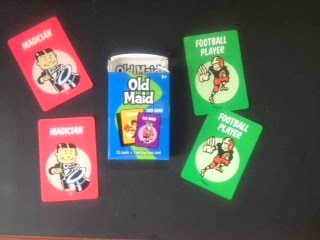
Old Maid – Use Old Maid cards to create partners.  Include the “Old Maid” if there is an odd number of students.  The “Old Maid” gets free choice.

Puzzle Pairs - Take valentines, seasonal cards, or playing cards and cut them in half in puzzle shapes.  Children put puzzles together to find their partner.
Go Togethers – Glue pictures of things that go together like socks and shoes or dogs and bones on index cards.  (You can find these on the internet.)  Children match pictures to find their partner.

Elbow Buddies – Children extend elbows and the first person their elbow touches is their partner.

Appointment Cards – Children make clocks similar to the one shown and walk around the room getting friends’ signatures by 12, 3, 6, and 9.  When the teacher calls out a time, they must find a friend at that time on their clock to be their buddy.

Shoulder Reading – When children get a partner, they sit next to each other facing opposite directions with their shoulders touching.  They can read together, take turns reading, or coach each other.

Partner Poem – Children face their partner, look them in the eyes and chant:
                        Hand to hand (shake hands)
                        And feet to feet (touch shoes)
                        I’m glad that you
                        Are partners with me!

Come back tomorrow to find out some things children can do with a partner.


Tuesday, November 12, 2013

THERE'S NO CRYING IN KINDERGARTEN!


Hey, cowboys and cowgirls!  I rounded up some great ideas for you last week in Texas.

Don't you love this shirt?

Chilli Pepper Cheer   (Teresa Palmer)
Open the jar.                          (Pretend to open a jar.)
Pick out a pepper.                 (Pretend to hold a pepper.)
Take a bite.                             (Take a bite.)
I yi yi yi!                                    (Hand up and shake like it’s hot!)

Truck Driver Cheer  (Teresa Palmer)
Boys do the truck driver cheer with a deep voice as they say, “Good job, good buddy!”
Girls do the truck drive cheer with a feminine voice and end with, “Honk!  Honk!”

Super Star  (Teresa Palmer)
Reach for the stars.                   (Reach up in the air.)
Catch it!  Grab it!                        (Pretend to grab something.)
Stick it!                                         (Pretend to lick and stick to forehead.)
Super star!                                  (Spread hands out.)

I’m So Smart!  (Janet Forney)
I am so smart.                              (Fingertips touch back of head.)
And nobody can take it away!
And no one can take it away!   (Shake head no.)
Ba da da!                                     (Shake fists.)
Yeah!                                            (Jazz hands.)

Class Cheers  (Amy Thomas)
Let children come up with their own cheers and write them on a poster.  For example:  Pete the Cat Cheer
My buttons, my buttons, my 4 groovy buttons…
Count backwards to one and then say, “Great job done!”

Turn off the TV and Go Outside!!!  (Ginny Hurley)
Turn                                    (Turn in a circle and jump as you say “turn.”)
Off                                       (Make an “O” like the Hulk as you say “off.”)
T                                         (Make arms in a T as you say “T.”)
V                                         (Arms make a V overhead as you say “V.”)
And Go                              (Jump forward with arms extended as you say “go.”)
Out                                     (Big overhead O as you say “out.”)
Side                                    (Turn sideways and say “side.”)

Stretch Break  (Paige Benyacoub)
Stretch to the left!               (Arms stretch left.)
Stretch to the right!             (Arms stretch right.)
Stand up!                             (Stand.)
Sit down!                              (Sit.)
Fight!  Fight!  Fight!            (Punch in the air.)

Working Out the Vowels  (Melanie Parras)
When working on the vowels the long vowel says it’s name like a strong man with muscle arms and a loud voice.
The short vowel sounds soft like a little girl.
Long A                (Make long a sound and flex muscles.)
Short A                 (Make /a/ sound with a high girlie voice as you hold
                               hands under your chin.)

Let’s Work Together (Amy Murray)
Put student sin pairs and have them create one product with both names to turn it in.  This can be done with a craft, writing, writing the alphabet, etc.

Listening Center  (Tracie Williams)
Put Dr. Jean’s CDs at the listening centers so the students can sing while working puzzles.  “I love it because no one argues over who is going to turn the pages or hold a book!  The kids sound so precious singing!”

Attention Getter
Teacher says…            Ice cream soda pop.
Kids say…                     Cherry on top!
*Use songs as a reward.  They get to earn pompoms etc. and when the get ten they get to sing a favorite song.


Roll a Heart Word (Erin Lloyd & Angie Plunk)
How about calling high frequency words “heart words” because you have to know them by heart.  Here is a great game called roll a heart.  Take six words and make a grid as shown.  Children roll a die and then write the word in that grid (starting at the bottom).  They keep rolling and writing until time is called.


Line Up Song  (Teacher Tipster – This teacher needs to be on the Comedy channel!)
Here we go just a walkin’ down the hall
Thinkin’ shh shh shh shh shh shh shh shh shh!
Here we go just a walkin’ down the hall
Thinkin’ shh shh shh shh shh shh shh shh shh!
We look good.            (Children echo.)
We look fine.              (Children echo.)
We look good, we look fine.
We can really make a line.
Here we go …

Potty, Flush, and Wash  (Cindy and Tracy)
Tune:  “London Bridge”
Potty, flush, and wash your hands,
Wash your hands, wash your hands.
Potty, flush and wash your hands
Everytime!

Jappy Jirthday  (Cyndi Washington)
When it’s the child’s birthday sing the birthday song the correct way, and then sing it by substituting the first letter of the birthday child’s name.
Jean’s birthday would be:
Jappy Jirthday Jo Jou.
Jappy Jirthday Jo Jou.
Jappy Jirthday Jear Jean.
Jappy Jirthday Jo Jou!

Bear Hunt  (Donna Hester)
Get the entire school to play along as you take your class on a bear hunt.  Get your backpacks, flashlights, and snacks.  Leave honey in the room and let someone come in and mess up the room with honey and fake fur while you are gone.  When you return ask, “What happened?”  Let the children make a book about what they saw and heard. 
*This has become a tradition at our school and everyone plays along.