photo 3am_dj_home_zps919fb85e.png photo 3am_dj_about_zps7cce4c75.png photo 3am_dj_website_zps73051235.png photo 3am_dj_ss_zps6759ec2a.png photo 3am_dj_bs_zps43e27832.png

Sunday, February 11, 2018

SMILE BREAK

Here's a simple little classroom management trick that might help you keep your "cool" this week.

When children are wound up, help center them with a smile break. Tell them to look at the clock and smile for 30 seconds. (Use the timer on your phone or have them look at the clock until the big hand is on the 6.)
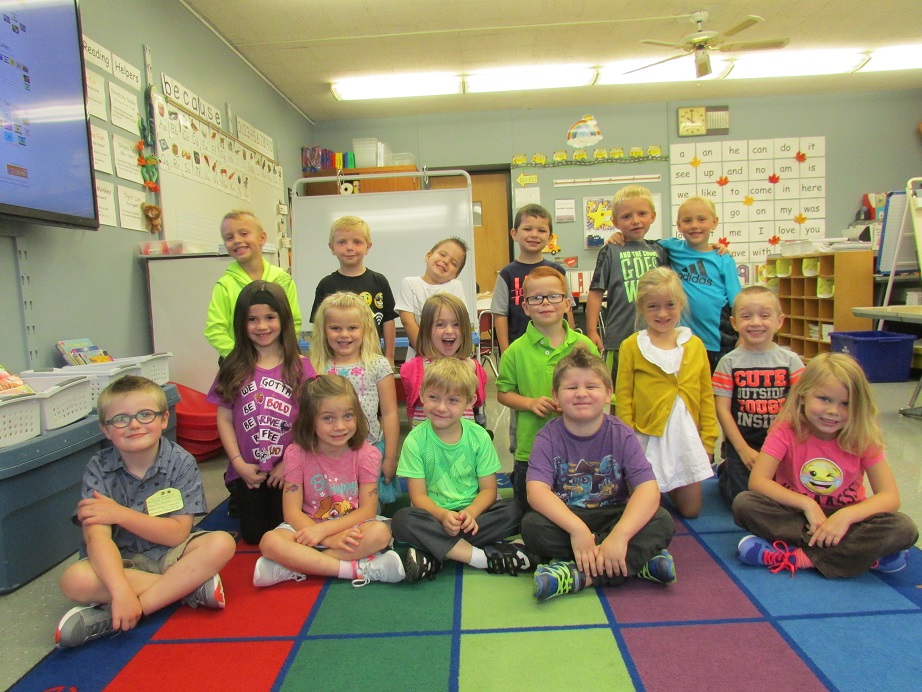
                              

Mrs. Kisloski's kinderoo cuties.

You can also ask them to hug themselves, sit and freeze, or do other motions for a specified amount of time.

Breath Through Your Nose

I love this idea to help children focus and clam down.  Have them close their lips and breath through their noses. (Works like a charm because they can’t talk!)

Babble Break
A brain break that students will love is a “talking break.” Set a timer for one minute or whatever and tell students they can talk with a friend until the timer goes off.  Once the time goes off there's no more talking!

Hint! You can focus the talking break by having children discuss a story you’ve read or talk about a topic you are studying.

Saturday, February 10, 2018

VOCABULARY PASSWORD

Every day use a class puppet to introduce a vocabulary word that will be the password for the day. Use this chant to introduce the password:
     Mr. Bear, Mr. Bear, (or whatever your puppet is),
     Oh, what do you say?
     What is the password for today?


*For attendance, the children say the password instead of “here.”

*Cut out a giant hand and write the word on the hand. Tape it to the door and every time the children enter or leave the classroom they “high five” the hand and say the word.

*Make tally marks on the board for every time a student uses the word during the day.

*Decorate a name badge with fake jewels.  Put a new "sparkle word" in the badge each day. Focus children’s attention by singing this song to the tune of “If You’re Happy.”


     If you can read this word shout it out. (Children shout word.)
     If you can read this word whisper it out. (Children whisper word.)
     If you can read this word spell it out. (Children spell word.)
     If you can read this word act it out. (Children dramatize the word.)


*Go to asl.com and click on the dictionary to learn how to sign the password.

Friday, February 9, 2018

VERBS, VERBS, ACTION WORDS!

If you can DO it, then it's a verb!
                                    

Verbs, Verbs, Action Words (Kiss Your Brain CD)
Verbs, verbs, action words
Things that you can do.
I’ll say a word, and if it’s a verb,
Show what you can do.
Run (Children run in place.)
Fly (Children pretend to fly.)
Dog (Children shout, “That’s not a verb.”)

Continue calling out verbs for the children to pantomime.

Charades
Let children take turns acting out verbs as their classmates try and guess what they are doing.

Pass the Story
Write verbs on index cards and place them in a sack. Have the class sit in a circle and begin passing the bag around. The first child chooses a word and begins the story by using that verb. The second child chooses a word and adds to the story with their word. Continue passing the bag as children add to the story using a verb from the bag.


Catch and TellHave children think of an action word in their head. The teacher throws a ball or beanbag to a child. That child states the verb they are thinking of and then passes the ball to another friend. Children continue passing the ball and saying verbs.

Say What? 
Write simple verbs on the board. Invite children to come up and add different endings for their friends to read and then use the word in a sentence.
                              
*Cover the end of a fly swatter with white paper. Write different endings on the paper (ing, ed, s). Children place the ending by verbs and read the new word.

Thursday, February 8, 2018

ACTIVE LEARNING WITH SIGHT WORDS

Purposeful practice for automaticity (aka repetition) is essential to skill mastery. The problem is when you drill children they get bored and don’t pay attention. Here are some chants and movement strategies to practice sight words, spelling words, and vocabulary words.
                               
Don't forget that these ideas can be adapted for kindergarten through elementary grades!

Clap and Snap – As you spell out words clap on the consonants and snap on the vowels.

Jumping Jacks – Do jumping jacks for each letter in a word.

Palm Pilot – Hold up one palm and trace the letters in a word with the index finger of the opposite hand. After making the letters say the word and “take it to the brain” by pretending to run your fingers up your arm to your brain.
                                    
Back Writing – Stand in a circle and spell out words on your neighbor’s back. Erase before writing a new word.

Cheer Words – Step back and forth as you clap and spell out words.
Give me an “E.”
“E”
I’ve got an “E” you’ve got an “E.”
Give me ….
What’s it spell? (Shout out word.)
                                                                                       
Disco – Finger up in the air and move it across your body as you say different letters in a word. Hands on hips as you say the word.
                          
Patty Cake – Children face a partner. They say the word as they clap. They cross and tap partner’s hands on each letter. Then high five and say the word in the air.

Air Writing – Children use their finger, foot, knee, tongue, elbow and other body parts to spell out words in the air.

March – Children march and swing arms on each letter. They salute and say the word at the end.

                                                         
Body Writing
Tall letters (b, d, f, h, k, l, t) - touch your head
Tummy letters (a, c, e, i, m, n, o, r, s, u, v, w, x, z) – touch your tummy
Toe letters (g, j, p, q, y) – touch your feet
For example:
H – touch head
O – touch tummy
P – touch feet
Clap as you say the word “hop.”

OLYMPIC EVENTS!  Think of some movements to tie in spelling with skiing, skating, hockey, etc.

Wednesday, February 7, 2018

WORDS, WORDS, WORDS!

Did you know that 3 words make up 10% of what we read? (I, and, the)
Did you know that 13 words make up 25% of what we read?
Did you know that 100 words make up 50% of what we read?

Here are some center ideas to help children master sight words.  Studies suggest that it takes the average child 25-36 exposures/experiences with a word before it is saved in their brains, so they'll be on their way with these activities.


*Note!  You might use some of these strategies already, but I hope you find at least one new idea.

In the News
Give children a section of the newspaper and highlighters. How many letters can they find that they can read? Ask them to write the words on a sheet of paper.
*Children can also identify words with glass pebbles.


Roll and Write
Make a graph with six sections going across and down. Number the sections in the top row 1-6 and then write a high frequency word in each section. Children roll a die. They find that number at the top of their frame and then write that word under it. They continue rolling the die and writing words as long as time permits.
                                         

Four Square Writing
Show children how to fold a sheet of paper into fourths. Have them trace over the creased lines to make four squares. Number the sections “1,” “2,” “3,” “4.” Ask children to write one letter words in the section numbered “l.” Write 2 letter words in the second section, 3 letter words in the third section, and 4 letter words in the fourth section.    


Bookmark
Make a bookmark from a 2” x 8 ½” piece of construction paper. Give children old newspapers and magazines and ask them to out words they can read and glue them to the bookmark.
                                       
Word Necklace
Cut a sheet of paper in half. Fold into eighths and cut on the creased lines. Staple to make a small book. Hole punch in the corner and tie on a piece of string. Children walk around the classroom and write words they can read.
*Use this necklace book for color words, shapes, adjectives, etc.


Rainbow Writing 
Make “rainbow words” by tracing around each word with different colors of crayons.

Word Search
Prepare a list of words found in the classroom and run off. Children walk around the room searching for the words on the list. They can cross through the words as they find them.

Partner Read the Room 
One child is the “student” and wears an empty pair of glasses. The other child is the “teacher” and holds a pointer. As they walk around the room the teacher points to words and the student reads them. After ten words they switch places.
Note! Whisper voices only for this activity!

Tuesday, February 6, 2018

PHONICS CENTERS

Children can practice "building" words with some of these simple materials. These activities can also be adapted for sight words, vocabulary words, or spelling words.

Alphabet Soup
Place magnetic letters in a bowl. Give children a large soup spoon to
scoop out some letters. Can they make a word with the letters? Have
them write the words that they make.

                                   
Letter Tin
Place magnetic letters inside a cookie tin. On the inside cover make three lines with a permanent marker. Have the children take out the letters and place them around the lid. Give children a list of CVC words to make and read.

Unifix Cubes 
Place dot stickers on unifix cubes. Write letters on the dots. Children can use these for constructing words.
*Let children play this game with a friend. One child builds a word and the other friend must then read it.
                                 
Play Dough Phonics
Let children use play dough to make objects that begin with different letter sounds.
*Use play dough to make two words that rhyme.

Duplo Letters and Words
Here is a photo a teacher sent demonstrating how she integrates blocks with phonics and sight words. She said she asked the parents to donate the Duplo blocks and the children thought they were "playing" instead of "learning."

Monday, February 5, 2018

LETTERS MAKE WORDS

These center ideas will help children develop the concept that "letters make words."  They can be adapted for older students to reinforce vocabulary or spelling words.

Name Puzzles 
Write children’s names on a sentence strip. Cut between the letters to make a puzzle. Next, write each child’s name and glue their photo to the front of an envelope. Place the puzzle pieces inside. Children can practice putting the puzzles together and reading friends’ names.

                            
*Put sticky dots on unifix cubes. (Use one color for the first letter and same colored dots for the other letters.) Print the letters in children’s names on the dots. Place a class directory with names and pictures so children can practice “building” their friends’ names.

Pull and Read 

Write children’s names or high frequency words on 12” sentence strips. Cut the left end off the envelope and insert sentence strips inside. Pull out one letter at a time to blend sounds and predict what the word might be.
     
*Use children’s photos or picture cues on the right side of the sentence strip so children can self-check.

Alphabet Beads
Give children alphabet beads and pipe cleaners so they can string on names, words, and so forth.


Clothespin Words
Write words on jumbo craft sticks. Write letters on spring clothespins. Children attach letters to the craft stick to make words.
        

Letter Bags and Boxes
Save sacks from restaurants or use food boxes for this center. Place foam letters or magnetic letters in a basket. Children pick a letter and then try to match it up with the same letter on a bag or box.