photo 3am_dj_home_zps919fb85e.png photo 3am_dj_about_zps7cce4c75.png photo 3am_dj_website_zps73051235.png photo 3am_dj_ss_zps6759ec2a.png photo 3am_dj_bs_zps43e27832.png

Tuesday, August 20, 2019

ACTIVE LEARNING #20 PHONOLOGICAL AWARENESS

Phonological awareness is the ability to recognize sounds in oral language (rhyme, alliteration, syllables, etc.). Tie movement in with oral and aural activities to engage the body and brain.

RHYME

Handy Rhymes 
Have children extend their arms as they say pairs of words that rhyme. For example: sun (extend right hand) - fun (extend left hand). As they progress, the teacher says a word (extend right hand) and then children say a word that rhymes (extend left hand). 

Rhyming Song 
Do this activity to the tune of “Skip to My Lou.”
Cat (hold out right hand)
Hat (hold out left hand)
Those words rhyme.
Cat (hold out right hand)
Hat (hold out left hand)
Those words rhyme.
Cat (hold out right hand)
Hat (hold out left hand)
Those words rhyme.
They all end with “at.” (Roll hands around as you say this.)

Rhyme Ball
You will need a ball, beanbag, or other object to toss for this game. Children sit or stand in a circle. The teacher says a word and then tosses the ball to a child. As the child catches the ball, she must say a word that rhymes.     

Rhyme Detectives
Tell the children that they will get to be detectives andlisten for words that rhyme. You say a word, and they put their pinkies up if they hear a word that rhymes with it. Pinkies down if it doesn’t rhyme.
For example: Cat - hat (pinkies up), run - dog (pinkies down). 


SYLLABICATION


Mouth It!
Have children gently place their palm under their chin and ask them repeat to words. Surprise! The mouth opens on each syllable (all syllables have vowels and the mouth opens).
                                                          
Move It!
Clap, hop, walk, or nod the syllables in classroom objects.
*Disco, hula, swim, or march to syllables in rhymes and songs.
“Beep” like aliens or “Wa wa” like Charlie Brown’s teacher as you say words or read.

Instruments
Have children beat out syllables with instruments.

*You could also use cardboard rollers, straws, pencils, etc. like drum sticks to tap out rhythms and syllables.

Syllable Show
Slowly say a word. Children hold up the number of syllables they hear on their fingers.

*You could also let them show the number of syllables by placing the appropriate number of poker chips or other objects on their desk.


BLENDING

Body Touch
Blend words touching parts of the body. Touch the head as you say the beginning sound in the word. Touch the stomach as you say the middle sound. Touch the feet as you say the final sound. Quickly move from head to feet and blend the sounds.

*You can also use the body to isolate sounds. For example:

Where do you hear the /s/ in bus? (Children touch feet.)


Finger Tap

Bend in your fingers and extend your thumb. Going from left tap a finger for each sound with your thumb. For example:
                                                         
/j/ /e/ /t/. Run your thumb over your fingers as you blend the sounds and say the word.

Monday, August 19, 2019

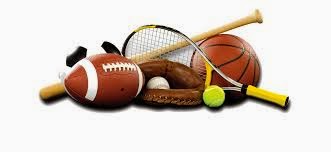
ACTIVE LEARNING #19 SPORTS SPELL

Get rid of wiggles and learn at the same time by using sports movements to spell out words.

Baseball
Pretend to bat the ball as you say the letters in a word and swing around and hit a homerun as you say the word.


Football 

Feet apart and run quickly in place with arms out in front of you as you spell out words.  Throw a "touchdown" as you say the word.


Soccer 
Kick across your body with your right foot and then kick across with your left foot as you spell words.  Kick a "goal" as you say the word.

Tennis 

Shuffle as you say the letters and then pretend to hit the ball as you say the word.


Basketball

Dribble on letters and pretend to shoot as you say the word. (Jump up on toes.)


Karate  

Feet spread apart with knees bent. Pretend to chop with your right hand and then chop with your left hand as you say letters.  Give a little kick as you say the word.


Skiing – Knees together and bend to the left as you swing your arms. Knees to the right as you swing your arms. Say letters as you move from left to right and then use both arms as you say the word.
 
Ice Skating 
Alternate arms in front as you pretend to glide on different legs while spelling words.

Hint! Encourage your students to think of other sports and how they can use them to practice skills.

Cheering Words
Children stand and step from side as they clap and cheer words:
Give me a B. B! I’ve got a B, you’ve got a B.
Give me an E. E! I’ve got an E, you’ve got an E.
Give me a D. D! I’ve got a D, you’ve got a D.
What’s it spell? BED! Say it again. BED!
One more time. BED!
 
Hint!  Model how to do each sport and then “practice” for a minute or two. Once students know the movements you can adapt the moves to count, read sight words, review math facts, say months of the year – it’s all good!

Sunday, August 18, 2019

ACTIVE LEARNING #18 BODY WRITING

Why teach children to write with their wrist when you can get so much more movement with one of these strategies?

Hint! The teacher will need to “mirror” these strokes.

Invisible Writing 

Children extend the middle and index finger and write in the air as they keep their elbow stiff.


Writing Wand 
Tape strips of tissue paper to a popsicle stick for air writing.

                                     
Noodle 

To practice writing numerals, letters, etc. give children a 9” inch section of a swim noodle. They can use both hands to write in the air (activates both sides of the brain.) Say, “Statue of Liberty” when you want them to listen and hold their noodles in the air.

                                                           
Midline Writing 

Activate both sides of the brain by extending the index finger from both hands as you write in the air.
 

Tummy Writing 
Children lay on the floor and extend one finger above their head. Children use that finger to trace shapes, letters, etc. on the floor.


Palm Pilot 
Children hold up one palm and trace letters on it with the index finger from the other hand. Take it to the brain! 
 
Back Writing 
Children practice writing on each other’s backs.
                                                         
Hint! Stand in a circle and face right. The teacher models how to write on the first child’s back. The first child repeats it on the second child’s back and it continues around the circle.


Body Parts 

Practice making shapes, letters and numerals in the air with different body parts, such as the elbow, foot, nose, belly button, chin, etc.

Hint! Let a different child choose the body part you use each day.

Letter Claps 

Hold hands in the air touching and make little claps as you make the shape of the letter and alliterate the sound.

More! Let children write letters with shaving cream on a table, in the sandbox, on the board with a wet sponge, or with chalk on the sidewalk.

Saturday, August 17, 2019

ACTIVE LEARNING #17 - COUNT ON!

Exercise those bodies and those brains with these counting games.

Karate Chop Count
Feet out, knees bent, karate chop with your right hand and then your left as you count by ones.
*Do leg curls and chops as you count by 5’s to 100
*Kick front and back as you count by 10’s to 200.
*Wax on, wax off as you count by 100’s to 1000.
          
*You can also karate chop spelling words and word wall words. Chop with right hand as you say a letter and then chop with the left hand as you say a letter. Hands folded together and bow as you say the word.

Pump Up to 100
Pretend to hold weights as you count.
1-20 - bicep curls (Elbows in, pretend to hold weights in fists with palms up as you bring forearms up and down.)
21-40 - for overhead press (Fists face forwards as you start at your shoulders and push the weights overhead.)
41-60 – side raises (Elbows at 90% angles as you raise them out to the side.)
61-80 – upright rows (Fists together close to the body and raise elbows out and up until fists are at your heart.)
81-100 – frontal raises - (Fists together and arms stiff as you raise them in front of your body to eye level.)
Whew! (Wipe brow!!!)

*Let children get an imaginary jump rope and jump as they count to 100.


Silly Voice Counting
Have children count using different voices. For example: robot, opera, pirate, monster, teacher, cowboy, monkey, surprised, worried, silly, excited, happy, sad, mad, confused, whisper, sleepy, and scared.
                                   
*Add holiday or seasonal voices like a scarecrow (reads words in a scary voice), ghost (students say “boo” after each word), witch (read with a cackle while stirring a pot), Rudolph (students flash their hands like blinking lights as they read the word), Frosty (students shiver as they read the words) or Santa (students must say the words three times in a “ho,ho,ho” style), or the Easter bunny (students hop after saying each word).


*Count each "ten" with a different voice.


Numbo
Draw the face of a worm (Numbo) on a circle or paper plate. Cut 10-15 circles out of construction paper and number 1-10 or 1-25.  Pass the circles out to the children.  Place Numbo’s head on the floor and ask the children to help him grow.  The child with “1” puts her circle down, followed by “2,” “3,” etc.  Ask questions, such as:  “What number comes between 7 and 9?  What comes before 13?  What is 2 more than 4?


Tens and Ones(Ginger McCormick)
(Cadence – Children repeat each line.)
I don’t know but I’ve been told. (Repeat)
Tens are tall and ones are small.
First you count up all the tens.
Then add the ones to the end.

*Pick students to be tens and stand tall.  Pick students to be ones and sit criss-cross in front of the tens.  Count the tall students by tens.  Count the students sitting on the floor by one.


Counting by Two’s (Melanie Hope)
Have students identify body parts what come in sets of two. Stand and county by 2’s as you touch the following body parts:
2 – hands on eyes
4 – hands on ears 
6 – hands on elbows
8 – knees
10 – feet
12 – eyes
14 – ears….
You’ll be able to count to 100 by 2’s before you know it!

Whisper Skip Count
One (Touch head as you whisper “one.”)
Two (Touch shoulders and say “two.”)
Three (Touch head and whisper.)
Four (Touch shoulders and say “four.”)
Five (Touch head and whisper.)
Six (Touch shoulders and say “six.”)
Seven (Touch head and whisper.)
Eight (Touch shoulders and say, “eight.”)
Nine (Touch head and whisper.)
Ten (Touch shoulders as you say “ten.”)

*To count by 3’s, touch shoulders and whisper “one,” touch shoulders and whisper “two,” touch waist and say “three.”
*To count by 4’s, whisper on 1-3 and touch knees as you say “four.”
*To count by 5’s, whisper on 1-4 and touch toes as you say “five.”


Shoelace Counting 
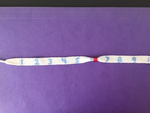
Write numerals 1-20 on a cotton shoelace with a fabric marker. Slide a bead on the shoelace and move it up and down as you count.
*What’s one more than___? Two less than___?


Friday, August 16, 2019

ACTIVE LEARNING #16 - ACTIVE LISTENING

Good listeners are ACTIVE listeners.  These are some simple strategies that can engage your students as they listen to instructions, books, or videos.

Schema
Teach sign language for "connection" (thumbs make circles with index fingers and join like a chain). Discuss that when they connect what is in the book with what is in their brain they make a "schema." If they've made a "schema" they can show you with their hands. Call on random students to explain how they connected personally with the book.


Me Too! 

Teach children sign language for “me too!” (Extend thumb and pinky finger and place the middle three fingers on your palm as you point your thumb toward your chest.) Tell children when you are reading a book they can use the sign to let you know they’ve had a similar experience.
                                        

Don’t Understand 
Children can use this sign when something is not clear to them. Put your index finger next to your brain and wiggle it like you are turning on a light as you shake your head “no.”
                                 
Understand
Pretend to scratch your brain.


Big Ears
Download a picture of a big ear and glue it to a craft stick.  Remind the children when you hold up the ear, they need to use their "big ears" to listen.
                                                                                

Listening Chant (Tune: “If You’re Happy and You Know it”)
If you’re listening to me do like this- (make a face for children to imitate).
If you’re listening to me do like this-(make another silly motion for children to copy).
If you’re listening to me then be quiet as can be.
If you’re listening to me ____(line up, get ready for a story, get out your books, or whatever you want them to do).

Thursday, August 15, 2019

ACTIVE LEARNING #15 - BRAIN BEADS

Don’t you just love tools that you can use in lots of different ways? It’s like my kitchen scissors. I couldn’t live without them to open packages, snip herbs, trim meat, cut veggies, etc. Just like tools in your kitchen, I have some handy math tools that you will be able to use in creating multi-sensory experiences in a variety of ways with a variety of skill levels.
Brain Beads
WHAT?
Brain beads are a simple tool that can be used to reinforce counting in a concrete way. You will need pipe cleaners and pony beads.  Knot one end of the pipe cleaner. String on 10 beads. Knot the other end.


HOW?

Counting 
Slide the beads to the left and then move them over one at a time to the right as you count.

       
*Flip the pipe cleaner over so the beads are on the left again and count from 11-20. Continue flipping the pipe cleaner and counting higher.

*Slide all the beads at once and count “ten.” Flip it over and slide all the beads as you say “twenty.” Continue counting by ten’s by sliding all ten beads at one time.

Friends of Ten
How many ways can you make ten?

Number Stories

Slide beads to demonstrate number stories.


Words– Slowly say a short sentence.  Have children follow you as you model moving a bead to the right for each word.  
Hint!  Always demonstrate and model before asking children to do these activities independently.

Syllables– Move beads for syllables you hear in words.

Phonemes– Say words slowly stretching out the sounds. Slide a bead for each phoneme. Say the word and slide the beads together to the left.

Talking Beads- You can also use the beads to guide sharing time.  Children can slide a bead over for every word that describes their object.  Then they can slide a bead for where they got it.  Finally, they can slide a bead as they say what it is.

Wednesday, August 14, 2019

ACTIVE LEARNING #14 - DANCING STANDARDS

All you need is some good music and a little enthusiasm and your students will master those sight words, math facts, and skills as they move and have fun.  Model these movements and then invite the children to join you.
                                           
Note! Children can do these standing up or sitting in their chairs.

Disco Dance – Put right index finger in the air and point to the left. Bring right index finger down by your side. Spell words or count as you move.


Swim - Pretend to swim by stroking arms as you count by ones, fives, etc. Can you backstroke? Sidestroke?

*Swim as you say letters and hold your nose and wiggle down as you say the word.

Funky Monkey - Fists out in front and move them up and down as you read sight words or count.


Hitchhike - Right thumb up and move across your body and then left thumb and move across the body as you count, read words, etc.

Chicken - Hands in armpits and flap like wings as you count or spell words.


Pony – Pretend to hold reins as you rock back and forth and say letters in a word. Lasso (arm in the air) as you say the word.


Batman – Make “v” with index and middle fingers and swoop them across your eyes as you count or read words.

Salsa - Left arm bent with index finger up in the air as you say an addend. Right arm bent with finger in air as you say another addend. Hands on hips and wiggle as you say the sum.
*Adapt for subtraction or other math facts.

Bollywood – Right palm up in the air like you’re screwing in a light bulb and then left palm down like you’re turning on a water spicket. Children can read sight words or repeat other information as they make the moves.


YOU CAN SING AND DANCE AND LEARN WITH ME AT THESE UPCOMING WORKSHOPS!

September 21, 2019
Early Childhood Conference
Virginia Beach, VA
CCPADirector@ccumc.net

September 28, 2019
Fargo, ND
2019 Early Childhood Conference:  Unstoppable Superheroes

October 4, 2019
Columbia, SC
South Carolina AEYC Conference
scaeyc.org

January 6, 2020
Fort Worth, TX
The Learning Center of North Texas
www.tlcnt.org 

January 28, 2020
Jacksonville, FL
Early Learning Coalition of North Florida
elcnorthflorida.org

February 28 & 29, 2020
Pasadena, CA
Southern California Conference for Pre-K, TK, Kindergarten, and First 
socalkindergartenconference.org

March 6, 2020
Atlanta, GA
Georgia Preschool Association
georgiapreschool.org

April 4, 2020
Vicksburg, MS
Early Educators Conference

April 18,2020
Mt. Vernon, IL
johnsonp@rlc.edu