photo 3am_dj_home_zps919fb85e.png photo 3am_dj_about_zps7cce4c75.png photo 3am_dj_website_zps73051235.png photo 3am_dj_ss_zps6759ec2a.png photo 3am_dj_bs_zps43e27832.png
Showing posts with label Mindfulness. Show all posts

Tuesday, January 7, 2025

YOGA YEAR

Make 2025 a YOGA YEAR by incorporating some of these strategies. Yoga has health benefits, as well as learning benefits. "Mindfulness" is a buzz word now, and yoga might be just the trick to help children focus and relax.

Yoga Letters
There are several videos where yoga poses are related to the alphabet. Wouldn't it be fun to incorporate yoga poses with phonics? Here's a poster that you can download free:

http://www.youngyogamasters.com/2014/05/28/yoga-alphabet-printable/


Yoga Shapes
I loved the yoga poses for kids I found on this website:


https://www.kidsyogastories.com/shapes-yoga/


Monument Poses
Linda Smith shared this idea for tying in MONUMENT POSES with social studies standards.

Statue of Liberty – One arm up holding the torch and the other arm holding a book with feet apart.

Washington Monument – Feet together and arms up and with pointed fingers.
Honest Abe – Sitting position with arms out as if on a chair.
Mount Rushmore – Legs apart with chin under fist and switch sides.
The Arch – Arms in an arc twice overhead.
Liberty Bell – Arms down swinging side to side as you say, “Bong, bong, bong, crack!”


Superhero Yoga
And, wouldn’t your students love doing this Superhero Yoga that Charley Schillinger does with her students?
Superman – Do a plank.
Wonder Woman – Sit in an invisible chair.
Spiderman – Feet together and squat.
Batman – Arms out and one leg up.
Captain America - Squat with legs apart and stretch arms over head and behind as if extending a shield.
Flash Lunges - One foot in front and lean forward and touch the floor.
Black Widow - Take turns stretching out your arms.
Iron Man Pose - Stand straight and look up towards the sky.

Here's here blog so you can learn more about it:

https://mscharleyblog.wordpress.com/2016/04/15/superhero-yoga/
https://drive.google.com/file/d/0B1SnEagA4jljZWZjN205R0NXMGc/view?usp=sharing


Morning Stretch
Several teachers have told me how my “Morning Stretch” really helps their students focus and get ready to start each day.


https://www.youtube.com/watch?v=xIq9TbaCokc

Monday, September 2, 2024

MORNING MINDFULNESS

If we only knew some of the "baggage" that children bring with them to school each day we would take a few minutes to love them and help them feel secure. This song will encourage children to “center” themselves and get ready to learn. As they practice breathing and stretching different body parts they will naturally calm down and focus.


MORNING STRETCH
It feels so good to start the day by stretching. (Stretch up high on toes.)
Breath in deeply and then let the air out. (Slowly breath in and out.)
Breath in fresh air – push the stale air out.
Stand up tall. (Stand with crown of head reaching up.)
Look left then right. (Slowly look left and then right.)
Roll your neck around (Gently roll your head around in one direction.)
So it’s not too tight. (Roll head in opposite direction.)
Shoulders up and circle around (Shoulders up as if shrugging and around.)
Other direction without a sound. (Opposite direction.)
Slowly breath in and lift your arms up high. (Lift arms up and then down.)
Let the air out and bring your arms by your sides.
Now stretch your arms out (Stretch arms out in a T.)
Big circles make. (Make big circles with arms.)
Other direction, (Make circles in the opposite direction.)
Then swish and shake. (Swing arms like a dishrag left and right.)
Bend to the left with right arm over head (Straighten right arm and bend.)
Next on the right with left arm instead. (Straighten left arm and bend.)
Slowly… (Lift arms and breath in. Lower arms and exhale.)
Touch your toes, then stretch high in the air. (Touch toes then up.)
Once more touch toes, lift up your cares.
Heel up and bend down first on the right. (Right heel up and stretch.)
Then left heel up and bend with toes in sight. (Left heel stretch.)
Slowly… (Lift arms and breath in. Lower arms and exhale.)
Stretch the right calf, and then the other side. (Bend right knee, then left.)
Stand tall as can be and hug yourself with pride. (Wrap arms around self.)
Bring the corners of your mouth up toward your eyes.
Think of something happy and give big smile! (Squeeze body and smile.)


BALANCING
Balancing is another simple, yet powerful way, to help children calm their bodies and focus their minds.

Balancing Act
Feet together, close your eyes, (Close eyes breath in and out.)
And breath slowly in and out.
Open your eyes, (Balance on left foot.)
Lift your right foot and balance on the left.
Put your arms out straight. (Arms out wide as you balance.)
Now reach for the stars. (Arms up in the air as you balance.)
Place your right foot on the floor
And raise your left foot. (Balance on right foot.)
Put your arms out straight. (Arms out wide as you balance.)
Now reach for the stars. (Arms up in the air as you balance.)
Place your left foot on the floor
And raise your right knee. (Lift right knee and balance on left foot.)
Can you bend your arms like a tree in the wind? (Move arms around.)
Place your right foot down
And raise your left knee. (Lift left knee and balance on right foot.)
Can you bend your arms like a tree in the wind? (Move arms around.)
Place your left foot on the floor.
Raise your right knee (Straighten right leg in the air and balance.)
And then stretch your right leg out straight.
Bend your right knee and place it on the floor.
Raise your left knee (Straighten left leg in the air and balance.)
And then stretch your left leg out straight.
Bend your left knee and place it on the floor.
Raise your right leg to the side. (Straighten right leg by side.)
Place your right leg on the floor.
Raise your left leg to the side. (Straighten left leg by side.)
Place your left leg on the floor.
Stand on your left leg. (Balance on left leg.)
Stretch out your arms. (Stretch arms out wide.)
Bend forward like an airplane. (Slowly bend forwards as you balance.)
Stand on your right leg. (Balance on right leg.)
Stretch out your arms. (Stretch arms out wide.)
Bend forward like an airplane. (Slowly bend forwards as you balance.)
Stand up on tippy toes. (Stretch up on toes and balance.)
Stand still for as long as you can.
Raise your right hand and place (Raise right hand and pat on back.)
It on your back and give yourself a pat.
Raise your left hand and place (Raise left hand and pat on back.)
It on your back and give yourself a pat.
Now close your eyes and slowly breath in and out.
Let your mind take you to a happy place.


Cloud Ride
Ask children to close their eyes and get on a cloud. Breath slowly in and out as the cloud takes them on an imaginary ride.

*This is pleasant to do as children lay on their backs. Play some quiet music to help them relax.


Magic Bubble
Focusing in breathing is a natural way for all of us to calm down.  Demonstrate how to make a magic bubble (circle with both hands by touching fingertips). Tell the children to hold up their bubbles and blow out and in…slowly out and in.

Sunday, July 30, 2023

MORNING MINDFULNESS

How you start your morning can create positive feelings that will last all day long. Stretching, breathing, and balancing can help children "center" themselves so they can focus and learn.

Morning Stretch


Five Finger Breathing
Children stretch out one hand like a star. They take the pointer finger of the other hand and trace the outside of the thumb as they inhale. They exhale as they trace the inside of the thumb. Inhale as they go up the index finger. Exhale as they go down the index finger. Continue inhaling and exhaling until all the fingers have been touched.


*Reverse and do the same thing using the opposite hand and finger.

Balancing Act
Balancing is a simple, yet powerful way to help children calm their bodies and engage their brains. Balancing is quiet and requires no special equipment.


Saturday, July 24, 2021

BALANCE, TIGHTEN - RELAX, AND TONY CHESTNUT

Balancing Act
Balancing requires no special equipment and is a powerful way to improve core strength and increase mindfulness. 

Feet together, close your eyes, (Close eyes breath in and out.)
And breath slowly in and out. 
Open your eyes, (Balance on left foot.)
Lift your right foot and balance on the left.
Put your arms out straight. (Arms out wide as you balance.)
Now reach for the stars. (Arms up in the air as you balance.)
Place your right foot on the floor 
And raise your left foot. (Balance on right foot.)
Put your arms out straight. (Arms out wide as you balance.)
Now reach for the stars. (Arms up in the air as you balance.)
Place your left foot on the floor...


Tighten and Relax

This video will help children release stress by tightening and relaxing different body parts.

Squeeze your hands tight as you can. Tighter. Tighter. Now relax.
Squeeze your toes tight as you can. Tighter. Tighter. Now relax.
Squeeze your arms…

Legs… Shoulders… Mouths… etc.


                      http://bit.ly/drjeanTighten

Five Finger Breathing
Children stretch out one hand like a star. They take the pointer finger of the other hand and trace the outside of the thumb as they inhale. They exhale as they trace the inside of the thumb. Inhale as they go up the index finger. Exhale as they go down the index finger. Continue inhaling and exhaling until all the fingers have been touched.


*Reverse and do the same thing using the opposite hand and finger.

Tony Chestnut

Point to the body parts as you sing. Sing each verse softer until you are doing the silent version.

Tony Chestnut
Toe (Point to toes.)
Knee (Point to knee.)
Chest (Point to chest.)
Nut (Point to head.)
Nose (Point to nose.)
Eye (Point to eyes.)
Love (Cross arms over chest.)
You (Point to a friend.)
Toe Knee Nose (Continue to point to body parts.)
Toe Knee Nose
Toe Knee Chest Nut
Nose Eye Love You
That’s what Toe Knee Nose.

Continue singing softer each time.


https://www.youtube.com/watch?v=fHUYa8oZVVs

Wednesday, August 5, 2020

MINDFUL MUSIC

Mindfulness suggests slowing down and paying full attention to what you are doing.  Learning to self-regulate and center themselves is a challenge for young children, particularly in the virtual classroom.  Here are some songs that can relieve stress and help children focus.


Balancing Act
Directions: Have children stand and follow along as they balance and relax.


Balancing Act


Tony Chestnut
Directions: Point to the body parts as you sing. Sing each verse softer until you are doing the silent version.


Tony Chestnut

Morning Stretch
This video does simple yoga moves as children slowly breath in and out.


Morning Stretch

Monday, May 18, 2020

MOVING THROUGH CONFLICT TO RESOLUTION

Several weeks ago a teacher asked for some help on CONFLICT RESOLUTION. Well, that's not my area of expertise, but fortunately I'm friends with Barbara Gruener and she has a brilliant mind, gentle heart, and great suggestions for you today!
 

Conflict. It’s a normal part of life for kids of all ages, but it might seem exacerbated in stressful times, like during our pandemic shelter-in-place that feels more like we’re under house arrest these past few months. And while our resolution to conflict can be as unique as the conflict itself, there are some tried-and-true strategies that can help us help our littles learn to respond rather than react when conflict strikes.

Start by showing this Sesame Street clip to help your children understand what conflict is and isn’t and that laughter is resilience skill that sometimes works as a pressure valve to release the tension that stress can cause.

Then, try one or more of these three things that have worked in classrooms and ought to easily transfer to a home setting:

The Path To Peace
Move through conflict on a Paths Of Peace Labyrinth like this, which we painted on the concrete recess slab but could easily be drawn out with chalk or set up using sticks, stones, or string. The two people in conflict enter the labyrinth side-by-side but quickly go their separate ways as they follow their side of the path to each numerical stop: 


At each number, the two problem-solving friends each:

1. State the problem. Each person gets a chance to talk about the problem from his or her point of view while the other listens.

2. State their feelings about the problem. Each person talks about how they feel about what’s happening while the other one listens to understand.

3. State the other person’s feelings about the problem. I call this the empathy stop, because it invites the participants to step into each other’s story, understand the problem from the other perspective, and feel what their friend is feeling.

4. Brainstorm any and all solutions. No judgements at this stop, so nothing is off the table. Encourage them to be as bold or silly, outrageous or practical as they can be with their suggestions for how they’d like to see the conflict resolved.

5. Choose the best option. The two people in conflict are now as physically close as they’ve been; proximity can help in deciding which action will work best for them. They may be able to negotiate and come to a peaceful resolution. They may decide to flip a coin or let the best of 3 rounds of Rock, Paper, Scissors decide. Or it could be that they agree to disagree, and that’s okay, too. The process is more important than the outcome; once they’ve decided, the hope is that they exit the labyrinth in harmony armed with an agreeable plan moving forward.


The Wheel of Choices
Conflict is ‘wheelie’ fun when you front-load with this paper-plate tool. During a time when all is well and there is no conflict, invite your children to answer the questions:

Ø What do we want to do when a conflict arises?

Ø How do we want to peacefully solve our problems?

Ø How do we want to treat one another in the process?

Brainstorm ways that they have seen (or would like to see) problems get resolved. For example, say they’re fighting about who gets the first turn in the game they’re playing; would they’d be willing to let their friend or sibling go first? Or maybe they want to roll the dice to see who gets the bigger number and allow that person to decide who goes first. If they’re squabbling over who gets the last cookie, maybe they’d like to break it in half or, better yet, split it three ways to share it with the caregiver in the room.

When you’ve got their list of suggested behaviors, get a paper plate and divide it into as many pieces as you have choices to offer. Fill in the pieces of the plate with the peacekeeping-strategies for getting along that they just brainstormed. After completing their Wheel of Choices, find a brad, cut an arrow from an index card, and add a spinner to the center of the plate.

When they can’t decide what to do, remind them to go to the Wheel of Choices and choose what’s best or have a spin and let the wheel help them decide.


Order In The Court
This activity is adapted from a weekly practice that one of my teachers did with our class during my formative years; try it before conflict arises in an attempt to not only talk your children through restorative strategies but also show them how equitable decisions are made.

Set up your own courtroom and let family members take turns playing judge, lawyer, and jury. Ask them to come up with conflict scenarios that they’ve seen or can imagine, or throw some conflicts from your childhood their way, then let the roleplay begin. Invite the designated lawyer to state the case and present one (or both) sides, let the juror(s) review the details and render a verdict and let the judge decide proper restitution. Start with easy dilemmas like this:

Ø Johnny hears his neighbor’s dog barking, so he sneaks next door and sets the dog free.

Ø Sirya gets on her parents’ computer without their permission.

Ø Joaquin gets mad and tells his friend that doesn’t want them to be friends anymore.

After you’ve settled the case(s), reflect together on what happened and whether or not they think that the sentence fit the infraction. This would also be an excellent time to talk about Restorative Practices, which focus not on punishment but on natural consequences and/or affirmative actions that can right the wrongs and restore the hurt to promote healing.

Speaking of healing, many conflicts result in the need for apology and forgiveness. Model what it looks like, sounds like, and feels like to apologize by showing your children how a give genuine apology and then providing opportunities for them to practice through roleplay so that when they really need it, they won’t be stuck not knowing how to fix their missteps. Try something like this: I’m sorry for {insert the result of their behavior, like hurting your feelings}; please forgive me. Help them understand not to excuse their behavior or blame it on someone or something else, but to take responsibility for what happened and work with intention to make it right. Remind them often that nobody is perfect and that it takes courage to admit and move through our mistakes. Then, instead of responding to an apology with, “That’s okay,” encourage them to say, “I forgive you.” Or “I accept your apology.” The closure that this will bring is crucial so that unresolved conflict doesn’t continue to hurt or, worse, threaten to end their friendships and relationships.

Author bio: Barbara Gruener is a nationally-recognized school counselor, speaker and character coach who has had the pleasure of working with and growing alongside of learners from every grade level during her 36 years as an educator. Author of the blog The Corner on Character and the book What’s Under Your Cape? SUPERHEROES of the Character Kind, Barbara works passionately to influence school climate change while fostering healthy habits and caring connections among school families and their stakeholders. In addition to spending time with her family and friends, Barbara loves inspiring people to savor being in the moment as they unwrap the present with gratitude and hope.

Monday, December 16, 2019

IF YOU KNOW YOUR TEACHER LOVES YOU!

Need a little tip for the day?

This is a simple idea that Elizabeth Hofmaster shared with me several years ago.  She sings this song each day as her children leave. It reminds me that for some child this might be the "sweetest" thing they hear all day!

If You Know Your Teacher Loves You (Tune: "If You're Happy and You Know It")
If you know your teacher loves you blow her a kiss.
If you know your teacher loves you and she really likes to hug you...
If you know your teacher loves you blow her a kiss.
Note!  I also think this would be a great way to start your day or focus your children's attention when you want to "scream" this week. 

I Am Slowly Going Crazy
When I would be about to explode, I would sit down in a chair and start singing this song.  At first my class really thought I was going crazy, but eventually they saw the humor and we would all end up laughing.  It became a great attention grabber and a fun way for all 

of us to relax and smile.                                 

I Am Slowly Going Crazy
(Tune: "Reuben, Reuben, I’ve Been Thinking")
I am slowly going crazy, (Cross right ankle on left knee. Place right
elbow on right knee and place chin on palm.)
1, 2, 3, 4, 5, 6, switch. (Cross left ankle on right knee and place
chin on left palm.)
Crazy going slowly am I, 6, 5, 4, 3, 2, 1, switch.
Continue singing faster and faster.

*Brainstorm other things you can do when you feel like you’re going crazy!

*Make a class book of “Things That Drive Us Crazy!”


Sunday, December 15, 2019

WHISPER WEDNESDAY IS COMING!

Does it seem like the closer you get to the holidays, the more the noise escalates in your classroom?  Here are a few tips that might help this week.

Whisper Wednesday
Before the children leave on Tuesday afternoon explain that tomorrow will be “Whisper Wednesday” and that all day long you will use "whisper voices." Make a sign for your door that says “Welcome to Whisper Wednesday. Please put on your whisper voice before entering today!” Greet the children at the door by whispering, “Good morning! I’m so glad you’re here today!” Sing, talk, read, and whisper through the day. 


Breath through Your Nose
Challenge the children to practice breathing through their noses. Guess what? You can’t talk of your lips are sealed and you are breathing through your nose! (The teacher who shared this said she could run to the office and back and her kids wouldn’t make a peep!)
                                                                                                                           
Peace and Quiet
Make the “peace” sign with one hand as you put the index finger from the other hand on your mouth.


Silent Signals
Make a poster with fingers for the things below. Children hold up the appropriate finger for what they need. The teacher can nod “yes” or shake her head “no.”

     1 finger – pencil

     2 fingers – tissue

     3 fingers – bathroom

     5 fingers – question
                            

Sunday, September 22, 2019

FIDGET RELAXERS

Finger exercises are a great way to calm children, focus their attention, and develop hand strength, coordination, and their brains!

Twiddle Your Thumbs
Demonstrate how to fold your hands and twiddle (rotate thumbs around each other) your thumbs.


*Unfold your hands and put the opposite thumb on top and twiddle.

Tap Them
Put palms together and tap one finger at a time starting with thumbs.


Spider
Open hands and touch fingertips. Bend in and out. Tap thumbs. Then tap index fingers, middle fingers, ring, and pinky fingers. Reverse.

*Roll each leg/finger forward and then backwards.

https://www.youtube.com/watch?v=sB4lXUhRfMU


Balancing Act
Directions: Have children stand and follow along as they balance and increase mindfulness.

Feet together, close your eyes, (Close eyes breath in and out.)
And breath slowly in and out.
Open your eyes, (Balance on left foot.)
Lift your right foot and balance on the left.
Put your arms out straight. (Arms out wide as you balance.)
Now reach for the stars. (Arms up in the air as you balance.)
Place your right foot on the floor
And raise your left foot. (Balance on right foot.)...

Now close your eyes and slowly breath in and out.
Let your mind take you to a happy place.

           
           https://www.youtube.com/watch?v=Thq9MTAUfSY


Tony Chestnut
Directions: Point to the body parts as you sing. Sing each verse softer until you are doing the silent version.

Toe (Point to toes.)
Knee (Point to knee.)
Chest (Point to chest.)
Nut (Point to head.)
Nose (Point to nose.)
Eye (Point to eyes.)
Love (Cross arms over chest.)
You (Point to a friend.
Toe Knee Nose (Continue to point to body parts.)
Toe Knee Nose
Toe Knee Chest Nut
Nose Eye Love You
That’s what Toe Knee Nose.

                                                      
                                                     https://www.youtube.com/watch?v=fHUYa8oZVVs


http://www.drjean.org/html/songs/Fidgets-index.php


Friday, September 20, 2019

HAVE YOU GOT SOME "ISSUES" THIS YEAR?

Oh, my! You know we've always had behavior problems in our classrooms, but they seem to be escalating. Many teachers are struggling with one or two children with "issues" that they don't have the energy to just "teach" and enjoy the other children. Sound familiar?

Is there something going on at home or maybe there might be too much screen time??? Whatever the problem is, you face it every day. I certainly am no expert and I don't have any magic potion, but over the next few days I'll share a few tips that might help from FIDGET FIXERS that Carolyn Kisloski and I wrote.

Fidget Toys
A fidget toy can be a quiet outlet and satisfy children’s “need to move.” Some children just need something to “fiddle with” so that they can focus on the learning task. Keep fidget toys simple so they meet the need as an outlet, but don’t distract the child completely.

Brain Toys
Materials: shoebox, old socks


Directions: Get a shoebox and write “brain toys” on it. Take old socks, tie them in knots, and place them in the box. As needed, invite children to get a brain toy. They can hold it, unknot it, knot it, squeeze it, and so forth.

Hint!  I think referring to these socks as a “brain toy” takes away from the negative implication.

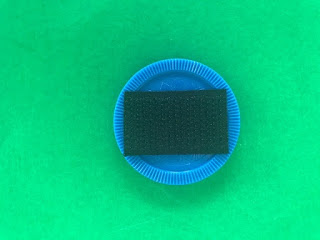
Stress Button
Materials: poker chip, Velcro (hook side), strong glue (E6000 is my favorite)


Directions: Glue a 1” piece of Velcro to the poker chip. Children can keep it in their pocket and rub it when they feel stressed or their hands are wiggly.


Twisty and Bendy
Materials: pipe cleaners or bendy straws


Directions: Give children a pipe cleaner to twist and manipulate.

Mindful Morning
See what happens when you start your day by having children breath, relax, and move.

 https://www.youtube.com/watch?v=xIq9TbaCokc


http://www.drjean.org/html/songs/Fidgets-index.php


Sunday, August 4, 2019

ACTIVE LEARNING #4 - YOGA YEAR

Make this A YOGA YEAR by incorporating some of these strategies. Yoga has health benefits, as well as learning benefits. "Mindfulness" is a buzz word now in education, and yoga might be just the trick to help children focus and relax.

Yoga Letters
There are several videos where yoga poses are related to the alphabet.  Wouldn't it be fun to incorporate yoga poses with phonics?  Here's a poster that you can download free:


Yoga Shapes
I loved the yoga poses for kids I found on this website:


https://www.kidsyogastories.com/shapes-yoga/

Monument Poses
Linda Smith shared this idea for tying in MONUMENT POSES with social studies standards.


Statue of Liberty – One arm up holding the torch and the other arm holding a book with feet apart.
                                                                            
Washington Monument – Feet together and arms up and with pointed fingers.
Honest Abe – Sitting position with arms out as if on a chair.
Mount Rushmore – Legs apart with chin under fist and switch sides.
The Arch – Arms in an arc twice overhead.
Liberty Bell – Arms down swinging side to side as you say, “Bong, bong, bong, crack!”

Superhero Yoga
And, wouldn’t your students love doing this Superhero Yoga that Charley Schillinger does with her students?
Superman – Do a plank.
Wonder Woman – Sit in an invisible chair.
Spiderman – Feet together and squat.
Batman – Arms out and one leg up.

Captain America -  Squat with legs apart and stretch arms over head and behind as if extending a shield.
Flash Lunges - One foot in front and lean forward and touch the floor.
Black Widow - Take turns stretching out your arms.
Iron Man Pose - Stand straight and look up towards the sky.

Here's here blog so you can learn more about it:


                             https://drive.google.com/file/d/0B1SnEagA4jljZWZjN205R0NXMGc/view?usp=sharing 


Morning Stretch
Several teachers have told me how my “Morning Stretch” really helps their students focus and get ready to start each day.
                                           
                             https://www.youtube.com/watch?v=xIq9TbaCokc



Here are some personal insights on yoga from my friend Drew Giles:

As a certified yoga instructor for both adults and kids, I have learned firsthand the benefits of teaching yoga and mindfulness to kids. Yoga is the coming together of mind (thoughts and feelings) and physical body. It’s a form of tactile and kinesthetic learning, which is the most basic child-centric learning style. Yoga can enable your students (and yourself!) to be more attentive and focused for learning. As a quick energizer, even one yoga pose done with purposeful breathing for just one minute will oxygenate the blood and lift the energy level of your students. Contrary to sceptics, yoga is not a religion. The practice of yoga was built on spirituality and the promotion of being kind and compassionate towards yourself and others. It is not a religion and does not judge religions.

Some of the benefits include: 
       Increases self-esteem
       Improves behavior, less discipline problems
       Invites a calm atmosphere
       Increases physical and mental awareness
       Provides opportunity for discovery and fun
       Improves motor development on both sides of the body
       Relieves stress, anxiety and anger
       Improves self-control

In a School Setting, yoga can also benefit educators by:
       Giving educators an alternate way to handle challenges in the classroom
       Giving educators a healthy activity to integrate with lesson plans
       Gives educators a way to blend exerciseinto their classes

Ready to incorporate yoga in your classroom?!  Here are a few fun tips.
·     Make the yoga class fun! Let go of thinking what a traditional yoga class may look like. A kids’ yoga class is all about moving in mindful and silly ways, learning how to pay attention to the breath and having a good time.
·     Follow the children’s lead. Most yoga poses were created to celebrate the world around us. Ask the kids to come up with poses for common animals or things they see in nature. 
·     Be flexible and come up with a thoughtful lesson plan.
·     Kids yoga should be voluntary; never force children to do yoga. If a few kids are not interested, simply allow them to watch the class do yoga.
·     Give clear and concise verbal and visual directions.

How to come up with a simple yoga lesson plan:
·      Start your yoga session by creating a safe and friendly environment
·     Focus on the breath, it’s a great way to transition from spending time on the playground or coming back from lunch.
·     Next, moving into warms ups – stretch side to side or stand in a tabletop position on hands and needs, arch the back like a cat with your head looking at your belly button, lower your belly, look up as you breathe in like a cow staring at the sky.
·     Focus on the body, you can do some sun salutations and build heat in your body. This allows your body to breakdown stagnant fluids and bring in new, nutrient-rich cells.
·     After 5-10 minutes of body work, move into a cool down, long stretches – see if you can touch your shins, ankles or toes! 
·     Finally, reap in the benefits by laying down motionless on your mat of the floor. This is an essential part of yoga and should never be skipped

A few last tips for success:
·     Learn and practice the lesson plan before you teach it.
·     Be prepared with extra activities. You never know which ideas may be a flop or a hit.
·     Start slow – when first introducing yoga to the class – offer a few, simple movements during a transition period and build the amount of time up to 45 minutes! Yes, it’s possible!
·     Be present and have a positive attitude. The kids will feed off your energy.
·     Appreciate and enjoy the kids where they are at. Always phrase assistance positively like "How about this way?" or "Let's do this!" 

There are a lot of great resources out there. Pinterest, Omazing Kids LLC, Kidding Around Yoga, Kids Yoga Stories are a few of my favorites. I did my kids yoga teaching certificate through Next Generation Yoga. Hint! They offer current educators a 50% discount! (Tell them Drew sent you!) 


Reach out to me if you have any questions.  andrewjgiles@gmail.com