photo 3am_dj_home_zps919fb85e.png photo 3am_dj_about_zps7cce4c75.png photo 3am_dj_website_zps73051235.png photo 3am_dj_ss_zps6759ec2a.png photo 3am_dj_bs_zps43e27832.png
Showing posts with label Visual Skills. Show all posts

Thursday, February 8, 2024

ART APPRECIATION

Aesthetic appreciation is probably not one of your standards, but I enjoyed introducing famous artists to my students. And the parents always got a kick out of their children talking about Picasso or Van Gogh. These strategies could easily be adapted to any teaching situation.

Art Appreciation 101

Each week choose a famous artist – anyone from Vermeer to Rockwell to Picasso. You can go online and download prints or check out books from the library. On Monday, give a little background about the artist and show one painting and give the title. Explain that artists always give a “name” or title to their work. “What title would you give this painting?” “What do you see?” “Why do you think the artist painted this?” “What do you think happened before?” “After?” “What do you think the people are saying?” “How does this painting make you feel?” “What materials did the artist use to create this picture?”
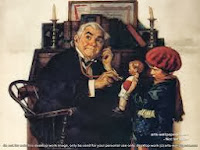


On Tuesday show another picture by the same artist. “Do you remember the title of yesterday’s painting? What do you think is the title of today’s painting?” Compare and contrast. “How are they alike?” “How are they different?”

Continue introducing a different painting every day.


*Use paintings to introduce new vocabulary words.
*Use paintings as springboards for writing stories or poems.
*Paintings can also be used for informative writing where children describe details.
*On Friday let children graph which painting they liked best. Why did you like that one? Is there one you did not like?

So, a funny thing happened because I was going to end this blog with an idea about Michelangelo. I was going to suggest you tell the children how he painted the ceiling of the Sistine Chapel on his back. Wouldn’t it be fun to tape paper under the table and let the children draw like Michelangelo? Well, guess what? That’s a myth. He actually stood up as he painted and then they attached the panels to the ceiling. You learn something new every day, don’t you?
*I still think it would be fun to tape paper to the bottom of a table and draw!


TIPS FOR ENCOURAGING YOUR CHILDREN TO EMBRACE THE ARTS!

Here's another great article from Laura Pearson that you can share with your families.

Photo via Pexels


Tips for Encouraging Your Children to Embrace the Arts


As parents, we strive to provide our children with well-rounded experiences that nurture their personal growth and development. One of the most powerful avenues for self-expression and imagination is the world of art. Whether it's painting, music, dance, or theater, the arts offer several benefits, including enhanced creativity, improved cognitive skills, and increased self-confidence. However, in today’s fast-paced world, it can be challenging to steer our children away from screens and towards artistic pursuits. That’s why Dr. Jean & Friends has compiled the following tips to help you encourage your children to embrace the arts.


Create a Multi-Purpose Arts and Crafts Room


Having a dedicated arts and crafts space in your home can go a long way toward fostering your child’s interest in the arts. A multi-purpose arts and crafts room provides an environment where your child can freely explore their creativity, focus on their projects, and immerse themselves in the artistic process. 


When designing your at-home art space, you’ll need to consider functional furniture and storage solutions, adequate lighting and ventilation, and child-friendly workspaces and seating options. You may also need to come up with some organizational solutions for art supplies, using storage bins, containers, or wall-mounted organizers to keep everything orderly. 


As you make further updates and modifications to your multi-purpose arts and crafts room, it's also essential to keep track of these changes for future reference. By documenting the improvements made, you can report them to an appraiser when selling your home in the future. Not only will this help showcase the added value of your property, but it can potentially secure a higher appraisal value by highlighting a dedicated creative space that might appeal to potential buyers.


Preserve and Share Your Children’s Artwork


Preserving your child’s artwork can provide your children with validation, recognition, and a sense of achievement that will encourage them to continue their artistic pursuits. Don’t have enough fridge space for all your children’s artwork? The Simplicity Habit suggests digitizing their creations to ensure they’re cherished for years to come. Scanning artwork is quick and convenient, especially if you want to share your children’s creations with friends and family. Just keep in mind that PDF files are ideal for sharing! Not only will digitizing your child’s artwork make it easier to share, but it will also safeguard their creations and preserve their artistic endeavors as lasting memories.


Explore Various Art Forms and Their Benefits


Exposing your children to various forms of art can help them discover their unique interests. For example, painting and drawing foster creativity, self-expression, and emotional development. Music is known for enhancing cognitive skills, memory, and emotional well-being. Dancing is great for boosting physical coordination and self-confidence, while crafting supports the development of fine motor skills and problem-solving abilities. Finally, acting or theater is fantastic for cultivating communication skills, empathy, and teamwork. 


By encouraging your children to have fun exploring various art forms, you’ll help them discover their strengths, express themselves, and find joy in the artistic journey. To get started, Artwork Archive suggests taking your children to art museums, plays, musical performances, and other displays of art in your community. When your child expresses interest in a specific art form, encourage them to give it a try! This might mean signing them up for private lessons, joining group classes, or simply purchasing some art supplies to use at home.


Encouraging your children to embrace the arts is a great way to nurture their creativity, boost their confidence, and enrich their overall development. By creating a dedicated arts and crafts room, digitizing your children’s artwork, and exposing your children to various art forms, you can help them discover their unique interests and support their artistic passions.


Whether you’re looking for educational tips or you just need a break, Dr. Jean & Friends is here to help! Feel free to post a reply if you have any questions


Tuesday, September 5, 2023

I HAD A BIRD

Most children love animals, but learning to recognize farm animals and their sounds can also help children get ready to read. In Early Childhood 101 you learned that children go from real and concrete to abstract. You also learned that children need to go from simple to complex. Take a look at how farm animals can nurture these pre-reading skills.

Visual Memory
Visual memory is critical for remembering letters, sight words, etc. If children can recognize farm animals they will develop the visual skills that will help them remember letters, numbers, shapes, etc.

Visual Discrimination
When children can recognize the difference between a horse and a cow, they'll be on the path for discriminating an "m" from an "n" and "the" from "that."

Auditory Discrimination
As children learn to tell the difference between sounds animals make like "baa baa" and "moo," they are developing auditory skills that will help them tell the difference between /b/ and /m/.

Auditory Memory
What sound does the duck make? Well, isn't that very similar to the sound that the letter "D" makes?


I Had a Bird
(Make signs for the animals as you sing.)
I had a bird, and the bird pleased me.
I fed my bird by yonder tree.
Bird went, “Tweedle dee dee.” (Open and close index finger and thumb by mouth.)

Cat - "meow, meow" (Pretend to stroke whiskers.)
Dog – “woof-woof” (Pretend to call your dog by patting your leg.)
Pig – “oink, oink” (Put palm of hand under chin and wave fingers.)
Duck – “quack, quack” (Open and close index and middle fingers and thumb by mouth.)
Cow – “moo-moo” (Extend thumb and little finger to look like horns and place on head.)

And here are some picture cards for the song.

http://bit.ly/DrJeanBirdPrintables


Old MacDonald
Sing along with me.
https://www.youtube.com/watch?v=Q5iDjbNN1Og

Saturday, October 1, 2022

GOING BATTY

But wait...there's more to do with those plastic rings!

Literacy
Children draw a spider web on a paper plate. Ask them to write a story about a spider on the back of the plate. 


Where's Batty?
Turn four or five cups upside down as shown and write sight words (letters, numbers, etc.) on them. Explain that "Batty" is going to hide under one of the cups. Have children close their eyes and “hide” the bat under one of the cups. Children take turns calling out a word and looking under that cup for the bat. The child who finds the bat gets the next turn to hide it. 


Arachnoids
What’s the difference between a spider and an insect? How many legs does a spider have? How many legs on 2 spiders? 3 spiders?

Bats
Is a bat a bird or a mammal? How can you find out? That’s right! Look on the internet and discover other interesting bat facts.

Graphic Organizers
Use attribute webs, Venn diagrams, T-charts, and other visual graphics to extend learning.
     
       
*As I was making these I realized how they align with higher level thinking skills. I know teachers are always looking for critical thinking strategies to use with little children, so how about this: WOULD YOU RATHER BE A SPIDER OR A BAT? WHY?

Sticky Drippy Spiders
Your students will also be delighted with this bottle. Pour about 1 cup of clear corn syrup in a plastic bottle. (The amount you need will depend on the size of the bottle. I really like to use larger round containers, but this was the only one I had on hand.) Add a few drops of red and yellow food coloring and swirl around to make orange. Add a few plastic spiders and watch them do their thing. (I used spider rings and cut the ring part off. I also put in a few bats.) 


I Spy Bottle! 
Several years ago we were eating in a Mexican restaurant in October and there were little Halloween toys in the spice bottles. It was interesting to watch adults, children, and families at every table trying to identify the objects. I guarantee this bottle will capture your students' interest! 


You will need a clear plastic bottle or jar, salt or sand, and small seasonal toys. Fill the container 2/3 full with salt or sand. Insert the toys and then screw on the top. Shake.
*How many objects can the children find?

*Pass around the bottle and let each child make a complete sentence starting with "I spy a..."
*Have each child repeat what the previous child says and then add something they see. First child: I spy a spider. Second child: I spy a spider and a bat. Third child: I spy a spider and a bat and a cat.

*Ask younger children to draw what they see in the bottle.

*Have older students make a list of everything they find in the bottle.

*Can they write a story using the objects in the bottle?

*Use the bottle to reward children who are working quietly or children who are resting quietly.

Ring Hunt
Children love to hunt for eggs at Easter, but they’ll also have fun hunting for these rings in the classroom or out on the playground.

Wednesday, September 29, 2021

GOING BATTY

Is a bat a bird or a mammal?  
Look on the internet you'll discover amazing bat facts.  
(I learned a few new things today at this site: https://nayturr.com.)

Where's Batty? 
Turn four or five cups upside down as shown and write sight words (letters, numbers, etc.) on them. Explain that "Batty" is going to hide under one of the cups. Have children close their eyes and “hide” the bat under one of the cups. Children take turns calling out a word and looking under that cup for the bat. The child who finds the bat gets the next turn to hide it. 


Graphic Organizers
Use attribute webs, Venn diagrams, T-charts, and other visual graphics to extend learning. 


Oral Language - Critical Thinking

WOULD YOU RATHER BE A SPIDER OR A BAT? WHY? 


Sticky Drippy Spiders

Your students will also be delighted with this bottle. Pour about 1 cup of clear corn syrup in a plastic bottle. (The amount you need will depend on the size of the bottle. I really like to use larger round containers, but this was the only one I had on hand.) Add a few drops of red and yellow food coloring and swirl around to make orange. Add a few plastic bats and spiders and watch them do their thing. (I cut the ring part off these.)


I Spy Bottle! 
Several years ago we were eating in a Mexican restaurant in October and there were little Halloween toys in the spice bottles. It was interesting to watch adults, children, and families at every table trying to identify the objects. I guarantee this bottle will capture your students' interest! 

                                       
You will need a clear plastic bottle or jar, salt or sand, and small seasonal toys. Fill the container 2/3 full with salt or sand. Insert the toys and then screw on the top. Shake.
*How many objects can the children find?

*Pass around the bottle and let each child make a complete sentence starting with "I spy a..." 

*Have each child repeat what the previous child says and then add something they see. First child: I spy a spider. Second child: I spy a spider and a bat. Third child: I spy a spider and a bat and a cat.

*Ask younger children to draw what they see in the bottle.

*Have older students make a list of everything they find in the bottle.

*Can they write a story using the objects in the bottle?

*Use the bottle to reward children who are working quietly or children who are resting quietly.


Ring Hunt
Children love to hunt for eggs at Easter, but they’ll also have fun hunting for plastic rings in the classroom or out on the playground.