photo 3am_dj_home_zps919fb85e.png photo 3am_dj_about_zps7cce4c75.png photo 3am_dj_website_zps73051235.png photo 3am_dj_ss_zps6759ec2a.png photo 3am_dj_bs_zps43e27832.png
Showing posts with label Comprehension. Show all posts

Wednesday, September 9, 2026

ARE YOU LISTENING?

When most teachers are asked what they look for in good students, they will respond, “I want students who can listen and follow directions.” As children spend more time in front of a screen, it’s important to slow down at the beginning of the school year to develop positive listening skills.

Turn it off! 
Turn off the big screen and get down at the children’s eye level and look at them.


Engage them! 
Get their attention with a finger play or a cheer.
*Teacher: Hocus pocus. (Pretend to wave a magic wand.)
Children: Everybody focus. (Children make imaginary goggles and put them around their eyes.)

Wait. 
Sit quietly and smile and wait.
*Close your eyes and pretend to wave a magic wand. Say, “Abracadabra. I will open my eyes when all my friends are sitting quietly.”

Lower your voice. 
By simply talking slowly with a quiet voice you will remind the children that it’s time to listen.
*Lip sinc a song or finger play like “Itsy Bitsy Spider.” Anything different or original will give children “pause.”

Busy Hands 
Give them something to do with their hands. Demonstrate how to cross your fingers and put your “listening hands” in your lap.


Pretzels and Applesauce 
If children are sitting on their bottoms they will be less likely to squirm around. Remind them that their legs should look like pretzels and they should make a bowl of applesauce with their hands.

Hint! I explain that the doctor said it’s important to sit with their legs like pretzels. If the “doctor says” they are more likely to respond. (This is true because orthopedists warn sitting on the knees can be harmful.)

Body Check. 
Remind children to listen with their eyes, ears, and bodies.
*Teacher: Are your eyes looking at me?
Children: Check!
Teacher: Are your ears ready to listen?
Children: Check!
Teacher: Are your bodies sitting quietly?
Children: Check!
Teacher: Are you ready to learn?
Children: Check!

Breathe 
Tell children to slowly breath in and out their noses. It’s surprising how this will calm them – and they won’t be able to talk!

Signs 
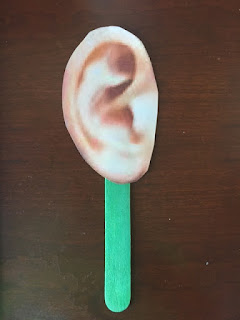
Run off a copy of a giant ear and tape it to a stick. When you hold up the ear children know they need to listen with big ears!

Repeat 
Practice giving directions ONE time. Invite another student to repeat what you have said.

Close Your Eyes 
Have children close their eyes as you give directions. Who can open their eyes and repeat what you said?

*Occasionally, have children close their eyes when you read a story. Can they make pictures in their brain?
*Invite children to sing songs or say nursery rhymes with their eyes closed.

Sunday, April 19, 2026

GOT A MINUTE?

If you've got 2 or 3 minutes after you've read a story or taught a lesson, these are some quick ways to assess learning and recall information. These ideas can be adapted for fiction or non-fiction literature, math, science, or social studies. All your students will be engaged and can reflect on what they've learned. That's a win/win!!

Sign Language
Teach children sign language for “yes” (make a fist and nod it up and down) and “no” (extend middle and index finger from thumb and open and close. As you ask questions, children respond with the appropriate sign.


Schema
Teach sign language for "connection" (thumbs make circles with index fingers and join like a chain). Discuss that when they connect what is in the book with what is in their brain they make a "schema." If they've made a "schema" they can show you with their hands. Call on random students to explain how they connected personally with the book.


Show Me
You will need two index cards. Write “yes” on one and “no” on the other. Children place these on the surface in front of them. As the teacher asks questions, the children hold up the appropriate word.

Envelope

Seal an envelope and cut it in half. Write “yes” on one side and “no” on the other side.

Stump the Teacher
Explain to the children that they get to be the teacher and ask you questions. Remind them to think about what they want to ask you before raising their hand. They must also know the answer to the question they are going to ask.

Wednesday, March 11, 2026

HAND OF KNOWLEDGE AND CHARACTER GRAPH

Need something new to replace a worksheet?


Hand of Thoughts 
Children trace around their hand and write a story element (Who, what, where, when, why) in each finger.

*Children write five things they learned from a science or social studies lesson.


Character Graph


Draw the outline of a body similar to the one shown. Label with “see,” “hear,” “think,” “say,” “feel,” “go.” After reading a story use the character graph for children to recall details.


Star of Knowledge


Make a large star and write a concept in the middle. Children add facts and details in each point of the star.

*Write a number in the middle and five facts that equal that number.

Thursday, November 13, 2025

THE SPOT

I titled this blog “The Spot” because a teacher told me she called her art center “The Spot.” I thought that was rather clever and perfect for these simple, open-ended projects. These creative activities are another way for children to SHOW WHAT YOU KNOW and can be tied into many different skills and standards.

*Remember, it’s the process and not the product. Children will be using problem-solving and small motor skills as they do these projects.

Pop Up Scene
Skills: comprehension, setting
Materials: construction paper, crayons, markers, scissors, glue, scrap box
Directions: Prepare pop-ups ahead of time by folding the construction paper in half. Cut two slits from the fold 3 ½” from each side and 2 ½” down as shown. Bend the tab in so when you open there will be a 3-dimensional tab. Have children close their eyes and make a picture from a book you have read in their brain. Have them draw the setting of the scene on the inside of the pop-up. Finally, have them draw the main character and glue it to the pop-up.
*Pop ups are perfect for habitat studies or scenes from history. 


Triarama
Skills: comprehension, setting, habitats
Materials: paper, scissors, crayons, markers, stapler
Directions: Cut the paper into a square by making a diagonal fold and cutting off the bottom. Children draw a scene on the top half of the square as shown. Cut in half-way on the diagonal crease, fold under, and staple to make a stand up scene. 


Pipe Cleaner People

Skills: book characters, famous people, retelling a story
Materials: pipe cleaners, scrap box, cloth, scissors, glue
Directions: Demonstrate how to make a stick person from two pipe cleaners. Children can then add a face, clothing, and other details. Let them retell a story with their pipe cleaner people.


Pinwheel
Skills: vocabulary words, spelling words, math facts, 4 facts learned, etc.
Materials: paper, scissors, hole punch, colored pencils, play dough
Directions: To make a square, fold a sheet of paper diagonally and cut off the end. Fold in half diagonally again. Cut in on diagonal lines stopping 1” from the center. Hole punch every other corner and in the middle. Insert holes on a pencil or straw and put a little play dough on the end. 


Sunday, November 2, 2025

TWO TURKEY TALES

Many things go in and out of style, but a good story is everlasting. I've got two of my favorite turkey tales for you today. I first heard Timmy Turkey about 40 years ago. In the original story grandmother turns Timmy into a color that "everyone will like" and you pull out a picture of a roasted turkey on a platter. I thought that might be a little too graphic for the kiddles, so I adapted it to be "kinder and gentler." The alliteration and oral language, as well as the sequencing skills, are perfect for engaging children. I guarantee they'll want to hear the story again and again.


Directions: Download the pattern and cut the turkey's body out of the front of a file folder. Insert colors of construction paper inside the file folder according to the story. (brown, blue, red, green, yellow, purple, and multi-color) Glue the words to the back of the folder so you can just read it and remove one sheet of paper at a time.

*Encourage the children to join in on the chorus!

TIMMY TURKEY
Once upon a time there was a beautiful brown turkey named Timmy. One day as he strutted down the road he heard a bluebird say:

Ha, ha, ha! He, he, he!
You’re the funniest turkey I ever did see.
Timmy Turkey replied: Oh, dear, oh, dear! Oh, me, oh, me!
Why am I the funniest turkey you ever did see?
The bluebird answered: You should be blue like me. It’s such a peaceful color.
So Timmy went home a dyed himself blue. (Remove the brown paper to reveal a blue turkey.)

The next day as Timmy strutted down the road he heard a red hen say:
Ha, ha, ha! He, he, he!
You’re the funniest turkey I ever did see.
Timmy replied: Oh, dear, oh, dear! Oh, me, oh, me!
Why am I the funniest turkey you ever did see?
The redbird answered: You should be red like me. It’s such a bright color.
So Timmy went home and dyed himself red. (Remove the blue paper to reveal a red turkey.)

The following day as Timmy was strutting down the road he heard a green frog croak:
Ha, ha, ha! He, he, he!
You’re the funniest turkey I ever did see?
Timmy sadly replied: Oh, dear, oh, dear! Oh, me, oh, me!
Why am I the funniest turkey you ever did see?
The frog croaked: You should be green like me. Green is the color of life!
So what do you think Timmy did? That’s right! He went home and dyed himself green.
(Remove the red paper to reveal a green turkey.)

Timmy was strutting down the road a beautiful shade of green the next day when he heard a yellow cat say: Ha, ha, ha! He, he, he!
You’re the funniest turkey I ever did see!
Timmy answered: Oh, dear, oh, dear! Oh, me, oh, me!
Why am I the funniest turkey you ever did see?
The cat laughed and said: Who ever heard of a green turkey?
You should be yellow like me. It’s such a happy color.
Yes, you’re right! Timmy went home that night and dyed himself yellow. (Remove the green paper to reveal a yellow turkey.)

The next day Timmy was strutting down the road again when he heard a purple parrot squawk:
Ha, ha, ha! He, he, he!
You’re the funniest turkey I ever did see!
Timmy said: Oh, dear, oh, dear! Oh, me, oh, me!
Why am I the funniest turkey you ever did see?
The parrot squawked: Yellow’s no color for a turkey.
You should be purple like me. Purple is the color of royalty.
Timmy went home immediately and dyed himself purple. (Remove the yellow sheet of paper to reveal the purple turkey.)

Once again Timmy was walking down the road when he heard his turkey friends laughing. They said: Ha, ha, ha! He, he, he!
You’re the funniest turkey we ever did see!
Timmy cried and said: Oh, dear, oh, dear! Oh, me, oh, me!
Why am I the funniest turkey you ever did see?
The other turkeys replied: Who ever heard of a purple turkey?
You look so silly!
Timmy slowly walked home and as he walked he thought to himself, “I have dyed myself blue, red, green, yellow, and purple, and I have pleased no one.” Then he got a brilliant idea! He got all the bottles of dye and made all his feathers different colors. (Remove the purple sheet of paper to reveal the turkey with the colorful feathers.)
The next day as Timmy Turkey strutted down the road everyone laughed and cheered!
Ha, ha, ha! He, he, he!
You’re the most beautiful turkey we ever did see!
And that’s why you always see turkeys with beautiful tail colors!


Timmy Turkey Download
https://drive.google.com/file/d/0B1SnEagA4jljdVlScjd2UlZzdGc/view?usp=sharing

Note! To make the final turnkey I cut little feathers and glued them to make a collage as shown.


OWATAGOOSIAM

This next story is a tell and draw story. After you do it several times invite the children to retell the story and draw along with you.


Once there was a little old lady who lived out in the country.

Her house was shaped like an oval. (head)

It had a little window that was a circle. (eye)

She had a garden beside her house. (beak)

And she planted seeds there.

Near her house there was a lake. (body)

And there was a little island in the lake. (wing)

Campers from the city would come and pitch tents by the lake. (feet)

They would walk to the lake to look at the fish in the water. (legs)

They would also watch the geese on the island.

But the people made so much noise they scared the geese and away they flew. (feathers)

The little old lady heard all the commotion and went down to the lake to see what was going on. (neck)

What do you think she saw?

When she got home she laughed and said, “OWA TAGOO SIAM!”

Say this faster and faster and it will sound like, “Oh, what a goose I am!”


Wednesday, February 26, 2025

BUT WAIT - THERE'S MORE!

Yes, indeed!  I've got a few more activities with envelopes.

Yes-No
This is great for a quick review. Have children write “yes” on one side with a green crayon and “no” on the other side with a red crayon. When you’ve got a few extra minutes have the class use these to answer simple questions. You can quickly gaze around the room and see who has the correct answer.


Question – Statement
Put a period on one side and a question mark on the other side. Children hold up the period if the teacher makes a statement. The question mark is held up for a question.


Fact – Opinion
Write “fact” on one side and “opinion” on the other side. As the teacher says facts and opinions, the children respond by holding up their envelope.

Book
Write riddles or questions on the front of envelopes. Put the answers on index cards and insert in the envelopes. Hole punch and bind several to make a book.


*At the beginning of the school year have children write descriptions about themselves on the outside of the envelope and then put their photo inside.


Pull and Read
Cut the left end off the envelope. Write children’s names on 9 ½” sentence strips. Glue their picture on the right side. Pull out one letter at a time for children to predict whose name it could be.


*Write sight words, vocabulary words, or sentences for children to pull and read.
*Write math equations with the answer at the end.

Word Puzzles
Write words (or children’s names) on the front of an envelope. Write the same word on a sentence strip and cut between the letters to make a puzzle. Place the letters in the envelope for the children to put together.


Skill Cards
Cut envelopes in half. Cut a ½ slit down each side and fold the top section down as shown. Use these to store flash cards of skills children need to work on such as letters, numbers, sight words, math facts, and so forth.


Note!  Here's the video I did if you want to see these activities demonstrated: 

Saturday, February 22, 2025

FAIRY TALE DAY

Tell a Fairy Tale Day is February 26th. What a perfect opportunity to help children “recognize different types of texts” and be entertained!


Some people think fairy tales are too violent for young children. And I would agree that some of them are a little twisted and dark. However, most of them aren’t any more violent than Saturday morning cartoons. The bottom line is children have enjoyed these stories for hundreds of years. Proof that a good story is a good story! There is usually a protagonist (good character) that struggles with an evil character. The best part of fairy tales is that they always end happily and good prevails. Many psychologists support fairy tales because they believe children will face “dragons” throughout their lives, and fairy tales give them hope, determination, and strength to defeat their problems.

I love this cartoon I found on the internet!


Let’s see how we can use “Tell a Fairy Tale Day” as a springboard for teaching this week.

Discussion
What is a fairy tale?
What do children know about fairy tales?
Are they fiction or non-fiction? Why?

Brainstorm
How many fairy tales can they name?
Make a list on the board as they call them out.
Go to the library and search for fairy tale books.

Comprehension
Get a storybook (without pictures) and have the children close their eyes as you read to them. Challenge them to make pictures in their brain.
*Stop before the end of the book and ask them to draw pictures of what they think will happen. Compare their predictions with what actually happened by reading the end of the book.

Read several different versions of the same fairy tale and compare and contrast.

Compare different illustrations of the same fairy tale.

Creative Activities
Let children dress up like their favorite character from a fairy tale. Encourage them to retell the story and explain why they chose that character.

Have children make puppets of favorite fairy tale characters from lunch bags, paper plates, or sticks.

Divide children into small groups and let them act out their favorite scene from a fairy tale.

I was a lucky little girl because I grew up before videos and iPads. I do remember my mother reading to us from this storybook every night. Look at the forward I found when I opened the book! 

This book is my house.
The door is open and I shall enter.

I shall be happy here because my house has so many windows and
my companions are men and women who love me.
Here I will find laughter, love, romance, beauty, and happiness.


OLDIES BUT GOODIES
 
Here's a new video of an "old" favorite from my childhood.  Thanks to my webmaster Alex May for his intelligence coupled with AI!


Monday, January 6, 2025

WHAT EVERY BRAIN WANTS!

Before going any further with active learning, I think it’s important to do a review of brain research. Some of you have administrators who “don’t get it.” Knowledge is power, and knowledge about how the brain learns will support movement in your classroom. You can easily search for this information on the internet, or you are welcome to use my “Top Ten Teaching Strategies Your Brain Wants You to Know About.” (Just so you don’t think I make this stuff up, I’ll cite some references at the end. The interesting thing about brain research is it’s primarily commonsense that you already know from being in the classroom!)

WHAT EVERY BRAIN WANTS!

1. Exercise – Exercise boosts brain power.

2. Attention – The brain likes novelty and challenges. It doesn’t pay attention to boring things.

3. Music and movement are the most convenient way to learn anything.

4. Stress – The brain needs a safe and secure environment.

5. Brain Growth Time – the brain needs quiet time for thinking and reflection.

6. Sensory stimulation – The more senses you activate, the more likely the message will get to the brain.

7. Memory – You have to repeat to remember.

8. The brain needs good nutrition, water, and plenty of rest.

9. Brain breaks need to be integrated into the day.
*Neuroscience suggests that our attention span is 10 minutes and instruction needs to be varied accordingly.

10.The only way to the head is through the heart. Take care of those relationships!

References
Hannaford, C. (2005). Smart moves: why learning is not all in your head.
Salt Lake City, UT: Great River Books.
Jensen, E. (2008). Brain-based learning. Del Mar, CA: Turning Point.
Medina, J. (2010), Brain rules. Seattle, WA: Pear Press.
Ratey, J. 2008). Spark. The revolutionary new science of exercise and the brain. New York: Little Brown and Company.
Schiller, P. (1999). Start smart. Beltsville, MD: Gryphon House.
Wolfe, P. (2001). Brain matters: translating research into classroom practice. Alexandria, VA: ASCD.


Active Learning #2

Books Up
You will need multiple copies of books for this game. Each child takes a book and looks for information that the teacher asks for.


For example: “What was the pirate’s name?” (Children hold up their books when they find the page that answers the question.)
“What do you call the front of a ship?” (Again, children look for the answer and hold up their books.)
“How did the pirate find the treasure?”
“What is the copyright date of the book?”

*This is also a great way to review for social studies or science tests.

Musical Books
Place chairs in a circle. Put a different book on each chair. Children get in the circle and march around to some music. When the music stops, each child sits in a chair and begins looking at the book in that chair. After a few minutes the teacher randomly asks, “What is your book about?” “Who is a character in your book?” “What is the setting of the book?” Children then replace books in chairs, stand, and begin marching to the music.

*This is a good way to spark interest in books and help children practice scanning for information.

Friday, June 21, 2024

TOTALLY READING


Standards will be a lot more fun with the songs on this recording. From phonics to phonological awareness to fluency to comprehension and vocabulary - let's get started!


1. Don’t You Just Love to Read?
2. Color Train
3. Deck the Room
4. Alphabet Antics

Phonemic Awareness
5. Nursery Rhyme Marathon
6. Rhythm Rhyme
7. Miss Mary Fill in the Blank
8. Pepperoni Pizza
9. Syllable Clap
10. Put Together Compounds
11. Word Families

Phonics
12. Happy Birthday Letters
13. Who Let the Letters Out? (Open version)
14. I Know an Old Man Who Swallowed a Letter
15. Letter Box
16. Letter Round-Up
17. Sweet Vowels
18. Slide and Blend
19. Diagraph Walk
20. The Tools of Good Readers

Fluency
21. Rapping Words
22. Lifetime Words
23. Punctuation Pays

Disc Two

Comprehension
1. Who? What? Where? When? Why?
2. It’s Fact and Fiction Time
3. Where Can You Go When You Need to Know?

Vocabulary
4. Parts of Speech Hoedown
5. Endings
6. We Can Do Opposites
7. Synonym Stomp,
8. O, Those Contractions

Writing
9. Ready to Write
10. Pencil Talk
11. Karate Writing
12. Writing Uppercase Letters
13. Rhyme to Write Lowercase Letters
14. Hi Ho Librario – Parts of a Book
15. Parts of a Letter
16. Good-Bye, Friends!

Instrumentals
17. Letter Round-Up
18. Deck the Room
19. Word Families
20. Pepperoni Pizza
21. Good-Bye Friends!
22. Nursery Rhyme Marathon
23. Synonym Stomp
24. Happy Birthday Letters
25. Rhythm Rhyme
26. We Can Do Opposites

Wednesday, April 3, 2024

POETRY = READING SKILLS


Are you (and your students) tired of skills, skills, skills? Well, take a look how poetry can "camouflage" those skills in a meaningful and engaging way.


Syllables
After reading a poem with your students, read it again clapping the number of syllables in each word. You could also snap, stomp, hop or make other movements for the syllables.


Rhyming Words
Following a reading, mention that you heard words that sounded alike at the end. Repeat two of the words that rhyme. Let’s read the poem again and see if you can listen for other words that rhyme. As children find words that rhyme, highlight them on the poem with highlighting markers or tape. Write sets of words that rhyme on the board. Underline the letters that are the same. Have children think of other words that have the same sound at the end. Write the rhyming words on the board as the children call them out.


Alliteration
Read poems that have strong alliteration. Ask children to identify words with the same beginning sound. Highlight the words in the poem or list them on the board. Can children add other words to the list that begin with the same sound?


Sound Scramble


Just for fun, c

Decoding Skills
As you come to unknown words in poems, stop and model how to sound them out by blending the sounds.


Predicting
Before reading a poem, encourage the children to look at the title or illustrations and predict what the poem might be about.


High Frequency Words
Highlight word wall words that are in poems. Pass out flash cards with words and challenge children to match them with words in the poem.


Parts of Speech
Ask children to identify verbs, nouns, and other parts of speech in poetry.


Comprehension
After reading a poem, ask appropriate questions that will develop comprehension skills. Is there a main character? What was the setting? When did the poem take place? What happened at the beginning? Middle? End? Was there a problem or resolution? What will happen next? What was the main idea?


Genres of Literature
Help children recognize different types of literature through poetry. Could the poem really happen or is it pretend? Poems and books that are pretend are called “fiction” and those that are real are called “non-fiction.” Is the poem humorous or serious? Does it tell a story (epic) or is it just a rhyme?


Mental Imagery
Being able to visualize what is happening in a story, poem, or text is a strategy for improving comprehension. Have children close their eyes as you read different poems to them. Encourage the children to make a picture in their brains to go along with what they hear. After listening to the poem, encourage the children to discuss the pictures that they made in their heads.


A Real Poem for your Pocket
Cut a pocket off an old pair of pants and staple it to a bulletin board. Store favorite poems in the pocket and use them to reinforce your reading skills.

Monday, February 26, 2024

FAIRY TALE DAY


Tell a Fairy Tale Day is February 26th, but any day is perfect for a fairy tale!
Some people think fairy tales are too violent for young children. And I would agree that some of them are a little twisted and dark. However, most of them aren’t any more violent than Saturday morning cartoons. The bottom line is children have enjoyed these stories for hundreds of years. Proof that a good story is a good story! There is usually a protagonist (good character) that struggles with an evil character. The best part of fairy tales is that they always end happily and good prevails. Many psychologists support fairy tales because they believe children will face “dragons” throughout their lives, and fairy tales give them hope, determination, and strength to defeat their problems.
Let’s see how we can use “Tell a Fairy Tale Day” as a springboard for teaching different types of texts.

Discussion
What is a fairy tale?
What do children know about fairy tales?
Are they fiction or non-fiction? Why?

Brainstorm
How many fairy tales can they name?
Make a list on the board as they call them out.
Go to the library and search for fairy tale books.

Comprehension
Get a storybook (without pictures) and have the children close their eyes as you read to them. Challenge them to make pictures in their brain.
*Stop before the end of the book and ask them to draw pictures of what they think will happen. Compare their predictions with what actually happened by reading the end of the book.
*Read several different versions of the same fairy tale and compare and contrast.
*Compare different illustrations of the same fairy tale.

Creative Activities
Let children dress up like their favorite character from a fairy tale. Encourage them to retell the story and explain why they chose that character.
*Have children make puppets of favorite fairy tale characters from lunch bags, paper plates, or sticks.
*Divide children into small groups and let them act out their favorite scene from a fairy tale.

I was a lucky little girl because I grew up before videos and iPads. I do remember my mother reading to us from this storybook every night. Look at the forward I found when I opened the book! 

This book is my house.
The door is open and I shall enter.
I shall be happy here because my house has so many windows and
my companions are men and women who love me.
Here I will find laughter, love, romance, beauty, and happiness.

Sunday, February 11, 2024

HOW ABOUT A THINK PAD?

These THINK PADS are easy to make and can be used in multiple ways.

Stack 6 sheets of paper on top of each other. Staple each of the corners as shown. Cut vertically and horizontally in half to make four “think pads.” Make several dozen of these. To begin give one to each child. Keep the others in the writing center. Explain that if they do a lot of thinking and writing they are welcome to get another pad.


Notes
Children can use these to take notes as they listen to a book or watch a video. They can draw, write words, or simply scribble. Encourage them by commenting, “You’re taking notes just like the big kids do in high school and college! Isn’t it fun to know how to take notes to help you remember?” 


What can you find out?

Collect non-fiction books about a topic that you will be studying in your class. Place the books on a table along with think pads, paper, and pencils. Let two children work together and take notes to look in the books and see what they can find out (learn) about the topic.


Written Response
Older students can use think pads to write the answer to math problems or other questions.


Brainstorm
If children finish their work early they can brainstorm or doodle on their think pads.


Sticky Notes
Children also love sticky notes to write reminders to themselves, notes to friends, etc.
Note! Sometimes physicians or dentists will donate these to your class.