photo 3am_dj_home_zps919fb85e.png photo 3am_dj_about_zps7cce4c75.png photo 3am_dj_website_zps73051235.png photo 3am_dj_ss_zps6759ec2a.png photo 3am_dj_bs_zps43e27832.png

Monday, January 20, 2025

ACTIVE COUNTING

Exercise those bodies and those brains with these counting games.

Karate Chop Count
Feet out, knees bent, karate chop with your right hand and then your left as you count by ones.
*Do leg curls and chops as you count by 5’s to 100
*Kick front and back as you count by 10’s to 200.
*Wax on, wax off as you count by 100’s to 1000. 

*You can also karate chop spelling words and word wall words. Chop with right hand as you say a letter and then chop with the left hand as you say a letter. Hands folded together and bow as you say the word.


Pump Up to 100
Pretend to hold weights as you count.
1-20 - bicep curls (Elbows in, pretend to hold weights in fists with palms up as you bring forearms up and down.)
21-40 - for overhead press (Fists face forwards as you start at your shoulders and push the weights overhead.)
41-60 – side raises (Elbows at 90% angles as you raise them out to the side.)
61-80 – upright rows (Fists together close to the body and raise elbows out and up until fists are at your heart.)
81-100 – frontal raises - (Fists together and arms stiff as you raise them in front of your body to eye level.)
Whew! (Wipe brow!!!)

*Let children get an imaginary jump rope and jump as they count to 100.


Silly Voice Counting
Have children count using different voices. For example: robot, opera, pirate, monster, teacher, cowboy, monkey, surprised, worried, silly, excited, happy, sad, mad, confused, whisper, sleepy, and scared.

*Add holiday or seasonal voices like a scarecrow (reads words in a scary voice), ghost (students say “boo” after each word), witch (read with a cackle while stirring a pot), Rudolph (students flash their hands like blinking lights as they read the word), Frosty (students shiver as they read the words) or Santa (students must say the words three times in a “ho,ho,ho” style), or the Easter bunny (students hop after saying each word).

*Count each "ten" with a different voice.


Numbo
Draw the face of a worm (Numbo) on a circle or paper plate. Cut 10-15 circles out of construction paper and number 1-10 or 1-25. Pass the circles out to the children. Place Numbo’s head on the floor and ask the children to help him grow. The child with “1” puts her circle down, followed by “2,” “3,” etc. Ask questions, such as: “What number comes between 7 and 9? What comes before 13? What is 2 more than 4?


Tens and Ones(Ginger McCormick)
(Cadence – Children repeat each line.)
I don’t know but I’ve been told. (Repeat)
Tens are tall and ones are small.
First you count up all the tens.
Then add the ones to the end.

*Pick students to be tens and stand tall. Pick students to be ones and sit criss-cross in front of the tens. Count the tall students by tens. Count the students sitting on the floor by one.

Counting by Two’s (Melanie Hope)
Have students identify body parts what come in sets of two. Stand and county by 2’s as you touch the following body parts:
2 – hands on eyes
4 – hands on ears
6 – hands on elbows
8 – knees
10 – feet
12 – eyes
14 – ears….
You’ll be able to count to 100 by 2’s before you know it!

Whisper Skip Count
One (Touch head as you whisper “one.”)
Two (Touch shoulders and say “two.”)
Three (Touch head and whisper.)
Four (Touch shoulders and say “four.”)
Five (Touch head and whisper.)
Six (Touch shoulders and say “six.”)
Seven (Touch head and whisper.)
Eight (Touch shoulders and say, “eight.”)
Nine (Touch head and whisper.)
Ten (Touch shoulders as you say “ten.”)

*To count by 3’s, touch shoulders and whisper “one,” touch shoulders and whisper “two,” touch waist and say “three.”
*To count by 4’s, whisper on 1-3 and touch knees as you say “four.”
*To count by 5’s, whisper on 1-4 and touch toes as you say “five.”

Shoelace Counting
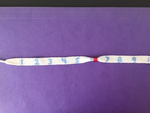
Write numerals 1-20 on a cotton shoelace with a fabric marker. Slide a bead on the shoelace and move it up and down as you count.
*What’s one more than___? Two less than___?

Sunday, January 19, 2025

ACTIVE LISTENING

Good listeners are ACTIVE listeners. These are some simple strategies that can engage your students as they listen to instructions, books, or videos.

Schema
Teach sign language for "connection" (thumbs make circles with index fingers and join like a chain). Discuss that when they connect what is in the book with what is in their brain they make a "schema." If they've made a "schema" they can show you with their hands. Call on random students to explain how they connected personally with the book.


Me Too!
Teach children sign language for “me too!” (Extend thumb and pinky finger and place the middle three fingers on your palm as you point your thumb toward your chest.) Tell children when you are reading a book they can use the sign to let you know they’ve had a similar experience.


Don’t Understand
Children can use this sign when something is not clear to them. Put your index finger next to your brain and wiggle it like you are turning on a light as you shake your head “no.”

Understand
Pretend to scratch your brain.


Big Ears
Download a picture of a big ear and glue it to a craft stick. Remind the children when you hold up the ear, they need to use their "big ears" to listen.


Listening Chant (Tune: “If You’re Happy and You Know it”)
If you’re listening to me do like this- (make a face for children to imitate).
If you’re listening to me do like this-(make another silly motion for children to copy).
If you’re listening to me then be quiet as can be.
If you’re listening to me ____(line up, get ready for a story, get out your books, or whatever you want them to do).

Saturday, January 18, 2025

BEADS FOR BRAINS

Don’t you just love tools that you can use in lots of different ways? It’s like my kitchen scissors. I couldn’t live without them to open packages, snip herbs, trim meat, cut veggies, etc. Just like tools in your kitchen, I have some handy math tools that you will be able to use in creating multi-sensory experiences in a variety of ways with a variety of skill levels.

Brain Beads
Brain beads are a simple tool that can be used to reinforce counting in a concrete way. You will need pipe cleaners and pony beads. Knot one end of the pipe cleaner. String on 10 beads. Knot the other end.


Counting

Slide the beads to the left and then move them over one at a time to the right as you count.


*Flip the pipe cleaner over so the beads are on the left again and count from 11-20. Continue flipping the pipe cleaner and counting higher.

*Slide all the beads at once and count “ten.” Flip it over and slide all the beads as you say “twenty.” Continue counting by ten’s by sliding all ten beads at one time.

Friends of Ten
How many ways can you make ten?

Number Stories
Slide beads to demonstrate number stories.

Words–
Slowly say a short sentence. Have children follow you as you model moving a bead to the right for each word.
Hint! Always demonstrate and model before asking children to do these activities independently.

Syllables– Move beads for syllables you hear in words.

Phonemes– Say words slowly stretching out the sounds. Slide a bead for each phoneme. Say the word and slide the beads together to the left.

Talking Beads- You can also use the beads to guide sharing time. Children can slide a bead over for every word that describes their object. Then they can slide a bead for where they got it. Finally, they can slide a bead as they say what it is.

Friday, January 17, 2025

KID INVENTORS' DAY


Television. Water skis. Earmuffs. The Popsicle. 

What do they have in common? 

All were invented by kids!

500,000 children and teens invent gadgets and games each year. 
These innovations help make our lives easier – and more fun! 

Celebrate the ingenuity and value of young brainstormers on
KID INVENTORS’ DAY!

kidinventorsday.com

Planning an Inventor's Day would be great fun, but encouraging children to be creative and think outside the box is important every day!


Junk Box – Recycle cardboard rollers, bubble wrap, catalogs, junk mail, bottle caps, etc. for children to create into artwork, games, inventions, and toys.

Brainstorm – Provide children with opportunities to brainstorm in groups and independently. Use attribute webs, time lines, shapes, and other graphic organizers.

Literature – Creative writing enhances literacy skills as well as original thoughts. Children can write stories, poems, songs, plays, and so forth.

Learning Centers – Blocks, construction toys, play dough, puppets, art media, and musical instruments all provide children with the opportunity to explore their talents and interests.

Outdoor Explorations – Nature is the perfect prescription to clear the mind and open creative thought. Children need to spend as much time as possible on the playground, at the park, or in their own backyard.

Assessment Show and Tell
– Instead of filling in bubbles, challenge children to demonstrate what they have learned in a creative way. They can sing a song, dress up, cook something, make a mural, etc.

Thursday, January 16, 2025

ACTIVE LEARNING VOCABULARY

Vocabulary words will "stick" in children's brains with these strategies. They're also good for learning a second language.

Dramatize
When introducing new words invite children to dramatize what the words mean. They can dramatize with their faces, hands, or whole bodies.


EXHILARATED!


Pantomime
Children pantomime vocabulary words as classmates try and guess their word.


Sign Language
Learn how to sign vocabulary words by looking at videos online.


Brochure
Tri-fold a sheet of paper to make a brochure. Children write the word on the top section, the definition in the middle, and illustrate it or write a sentence in the bottom section.


Antonym Actions
Let children act out words that are opposite what the teacher says. For example:
Teacher says “hot.”
Children respond by shivering.
Teacher says “loud.”
Children respond by being quiet.

Synonyms
Call out synonyms for the students to interpret. For example:

Happy – delighted – joyful - gay - pleased
Angry – mad – furious
Sleepy – tired – fatigued

Wednesday, January 15, 2025

PUNCTUATION WITH A PUNCH!

These movements will make learning about punctuation more fun!

Capital
Capital letters are at the beginning of a sentence. They tell you to “GO.” Have children stand every time you come to a capital letter.

Period
Periods tell you when to stop. Sit down when you come to a period.

Whoa!
Sit like cowboys and cowgirls by straddling chairs. When you come to a period, children pretend to pull back on the reins as they say, “Whoa!”

Question Mark
When you come to a question mark, put your index finger on your head and shrug your shoulders.

Exclamation Point
Put your fist in the air for an exclamation mark.

Comma
Hop for a comma.

Quotations
Two fingers in the air and wiggle.

*Let children come up with their own movements for punctuation.


ABC?
Say the abc’s according to the punctuation marks.
A B C?
D E F G.
H I J! K L M N.
O P Q?
R S T!
U V W.
X Y Z!

*Write nursery rhymes and other familiar poems with unusual punctuation.

Punctuation Detectives
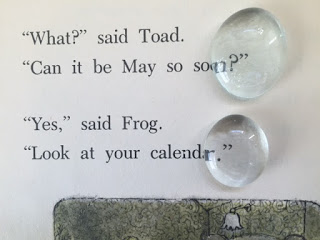
Use glass pebbles to highlight punctuation.


Twist the end of a pipe cleaner and use to find punctuation marks.

Tuesday, January 14, 2025

SHOW ME NUMBERS AND LETTERS

This is a “quickie” activity that you can use when you’ve got five minutes before lunch or at the end of the day. It works with a large group or small group to reinforce skills.

Show Me Math
Make a set of “show me” cards for each child by writing the numerals 0-10 on 3” squares of heavy cardstock. Have children store these cards in a zip bag in their desk. When you have a few extra minutes, ask the children to get their cards and arrange them on the floor or table in numerical order from 0-10. Use the cards for some of the games below.
*Adapt the number of cards to the ability of your students.

How Many?
The teacher claps, snaps, or stomps a set. Children listen and then hold up the correct number.

*Show me how many toes you have? How many thumbs at your table? Show me how many days in the week?

*Make a set with felt pieces on the flannel board. Show me how many.

Mystery Number

I’m thinking of a number between 4 and 6. Show me. I’m thinking of a number two more than seven. Show me.

Math Facts
4 plus 2. Show me.
9 minus 3. Show me.

Number Stories

I had four pennies. I found three more. Show me how many I have in all.
*Let children make up math stories for their friends.

Fact Families
Call out numbers in a fact family. Can children write the equations in that fact family?

Number Bonds

How many ways can you make seven?

Base Ten
Put 3 in the tens spot and two in the ones spot. What’s the number?

Odd and Even
Sort the odd and even numbers.

Slap Happy Math
Children get a partner and place one set of show me cards on the floor between them. The teacher calls out different math problems. The first child to slap the correct numeral gets a point.

Hint! Put a line on the bottom of each card to help the children identify the direction they should go.

Here's where you can download number cards.

https://www.eduplace.com/math/mthexp/g1/visual/pdf/vs_g1_19.pdf


Show Me Reading

Make cards for letters and sounds you want to reinforce.

CVC Words
Call out individual sounds for children to select. Blend to say the word.

Onset and Rime
Make a rime and then add different “onsets” to put in front of the rime to make words.

Singular and Plural
Children make nouns with letters and then add “s.”

Note! You can make a frame to stand your letters up in similar to the one in Scrabble games.