photo 3am_dj_home_zps919fb85e.png photo 3am_dj_about_zps7cce4c75.png photo 3am_dj_website_zps73051235.png photo 3am_dj_ss_zps6759ec2a.png photo 3am_dj_bs_zps43e27832.png
Showing posts with label STEM. Show all posts

Monday, May 11, 2026

LET'S EXPERIMENT!

I KNOW A SCIENTIST - AND YOU CAN BE ONE, TOO!


Download all the activity cards for most recent blog posts here:


You'll be amazed by these experiments you can do with simple materials around your home.

Pepper Scatter

Shiny Pennies

Happy Face Balloon

Magnetic Mouse

What’s Up?

Funnel Phone

Growing, Growing

Feely Socks


A pdf file with all of these cards is available with the link above.


.

Friday, April 17, 2026

ARBOR DAY

April 24th is Arbor Day, but every day we should look outside and appreciate trees. These websites have some great information and activities for kids at school or at home.

https://www.arborday.org/kids/

https://www.arborday.org/celebrate/educational-resources.cfm

Brainstorm
Divide children into small groups and let them brainstorm all the products we get from trees.

*THE GIVING TREE by Shel Silverstein is a wonderful book to share, but my little kids always wanted to know, "Why did he have to get old?" (I wonder the same thing sometimes!!!)


TREEmendous Writing
Let children look out the window or sit under a tree and write descriptions. Think about the colors in the tree. Are there animals in the tree? What are the parts of a tree?
*For creative writing, ask children to complete this sentence: If I were a tree I would...


Tree Identification
Download information about leaves similar to the one below.

Take a nature walk and challenge the children to identify the trees on the school grounds.

How are leaves different?

How does the bark on trees vary?

*Hint! Give children a clipboard and let them draw their favorite tree.

*Let them do rubbings of leaves from different trees and compare.


Plant a Tree
Contact your local cooperative extension service, Forestry Services, or National Arbor Day Foundation for free seedlings. Discuss what your tree will need to thrive. Prepare the soil, water your tree, and record its growth.


Vocabulary
What's a deciduous tree? What's an evergreen tree?
Sing this song to the tune of "London Bridge" to help your students learn how about deciduous and evergreen trees.

If your leaves fall to the ground,
to the ground,
to the ground.
If your leaves fall to the ground
You're deciduous.
If your leaves stay green all year,
green all year,
green all year.
If your leaves stay green all year,
You're an evergreen.


ADOPT A TREE

A Louisiana teacher shared this sweet story about what happened when she let her class "adopt" a special tree on the playground. They named their tree Maggie and hugged her, drew pictures of her in different seasons, read stories and sang songs under her, wrote descriptions...you get the idea. One day as a group of children were playing, one child snapped a branch off another tree. A little boy started to cry because he said, "You're hurting Maggie's friend." I'm not sure "adopting a tree" was in their state standards, but it's a beautiful story about instilling a love of nature in children. And, it's so easy just to take a moment every now and then to focus on trees and all the living things this time of year.


A SPECIAL NEW VIDEO ABOUT FRUIT TREES FOR ARBOR DAY!


Thursday, April 16, 2026

RECYCLE ME - PLEASE!

You know all those cardboard food boxes you throw away? Well, here's a great opportunity to give them a second life, teach your children to recycle, and make some cool materials for your classroom. Send a note asking families to save their cardboard food boxes for a week and then let the fun begin!

Cardboard Castle – Let children use masking tape to create a castle or other play sculpture.

What's for Breakfast? Book - Each child chooses the front of their favorite cereal box. They can write original sentences or fill in the blank "(Child's name) likes (cereal)."


Puzzles – Cut box fronts into puzzle shapes. Store in zip bags. For younger children use two like boxes. Cut one up and let them place the pieces on the second box.


Fronts and Backs
– Cut front and back panels off of boxes. Mix them up and then ask the children to match up the ones that go together.

*Play a memory game where you place the fronts and backs face down on the floor. Children try to match up pairs.

Stencils and Templates – Cut geometric shapes out of box fronts. Children can trace these with colored pencils, crayons, or markers.
*Cut seasonal shapes or objects that relate to a unit of study for the children to trace.


Sewing Cards – Punch holes around the sides of boxes. Children can sew these with yarn, string, or old shoelaces.


Weaving – Cut notches around the sides of boxes and let children weave through these with yarn.

Fractions – Give each child the front panel off a box. Can you cut it in half? Fourths? Eights?

Math – Have children sort the boxes by product, size, etc. Graph favorite cereals, cookies, crackers, etc.

How about a free song download and flip book about recycling?

http://www.drjean.org/html/monthly_act/act_2015/04_Apr_css/index.html


What Will I Be When They Recycle Me?
(Tune: “Oh, Dear, What Can the Matter Be?”)
What will I be when they recycle me? (Roll hands in a circle.)
What will I be when they recycle me?
I’ll come back to life—you will see! (Clap your hands and then point your finger.)

I am an empty soda can (Pretend to hold a soda can in front of you.)
Made of precious aluminum.
I can save lots of energy
If you will recycle me. (Roll hands in a circle.)

I’m an old bottle of plastic (Pretend to hold a plastic bottle.)
But I could be fantastic!
Toys, pipes, car bumpers, and much more—
That’s what my plastic is for. (Roll hands in a circle.)

A pile of used boxes and papers we (Make an invisible square in the air.)
Come from the precious wood of trees.
Recycled we’ll be as good as new (Roll hands in a circle.)
And save some other trees, too.

I am a fine jar made of glass— (Cup hands to make a bowl.)
Please don’t treat me like plain old trash! (Shake head “no.”)
I’ll make new jars again and again
Recycle me—yes you can! (Roll hands in a circle.)

Though we may look like old used stuff, (Open palms.)
Stop, wait! Please don’t give up on us! (Make sign language for “stop.”)
Think of the great possibilities— (Put index finger on your head and tap.)
Recycle us, set us free! (Roll hands in a circle and then throw up hands in the air.)

Wednesday, April 15, 2026

LITTER PATROL

One of the best ways to be on the "green team" is to keep the earth beautiful by picking up trash. There's nothing more frustrating to me than to see trash along the road, but maybe we can improve things in the future by getting our students to join the LITTER PATROL!

Litter Patrol
Well, here we go, (Clap and snap fingers to the beat.)
We’re on the litter patrol.
We’re going to work all day
To put the trash away.
The planet earth, you see
Is our habitat.
We’re going to clean it up,
Well, how about that!


Litter Bags
Ask your students to bring in an empty cereal box or cardboard food box.
1. Cut the tops off the boxes.
2. Punch a hole in each short side.
3. Tie on a piece of string. Use these to collect trash or have the children place these in their cars.


Earth Day Project
Plan a community project where parents and children come together to clean up a park or natural area in your community. Make sure you have gloves and trash bags for the participants.


Trash Snack
How about a “trash snack”? You will need ice cream cones, Gold Fish crackers, Cheerios, pretzel sticks, and peanuts. Take 4 lunch sacks and put a different item in each sack. Write “old tires” on the sack with Cheerios, write "dead fish" on the sack with the crackers, “sticks” on the sack with pretzel sticks, and “stones” on the sack with peanuts. Take a large bowl and make up a story about collecting trash. As you name the different items, invite different children to dump the contents in the bowl. Stir with a large spoon and then serve the “trash” in trashcans (ice cream cones). The cool thing about this snack is that there is NO trash when the children have finished eating!

Hint! Substitute raisins for peanuts if you have students with food allergies. You can also use sunflower seeds or other snack foods.

Tuesday, April 14, 2026

EARTH DAY

Every day should be “Earth Day,” but is officially celebrated every April 22nd. It’s always important to think about our planet and get kids interested in protecting their environment. Your students are going to be so proud of this “Earth Book” when they take it home to share with their families. 


Materials: 8” squares of the following colors:
2 orange, 1 green, 1 blue, 1 yellow, 1 brown, 1 purple

Directions:

1. Use the link at the bottom to cut out the different pages for the book.
2. To assemble the book put down the solid orange, then the purple, brown, yellow, blue, green, and end with the orange with the circle cut out.
3. Staple on the left.
4. Younger children can “read” the book by describing the colors of the earth on each page. Older students can write simple descriptive sentences on each page.
5. On the last page invite children to write or draw how they can help protect the earth.

Hint! Your students will be overwhelmed to do this all in one day, so stretch this project out by asking them to just do 2 or 3 pages a day.

Here's a pdf with the patterns.
https://drive.google.com/file/d/0B1SnEagA4jljNnFFV0VhbU5YcEk/view?usp=sharing


Earth Day Necklace
1. Give children a small ball of blue polymer clay.
2. Give them a small piece of green clay and tell them to break it into 4 or 5 little pieces.
3. Attach the green pieces to the blue ball and roll in your hands.
4. Make a hole in the center with the nail.
5. Bake in a 275 oven for 12-15 minutes.
6. String the earth ball on yarn or string to make a necklace.


Nature’s Colors
1. Give children assorted pony beads and a piece of string or yarn 20-24” long.
2. Explain that they can select a bead to represent the different things in nature that they appreciate. For example, a blue bead might remind them of the ocean, or a red bead might remind them of a cardinal. (Hint! Limit one bead per color. To make it easier to string wrap a small piece of tape around the end of the yarn.)
3. Tie the ends of the string together to make a necklace.
*Older students could write sentences about each color.
4. Ask children to describe their necklaces and explain what each color represents.


Monday, April 13, 2026

GREEN TEAM

Who wouldn't want to be a super hero on the green team? How about some membership cards?

The Green Team (Tune: “When Johnny Comes Marching Home”)
We are on the Green Team. (March in place as you swing your arms.)
Hoorah! Hoorah! (Fist in air as if cheering.)
We can recycle every day. (March in place as you roll your arms around.)
Hoorah! Hoorah! (Fist in air as if cheering.)
Aluminum, glass, tin, (March in place.)
Put paper and cans in recycle bins. (March in place.)
Join the Green Team, (March in place.)
Defend the earth and keep it clean. (Put both fists in the air like a hero.)

We are on the Green Team. Hoorah! Hoorah!
We can reduce what we use. Hoorah! Hoorah!
Turn off water and the lights.
Walk, take a bus, or ride your bike.
Join the Green Team.
Defend the earth and keep it clean.

We are on the Green Team. Hoorah! Hoorah!
We can reuse many things. Hoorah! Hoorah!
Share old toys and old clothes, too.
Give away what you don't use.
Join the Green Team,
Defend the earth and keep it clean.

We are on the Green Team. Hoorah! Hoorah!
We can keep our planet clean. Hoorah! Hoorah!
Pick up all the trash you see.
Protect wildlife and plant new trees.
Join the Green Team.
Defend the earth and keep it clean.

*Put out scrap materials in the art center and encourage children to make “Green Team” badges. You can also let them decorate sheets of newspaper and staple them around their necks to make “Super Green Hero” capes. Let children dramatize what they would do if they were a “Super Green Hero.”

*Make a language experience chart of children’s suggestions for what it means to be on the “Green Team.” Have children dip their thumb in green paint and “sign” it on the list to signify that they are going to join the “Green Team.”


*Walk around the school and encourage the children to draw pictures or write suggestions for conserving energy and making the learning environment “green.” Compile results and ask the principal to visit your class and discuss improvements that can be made.

*Make a naturalist kit by recycling a detergent box or similar container with a handle. Make binoculars by cutting a cardboard paper towel roll in half. Tape the halves together and hole punch at the top. Tie on a piece of string so children can easily take the binoculars on and off their heads. Add a magnifying glass, field guide, tweezers, film canister (for collecting specimens), paper, pencil, etc. Talk about what naturalists do. Can you be a naturalist? Divide children up into groups of two and let them take turns playing “naturalist” on the playground.


Wednesday, April 1, 2026

ENGINEERS

Engineering is the design process used to solve problems and build things. Children are natural engineers as they play with blocks and Legos, create things in art, or build a fort outside with their friends. Here are a few other activities that will give your little “engineers” a job. 


Engineer Planning Book
Write “Engineer Planning Book” on the cover of the notebook. Explain that engineers draw a plan and then try to build their design. Place the book in the block center along with a pencil and encourage children to draw their idea and then try to build it.


Cups and Plates
Little guys to big kids will be challenged to build structures with simple materials like plates and cups.


Lunch Bag City
Buildings and houses from lunch bags are fun to construct and use to create a community, reproduce a scene from a book, or design a city of the future. Take 2 lunch bags and open them up. Fill one with crushed newspaper. Insert the second bag on top and then decorate with markers, construction paper scraps, etc.


Friday, March 27, 2026

"SEEDY" STUFF

All over the country people are planting their gardens. There's still a little magic when a seed begins to sprout. I remember eating a popsicle with my older cousins when I was a preschooler. They told me if I dug a hole and put my popsicle in it then it would grow into a popsicle tree. I'm still waiting!!! I also enjoyed letting my students brainstorm different objects we could plant, like jelly beans and pennies. 

Hint! If you line a plastic up with a paper towel and fill the center with sand you can insert items and watch what happens.


The Planting Song
(Tune: “The Farmer in the Dell”
Let’s all plant some seeds, (Pretend to dig.)
Let’s all plant some seeds.
Hi, ho, it’s spring you know,
Let’s all plant some seeds.

The rain begins to fall… (Wiggle fingers down.)
The sun warms the earth…(Arms over head.)
The seeds begin to grow… (Pretend one arm is a plant.)


Growing, Growing!
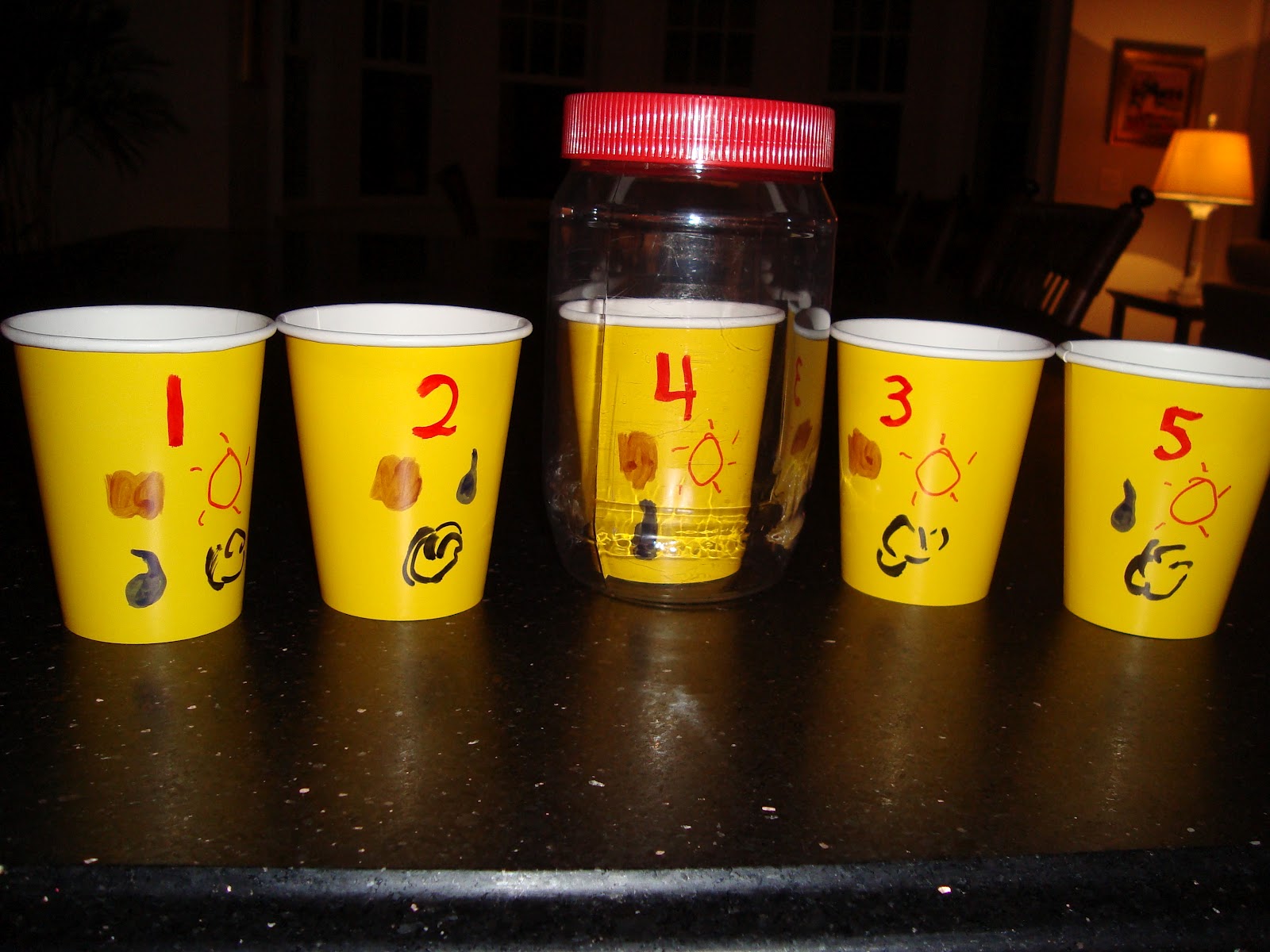
What does a seed need to grow? Brainstorm with the children and write their responses on the board. Take five cups and draw the following as shown:
soil, water, sun, air
soil, water, air
soil, water, sun
soil, sun, air
sun, air, water

Plant several bean seeds in each cup. Encourage the children to predict what will happen. Observe. Evaluate predictions after several weeks.


Seed Hunt
Brainstorm different seeds that come from foods we eat, such as apples, oranges, sunflowers, avocados, popcorn... Challenge children to look in their kitchens at home and bring in seeds. Plant the seeds in clear cups and label. Place in a sunny window, water, and you might be surprised at what comes up!

Tuesday, March 24, 2026

EGG EXPERIMENTS

There's more to eggs than dying them!


Rubber Egg
Materials: clear jar with lid
vinegar
raw egg in its shell

1. Put a raw egg in a jar and then cover it with vinegar. Screw on the lid and set it aside for 3-5 days.
2. Observe the egg each day and describe what is happening to it.
3. After 3-5 days, the eggshell should be almost invisible. Remove the egg, rinse it off, and hold it up to the light. How does the shell feel? Hold the egg several inches from the table and drop it. Does it break?


EggStra Special

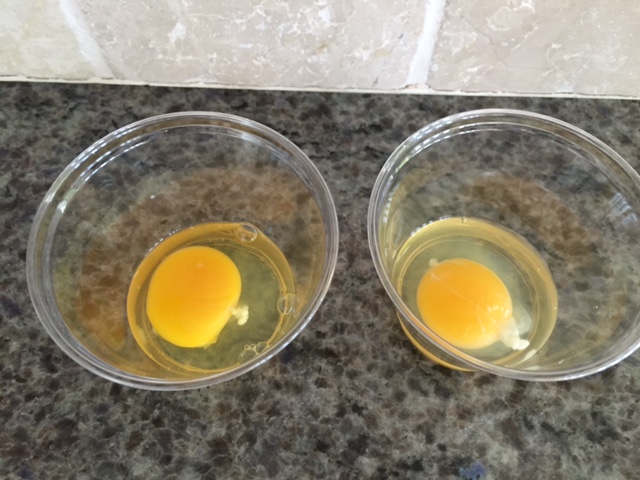
Materials: 2 clear cups
1 brown egg
1 white egg

1. Pass around the eggs for the children to gently hold and observe.
2. Discuss how the eggs are alike and how they are different.
3. Ask the children to predict if they are alike or different on the inside.
4. Break each egg into a different cup and compare.
5. How are people like the eggs? Do people look alike on the outside? Are people the same on the inside?
*They made good scrambled eggs, too!


Happy Teeth
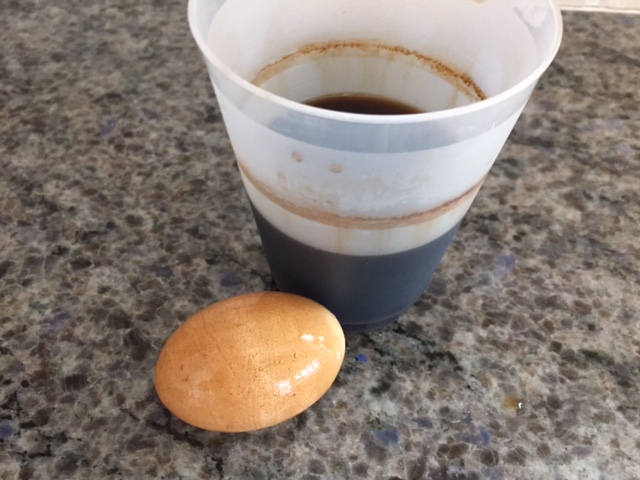
Materials: 4 raw white eggs
4 clear cups
tea, coffee, cola, water

1. Place each egg in a different cup and cover with one of the liquids.
2. Observe the eggs for several days to see what happens.
3. Remove the eggs and encourage the children to describe what happened to each egg and why.
4. How are teeth like the eggs? What will happen to your teeth of you drink tea and coffee all the time?
*Brush the eggs gently with toothbrush and toothpaste and see what happens.


Note! Brushing the egg with toothpaste didn't work too well. I might have left the egg in the coffee too many days. Or, maybe it was the toothpaste???


What’s in an Egg?
Materials: plastic egg
small toy animal that would hatch from an egg (fish, bird, alligator, frog, spider, snake, etc.)

1. Put the toy in the egg? Let the children shake it and try and guess what it is.
2. Have them make a list of all the animals they can think of that hatch from eggs.
3. Open the egg to confirm their guess.


Natural Dyes
Did you know you could dye eggs with berries, vegetables, and spices? There are many ideas on the internet if you want to give it a try.

Wednesday, March 18, 2026

SPRING"ING" INTO SKILLS

Spring, spring, where are you? March 20th is the “official” first day of spring, so here are some activities that you can use in your lesson plans to help kids PLAY and LEARN!

Spring-O
Make a bingo card with signs of spring and objects that children can find on your playground. Children can walk around the playground and and color in the objects as they find them. Children could do this activity individually or with a partner.


Scavenger Hunt
Here’s a spring hunt for older students. Divide them into groups of 4 and give each group a clipboard with the items below. Have them record their answers. When you return to the classroom groups can share their results and compare answers.

Can you find a sign of spring? 

Can you find something older than you? 

Can you find something younger than you? 

Can you find something rough? 

Can you find something that feels soft? 

Can you find something living? 

Can you find something dead? 

Can you find something smaller than your fingernail? 

Can you find something bigger than you? 

Can you find something green? 

Can you find something yellow? 

Can you find something that smells good? 

Can you find some trash? Pick it up and throw it away! 


Long and Short
Give children a piece of string or yarn. Challenge them to walk around the playground and find objects that are "longer" than their string and "shorter" than their string.


Alphabet Walk
Divide children into groups of four and give each group a sheet of paper with the letters of the alphabet. (They will also need a pencil and a clipboard to write on.) Challenge groups to find as many objects as they can for the letters in the alphabet. For example: A-acorn, B-bird, C-cloud, D-dirt, etc.

Shape Hunt
Cut circles, squares, rectangles, and triangles out of construction paper and put them in a bag. Children choose a shape and then try to match it up with a similar shape on the playground.
*Have children lie on the ground and make shapes with their bodies. Take photos to make a class book.

Bounce and Count
How many times can they bounce a ball and catch it? How many times can they toss a ball with a friend and not drop it?
*Have each child silently count the steps from the classroom to the playground. Compare their answers.

Monday, March 16, 2026

BIRD WATCHERS

What a perfect time of year to become a bird watcher! There are so many wonderful fiction and non-fiction books about birds, as well as crafts, finger plays, books, and games. I know some of your parents will enjoy making bird watchers and doing some of these activities.


Bird Watchers 
You will need paper towel rolls, tape, a hole punch, and string to make these "bird watcher" binoculars. Cut the paper towel roll in half and tape together. Punch 2 holes at the top and tie on a string that can easily fit on and off the head. Take a nature walk and see how many birds you can identify.


P.S. A teacher shared this website where children can learn to identify birds and their calls. It's so engaging even for adults like me!
https://www.aaastateofplay.com/50-bird-species-sounds-they-make/?fbclid=IwAR3JkCpq5zt33DNG-QVeSDSR5Hku-c5PUKiYVRXh_17xvRjEZ_7AzcksUkw


Paper Plate Birds and Nests
Let children make birds or nests out of paper plates similar to the ones in the picture.


What’s in the Egg?
First, brainstorm all the different animals that come out of an egg. Now, you’re ready to make a flip book called “What’s in the Egg?” Fold a sheet of paper in half lengthwise, then fourths and eighths. Open and cut the crease to the middle fold. Fold in half to make 4 little flaps. Children draw eggs on the front of each flap. Open the flaps and challenge children to draw 4 different things that might come from an egg. When they hold this book up to the light, they will see their little critters inside the egg.


Saturday, March 14, 2026

LEARN ABOUT BUTTERFLIES DAY

I bet you didn't know that March 14 was LEARN ABOUT BUTTERFLIES DAY. Find out more at: http://allthingsbutterflies.com


No matter how old you get, the life cycle of a butterfly will always be nature's magic! There are so many learning opportunities from caterpillars and butterflies: comparing and contrasting fiction and non-fiction books, saying finger plays, writing books about the life cycle, art projects, dramatizations... Let's get started with a song.

Butterflies
(Tune: Up on the Housetop)
First comes the butterfly (Hook thumbs and flutter fingers.)
Who lays an egg.
Out comes a caterpillar (Wiggle index finger.)
With many legs.
Then the caterpillar
Spins and spins (Roll hands around.)
A little chrysalis
To sleep in. (Place head on hands.)
Oh, oh, oh! (Fingers around eyes.)
Look and see.
Oh, oh, oh!
Look and see.
Out of the chrysalis, (Hook thumbs and flutter fingers.)
My, oh, my!
Out comes a (Move butterfly fingers all around.)
Beautiful butterfly!

Here's a video my webmaster made with photographs of the life cycle:
http://bit.ly/drjeanCaterpillar

Here's a video with illustrations:
https://www.youtube.com/watch?v=In_akp9Fxbc


Drama
Let children act out the life cycle of a butterfly. First, they lay on the floor in a ball. Next, they crawl around like caterpillars. Can they spin around and make a chrysalis? Finally, they can spread their wings and FLY!

Baggie Butterfly
Make a butterfly by tearing up little pieces of colored tissue paper and putting them in a zip lunch bag. Gather up in the middle and twist on a pipe cleaner to make the body and antennae. Attach a string for flying.


Smoosh Painting

Cut butterfly shapes out of newsprint. Fold in half. Let children drop paint with a spoon or eye dropper on one half. Fold and rub. Open to view your butterfly.


Life Cycle Flip Book
Make a flip book for the children to illustrate the life cycle of the butterfly.


Tell the lifecycle of the butterfly with a stick, a bean, and pasta. First, take children on a nature walk and ask them to find a stick that is as long as their arm from their wrist to their elbow. Glue the bean to the left of the stick for the egg. Next comes a spiral pasta for the caterpillar. Then a shell pasta for the chrysalis. Finally, a bow shaped pasta for the butterfly.