photo 3am_dj_home_zps919fb85e.png photo 3am_dj_about_zps7cce4c75.png photo 3am_dj_website_zps73051235.png photo 3am_dj_ss_zps6759ec2a.png photo 3am_dj_bs_zps43e27832.png
Showing posts with label Experiments. Show all posts

Monday, May 11, 2026

LET'S EXPERIMENT!

I KNOW A SCIENTIST - AND YOU CAN BE ONE, TOO!


Download all the activity cards for most recent blog posts here:


You'll be amazed by these experiments you can do with simple materials around your home.

Pepper Scatter

Shiny Pennies

Happy Face Balloon

Magnetic Mouse

What’s Up?

Funnel Phone

Growing, Growing

Feely Socks


A pdf file with all of these cards is available with the link above.


.

Tuesday, March 24, 2026

EGG EXPERIMENTS

There's more to eggs than dying them!


Rubber Egg
Materials: clear jar with lid
vinegar
raw egg in its shell

1. Put a raw egg in a jar and then cover it with vinegar. Screw on the lid and set it aside for 3-5 days.
2. Observe the egg each day and describe what is happening to it.
3. After 3-5 days, the eggshell should be almost invisible. Remove the egg, rinse it off, and hold it up to the light. How does the shell feel? Hold the egg several inches from the table and drop it. Does it break?


EggStra Special

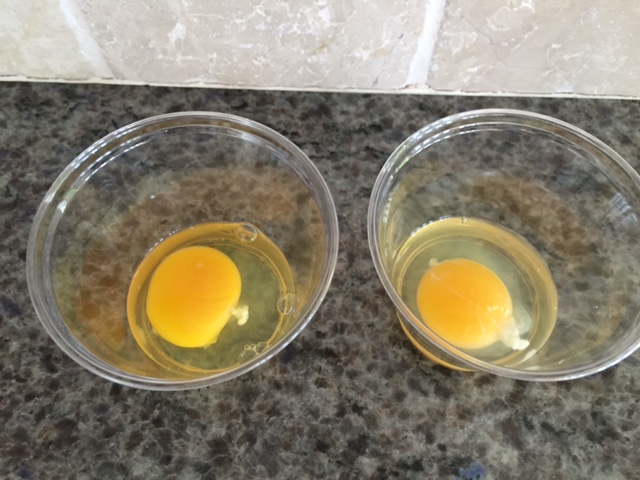
Materials: 2 clear cups
1 brown egg
1 white egg

1. Pass around the eggs for the children to gently hold and observe.
2. Discuss how the eggs are alike and how they are different.
3. Ask the children to predict if they are alike or different on the inside.
4. Break each egg into a different cup and compare.
5. How are people like the eggs? Do people look alike on the outside? Are people the same on the inside?
*They made good scrambled eggs, too!


Happy Teeth
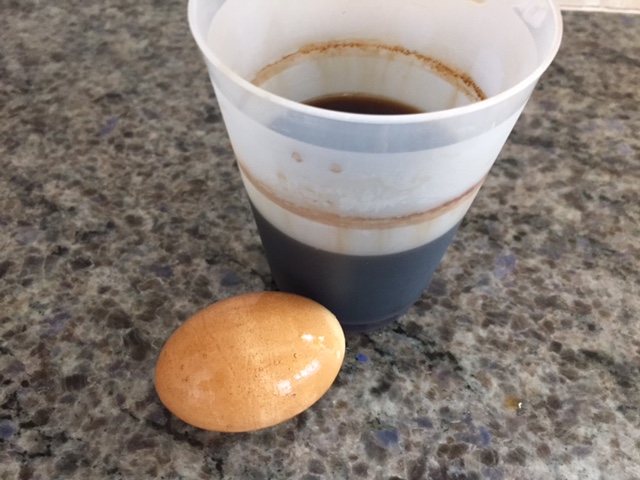
Materials: 4 raw white eggs
4 clear cups
tea, coffee, cola, water

1. Place each egg in a different cup and cover with one of the liquids.
2. Observe the eggs for several days to see what happens.
3. Remove the eggs and encourage the children to describe what happened to each egg and why.
4. How are teeth like the eggs? What will happen to your teeth of you drink tea and coffee all the time?
*Brush the eggs gently with toothbrush and toothpaste and see what happens.


Note! Brushing the egg with toothpaste didn't work too well. I might have left the egg in the coffee too many days. Or, maybe it was the toothpaste???


What’s in an Egg?
Materials: plastic egg
small toy animal that would hatch from an egg (fish, bird, alligator, frog, spider, snake, etc.)

1. Put the toy in the egg? Let the children shake it and try and guess what it is.
2. Have them make a list of all the animals they can think of that hatch from eggs.
3. Open the egg to confirm their guess.


Natural Dyes
Did you know you could dye eggs with berries, vegetables, and spices? There are many ideas on the internet if you want to give it a try.

Saturday, April 5, 2025

SEEDY STUFF!

Seed Hunt
Have children hunt for seeds in their kitchen at home. Bring these in and plant them in clear plastic cups filled with potting soil. Be sure to label. Water and watch.


Seedy Snack
Popcorn, sunflower seeds, pickles, and strawberries! What do they call have in common? They could all be part of a seedy snack. Let the children brainstorm all the things they eat that have seeds.


Planting Jelly Beans
Invite children to think of other things they would like to plant, such as jelly beans or pennies. Place a paper towel around the inside of a clear plastic cup and fill with soil. Plant the jelly beans and pennies between the cup and the soil so the children can observe what happens. Water and place in a sunny window.


Veggies
Purchase carrot seeds, radishes, and other vegetable seeds that germinate quickly and plant.  (My daughter likes to use cardboard egg cartons to start seeds.)  Water, set in a sunny window, and have the children record the plant growth.
*Transfer to your school garden or a container garden when the plants are several inches high.


Newspaper Tree
My kids always loved to watch me make this newspaper tree. Open three sheets of newspaper and lay on the floor as shown. Roll up and tape. Cut down several strips from the top about 8” long. Reach into the middle of the roll, grab the center, and slowly pull up. Tae daa!


Friday, April 4, 2025

THE PLANTING SONG

Spring is in the air and it's time to do a little planting!


The Planting Song (Tune: “Farmer in the Dell”)
Let’s all plant some seeds, (Pretend to dig with a shovel.)
Let’s all plant some seeds.
Hi, ho, it’s spring you know,
Let’s all plant some seeds.

The rain begins to fall… (Have fingers fall like rain.)

The sun warms the earth… (Hands over head in a circle.)

The seeds begin to grow… (Make a fist with one hand and bring the other hand up through it.)


Dig a Hole  (Finger Play)
Dig a hole. (Make a hole by making a fist with right hand.)
Plant a seed. (Stick left index finger in the hole.)
Up comes a flower. (Bring left hand up through right fist.)
Pull out the weed. (Pretend to pluck a weed.)


Growing, Growing!
What does a seed need to grow? Brainstorm with the children and write their responses on the board. Take five cups and draw the following as shown:

soil, water, sun, air
soil, water, air
soil, water, sun (Put in a jar so it doesn't get fresh air.)
soil, sun, air
sun, air, water

Plant several bean seeds in each cup. Encourage the children to predict what will happen. Observe. Evaluate predictions after several weeks.


Dirt Cake
Give each child a clear cup. Let them put a layer of chocolate pudding in the cup, then sprinkle with crushed Oreo cookies. Add a gummy worm and a paper flower stapled to a straw. (Yeah, I know it’s junky, but it would be fun for a birthday party or if you’re a grandparent!)

Sunday, March 30, 2025

EGG EXPERIMENTS

There's more to eggs than dying them!


Rubber Egg
Materials: clear jar with lid
vinegar
raw egg in its shell

1. Put a raw egg in a jar and then cover it with vinegar. Screw on the lid and set it aside for 3-5 days.
2. Observe the egg each day and describe what is happening to it.
3. After 3-5 days, the eggshell should be almost invisible. Remove the egg, rinse it off, and hold it up to the light. How does the shell feel? Hold the egg several inches from the table and drop it. Does it break?


EggStra Special
Materials: 2 clear cups
1 brown egg
1 white egg

1. Pass around the eggs for the children to gently hold and observe.
2. Discuss how the eggs are alike and how they are different.
3. Ask the children to predict if they are alike or different on the inside.
4. Break each egg into a different cup and compare.
5. How are people like the eggs? Do people look alike on the outside? Are people the same on the inside?
*They made good scrambled eggs, too!


Happy Teeth
Materials: 4 raw white eggs
4 clear cups
tea, coffee, cola, water

1. Place each egg in a different cup and cover with one of the liquids.
2. Observe the eggs for several days to see what happens.
3. Remove the eggs and encourage the children to describe what happened to each egg and why.
4. How are teeth like the eggs? What will happen to your teeth of you drink tea and coffee all the time?
*Brush the eggs gently with toothbrush and toothpaste and see what happens.

Note! Brushing the egg with toothpaste didn't work too well. I might have left the egg in the coffee too many days. Or, maybe it was the toothpaste???


What’s in an Egg?
Materials: plastic egg
small toy animal that would hatch from an egg (fish, bird, alligator, frog, spider, snake, etc.)

1. Put the toy in the egg? Let the children shake it and try and guess what it is.
2. Have them make a list of all the animals they can think of that hatch from eggs.
3. Open the egg to confirm their guess.
*Make a t-chart of animals that come from eggs and animals that do not hatch from eggs.


Natural Dyes
Did you know you could dye eggs with berries, vegetables, and spices? There are many ideas on the internet if you want to give it a try.

Thursday, February 6, 2025

MAKE A CLOUD

This is one of the coolest, easiest, most amazing science experiments that you can do in your classroom. (My husband was even impressed!!) Several teachers had told me about this activity, but seeing is believing and I finally got a bar of Ivory soap and gave it a try.

You will need:

1 bar of Ivory soap

1 plate (paper or glass)

microwave

Directions:

Put the bar of soap on a plate. Place in the microwave for 90 seconds. (I actually only did it for 70 seconds.) Observe. Talk about magic! The soap will turn into a mass that looks like a fluffy cloud. Remove, cool, and then explore the texture.


Hint! Invite the children to record what the soap looks like before and after microwaving.
*What caused the change?
*How does it feel?
*Can they still use it like soap?


There are many informative books about clouds, as well as whimsical tales like CLOUDY WITH A CHANCE OF MEATBALLS, IT LOOKED LIKE SPILT MILK, and THE LITTLE CLOUD.


I also found some free videos and resources if you want to learn more about clouds:

https://www.youtube.com/watch?v=eCumUup9vWQ

https://www.youtube.com/watch?v=EhLT11hKyok

https://www.youtube.com/watch?v=QAqeFSa60TE

http://www.weatherwizkids.com/weather-clouds.htm


Wednesday, April 10, 2024

SUPER SIMPLE SCIENCE EXPERIMENTS

I know it's a challenge to come up with science experiments with your different teaching situations, but here are a few simple ones that should spark children's interest wherever they are.
Note! These would also be good for the parents to repeat at home.

Dancing Rice
Materials: uncooked rice, water, food coloring, baking soda, white vinegar, clear glass

Directions: Put about 1/4 cup of uncooked rice in a clear glass. Add water. Add a few drops of food coloring and a TB of baking soda. Mix. Add 2 TB white vinegar and watch the dance party!
What happened? Why?


Shiny Pennies
Materials: old pennies, vinegar, salt, cup and spoon

Directions: Put ½ cup of vinegar in the cup. Add 1 TB salt and mix to dissolve. Drop the pennies in the cup and stir them around while you count to 25. Take the pennies out of the cup and rinse them off in water. Taaa Daaa! What happened to the pennies? What made them shiny?

*Experiment shining pennies with ketchup or lemon juice.


In the Bag
Materials: zip sandwich bag, sharp pencil

Directions: Fill the sandwich bag with water. Hold the pencil and say, “What do you think will happen if I stab this pencil in the bag?” Take the pencil and quickly insert it through the bag. What happened? Why? 


Pepper Scatter

Materials: clear bowl
pepper
liquid detergent

Directions: Fill the bowl with water. Sprinkle the pepper on top. Squirt a drop of detergent in the middle of the bowl. Observe what the pepper does. What makes the pepper scatter?


Milk Explosion

Materials: pie pan
whole milk (room temperature)
food coloring
liquid detergent (Dawn works best.)


Directions: Place a cup of milk in the pie pan. (It must be whole milk and room temperature.) Put several drops from each bottle of food coloring down the sides of the pie pan at different intervals. Now, squirt a few drops of the detergent in the middle of the pan. Patiently observe and the colors will explode in the pan. 


Happy Face Balloon
Materials: balloon (Use a large balloon and blow it up first to make sure
it will inflate easily.)
permanent marker, empty bottle
vinegar, baking soda
spoon, funnel

Directions: Blow up the balloon and draw a happy face on it with the marker.
Put ½ cup of vinegar in the bottle. Put several spoonfuls of baking soda in the balloon using the funnel. Insert the end of the balloon over the mouth of the bottle. Hold up the balloon so the baking soda falls in the bottle and watch what happens. What made the balloon blow up? Have children draw pictures in sequential order of how this experiment was conducted.

Tuesday, April 9, 2024

SCIENTIST OF THE WEEK


Write a letter similar to the one below and send it home with a different child each Monday. Create a backpack for the “Scientist of the Week” with a magnifying glass, magnet, field guide book, spiral notebook, pencil, safety goggles, lab coat, and a book of science experiments. (My website has some experiments you could copy.)

Dear Parents,
Your child has been selected as “Scientist of the Week.” Please help your child choose an experiment to present to the class on Thursday. You will find some science experiments in this bag, but it might be fun for you and your child to go to the library or search on the internet. Help your child practice the experiment several times so she’ll feel confident when she does it in front of her classmates. We will have “The Scientist of the Week” at 2:00 p.m. Thursday afternoon and we’d love for you to join us.


Hint! If you are in a school where family participation is a struggle, perhaps you could let a 4th or 5th grade student buddy help a different child each week.

*To encourage informative writing, have children make science journals where they draw pictures or write observations of the presentations.


Science at Home
Here's a fun experiment that you could send home in a bag for your students to do with their families.

Toothpick Trick
Materials: wooden toothpicks
cup of water

Directions: Take 5 toothpicks and bend them in the middle. Do not break them apart. Place the bent edges together in the middle to make a 10 pointed star. How can you turn it into a 5 pointed star without touching the toothpicks. (Let children brainstorm all the possibilities.) Dip your finger in the water and put a drop in the middle of the 10 pointed star. Observe as the toothpicks move to form a five pointed star. What made the toothpicks move?


Come back tomorrow for more of my favorite experiments you can do at school or you can send the directions home for families to have some STEM fun.

Monday, April 8, 2024

I KNOW A SCIENTIST


Calling children "authors" when they write and "scientists" when you do experiments is positive self-talk. It helps them think positively about themselves and nurtures their confidence. That's why I love this song about a "scientist."

I Know a Scientist
(Tune: “I Had a Little Turtle”)
I know a scientist, (Hold up index finger.)
And you can be one, too! (Point with index finger.)
Here’s the scientific method
So you’ll know what to do.

First you find a question. (Hold up one finger.)
Just take a look around. (Pretend to look around.)
What is it that you want to know?
Now you write it down.

Next you make a guess— (Hold up two fingers.)
It’s called a hypothesis—
About what will happen
When you do your tests.

Now experiment, (Hold up three fingers)
Observe it, write it, too. (Hold up four fingers.)
You’ll need lots of data
To show your guess is true.

Draw your conclusions. (Hold up five fingers.)
Look into any doubts.
Then tell everybody
What you’ve found out!


Lab Coat
If you were a kid, wouldn't you like a lab coat like a real scientist? Well, here's a great project to share with your families.

Materials: pillowcase, scissors, markers

Directions: Use the pattern below or come up with your own design to make the pillowcase look like a lab coat.
*Cut on the dotted lines.
*Let your child decorate with markers.
*Have fun!!!

Monday, April 1, 2024

APRIL SHOWERS

April is the perfect time to introduce the water cycle with a song and a story bracelet.

The Water Cycle (Tune: “My Darlin’ Clementine”)
Evaporation (Push palms up.)
Condensation (Hands together in air.)
Precipitation all around (Wiggle fingers down.)
Accumulation (Sweep arms in circle.)
Evaporation (Push palms up.)
The water cycle goes
Round and round (Make circles with arms.)


Rain in a Jar Experiment
Fill a large glass jar with very hot water. Set a pie pan full of ice cubes on top of the mouth of the jar and observe what happens. Encourage students to draw observations.


Story Bracelet
Children will be able to retell the water cycle with this bead bracelet. Have them string on the following beads as they repeat the water cycle:
Evaporation - clear bead
Condensation - white bead (cloud)
Precipitation - blue bead (rain)
Accumulation - brown bead (puddle)
Sun - yellow bead
Evaporation - clear bead


Make Rain
Make “rain” as a transition activity to quiet children. Hold up one palm and tap with one finger from the other hand. Next, slowly add another finger and tape with two, then three, four, and five. (At this point you can also stomp your feet to make thunder.) Reverse the process by tapping with five fingers, then four, three, two, one. Quietly place your hands in your lap. It will really sound like a rain storm is coming and then going away.


Rainy Day Reads
Make a special place to read on rainy days by opening a large umbrella and putting it in a cozy corner in your classroom. Put some books and stuffed animals under it and your children won't be able to resist!
Note! Limit two at a time and they'll be lining up for their turn!

Monday, March 25, 2024

HOW DOES YOUR GARDEN GROW?

Spring is in the air and it's time to do a little planting!


The Planting Song
(Tune: “Farmer in the Dell”)
Let’s all plant some seeds, (Pretend to dig with a shovel.)
Let’s all plant some seeds.
Hi, ho, it’s spring you know,
Let’s all plant some seeds.

The rain begins to fall… (Have fingers fall like rain.)

The sun warms the earth… (Hands over head in a circle.)

The seeds begin to grow… (Make a fist with one hand and bring the other hand up through it.)


Growing, Growing!
What does a seed need to grow? Brainstorm with the children and write their responses on the board. Take five cups and draw the following as shown:

soil, water, sun, air
soil, water, air
soil, water, sun (Put in a jar so it doesn't get fresh air.)
soil, sun, air
sun, air, water

Plant several bean seeds in each cup. Encourage the children to predict what will happen. Observe. Evaluate predictions after several weeks.


Seed Hunt
Have children hunt for seeds in their kitchen at home. Bring these in and plant them in clear plastic cups filled with potting soil. Be sure to label. Water and watch.

Seedy Snack
Popcorn, sunflower seeds, pickles, and strawberries! What do they call have in common? They could all be part of a seedy snack. Let the children brainstorm all the things they eat that have seeds.

Planting Jelly Beans
Invite children to think of other things they would like to plant, such as jelly beans or pennies. Place a paper towel around the inside of a clear plastic cup and fill with soil. Plant the jelly beans and pennies between the cup and the soil so the children can observe what happens. Water and place in a sunny window.


Newspaper Tree
My kids always loved to watch me make this newspaper tree. Open three sheets of newspaper and lay on the floor as shown. Roll up and tape. Cut down several strips from the top about 8” long. Reach into the middle of the roll, grab the center, and slowly pull up. Tae daa!


Friday, March 15, 2024

"EGG" SPERIMENTS

There's more to eggs than dying them!


Rubber Egg
Materials: clear jar with lid
vinegar
raw egg in its shell

1. Put a raw egg in a jar and then cover it with vinegar. Screw on the lid and set it aside for 3-5 days.
2. Observe the egg each day and describe what is happening to it.
3. After 3-5 days, the eggshell should be almost invisible. Remove the egg, rinse it off, and hold it up to the light. How does the shell feel? Hold the egg several inches from the table and drop it. Does it break?


EggStra Special
Materials: 2 clear cups
1 brown egg
1 white egg
1. Pass around the eggs for the children to gently hold and observe.
2. Discuss how the eggs are alike and how they are different.
3. Ask the children to predict if they are alike or different on the inside.
4. Break each egg into a different cup and compare.
5. How are people like the eggs? Do people look alike on the outside? Are people the same on the inside?
*They made good scrambled eggs, too!

Happy Teeth
Materials: 4 raw white eggs
4 clear cups
tea, coffee, cola, water

1. Place each egg in a different cup and cover with one of the liquids.
2. Observe the eggs for several days to see what happens.
3. Remove the eggs and encourage the children to describe what happened to each egg and why.
4. How are teeth like the eggs? What will happen to your teeth of you drink tea and coffee all the time?
*Brush the eggs gently with toothbrush and toothpaste and see what happens.


Note! Brushing the egg with toothpaste didn't work too well. I might have left the egg in the coffee too many days. Or, maybe it was the toothpaste???

What’s in an Egg?

Materials: plastic egg
small toy animal that would hatch from an egg (fish, bird, alligator, frog, spider, snake, etc.)

1. Put the toy in the egg? Let the children shake it and try and guess what it is.
2. Have them make a list of all the animals they can think of that hatch from eggs.
3. Open the egg to confirm their guess.
*Make a t-chart of animals that come from eggs and animals that do not hatch from eggs.

Natural Dyes
Did you know you could dye eggs with berries, vegetables, and spices? There are many ideas on the internet if you want to give it a try.

Tuesday, February 6, 2024

MAKE A CLOUD

It's about time for a science experiment. This is one of the coolest, easiest, most amazing science experiments that you can do in your classroom.

*Your families would probably love the directions so they can repeat this at home! 

You will need:

1 bar of Ivory soap

1 plate (paper or glass)

microwave

Directions:
Put the bar of soap on a plate. Place in the microwave for 90 seconds. (I actually only did it for 70 seconds.) Observe. Talk about magic! The soap will turn into a mass that looks like a fluffy cloud. Remove, cool, and then explore the texture.


Hint! Invite the children to record what the soap looks like before and after microwaving.

*What caused the change?


Cloud Watch
Give children clipboards, blue paper, and a white piece of chalk. Go out on the playground and challenge them to draw the clouds in the sky. Can they predict what the weather will be from observing the clouds?


There are many informative books about clouds, as well as whimsical tales like CLOUDY WITH A CHANCE OF MEATBALLS, IT LOOKED LIKE SPILT MILK, and THE LITTLE CLOUD.


I also found some free videos and resources if you want to learn more about clouds:

https://www.youtube.com/watch?v=eCumUup9vWQ

https://www.youtube.com/watch?v=EhLT11hKyok

https://www.youtube.com/watch?v=QAqeFSa60TE

http://www.weatherwizkids.com/weather-clouds.htm

Come back tomorrow for more science activities to do with clouds.