photo 3am_dj_home_zps919fb85e.png photo 3am_dj_about_zps7cce4c75.png photo 3am_dj_website_zps73051235.png photo 3am_dj_ss_zps6759ec2a.png photo 3am_dj_bs_zps43e27832.png
Showing posts with label Cooperation. Show all posts

Tuesday, January 20, 2026

COMPLIMENT DAY AND KAZOOS

What do compliments and kazoos have in common? They are both holidays you can celebrate the end of January.

Compliment Day January 24th


This would be a good day to talk about what a compliment is. How do you feel when someone gives you a compliment? What are some different ways you can compliment someone? How many compliments can you give during the day?

Compliment Jar
Get a clear jar and a bag of gems. Whenever someone compliments your class put a "gem" in the jar. When the jar is full the children get a special reward such as a popcorn party, extra recess, etc.

*You can use cotton balls, marbles, or other items for the compliment jar.


Hint! Be sure and let your special teachers and other school staff know about your gem jar so they can compliment your class when they EARN it.

Compliment Board (Kalli Lemley)
To encourage kindness and appreciation for others, place a bulletin board outside the room dedicated to compliments to each other. Vary the theme throughout the year:
“Leaf a compliment.” (Leaves)
“Snow’s some kindness.” (Snowflakes)
“Send a ray of sunshine.” (Sunshines)
“Watch our friendship grow.” (Flowers)

National Kazoo Day January 28th


Ask your students to bring in paper towel rolls. (For sanitary reasons it is best to collect paper towel rolls rather than TP rolls!) Cut the paper towel rolls in half and punch a hole ¾” from the top. Let children decorate the cardboard rollers with markers or crayons. Cut 6” circles out of wax paper and use a rubber band to attach to one end of the roller and you’re ready to hum. March around the room as you hum some of your favorite songs.


Play “name that tune” as different students stand up and try to stump their classmates by humming a familiar tune.

Friday, September 20, 2024

SMALL GROUP PROJECTS

Small groups, also known as cooperative work groups, provide children with the opportunity to set goals, plan, communicate, problem solve, and be creative. 

It might be interesting to assign roles, such as the supervisor (leader), secretary (takes notes), and reporter (shares information), cheerleader (team member who encourages).

Hint! To enable different students to have leadership roles, you could have a “lucky draw” for these positions. Write “supervisor,” “secretary,” “reporter,” and “cheerleader” on jumbo craft sticks. Place in a can, shake, and then let team members chose a random role.


Here are a few opportunities for small groups:

Do a social studies or science project around an assigned theme. They could make a poster, write a report, do a skit, make a video, etc.

Brainstorm! Make lists!

Do surveys and collect data.

Write a play, story, poem, rap, or song and present it to the class.

Play a board game.


Work on a science experiment together.

Write letters to politicians, authors, or other famous people.

Make books together.

Answer questions. Teacher asks a question and they get together to come up with an answer they agree on.

Work on an invention.

Do an internet search.

How about a PowerPoint, blog, or digital photographs?


Pass the Pat
Encourage children to recognize the efforts of each member in their group. Have them stand in a circle and take turns patting each other on the back and saying a contribution each team member made.

Thursday, September 19, 2024

MORE FUN WITH A PARTNER

Here are more activities children can do with a partner.


Guess who I am? Children dramatize or pantomime favorite books, rhymes, animals, etc. while their partner tries to guess.

Make shapes and letters with their fingers or bodies.

Do puzzles together.

Check each other’s work.

Edit each other’s writing.

Work on vocabulary. One child calls out a word while the other child gives the definition.

Practice spelling words. One friend calls out a word for partner to spell.

Play “Mirror.” One child is the leader and the other child is the “mirror” and must mimic what the leader does. Switch roles after a minute.

Do a graphic organizer (Venn diagram, web, T-chart, time line, etc.).

Write on each other’s backs.

Do exercises together.

Patty Cake– When children patty cake with a partner they are practicing self-regulation, eye-hand coordination, body spatial awareness, crossing the midline, and a myriad of other skills. In addition to traditional hand clap games and rhymes children can:

*Say nursery rhymes as they patty cake.

*Say the ABC’s.

*Count by one’s, five’s, ten’s, etc.

*Practice spelling words and word wall words. (Clap your hands as you say the word. Cross and tap as you say each letter. High five in the air as you repeat the word.)


Upper Grade Buddies
- Do collaborative learning activities with different groups. Kindergarteners could be paired with 4th graders or classes on the same grade level could be partnered.

Wednesday, February 21, 2024

BUILDING BAGS


Here’s an art/engineering project that my students always enjoyed. Erik Erikson believed that children aged 5-12 were in the age of “industriousness” and needed opportunities to feel confident in their ability to achieve and produce. If you watch children as they work on these projects you can almost see their brains firing away as they create and problem-solve.

What?
2 lunch bags
old newspapers
scissors, tape, glue, markers
construction paper scraps and other art media


How?
Decorate one bag with construction paper, markers, paint, and your imagination to look like a building. Open the second bag and stuff with wadded up newspaper. Insert the decorated bag over the stuffed bag to make a rectangular cube.

Why?
Tie these sack structures in with a unit on community helpers by asking children to make buildings in their community.

Let children make places from a book they have read and use them to retell the story.

Divide children into small groups and let them collaborate in designing buildings and structures. Can they make a city in the future? Can they make dwellings from other cultures and countries?

Now that's what I call building skills for the 21st Century! Cooperation, collaboration, communication, and creativity all rolled into a fun thing for children to do!

Saturday, April 22, 2023

PATTY CAKE - PATTY CAKE

Why patty cake?

First of all, it's free, simple, environmentally friendly, sugar-free...

Patty cake is a great brain break when children are restless.

When you patty cake you cross the midline which activates both sides of the brain.

It's good for eye-hand coordination.

It's TPR - Total Physical Response - motor skills and oral language.

Patty cake encourages self-regulation and the executive function.

It nurtures 21st century skills - cooperation, collaboration, and communication.

You've got purposeful practice for automaticity (aka repetition) because children will want to do it over and over.

How about INTENTIONAL TEACHING? Choose words or skills you are working on and integrate them into this movement game.

Talk about ACTIVE learning!

Here are some"patty cake" videos my webmaster created:

Note!  I looked a lot younger then and that little boy is headed off to college!!  Just a reminder to treasure every moment!

P.S.  Ask children to patty cake with their parents for homework!

Monday, March 6, 2023

PLAY AND LEARN GAMES

It’s important to remember that it takes several times before children “get” how to play a game. Introduce the game, play a few rounds, and then try it again the following day. Never drag out a game, but “quit while you are ahead” so they will want to play it again. In addition to reinforcing skills, these games will also develop the executive function (self-regulation) and 21st Century Skills (cooperation, collaboration, critical thinking).

Hint! Paper plates are cheap, durable, and make perfect flashcards for these games.


MUSICAL PLATES
Skills: words, letters, math facts, colors, shapes, etc.
Materials: paper plate flashcards with information you want to practice
Directions: Do you remember the old game where you placed chairs in a circle and walked around until the music stopped? If you didn’t find a chair you were OUT! This is a similar game that can reinforce letters, words, colors, math facts, etc. Scatter the paper plates on the floor. Play some catchy music for the children to dance to. When the music stops each child finds a paper plate and picks it up. The teacher randomly points to various children to identify the information on their plates. Have the children place the plates back on the floor and continue dancing.
*If the child is unsure about what is on their plate invite them to “ask the audience.”

RED ROVER, RED ROVER
Skills: words, letters, shapes, colors, etc.
Materials: flashcards
Directions: Divide the class into two teams and have them stand on opposite sides of the room facing each other. Give each player a flashcard to hold in front of them. The teacher goes to one team and asks, “Who do you want to call over?” The children select someone from the opposite side and say, “Red rover, red rover, send (word) right over.” The child holding that word walks, hops, tiptoes, or jumps to the opposite side. The game continues as sides take turns calling words over.

WORD HUNT
Skills: words, letters, math facts, etc.
Materials: flashcards
Directions: Have the children close their eyes as you hide the flashcards around the room. Children open their eyes and hunt for the words. When they find one they bring it to the teacher and read it. Then they hide it again and look for another word. The game continues as long as the children are interested.

HEADS UP - SEVEN UP
Skills: words, letters, numerals, shapes, etc.
Materials: flashcards
Directions: Seven children come to the front of the room and are given a flashcard. The rest of the class places their heads down. The seven tiptoe around and place a flashcard by a friend before returning to the front of the room. The seven join in and say, “Heads up! Seven up!” Children who received a flashcard stand up and identify the information on their card. They then get three guesses to determine who gave them the card. If they guess correctly they get to switch places that person.


SCOOTS
I found this game called “SCOOTS” that Jessica Quisenberry taught me several years ago.  This game can be adapted for all content areas and age levels and it beats a worksheet or computer game any day!

Write math facts, sight words, pictures, etc. on index cards. Write a letter or number in the corner of each card. Tape the cards around the room.

Prepare an answer grid similar to the one shown. Children “scoot” or walk around the room until they find a card. They can then put their answer on the grid. 


Hint! Cardboard clipboards work great for this activity.

*Adapt the number of sections to the age and ability of your students.

Example: math facts (write the answer)

Phonics (picture for children to identify the beginning sound, blend, vowel, etc.)

Parts of speech (word and they write if it is a noun or verb)

Tuesday, January 3, 2023

NATIONAL PUZZLE DAY

Puzzles are one thing that will never go out of style. Here are some puzzle activities that will work any day this month, or you can save them to celebrate National Puzzle Day on January 29th.

There have been numerous research studies that confirm the importance of puzzles in cognitive development. Other benefits of puzzles include:

Small motor skills
Eye-hand coordination
Task initiation and completion
Sense of accomplishment

Puzzles also provide the opportunity for children to collaborate and cooperate with a partner or small group.

Here are a few ideas to incorporate puzzles into your plans this month. You might be surprised at the standards you’ll find!


Jigsaw Puzzle
Put a jigsaw puzzle (50-100+ pieces depending on the age and ability of your students) on a table. Explain that you will leave it out all week and if they finish their work early they can try and put it together. (You’ll quickly be able to identify the children who have done puzzles at home with their families.)


Story Puzzles

Have children draw pictures and write stories on cardstock. Next, let them cut the paper into puzzle pieces. (I’ve found it best to give them a limit of 8-15 pieces or they’ll end up with confetti.) Put these in an envelope and exchange with friends. After putting the puzzles together they can read each other’s stories.


Word Puzzles
Write vocabulary/spelling/sight words on sentence strips. Cut between the letters and place them in an envelope. Children put the letters together and read the word.


Hint! Write the word on the back of the envelope so they can self-check.
Ask them to write the words after they complete the puzzles.

Poem Puzzles
Make 2 copies of nursery rhymes or poems. Glue one to the front of a clasp envelope. Make a puzzle of the other rhyme by cutting between the lines or words. Store in the envelope. Children place the puzzle pieces on top of the original and then read.


Magazine Puzzles
Let children cut out favorite pictures from a magazine. (These could relate to a theme or unit.) Glue pictures to a piece of cardstock and then cut into puzzle pieces.


Cereal Box Puzzles


Ask children to bring empty cereal boxes from home. Cut the front sections off the boxes and cut into puzzle pieces.
*For younger students it works best to use two boxes that are the same. One can be cut up and then they can place the pieces on the whole.


Greeting Card Puzzles
Ask parents to save old greeting cards. Child can cut off the front of the cards and then use them to make puzzles.

Thursday, January 20, 2022

INDOOR GAMES FOR A WINTER DAY

The weather outside is frightful,
But inside our game is delightful.
And since we can’t go out to play
Here are some indoor games for today.

Silent Touch
This is a great game to quiet children and build memory skills. The first child gets up and touches an object and then sits down. The second child gets up, touches the first object, then touches an additional object. The third child touches the first object, second object, and adds a third object. The game continues as classmates touch what the previous children have touched in sequential order and then add a new item. When a child forgets, simply begin the game all over again.


Four Corners (This is the BEST indoor game ever!)
Number each of the corners in the room ~ 1, 2, 3, 4. (You can write the numerals on paper and hang them up if you want.) Choose one person to be “it.” “It” hides their eyes and slowly counts from one to ten as the rest of the class tiptoes to a corner in the room. When “it” says “freeze,” everyone must be in a corner. “It” then calls out a number (1, 2, 3, or 4) and the children in that corner are out of the game. They sit down in the “stew pot” in the middle of the room. “It” counts to ten again as everyone moves to a new corner. The game continues until there is one person left. That person becomes the new “it.”
Hint! Shorten the game by having “it” call out two corners at a time.

*If there is no one in the corner, ask “it” to call out another number.

*Label the corners with letters, numbers, sight words, vocabulary words, etc.


Detective
One child is the “detective.” The detective describes a “missing child” (classmate), giving their eye color, hair color, description of clothing, likes, etc. The first person to identify the missing child gets to be the new detective.

Hint! Here is another variation of this game. Send the detective out in the hall. Select one child and hide him or her under your desk or behind a shelf. The detective returns to the classroom and tries to identify the missing child. (You can also let two children exchange seats and see if the detective can spot the switch.)


Hot Potato
You can use a small ball, bean bag, or stuffed animal for this game. Children sit or stand in a circle. Children begin passing the “hot potato” (ball or bean bag) around the room when the music starts. Explain that it is a “hot potato” and they need to pass it quickly to the next friend. When the music stops, the one holding the “hot potato” is out of the game and must leave the circle. If two children are holding it they are both out. The last child remaining is the winner. Begin the game again.


Silent Ball
You will need a small, soft ball for this game. Explain that the object of the game is to see how many times you can toss the ball without talking. Look at the person you are throwing the ball to so they will be ready. Silently count how many times we can throw the ball without talking or dropping it. If someone talks or drops the ball, then the game begins all over again.
                                                                     

Tower Topple
This game is similar to Jenga. Have children get a block and then sit in a circle. The first child begins building the tower by placing her block in the middle of the circle. The second child places his block on top of hers...The game continues as children try to build the tower higher and higher. When it falls over every shouts "tower topple" and the game begins again.

Tuesday, November 9, 2021

TEAM WORK - WORKS!!

Almost any learning project children do independently will be more exciting when they do it with their friends. These can be adapted to different age levels, abilities, and skills you want to reinforce. 


Posters 
Groups can make posters about drug awareness, nutrition, or other health issues and post them around the school.


Phonics
Give teams a letter, word family, prefix, etc. and have them write or draw all the things they can think of.


Book Makers
Give students a topic and then ask them to make a book about it. Be sure they sign their names as “authors and illustrators.” 

*Have an “authors’ party” where groups read their books to classmates.


Pass It on Picture
Groups sit in a circle and each member is given one color of crayon and a sheet of paper. The children begin drawing a picture. When the teacher rings a bell, they must pass their picture to the person on their right. The children continue drawing and passing pictures until it ends up to where it originated.

*You can do the same thing with colored pencils and story writing.


Construction
Groups can build things with blocks, Legos, and other construction materials. 

*Tie in with math. How many squares, rectangles, etc. did you use?

*Relate to a unit of study. For example, make a home for a pioneer, or make a home for a bear.


Decorations
Have groups make decorations for holidays and special school events.


Group Art Projects 
Children can add individual components to make a thing of beauty. They can make a quilt where each child is given a 6” square. After decorating their square punch holes in the corners and tie them together with yarn to make a quilt. Groups can also make anchor charts, murals, collages, paintings, flags, sculptures, and so forth.


Cards and Thank You’s
Teams can work together to create get well cards, thank you notes, and other greetings.


Write a Song, Rap, or Poem
Have students collaborate to write a song, rap, or poem. Encourage groups to practice and then perform for classmates.

*Tie these in with national holidays, seasons, special events, or literature.

*Acrostics work well for this.


Pass the Pat
Encourage children to recognize the efforts of each member in their group. Have them stand in a circle and take turns patting each other on the back and saying a contribution each team member made.


Here are team work projects to challenge older students. I'm smiling because I remember doing some of these in grad school. I think I learned more from these activities than listening to lectures!! 

Visual Graphics
Have teams use webs, T-Charts, Venn diagrams, and other graphic organizers to explore themes, books, compare/contrast, and so forth.


Make Lists
Teams can make lists of how to be a buddy, how to be a good student, what to do when they are bored, what they like best about school, and so forth.


Brainstorm – Themes, literature, math concepts and almost anything you are studying can spark brainstorming with a small group.

*Let students brainstorm how to handle common classroom problems like students who break in line. Brainstorm what to do with broken crayons. Brainstorm what to do instead of playing a video game. 

*Put big sheets of paper on a wall to use for brainstorming. 


KWL – Know, Want to Know, Learned – When introducing a new theme or concept let groups make a list about what they already know about the topic and what they want to learn about the topic. During the study they can be encouraged to write what they are learning.


See What You Can Find Out - When starting a new unit select several books from the library on the topic. Give each group a book and ask them what they can find out in five minutes. Let one person from each group report to the class.

*Ask groups to trade books and see what else they can find out.


Techies - Groups can use technology to take photos, make movies, powerpoints, post blogs, and other projects.


Innovators - Give groups common objects such as a rubber band, safety pin, straw, etc. and challenge them to come up with as many different uses for the object as they can.


Designers - Give groups paper and challenge them to create a paper airplane. Go outside and test airplanes to see which one flies the best.

*They could also design boats or other simple machines.


Inventions - Let groups collect recycled materials (cereal boxes, paper towel rolls, etc.) Can they invent something new?


Dealer’s Choice - Give teams a deck of cards and ask them to create a new game.


Book Talks - Give groups study questions to guide them in talking about books they have read.

*Have them critique books. What did you like? Dislike?


Read and Pass - Teams form a small circle facing each other. One child begins reading and then passes the book to the person on her right. Students continue reading and passing the book around the circle.

*Limit reading to one sentence each, one paragraph, or one page.


Word Games - Give a vocabulary word to each group. How many smaller words can they write using the letters in the vocabulary word?


Letter Writing - 
Write letters as a group to politicians, authors, or other famous people.

*They could also send emails from their group.


Math - Have teams write all the combinations for a different number.

*Make a list of things that are a 2-D or 3-D shape.

*Look around the room and make a list of all the things that have numbers.


Survey Says - Let children work in groups to collect data. 

*They can also work as a group to do interviews.


Advertisement - Ask a team to read the same book and then create an advertisement about their book. They could make a poster, original slogan, etc. and present to classmates.


Science - Groups can do science experiments, gather data, record observations, and report findings to classmates.


Wants and Needs - Have groups make a T-chart of “wants” and “needs.”

*Tell groups that they are going on a wagon train west. Ask them to make a list of all the supplies they will need. (You could adapt this to a new colony on Mars or some other science fiction theme.)


Categories - Give groups a category (fruits, mammals, professions, games, etc.) and have them write/draw all the things they can think of for that category.


Puppet Show - Let students make puppets from lunch sacks, paper plates, or other art materials. 

*Ask them to write and perform puppet shows for the class. 

*Coordinate puppet shows with books read, units of study, social situations, etc.


Pantomime and Charades - Groups can pantomime books, songs, poems, and other themes while classmates try to guess what they are.


Skit or Play - Have teams create (and write) skits and plays to reinforce a unit or theme. They can make masks, costumes, or other props for presentations to the class.


Statues - Challenge groups to create a human statue that depicts something from a favorite book. Groups make their statues and their classmates have to discover which book they are performing.

*Use songs, poems, or other themes for statues.


Clean Up  - Assign groups responsibility for different areas and different jobs in the classroom. You could have a “library committee,” “sanitation team,” “neat squad,” “green team,” and other catchy team names.


Saturday, October 23, 2021

COLLABORATIVE BOOKS - IF THEY MAKE IT, THEY WILL READ IT!

 You’ll find some of the most popular books in your classroom will be those that students collaborate to make. What a perfect way to motivate your students to write and read as you reinforce standards.  


Consider these components when making collaborative books with your class:

Dedication 
– Encourage children to “dedicate” books. 

Copyright Date – The date you make your book.

Publisher – Your school, city, and state.

Authors and Illustrators – Have children sign a group page as authors and illustrators of the book.

ISBN – Include an ISBN number and bar code on the back.

The End – Everybody can read this page!

Comments and Compliments – Let children have turns taking the book home for one night. Their parents can then write their “comments or compliments” about the book on that page. (You could also pass the book around to different classes in your school and they could write remarks on this page.)

*Older students could do a “Table of Contents,” “Index,” or “Glossary.”

*Place class books in your school library, public library, a hospital, etc.

*Have a “drawing” at the end of the year so each child gets to keep one of the books.


Concept Books

Reinforce concepts you are working on, such as letters, shapes, science themes, friendship, etc. to make class books.


Song Books
I also love to take songs and use them to make books with children. You can ask the children to close their eyes as they listen to the song and then make pictures in their brain. Invite them to draw their picture and then cut out words to the song and match them up with the pictures. Don't worry! It always turns out beautifully!


*You can also type words to songs ahead of time and let each child choose the sentence they would like to illustrate. 

Here are some other interesting topics for making books with your students:

THE BEST THING ABOUT ME  

HEROES

OUR WISH BOOK  

CELEBRATIONS

WHEN I GROW UP  

JOKE BOOK

HOW TO BE A FRIEND

WHAT I DIDN’T DO OVER THE SUMMER

WHAT I DIDN’T GET FOR CHRISTMAS

A MAGIC CARPET RIDE  

DREAMS

THINGS THAT BUG US/SCARE US  

KNOCK! KNOCK!

MY NIGHTMARE LOOKS LIKE  

I AM…  

I LIKE…  

I CAN….  

I SEE….

MY WORST/BEST DAY EVER  

IF I WERE THE TEACHER I WOULD…  

IF SHOES COULD TALK  

THE DAY ANIMALS TALKED  

WHAT TO DO WHEN A BABY CRIES  

IF I WON THE LOTTERY  

HAPPINESS IS…

LOVE IS…

I’M WORKING ON…  

IF I WERE IN CHARGE OF THE WORLD

I WISH I WERE…  

IT’S NOT FAIR

WHAT DOES THE PRINCIPAL DO ALL DAY? 

WE WOULD LIKE TO TELL THE PRESIDENT…IF 

Friday, October 22, 2021

READ AND WIN!

Several years ago while visiting a school I saw two shiny new bikes on display in the library. Every time a child read a book they got to put their name on a ticket to win the bike. What a great way to motivate children to read! These ideas aren’t quite as big as a bike, but I bet you might spark a little interest with them.


Book Drawing
You will need a roll of tickets (purchase at an office supply store) or make your own. Each time a child reads a book she gets to write her name on a ticket. Collect these in a sack during the week. On Friday, draw a name out of the sack and that child WINS a book! 


Note!  It could be a book that you purchased or a book that the class has made.


Stay Up Late and Read
To reward children make copies of “Extra 15 Minutes” coupons similar to the one shown. Children who earn the ticket get to stay up an extra 15 minutes at bedtime and read to their parents.


Book Bucks
Run off "reading-bucks." (Free if you do a google search.) When children read a book they earn a "buck." They can save these to buy a book or other prize.


Popcorn Party
Get a large jar and write “Popcorn Party” on it. Every time any student reads a book she gets to add a cotton ball to the jar. When the jar is full the whole class gets a popcorn party.


Reading Incentives
I asked Mr. Google about "reading incentives" and he gave me lots of great links.


Note! There are some who think "bribing" children to read will backfire. That's why I have offered several choices here that do not reward children for the number of books they read. I agree that "reading" itself is the reward, but many children LOVE a challenge.

I found this BINGO card on https://www.reading-rewards.com/blog/11-reading-incentives-classroom/. I like something like this because children could choose their own reward for whatever they wanted to read.

Friday, October 8, 2021

SMALL GROUP WORK

Small groups, also known as cooperative work groups, provide children with the opportunity to set goals, plan, communicate, problem solve, and be creative.
It might be interesting to assign roles, such as the supervisor (leader), secretary (takes notes), and reporter (shares information), cheerleader (team member who encourages).

Hint! To enable different students to have leadership roles, you could have a “lucky draw” for these positions. Write “supervisor,” “secretary,” “reporter,” and “cheerleader” on jumbo craft sticks. Place in a can, shake, and then let team members chose a random role.


Here are a few opportunities for small groups:

Do a social studies or science project around an assigned theme. They could make a poster, write a report, do a skit, make a video, etc.

Brainstorm! Make lists!

Do surveys and collect data.

Write a play, story, poem, rap, or song and present it to the class.

Play a board game.


Work on a science experiment together.

Write letters to politicians, authors, or other famous people.

Make books together.

Answer questions. Teacher asks a question and they get together to come up with an answer they agree on.

Work on an invention.

Do an internet search.

How about a PowerPoint, blog, or digital photographs?


Pass the Pat
Encourage children to recognize the efforts of each member in their group. Have them stand in a circle and take turns patting each other on the back and saying a contribution each team member made.


Friday, January 1, 2021

KINDNESS IS THE REAL GLOBAL WARMING

Happy new year from Barbara at The Corner on Character. As I peek into my January calendar after an incredibly unusual 2020, I’m wondering if anybody else wishes every day were Kind-day like I do. But is it just an idealistic dream or a Pollyanna mindset to think that way? Not if you believe that anything is possible.

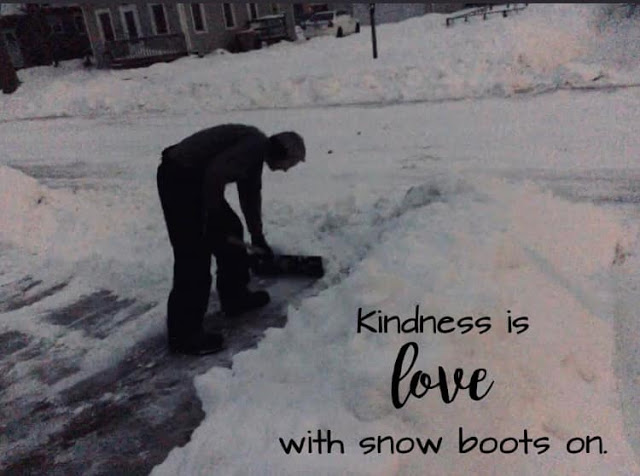
So I’m on a kindness crusade to make it a reality. Won’t you join me? I’ve heard it said that kindness is love with its snow boots on, so all you’ll need is a pair of boots. And maybe a shovel.


I know there’s a lot of love in that huge heart of yours, so let’s get to work. Here are a few of our ideas to help get started warming the world with kindness.


1. Positivity Sticks. This young superhero came to me asking if she could please eat lunch with me. Before I could get the word yes out, she asked if she could bring three friends. Thinking they had a conflict they wanted me to mediate, I agreed and we made a date. When they arrived, they asked if I had any sticky notes and markers. They had a plan: They were going to write positive, uplifting messages that they would deliver to the third-grade bathrooms during lunch so that it would surprise their friends in the afternoon. How super sweet is that? Never underestimate the power of a kind thought, a kind word, a kind deed to inspire and influence.


2. Knitting Kindness. If you’re looking for a project that you can do with a club, why not consider teaching a skill to meet a need. Now in our 17th year, this group of third-grade knitters comes together weekly to make hats for preemies to help reduce the infant mortality rate. A cap is an essential, lifesaving measure that many people in underdeveloped countries don’t have access to, so we knit to help save lives. Community members from the local Knitting Guild volunteer to make it an intergenerational activity. Knit Club members come back as mentors in grades four and five. Kids helping kids; is there any better way to warm the world?
                            

3. Mentoring matters. Serving as a mentor to someone is another fantastic way to elevate empathy, practice compassion, and show kindness. High School Mathletes come to help us learn our math facts.

High School PAL (Peer Assistance and Leadership) students visit weekly to help us practice our social skills and learn to cooperate and work collaboratively.

And Big Sister role models sometimes stop by just for fun, like this cookie-frosting visit on Dr. Seuss Day.


4. Write on! Writing someone a note and/or drawing a picture is another easy, no-cost way to brighten someone’s day and sprinkle kindness like glitter. I received this beautiful ray of sunshine on a day recently when I was feeling more than a little gray and it totally filled me with sunshine and restored my joy. How could you use your words to be the rainbow in someone’s storm?


5. Sweet Treats. Kind acts don’t have to be great to be grand. One summer, my high-school son and I had the opportunity to deliver some hand-dipped chocolate candies to a group of people who are challenged by homelessness. He was caught off guard twice when one of the ladies asked him for the recipe and one of the men told a story about how he used to make those very same peanut butter balls with his children when they were younger. A third encounter left him baffled when one of the men came back for seconds and told him that if he were to put peppermint candies on the white chocolate coating that he could actually sell them at a store for $8 a dozen. Entrepreneurial tips from a homeless stranger-turned-friend sparked so many questions and elevated our empathy as we tried to make sense of and understand their lives, their hurdles and their circumstances. Kindness for the win!


6. Service and sacrifice. A special annual service project at our school is our S.O.S. (Sweets for our Soldiers) campaign. We create thank-you cards and send them along with kindness from our kitchens in the form of homemade brownies and cookies to our active-duty military personnel currently deployed to somewhere overseas. Sometimes they’ll Skype or Zoom chat in so we can watch them open what they fondly call our ‘hugs from home’ right in front of us on the big screen. We must never forget that freedom isn’t free; this is just a small token of our gratitude for their service and sacrifice.


So there you have it, six simple suggestions to give kindness some traction in your character building. And though you may have to work with intention to adapt some of our suggestions to stay distanced, masked up and safe, you can still lace up those boots and start making those kindness footprints today. And tomorrow. And every day after that until kindness becomes an everyday thing and every day becomes Kind-day.

How will you warm our world (WOW) with kindness today?


Buy The Book

Buy The Book

What's Under Your Cape?