photo 3am_dj_home_zps919fb85e.png photo 3am_dj_about_zps7cce4c75.png photo 3am_dj_website_zps73051235.png photo 3am_dj_ss_zps6759ec2a.png photo 3am_dj_bs_zps43e27832.png
Showing posts with label Sets. Show all posts

Wednesday, October 7, 2026

TOY CAR MATH

Talk about playful and challenging! Take a look at all these things you can do with toy cars. You can pick them up at garage sales or buy them for $1 or less at a dollar store. Use these cars for centers, games, and other activities in your classroom.

What? toy cars, sticky dots, marker


How? Put sticky dots on the cars and number them 1-10. Fasten your seatbelt and here we go!

Numerical Order
Write numerals on sticky dots and place them on the cars. Can children arrange them in order?


Place Value

Use cars for tens and ones.


Sets and Numbers
Make a parking lot with different sets of dots in each space. Children match up numbers on the cars with the correct space.


Roll and Add
Write numerals 1-12 on a long strip of paper. Children roll two dice, add up the numbers, and then move their car to the correct space.


Sorting
Ask children to sort the cars. What was their sorting rule? Can they sort them another way?

Letters
Write lower letters on sticky dots and put them on the cars. Make paper houses with uppercase letters. Can they match the cars with the houses?


Phonological Awareness
Make a parking lot with three spaces. As you say a word children park the car according to where they hear the sound (beginning, middle, end) of the word.

Sunday, February 12, 2023

DOING DOTS

Subitizing is the ability to recognize numbers without counting. Dot cards can contribute to children’s understanding of number concepts, counting, composing and decomposing numbers, and a variety of standards. Take a look at all the ways you can use dot cards in your classroom.

Hint! Start with dot patterns up to 6 and then extend it to 10 when they are ready. 

*Make sure to download dot cards on card stock or heavy paper.


One to One
Children match up pompoms, beans, erasers, pebbles, and other small objects with dots on cards.

Dot Flash
The teacher quickly holds up a dot card and then places it face down. The children hold up that number of fingers on their chest. Ask, “How did you know it was that number?”

Clip It
Children use the appropriate number of paper clips or clothespins to attach to the dot cards.

Copy Cat
The teacher holds up a dot card. The children try to reproduce the pattern with their own counters.

Sorting
Sort dot cards by amount.
Sort odd and even cards.

Line Up
Students line up the dot cards in numerical order from largest to smallest or smallest to largest.


Matching
Match dot cards with dots on dice.
Match dot cards with ten frames with the same amount.
Make puzzle games where children match dots with numerals or words.

Partner Count
Cards are placed face down on the table. One card is turned over and the first child to say the number gets to keep the card. The partner must count the dots to verify it’s correct.
*To make the game more challenging, ask them to say one more than the quantity of dots, one less, two more, etc.

Memory

Run off two sets of dot cards. Place them face down on the floor. One child at a time turns over two cards. If the cards match they make keep them and take another turn. If the cards don’t match, they are turned back over and the next child takes a turn.

Top It
You will need several sets of dot cards for this game. Shuffle the cards and lay them face down in a pile. One child at a time chooses a card. The child with the largest number of dots wins both cards. If they turn over the same amount they continue to draw cards until one player has a higher number.

It Adds Up
Two children have a set of cards and face each other. They each turn over a card and add up the amount. The first child to correctly say the answer gets to keep the cards.
*Tally to keep score.


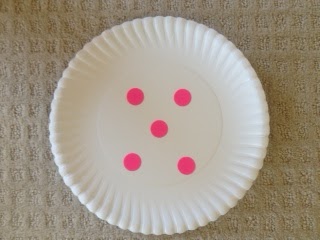
Paper Plates
How about making some dot plates?

Wednesday, October 19, 2022

STEM WITH BLOCKS

I could almost weep when a teacher says, "My administrator made me get rid of my blocks." Take a look at all of these "hands-on" math activities with blocks.  (Looks more interesting than a worksheet to me.)

Sorting – Can they sort like blocks together? Can they regroup the blocks by another attribute?

Numerical Order – Write numerals 0-10 on 2 ½” x 5” pieces of paper and attach to blocks. Can they put the blocks in order? 


Sets and Numerals – Write numerals, number words, and sets on blocks for children to match.


Roll and Stack – Children take one or two dice and roll. They select that number of blocks and stack them as tall as they can.


Counting – How many blocks can you stack?

Math Signs – Write inequality signs, =, +, and – on pieces of paper and attach to blocks. Children can build equations and practice addition and subtraction with the numeral blocks and signs.


Liquid Measurement – Write “cup” on two square blocks. Write “pint” on a rectangular block. How many cups in a pint?


Fractions – What would happen if you cut the square block in half? What would happen if you cut the rectangular block in half? How many ways can you make the square block? Rectangular block?

Measure Up – Children lay on the floor as friends take unit blocks and measure how many blocks long they are. Use different size blocks and compare.

Graphing – Have children draw their faces on 2 ½”” squares. Tape to blocks. Use for comparing and graphing.
For example: You could have a picture of a bus, feet, and a car. Children place their block under the way they travel to school. Which one is more? Less? How can we tell for sure?


Block Book – Cut small shapes out of construction paper to represent the different unit blocks. Glue these to a file folder to make structures similar to the ones shown. Hole punch to create a book. Children look at the drawings and then try to duplicate them with blocks.