photo 3am_dj_home_zps919fb85e.png photo 3am_dj_about_zps7cce4c75.png photo 3am_dj_website_zps73051235.png photo 3am_dj_ss_zps6759ec2a.png photo 3am_dj_bs_zps43e27832.png

Friday, April 1, 2016

RISE AND SHINE IT'S APRIL!!!

                                  
Start April with a smile and a song with this new video!
https://youtu.be/jyAD2OoFuoYAnd, check out drjean.org for great ways to celebrate Poetry Month. You'll find ideas for a poetry club, how to reinforce standards through poetry, how to extend poems with art, and how to turn your students into poets.

                      When your give children a song and rhyme,
                      You give them a gift that will last for all time!

Rise and Shine
Rise and shine, (Bend down, then rise and put arms in air.)
And welcome to school today. (Clap to the beat.)
Rise and shine, (Bend down, then rise and put arms in air.)
And welcome to school today. (Clap.)
Rise and shine, (Bend down, then rise and put arms in air.)
And welcome to school today. (Clap.)
We’re so glad you’re here! (Shake hands.)
A little louder… (Sing loud.)
A little softer… (Sing soft.)
Whisper version… (Whisper words.)
Hint!  When you end songs with a whisper voice it will calm children and prepare them for the next activity.

Thursday, March 31, 2016

CALLING ALL YOU CAMPERS!

A teacher at a recent workshop said, "Dr. Jean, I heard you were going to retire."  Retire!!!  Now, why would I do that when I can go to summer camp and have fun and learn with great teachers like you?  You know that I LOVE what I do, and "God willing and the creek don't rise" (a southern saying), I'm going to keep on doing what I enjoy doing for many more years.
This is what the brochure says you'll learn, but I think being around enthusiastic teachers and sharing with each other is the BEST part!

Tried and True Student Engagement. Engage in dozens and dozens of hands-on activities guaranteed to get kids excited about learning.
Fuel-Injected Literacy and Math. Inject new life into teaching and learning with active, challenges experiences that connect the latest brain research and nurture essential skills.
Standards FUN. Explore ideas for turning the clear learning goals of the state standards into “we-want more” learning opportunities for your children.
Centers Working for You. Experience the magic of learning with 50+ nifty centers that work— and fuse developmentally-appropriate practices with state standards.
Classroom Management Success. Develop successful classroom management skills that eliminate distractions and free-up more teaching and learning time.

I'll look forward to meeting you and sharing my heart and all my ideas with you this summer at one of these locations:
                    Phoenix, AZ   June 21 & 22, 2016
                    Albany, NY   July 26 & 27, 2016
                    Manchester, NH   August 2 & 3, 2016
Go to sde.com to register or download a brochure.

Wednesday, March 30, 2016

STORY STICK STARTERS

Everybody gets writer’s block every now and then. These story sticks might be the cure to prompt your students and motivate them to write.

Materials: jumbo craft sticks (Here I go again with those sticks! No, I don’t have stock in the company!)
pictures of people, places, events
glue, tape
jumbo craft sticks
green, yellow, and orange construction paper
magazines, newspapers

                          
Directions: Cut 3” circles out of each color of construction paper. Let the children cut out pictures of people, places, and events from the magazines and newspapers. You will need 5-10 of each. Glue the pictures of people to the orange circles, the pictures of places to the green circles, and the pictures of events to the yellow circles. Tape the circles to jumbo craft sticks and place them in a cup or can.
Invite the children to choose a stick of each color to help them write a story. The orange will be the WHO/the main character. The green stick will be WHERE/the place. The yellow stick will be the WHAT/the plot.

*Use photos of classmates, the teacher, famous people, animals, etc. for the WHO sticks.
*To encourage informative writing, tie in the story sticks to units of study or current events. For example, you could use pictures of Presidents, habitats, or environmental issues.
*Let two children work together to write a story.
*Place the sticks in the writing center for independent work.


Hint!  For younger children use the story sticks to encourage oral language.  Make sticks with interesting characters or objects and let them choose one or two and create a story using them.
                                        
CHEW and WRITE
I’ve shared this idea before, but if you’ve never done it you might want to give it a try. Give children sugarless gum and explain that they can open it and start chewing when they get their name on their paper and an idea in their head. As long as they are writing they get to chew the gum. When they stop writing they have to throw their gum away. Sure cure for writer’s block!!!!

Tuesday, March 29, 2016

FINGER NEUROBICS - MY LITTLE HANDS KEEP MOVING!!

Yes, those little hands do keep moving, so you might as well focus them in a positive direction. Here’s a video where they demonstrate “finger fitness” that’s good for hand strength, coordination, and the brain:

https://www.youtube.com/watch?v=sB4lXUhRfMU

Can you believe all those finger plays, cheers, handshakes, and brain hugs I’ve been preaching about all these years are actually powerful ways to stimulate the brain? Go figure!!!! Maybe thumb wrestling, patty cake, and rock, scissors, paper are a good thing after all!

During transitions or while trying to focus your students’ attention, wouldn’t it be easy to try some of these finger neurobics? (Yeah, I just came up with that term. Neurobics refers to brain exercises so I just put fingers in front of it.) I adapted the names of the activities to make them more child-friendly. I think it’s important for the teacher to model these and do the exercises with the children so they can see that you are challenged just like them. I’d also remind them that they are good for their brain. (People buy in line, hook, and sinker when they think something will make them smarter!)


See Saw – Palms together. Push your right hand against the left and then push the left hand against the right.
Do the same thing with your thumbs, index fingers, middle finger, ring, and pinky fingers.

Beehive – Cross fingers to make a beehive. Wiggle each bee/finger starting with thumbs as you count from one to ten. Reverse as you count backwards. Cross fingers with the opposite thumb in front and then wiggle each finger.

Spider – Open hands and touch fingertips. Bend in and out. Tap thumbs. Then tap index fingers, middle fingers, ring, and pinky fingers. Reverse. Roll each leg/finger forward and then backwards.

Brain Hug – Thumbs up. Thumbs down. Cross arms. Clasp fingers and bring them down and up close to your chest. Wiggle each finger one at a time.

*Thanks to my grandson K.J. for demonstrating these!

Monday, March 28, 2016

SAME SONG - DIFFERENT VERSE

A teacher came up to me after a workshop and said, “Dr. Jean, all of your songs go to the same ten tunes.” I just laughed and said, “You’re right! That’s what they are so easy to sing!”

Piggyback tunes have been used forever because once the melodies are in the brain you can easily change the words. I read a book called MOZART FOR THE BRAIN several years ago and it pointed out that children can only focus on one thing at a time. It’s difficult to learn words and melodies at the same time, but if the tune is in the brain it is much easier to learn the lyrics.

Everybody knows “BINGO” so here are a few new learning opportunities for this familiar tune.
                       
Zip Code
There is a zip code where we live and we know our zip code.
3 - 2 – 1 – 5 - 5
3 - 2 – 1 – 5 - 5
3 - 2 – 1 – 5 – 5
Now we know our zip code.

                         
Vowels
There are some letters you should know and they are the vowels.
A – E – I – O – U
A – E – I – O - U
A – E – I – O - U
And now you know the vowels.

Senses
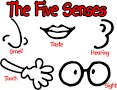
There are five senses that we use to help us learn each day.
See (Point to eyes.)
Hear (Point to ears.)
Smell (Point to nose.)
Taste (Point to mouth.)
Touch (Hold up hands.)
See, hear, smell, taste, touch,

We use them every day.
                                  
Word Families
There is a word family you should know and ILL is it’s name-o.
WILL
FILL
HILL
They end in ILL you know.

Number Bonds
There are some facts that you should know and they all equal seven.
2 + 5
3 + 4
6 + 1
7 + 0

                              
Now it’s time to say good-bye
And end our school day.
We learned a lot today.
We worked hard and we played.
We were kind in many ways.
So long, friends, for today.

Sunday, March 27, 2016

WONDER

This is a day of JOY and WONDER, and no matter what your beliefs, I wanted to share a book about universal goodness. Several weeks ago some teachers were talking about a book for middle school students called WONDER by R. J. Palacio. They were raving about the book and said it was a “must read.” Once I started reading it I couldn’t stop! It’s one of those books that get in your heart and you’ll never forget it!!! I don’t want to say any more, but I wanted to share a few quotes about kindness that the principal shared in the graduation address.
                             
“Such a simple thing, kindness. Such a simple thing. A nice word of encouragement given when needed. An act of friendship. A passing smile… If every single person in this room made it a rule that wherever you are, whenever you can, you will try to act a little kinder than is necessary – the world really would be a better place. And if you do this, if you act just a little kinder than is necessary, someone else, somewhere, someday, may recognize in you, in every single one of you, the face of God.”

I hope your day is filled with WONDER!

Thanks for making this world a better place with your kindness to children every day!


Saturday, March 26, 2016

EGG- STRA, EGG-STRA!

I know you'll be busy today dying eggs, hiding eggs, and getting your bonnets all set for the Easter parade. Tomorrow evening you're going to be asking yourself, "Now what am I going to do with all these plastic eggs?" Take a look at this blog I wrote several years ago and your dilemma is solved.

Write an upper case letter on one half with a permanent marker and the lower case letter on the other half.
*Children can match letters. They can also write words or draw pictures of things that begin with that sound and put them in the egg.
Write onsets (consonants or blends) on one half and rimes (word endings) on the other half. Children twist around and read words. You could also ask children to write the words.
                              
Practice making and reading two letter words by writing a letter on each half. Ask children to write the words or use them in a sentence.Write numerals or number words on the eggs. Children fill with the appropriate amount of beans or paper clips.
Can they write all the different ways they can make five?

                             
Make compound words with eggs.
Let children draw pictures of all the animals that come from eggs.
                           
Write a poem about spring on a small sheet of paper. Fold it up and put it in the egg.Practice addition and subtraction with eggs.
                          
Write sight words or spelling words on the eggs. Write the same word on a 1” x 4” sheet of paper and cut between the letters to make a puzzle. Place puzzle pieces in the egg. Children shake and then open and put the pieces together to make the word.
*You can also put random letters in the egg and ask children to see how many words they can make and write from the letters.

Hint! I have tried both Sharpies and permanent markers and they rub off. I would suggest just putting clear tape on top of the marker.