photo 3am_dj_home_zps919fb85e.png photo 3am_dj_about_zps7cce4c75.png photo 3am_dj_website_zps73051235.png photo 3am_dj_ss_zps6759ec2a.png photo 3am_dj_bs_zps43e27832.png
Showing posts with label Common Core State Standards. Show all posts

Monday, October 13, 2014

DICTIONARY DAY

Did you know that this Thursday, October 16th, is Dictionary Day? It's actually Noah Webster's birthday and a perfect day to let each child make her own personal dictionary.  
                                  
Materials: pocket folder, prepared pages with alphabet letters, markers
*Here’s a link where you can download the pages with letters: http://www.drjean.org/html/monthly_act/act_2007/02_Feb/pg01.html


Saturday, September 6, 2014

GAMES FOR A SUNNY OR A RAINY DAY


Take some of the traditional games you play and turn them into a learning opportunity with these ideas.


Hot Potato 

Children sit on the floor in a circle.  The teacher passes a beanbag to one student and they continue passing the ball around the circle as the teacher plays music.  When the music stops, the child holding the beanbag has to identify the information on the flashcard.  (Allow them to "phone a friend" if they need help with the answer.)

*Adapt this game out on the playground by having children stand in a circle.  Pass a ball and blow a whistle to stop the ball.


Musical Words
Place words on the floor. Put on some music and encourage the children to dance around. When the music stops each child picks up a word and reads it quietly. The teacher points to several children to read their word aloud. Continue dancing and reading.

Red Rover 
Divide the class into two teams facing each other on opposite sides of the room. One team at a time calls for a word from the other team. For example, “Red rover, red rover, send ‘talk’ right over.” You can also ask the child holding the word to gallop, hop, jump, tiptoe, or make another movement as they cross the floor.

Kings and Queens
Line up 6 chairs. Choose 6 girls (queens) to sit in the chairs and 6 boys (kings) to stand behind the chairs. (The rest of the class is the audience.) The teacher holds up a flashcard in front of the first girl and boy. If the boy guesses first he gets to sit in the chair and the girl stands behind him. Continue several rounds with the first 12 children. Then the audience changes places and becomes the new kings and queens.

Around the World
Place chairs in a circle or have students sit on the floor in a circle. One child is chosen to be “it” and go around the world. “It” stands behind the first child. The teacher shows a flashcard. If “it” guesses correctly first they continue “around the world.” If the child sitting guesses first they become the new “it” and travel around the world.

Sentence Makers
Pass out words to children. Think of a sentence using the words. Call out one word at a time and have that child place her word on the floor. Read the sentence together. To vary the game, let one child at a time place words on the floor as they try to create a sentence.

Heads Up Seven Up 

Seven children come to the front of the room and are given a paper plate with a word or whatever on it. The rest of the class places their heads down. The seven tiptoe around and place a plate by a friend before returning to the front of the room. The seven join in and say, “Heads up! Seven up!” Children who received a plate stand up and read their word. They then guess who gave them the plate and switch places.

Friday, September 5, 2014

IN A FLASH!


Let’s face it! If children have to learn skills and are assessed on specific things, we’ve got to play the game. The amount of time different children need to master skills varies widely, so take advantage of all those extra minutes and transitions with these games.   

Catch and Tell
“Catch and Tell” is an example of a “portable” tool that could be used while waiting in the hall.  You will need a bean bag or small sponge ball to play this game. The teacher says a letter and then tosses the ball to a child. That child must name something that begins with that sound before tossing the ball back to the teacher.
This game can be adapted for rhyming words, colors, math, social studies, and other skills.

Kids vs. Teacher - Draw a scorecard on the board with “Kids” on one side and “Teacher” on the other side. Show a word. If a child Teacher raises her hand and correctly reads the word, she gets a point for her team. If any child shouts out the answer, then the teacher gets a point. (If children keep talking out of turn, just continue to put point marks for the teacher!) 


I Have. Who Has? - Make a list of words that you would like to use for this game. Write “I have______. Who has______?” on a sheet of paper and run off multiple copies on cardstock. Write the first word and second word on the first card. Write the second word and third word on the next card, etc. Put a sticker on the first card so that child will know to begin the game. Shuffle up the cards and pass them out to the children. The child with the sticker begins by standing and saying, “I have __. Who as___?” The child with the second card then stands and reads the information on her card. 
                                       
Snowballs - Each child gets a sheet of paper and writes a word wall word, spelling word, math fact, review question ,etc. on it Children wad up their sheet of paper to make it a “snowball.” Divide the class into two teams and have them stand about 10 feet from each other. When the teacher says, “Let it snow!” children begin throwing their snowballs at the opposite side. Children open their snowball and identify the information on it before
throwing it back at the other side. The game continues until the teacher says, “Freeze!” Count up the number of snowballs on each side. Who has more? Who has less? In this game, the team with the smaller amount is actually the winner! Everyone gets a snowball and the game continues.
*At the beginning of the school year write children's names on the snowballs so they can get to know their friends.  
*K.J.'s 4th grade teacher played a game where the students wrote four special things about themselves on a sheet of paper.  They wadded them into snowballs and threw them to the front of the room.  Each student chose a snowball and then they had to hunt and find who it belonged to.
              
Secret Word - Arrange flash cards in a pocket chart or on the floor. Tell the children to close their eyes as you hide a sticker behind one word. “Who knows the secret word where the sticker is hidden?” One at a time children say a word and then come look behind it. The first child to find the sticker gets to be “teacher” and hides the sticker again.

Stomp - Place the words on the floor in the middle of the room. Divide the class into two teams. Choose one child from each team to come up and play. Call out a word. The first child to stomp on it wins a point for their team.

Pick Up
- This game is similar to stomp. The teacher calls out a word and the first child to pick it up wins a point for their team.


Thursday, September 4, 2014

RABBIT TRAPS


My favorite professor Wood Smethurst at Emory University always said, “If you want to catch a rabbit, you have to have a rabbit trap.” If we want children to master skills we have to have games and songs and “traps” to capture their attention and interest.

One time when I did a workshop a teacher remarked, “We’re not allowed to do flashcards.” I imagine a supervisor came in the room and saw the teacher “drilling” students with the cards. All things in moderation is my rule. I think there is a time, place, and creative way to use flash cards. RAN (rapid automatic naming) is a pre-reading skill. Basically, how quickly can a child see something and retrieve the word for it. Flashcards can nurture RAN and offer repetition for students who need a little more time learning a skill.

Over the next several days I will be sharing some quick flash card games you can use when you have a few extra minutes. I suggest making a different set each month for skills children need to automatize. You could make flash cards for words, letters, numerals, math facts, vocabulary, children’s names, and so forth.

Many people make flashcards from sentence strips or index cards. You can also make flashcards on paper plates. The advantage of using plates is that the circle shape tends to pull the eyes to the information in the center rather than the corners.

Note! If children don’t know a word, let them “phone a friend” or “ask the audience.” Instead of saying, “You’re wrong,” try “You’re close. Would you like to phone a friend?”

Stepping Stones - Place words on the floor from one side of the room to the
other. Children read the words as they step on the “stones” and try to get to the other side.

Boom - Write “BOOM!” with a bright marker or glitter on several of the
flashcards. As you “flash” through the cards, children identify the
information. When “BOOM!” appears, children jump up and shout out “Boom!”
*Change the surprise word! For example:“Gobble, Gobble” for Thanksgiving
or “Roarrrrrr” for a dinosaur unit.

                   
Twister - Place the words close together on the floor. One child comes up as the teacher (or another child) calls out a body part and a word. For example, “Put your left hand on the word ‘has.’ Put your right foot on the word ‘do.’” The game continues until the child can no longer twist to the word.

Word Worm - Make a worm’s head from construction paper. Pass out words
to each child. Place the worm’s head on the floor and ask the children to see how long they can make him grow. One child at a time places her word next to the worm’s head. Each child reads the proceeding words, plus their word. 
*Pass out alphabet letters and challenge the children to put the letters in alphabetical order on the bug.
*Pass out circles with numerals and let children come up one at a time and put their numeral in order.

Monday, August 25, 2014

REPETITION, REPETITION, REPETITION!


Whatever the age or activity, repetition is key to learning a new skill. You have to practice until you learn what works and what doesn’t work. Most research suggests you must repeat something 7 times and possibly as many as 12-15 or more times. With children you often have to use encouragement to motivate them to want to practice. 

Purposeful Practice for Automaticity

Now, that’s a phrase that will impress others! Basically, it means when teaching children a new skill they have to practice it until it becomes automatic. Some students with good visual memory skills can remember a sight word after one time. Some students with good auditory skills can remember the tune to a song after singing it one time. Some students with strong motor skills can remember dance steps after doing them one time. Students learn in three main ways: visual, auditory, and kinesthetic. This highlights the importance of providing different learning experiences to meet the needs of the different learners in your classroom.

That’s Boring!
Worksheets and repetitive drill can be boring to children, so take a look at these ideas. They can be adapted from preschool to primary grades by changing the content from colors and shapes to letters and words and math facts.

*The more senses you activate, the more likely the message will get to the brain, and that’s why you’ll find at least two senses (eyes, ears, or motor) in each one. These ideas are simple, quick, and FREE!

Hands Up
Each week cut out 2 hands and write skills you want your students to practice on the hands. Every time they go in and out the door they “high five” the hands and repeat the information. For older students use five hands. The teacher stands at the door and calls out a word or math fact and the students touch the appropriate hand. 

                                       
Visor
Write a letter, word, shape, math fact, etc. on an index card each day and tape it to a visor. One student is the “super” visor of the day. The supervisor stands at the door and does not let friends go out until they say the information on the visor.

Name Badge
Again, write letters, words, numbers, etc. on paper cut to fit in a name badge. Children wear the name badges and walk around the room and greet friends referring to them as the information on the badge. For example: “Hello T.” “Hello M.”

Bracelet
Cut construction paper 1 ½” x 7”. Write skills on the paper and then tape to children’s wrists like a bracelet. During the day frequently call attention to the bracelet by saying, “Show me___.” “Shout out what’s on your bracelet?” “Tell your parents 3 times tonight what is on your bracelet.”


Friday, August 1, 2014

WHAT DAY IS IT?

Did you say August first? Where did summer go? I can’t believe that school is just around the corner. Check out my website today (drjean.org) for dozens of centers you can create for writing, language, and math. Although they are aligned to Common Core Standards, they really are “universal” and can be adapted for any curriculum, state goals, or grade level. 

Here are photos of some of my favorite centers, but you’ll have to go to my website to get directions. 


Shape Monster
I downloaded this “Shape Monster” book when Kalina was visiting and she was so excited to draw the shapes and “read” the book. It’d be perfect for the beginning of the school year.
http://www.hubbardscupboard.org/Shape_Monster_Printable_Booklet_in_Block_Print.PDF

Tuesday, July 8, 2014

ROAD TRIP

I’m on the road again. 
I just can’t wait to get on the road again.
I’ll make lots of new friends,
And I can’t wait to get on the road again…


I’m busy packing for the conference in Las Vegas, but I had to take a break and write this blog. Having children match road signs is a practical way to focus on environmental print as well as the standard “making real life connections between words and their use.” I found these great signs at doodlesandjots.com. If you run off two copies you can cut one up and then let the children use the pieces to match visually like a lotto game. You could also glue these to toilet paper rolls for signs in the block center.

I know some of you will be taking road trips with your own kids over the next few weeks, so download the signs and see how many your children can find along the road. (“Be alert for bears” might be a toughie!)

One year K.J. went on a four-hour car trip with us. I told him ahead of time we were going to play “old fashion family trip” and there would be no radio, CDs, or electronic devices. We would just talk, play games, and sing songs like we used to do in the “olden days.” We didn’t last four hours, but we did have some good laughs playing these car games:
License Plates – Can you find a license plate for every state? Write them down as you find them.
Alphabet – Can you find a word on a billboard that begins with each letter of the alphabet?
I Spy – Colors, shape, beginning sound…inside or outside the car.
20 Questions – People take turns thinking of a person, place, or thing. Other players can ask 20 “yes” - “no” questions to try and determine the answer.
Ghost – This is a spelling game. The first person says a letter. The second person adds another letter. The third person adds another letter and so on. You do not want to spell a word because if you do, you will get a “g.” The word has to be at least four letters long. If someone says a nonsense word, you have a right to challenge them to see what their word might be. If it’s not a legitimate word, then they get a letter. Every time you spell a word you get another letter from the word ghost. The first person to spell out ghost becomes invisible and you don’t talk to them.

What car games do you remember from your childhood?

Tuesday, July 1, 2014

IT'S CHRISTMAS IN JULY!

Seriously, it’s Christmas on my website today. You can download the “I CAN” Center Cards I told you about yesterday, as well over 80 ideas for centers that reinforce Reading Literature and Reading Foundations standards. You’ll also want to download the free song. It’s called “School Cheer” and it’s a take off on “Father Abraham.” There is a pause at the beginning of the song so you can insert your school’s name. It’s a good song to get rid of wiggles, help the children relax, and build a sense of community. 

School Cheer
It’s going to be a great year!
Let’s get started with a cheer!
This song is really cool.
Just fill in the name of your school.

(Name of school) School has many friends.
There are many friends at (name of school).
I am one of them,
And so are you.
So let’s all give a cheer.
Right arm. (Begin moving right arm up and down.)

Continue adding left arm…right foot…left foot…nod your head.
End by singing, “Turn around and sit down.”

Thank Kristine Gough for the ppt to go with the song!

Hello, Friends!
It would be easy to make a class book to go along with the song. Title the book “Hello, Friends!” On each page glue a photo of a different child with “Hello, child’s name!” at the top. Read over the book each morning to start your day, and then let one child take it home each evening to share with their families.


Monday, June 30, 2014

I CAN! WE CAN!

I know you think I’ve been slacking with my blog lately, but wait until you check out the SURPRISE that Carolyn Kisloski and I have been working on! Many districts now require teachers to display focus goals at centers, so we have translated the standards into “child friendly” language with these “I Can Center Cards.”

HOW?
Run the center cards off (2 per page) on card stock and cut them in half.
Hole punch at the top and use book rings for each strand. Flip through the book to display focus goals at learning centers.
Note! Feel free to adapt these for your students, grade level, curriculum, and district’s expectations.

I feel so blessed to have met Carolyn Kisloski who is a kindergarten teacher in New York with a passion for sharing with other teachers. Her blog is Kindergarten: Holding Hands and Sticking Together (http://ckisloski.blogspot.com/). Carolyn has already started using the cards in her classroom.

So, now that I’ve got your attention, would you like to know how you can get your FREE download of the “I Can” cards? 

drjean.org (Click on "Christmas in July" and then click "I Can"Center Cards)
You can also go to Carolyn's blog or her TPT store:
http://ckisloski.blogspot.com/ 
http://www.teacherspayteachers.com/Store/Carolyn-Kisloski  

Saturday, June 14, 2014

PLAY DOUGH 102


Writing 
Make something you like (or don’t like) and write about it. 
                       
Make something from a book you have read and write about it.

Take a small piece of red play dough and blue play dough and squeeze them together. What happens? Write about it.

Make something and then tell/write 3 things about it.

Language
Make letter plates by writing letters with a permanent marker on plastic plates. Children roll play dough and make the letters on top.  Can they make something that starts with that sound?


Make letters (or words) using a bubble font. Children roll dough and fill in.


Make something that is a noun. How can you make it plural?

Make punctuation marks out of play dough. Add to a sentence for a friend to read.


Friday, June 13, 2014

PLAY DOUGH 101


After thinking about Kalina’s play dough octopus, I thought it might be interesting to explore different ways you could use play dough in centers to reinforce skills. Multi-sensory, engaging, creative, open-ended…here we go! 

Reading Literature
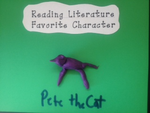
Let children make their favorite character and use it to retell a story.

Draw a scene from a story and add details with play dough.

Reading for Information
Make something that you learned from the book.

Reading Foundations
Rhymes – Make two objects that rhyme. 

                                        
Sounds – Make objects that start with a consonant, blend, or diagraph you are working on.
Vowels- Make an object for a long vowel sound and short vowel sound.

Silly Putty
Here’s another idea a second grade teacher shared for keeping those fingers busy! She asks each parent to provide a container of silly putty that the children keep in their pencil box. If they finish their work early, they use the silly putty to create something that relates to a reading skill, math concept, science unit, etc.


Saturday, June 7, 2014

COMMON CORE KARAOKE

It takes a village to raise a child, and it takes a team to create something exciting for children! Sam Williams (kindergarten teacher extraordinaire), Michelle Tsivgadellis (3amteacher and delightful graphics designer), and Alex May (webmaster genius) and I have been working on “Common Core Karaoke" for 6 months. Our goal was to take some of my songs that children enjoy and use them as a springboard to reinforce skills and standards.

Each song packet is full of many tools and suggestions to make
reading come to life in your classroom. Every packet includes:
· Download of the song
· A colorful sing and read book
· A reproducible independent reading book
· Lyric sheet
· Extension Activities
· Common Core “I Can” Statements for ELA and Math
* Each packet also comes with reproducibles to use in your Daily 5
Centers. 

                          
Our first series includes these four songs that will be perfect for the beginning of the school year:
“Color Farm”
“Shape Family”
“Nursery Rhyme Rap”
“Five Little Hotdogs”

What every classroom needs in the coming school year is a little more JOY, and we hope our songs, books, and activities will add some smiles and fun to your day. Song packets are $4.95 each or $16.00 for the series of four. And, yes, we’ve got more series scheduled to come in the next year. We can’t wait to hear your feedback and suggestions for making “Common Core Karaoke” even better!

Here are the TPT links:
Color Farm
http://www.teacherspayteachers.com/Product/Color-Farm-1263696

Little Hot Dogs
http://www.teacherspayteachers.com/Product/Five-Little-Hot-Dogs-1263699

Nursery Rhyme Rap 

Wednesday, June 4, 2014

FINGER PLAY MATH

Fish 
One, two, three, four, five – (Hold up fingers on right hand one at a time.)
I caught a fish alive. (Clap palms as if catching a fish.)
Six, seven, eight, nine, ten – (Hold up fingers on left hand as you count.)
I let it go again. (Open up palms and pretend to release a fish.)
Why did you let that fishy go? (Shrug shoulders.)
Because it bit my finger so. (Hold up pinky.)
Which finger did it bite?
My little finger on the right.

Counting
Cut out ten paper fish and write the numerals 1-10 on them. Mix them up and then ask the children to put them in order.
*Make 20 fish for older students. 

                   
Five Little Seashells
Five little seashells lying on the shore. (Hold up 5 fingers.)
Swish went the waves, and then there were four. (Swoop hands up.)
Four little seashells, cozy as can be. (Hold up 4 fingers.)
Swish went the waves, and then there were three. (Swoop hands.)
Three little seashells, all pearly new. (Hold up 3 fingers.)
Swish went the waves and then there were two. (Swoop hands.)
Two little seashells, sleeping in the sun. (Hold up 2 fingers.)
Swish went the waves, and then there was one. (Swoop hands.)
One little seashell left all alone. (Hold up 1 finger.)
It whispered, “Shhh,”as I took it home. (Index finger by lips.)

Sets
Let children draw pictures of underwater scenes.  Write a different numeral on each one and give children seashells to make the appropriate set.
*Give children five seashells. How many different ways can they group them to make five?  

Hint!  A great place to buy shells is a dollar store.

Tuesday, June 3, 2014

SOUNDS FISHY!

In celebration of summer, over the next week I will be focusing on fish with tales, finger plays, songs, snacks, art projects, and science. Here we go with "Mitch the Fish." This file folder story is an adaptation of “Scat the Cat” that I published in a book 25 years ago. I hope your children say, “Do it again! Do it again!” 

Materials: file folder, 2 orange, 1 red, 1 yellow, 1 blue, and 1 black construction paper

Cut a fish shape out of the front of the file folder. Run off the story below and glue it to the back of the file folder so you can read it as you remove one sheet of paper at a time. Insert the paper in the file folder in this order: orange, red, yellow, blue, black, orange (You might need to trim down the construction paper to 8” x 10”. I used a dot sticker for the eye, and yes, I have to put a smile on everything!)

MITCH THE FISH
Once there was an orange fish named Mitch who could change his color with the swish of his tail. All he had to say was:
         I’m Mitch the fish.
         I swim and I swish.
         And I can change my color
         If I wish.
One day he was swimming around the ocean floor when he saw a red lobster. He thought it would be fun to be a bright color like the lobster so he said:
         I’m Mitch the fish.
         I swim and I swish.

         And I can change my color 
         If I wish.
                             
Suddenly he turned red. (Remove the orange sheet of paper to make Mitch red.) The lobster said, “I’m the only sea creature who can be red. I’ll snap at you!” So Mitch decided he didn’t want to be red anymore. Just then he saw a yellow starfish, so he said:
         I’m Mitch the fish...
And with a swish Mitch turned yellow. (Remove the red paper to show the yellow.) The starfish said, “I’m the only creature who can be yellow. I’ll prickle you!” So Mitch decided he didn’t want to be yellow anymore.
Then he saw a blue whale and said:
         I’m Mitch the fish...
And with a swish Mitch turned blue. The whale said, “I’m the only creature who can be blue. I’ll flip you with my tail!” So Mitch decide he didn’t want to be blue anymore. He saw a big, black shark and said:
         I’m Mitch the fish...
And with a swish Mitch turned black. The shark said, “I’m the only creature who can be black. I’ll poke you!” Mitch realized the best thing to be was himself, so once more he said:
         I’m Mitch the fish...
He turned back into being an orange fish because being yourself is always the very best thing to be!

Research
Look on the internet to find different creatures in the sea. How many colors can you find?

Retelling a Story
Make a story bracelet so children can retell the story in sequential order.
String an orange, red, yellow, blue, black, and orange bead on a pipe cleaner. Twist the ends to make a bracelet.

Writing

Creative - If you lived in the sea, what would you be?
Descriptive -If you were in the ocean, what would you see? Hear? Taste?  Touch?


Thursday, May 29, 2014

I'VE GOT THE WHOLE STORY IN MY HAND!

Good readers are active readers and they are always looking for information. Prompt children to recall details by singing this song before you read a book.

I’ve Got the Whole Story in My Hands
(Tune: “He’s Got the Whole World in His Hands”)
         I’ve got the whole story in my hand, (Hold up your hand.)
         I’ve got the whole story in my hand,
         I’ve got the whole story in my hand,
         And I can read.
         I’ve got the who, what, when, where, why…
         And I can read! (Hold up 1 finger at a time.)

Who? What? Where? When? Why?
(Tune: “Ten Little Indians”)
         Who? What? Where? When? Why?
         Who? What? Where? When? Why?
         Who? What? Where? When? Why?
         Ask questions when you read. 


Story Sticks 
You will need large craft sticks and a sock for this project. Write a different story element (characters, setting, problem, resolution, etc.) on each stick with a marker. Place the sticks in the sock and throw the sock over your shoulder before you begin to read. It will be a reminder to your class to focus on those things. After reading the story, let different students choose a stick and tell that part of the story.
*Write story elements on index cards and put them in a sack.
*Vary the sticks by adding author, illustrator, title, beginning, middle, end, etc. or who, what, where, when, why.

Story Map 
Graphic organizers give children a “picture” for their minds.
Go to readwritethink.org/materials/storymap/ for ideas about story maps.


Saturday, May 24, 2014

MATH NEWS

You can even recycle newspapers and catalogs to create math activities!

Numbers (K.CC.1)
Can you find the numbers 1-10, cut them out, and them glue them in order?

Sets (K.CC.4)
Write numerals 1-5 and cut out sets for each one. 

                     
Scoreboard (K.CC.6)
Cut out scores from the sports page. Can you tell which is more and which is less?

Addition (K.OA.3)
Cut out two pictures. Make up a number story based on objects in each picture.

Shapes (K.G.2)
Can you find a picture of a square, triangle, or circle? Can you find pictures of solid (3-dimensional) shapes?

Sorts (K.MD.3)
Fold a sheet of paper in half. Cut out objects that are alike and glue them on the same side. Can you give your sorting rule?

Have I got your creative juices going?  What else can you add to this list?

Friday, May 23, 2014

READ ALL ABOUT IT!

Use these ideas now or "recycle" them next year in learning centers!


Bookmark (RF.K.3c)
Make a bookmark from a 2” x 8 ½” piece of construction paper. Cut out words you can read and glue them to the bookmark.

Verb Collage (L.K.5a)
Cut out verbs and make a collage.
*You could also make a collage of adjectives, adverbs, high frequency words, and so forth. 


Fact and Opinion
Cut out a picture. Can you tell two facts about the picture? Can you give an opinion about the picture? 


ABC Order (RF.K.1d)
Can you find a word or picture for each letter of the alphabet? (This takes a LONG time and could be something children work on for a week.)

What Will Happen Next? (W.K.3)
Cut out a picture and write a story about what you think will happen next.

Fiction – Nonfiction (RL.K.5)
Cut out a picture of something that is pretend/fiction. Cut out a picture of something that is real/nonfiction. Can you explain the difference?

Sequencing (SL.K.4)
Cut out comic strips and cut them apart. Can you put them back together and retell the story?
*Can your friend put them back together in correct order?


Picture Talk (W.K.2) 
Find a picture and write something about it.