photo 3am_dj_home_zps919fb85e.png photo 3am_dj_about_zps7cce4c75.png photo 3am_dj_website_zps73051235.png photo 3am_dj_ss_zps6759ec2a.png photo 3am_dj_bs_zps43e27832.png
Showing posts with label Reading. Show all posts

Monday, September 14, 2026

WINNING WAYS WITH PARENTS

In Amanda Ripley’s book THE SMARTEST KIDS IN THE WORLD, one of the most interesting findings was that what parents did at home mattered significantly. Reading to children and talking about school was very important. Parents showed their children they valued education by asking about school, what they learned, what they liked, etc. Parents who modeled reading also had a positive impact.


Here are a few tips to encourage parents to communicate with their children about school.

Journal
Make daily journals for students by putting white paper in a pocket folder. At the end of each day students draw what they learned and dictate or write a sentence to go with their drawing. The journal goes home each evening so children can discuss what they did at school with their parents. The parents sign the journal, write comments or compliments, and return it the following day.


Conversation Starters
Make copies of the attached conversations starters. (Adapt them to your age level and curriculum.) Cut them apart and put them in a bag. Children draw one as they leave at the end of the day and give it to their parents to prompt a discussion about what they did.
https://drive.google.com/file/d/0B1SnEagA4jlja2w2OWtzRjlIdkk/view?usp=sharing


Hint! One school suggested that parents "turn it off" in the car when they picked up their child. The quiet time might encourage children to talk about school because they'd know they had their parent's undivided attention.


Screen Time Survey
Ask parents to keep a log of how much time their child spends in front of a screen for a week. The following week ask them to “turn it off” and spend an equal amount of time reading, playing games, doing chores around the house, etc. with their child.


Brain Tickets
Run off brain tickets similar to the ones below. To earn a brain ticket children need to tell the teacher one new thing they learned at the end of each day. Explain to the parents that their job is to ask their child what she learned to earn the ticket.


https://drive.google.com/file/d/0B1SnEagA4jljUmNfQTJld3VsV00/view?usp=sharing

HERE'S A GREAT ARTICLE BY LAURA PEARSON TO SHARE WITH PARENTS!

Building Friendship Skills at Home to Boost Kids’ Confidence at School

For busy parents of elementary and middle school kids, few things sting like hearing that making friends at school feels confusing or lonely. Many children face social development challenges that show up as missed cues, awkward starts, or conflicts that seem to come out of nowhere, even when they’re bright and kind. Children’s friendship skills shape daily comfort in the classroom, on the playground, and in group work, where peer relationships in childhood can either support learning or drain a child’s energy. A steady parental role in social skills helps kids build the confidence and habits that make school days easier.

Understanding Friendship Skills Kids Can Practice Anywhere

Friendship skills are small, learnable behaviors that help kids connect: starting a chat, taking turns talking, sharing space or materials, and noticing who is being left out. These are part of the social and conversational rules that make interactions feel smooth instead of confusing.

When kids practice these moves at home and in clubs or sports, they build social understanding they can reuse at school. Even a few extra back-and-forth exchanges matter, because conversational turns support the kind of listening and responding that friendships need.

Think of it like a rehearsal. If your child practices greeting a neighbor, sharing the remote with a sibling, and inviting a cousin into a game, school interactions feel less like guesswork. That’s why simple animated stories can make greetings, turn-taking, and including peers feel easy to repeat.

Create 5-Minute Animated Social Stories to Practice Friend Moves

Once your child can name “friend moves” like greetings, turn-taking, and inviting someone in, seeing them play out in a story makes the skills easier to remember and try. Parents and kids can use an AI animation generator to turn friendship lessons into fun visual stories you watch together and talk about. Tools like an AI animation generator can quickly transform simple text prompts, quick sketches, or images into lively 2D or 3D animations, no advanced design skills required, so it’s easier to bring your child’s ideas to life in an animated video. One day your story might show a friendly “Hi” at the classroom door; another might model a back-and-forth conversation where each person takes a turn; another could show how to invite a peer to join a game.

The process of creating shared comics, storyboards, or animation-style images is practice, too: kids get to share ideas, listen to yours, take conversational turns, and cooperate as you build the story together. That low-pressure teamwork can help them feel more confident using the same skills with classmates. If you’d like a simple place to start, Adobe Firefly AI animator can help you generate animated scenes from prompts or visuals.

Habits That Grow Friendship Skills All Week

Small, repeatable habits turn “friend moves” into automatic choices at school. When you practice briefly and consistently, your child builds confidence without feeling coached all day.

Two-Minute Connection Warm-Up

      What it is: Practice one greeting, one question, and one compliment before school.

      How often: Daily

      Why it helps: It makes friendly openings feel natural in the hallway.

Model-It-First Moments

      What it is: Let your child see you introduce yourself and include someone.

      How often: Weekly

      Why it helps: Kids copy what they notice, especially under pressure.

Coach-and-Release Script

      What it is: Rehearse one sentence for joining play, then let them try.

      How often: Per milestone

      Why it helps: It supports independence while lowering anxiety.

Inclusion Check-In

      What it is: Ask who sat alone, then plan one kind invite tomorrow.

      How often: Three times weekly

      Why it helps: It builds empathy and social-emotional development.

Screen-to-Scene Swap

      What it is: Trade 10 minutes of scrolling for face-to-face talk or play.

      How often: Weekly

      Why it helps: It counters losing the opportunity to develop everyday connection skills.

Friendship Skills Questions Parents Ask Most

Q: How can I help a shy child without pushing too hard?
A: Keep it small and predictable: practice one greeting at home, then stop. Turning it into a game can lower pressure, and practice at home gives your child a “safe rehearsal” before school. Praise effort, not outcomes.

Q: What should I say when my child tells me they were left out?
A: Start with empathy: “That sounds really painful.” Then help them pick one next step they can control, like asking one classmate to partner up tomorrow. Avoid rushing to solve it immediately, which can make them feel powerless.

Q: Why does my child copy friends or act differently to fit in?
A: Wanting to belong is normal, especially in elementary and middle grades. Research with more than 350 fourth and fifth grade students shows fear of rejection can shape peer behavior. Try talking about “kind choices” versus “popular choices” and role-play a calm boundary.

Q: When should I step in with the teacher or school?
A: Step in if there is repeated exclusion, name-calling, threats, or your child seems anxious about attending school. Share concrete examples and ask what supports are available, like lunch buddies or structured group work. You can advocate while still building your child’s skills.

Q: Should I arrange playdates if my child struggles socially?
A: Yes, but keep them short and low-stakes, ideally with one child and a clear activity. Choose settings where taking turns is natural, like a simple game or craft. Afterward, ask one question about what felt easiest, then celebrate that.

Grow School Friendships by Practicing One Skill at a Time

Kids can feel stuck when friendships get confusing, especially after rejection or when shyness makes reaching out feel risky, and parents often worry about doing too much or too little. The steadier path is gentle parental involvement in friendship: notice patterns, reinforce social skills with calm coaching, and treat practice as ongoing rather than a one-time fix. Over time, that approach supports social success at school by helping children read situations, recover from bumps, and stay connected with peers. Small, repeated practice builds the confidence kids need to keep trying with peers. 

Friday, September 11, 2026

READ AT HOME

Here's an idea for active learning that will involve families and encourage children to read, read, read. You can buy these or just start simple by creating two book bags. You could rotate these through your class for a month so each child would have two turns with different books and animals. Children will anticipate "their turn" and taking the bag home.

BOOK BAGS
Directions: Place a book and coordinating toy in each bag. Add blank paper, crayons, and a pencil. Rotate allowing children to take home “book buddy” bags. Remind them to do each of the activities below before returning the book bag to school.

1. Read the book to yourself.

2. Read the book to your book buddy (stuffed animal).

3. Read the book in the mirror.

4. Read the book to someone in your family.

5. Read the book one more time to your pet, a toy, or something else.

6. Draw a picture of your favorite part of the story.

When children return the book bag to school, invite them to sit in the “teacher’s chair” or "reader's chair" and read a few pages to their classmates.


TAKE HOME TEDDY
Put a stuffed bear (or other animal), spiral notebook, and pencil in a backpack. Choose a different child to take home the backpack each evening. The child writes or dictates a story to their parents about the bear.
*Just for fun add a toothbrush, pajamas, and other items for the bear.


PARENT LETTER
Here is a letter for parents that you can adapt to reinforce the important role that they play in helping their children learn to read.

Dear Parents,

You’ve heard it before, and I’ll say it again. You are your child’s first and most important teacher! The best way to help your child learn to read is to read, read, read!

Model reading in front of your child. Read directions on recipes, the newspaper, labels on clothing, and street signs. Show your child the importance of reading, and also the pleasure we can get from reading.

Set aside a special time each day to read with your child. It might be right before bed, or you could wake your child up each morning with a story.

Point your finger under the words as you read them.

Talk about the title of the book, the author, illustrator, etc. What is the setting? Who are the characters? Could this really happen or is it just pretend? 

Take your child to the library. Help your child get her own library card and take responsibility for books.

Create a special basket or shelf in your home where you keep books and magazines for your child to read. You might also want to keep a backpack filled with books in your car.

Happy reading!


Friday, September 4, 2026

READ A BOOK DAY


There are some things I just cannot part with…such as my favorite books I loved to read to my own children and the children in my classroom. Like anything, the teacher adds the magic to a book. If you love a book, then I can guarantee you that your enthusiasm will make your listeners love it as well.

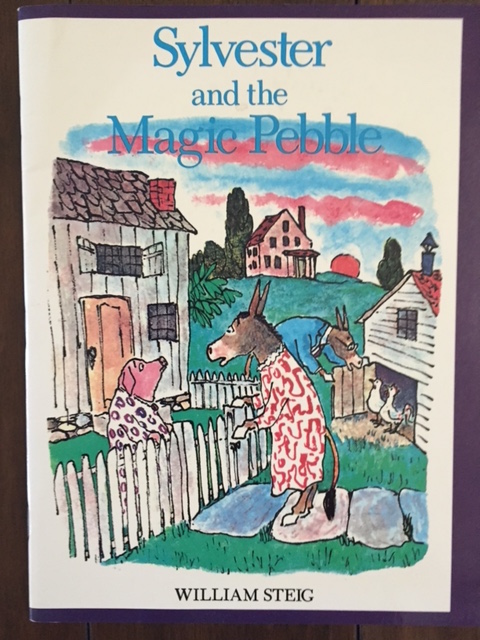
When Kalina visited many years ago I got out my “antique” collection to share with her. I just couldn’t let her grow up and not know about Ping or Sylvester or Sal. The world has changed, but Kalina and I delighted/devoured/enjoyed/savored/appreciated the books as if it time had stopped. Reading these books was like giving her a little bit of my life.  
*I wish she were five years old again and I could hold her in my lap!


The interesting thing is that as I was reading the books I looked at them through my “standard” lenses. I didn’t realize when I read Morris the Moose books that I was introducing double meanings of words. Chicken Soup with Rice was perfect for phonological awareness and Ping showed what life is like on the Yangtze River. We counted the dogs in Madeline, Sylvester was exploding with vocabulary, and we recalled the sequence of events in The Mitten. It is true that you can still teach children everything with a good book. But, I didn’t have to TEACH children with the books – they will just learned in a natural and meaningful way.


Good books are like good friends that you want to visit again and again!

Saturday, August 29, 2026

SEPTEMBER HOLIDAYS


One of the best ways to make September memorable is to celebrate some special days. Over the next few days I'll share how to take some crazy national holidays and turn them into learning opportunities with songs, games, and crafts. Who would have thought that there was a National Bubble Gum Day or Play Dough Day? Get ready for a GOOD TIME! 


Friday, June 5, 2026

GREAT TEACHERS 102


Reading through the notes teachers share at my workshops is like finding a prize in a box of Cracker Jacks! Look through this list from a conference in North Carolina in 2012 and I guarantee you’ll find something to add a sparkle to your new school year!


Funtime Center (Michele Montgomery)
Ask parents to send in cereal boxes. Cut off the back and laminate. Place in a reading bin with dry erase markers and allow students to work the puzzles if they finish their work early.
*You can also collect kids’ menus from restaurants and laminate.


Pick Up Sticks Sight Words (Lesley Whitman)
Write sight words on popsicle sticks. The children use wooden skewers to try and pick up sticks without moving any of the other sticks. Encourage them to read the word on the stick.
*You could make a similar game with letters, math facts, etc.


Magazine Pictures (Lesley Whitman)
Cut out odd magazine pictures and glue them on cardstock and laminate. For the pre-k children pass out a pictures and let each child talk about their picture. It’s a great way for making inferences and encouraging complete sentences.
*In kindergarten put several pictures in a basket and let children draw a picture and then write about it.


Baby Fish Fingers (Deborah Morales)
Tell the children that their thumb and index finger are their baby fish. When they need to open anything they should use their baby fish. (Works like a charm for ketchup packets.)
At circle time tell them to put their baby fish in their fish bowl (hole created by sitting cross legged).


Cutting Shoebox (Chris Lance)
To encourage children to practice cutting at home by asking parents to fill a shoebox with junk mail and safety scissors. Keep the box on top of the refrigerator and bring it down when parents are busy cooking dinner.

Stretching Sounds (Maria Bristal)
Buy little plastic slinkies at the dollar store and let the children use these to stretch out words.


Write Your Name on Your Paper (Christy Jones)
Sing this song to the tune of “If You’re Happy and You Know It.”
Write your name on your paper,
Write your name.
Write your name on your paper,
Write your name.
If you don’t write your name,
Then they all look the same.
Write your name on your paper,
Write your name.


Greetings (Jennifer M. Britt)
Greetings are so important and you can use an apron with different types of greetings for kids to choose. 
 An adaptation to this would be to make a wheel (like Wheel of Fortune) and use picture symbols to represent the different handshakes (biker, fisherman, butterfly, thumb kiss, Spiderman, hand hug, farmer, etc.) 
*You could also use a wheel and spinner for cheers, songs, etc.


Bike Safety (Jennifer Britt)
Talk about bike safety and let the children suggest rules, such as wearing a helmet, looking all around before getting on their bike, etc.
* Let children make a license with their picture, date of birth, address, eye color, hair, address, etc.


Snowman Counting (Debbie Stowe)
You will need cups, cotton balls, and tweezers for this activity. Draw snowmen on cups and write the numerals 1-10 on their tummies. Children use tweezers to pick up snowballs (cotton balls) because they are too cold. Can they place the correct number of snowballs in each cup?


Paint Paddles and Clothespins (Mary Jane Long)
Write numerals vertically down a paint paddle. (They'll usually donate these at a paint store.)  When the teacher says, “Show me 4,” the children attach a clothespin to the numeral and hold up their answer. You can use paddles for addition, subtraction, and other math skills.
*Make paddles with letters, shapes, etc.


Rotten Apple (Mary Jane Long)
Use die cut apples for this game. On the apples write letters, numbers, words, or whatever skill you are working on. On a few apples write “rotten apple.” Children take turns choosing apples and identifying the information. They must put all their apples back if they pick the “rotten apple.”
*Adapt throughout the year with a broken heart in February, cracked egg in April, melting snowman in January, etc.


Hey There Neighbor! (Ruth Ann Tensi)
Hey, there, neighbor! (shake hands)
What do you say? (switch hands)
It’s going to be a great day. (reach up diagonally)
Greet your friends. (high 10’s)
And boogie on down. (shake bottom while bending knees)
Give ‘em a bump (bump hips gently)
And turn around. (turn around in place)
*Count to ten while they find a new partner.


Hang Those Letters Down (Kate Barnes)
Boys and girls, some letters stand tall. (arms up)
Some sit on the wall (arms straight out)
And some fall.
I’ll show you what to do with those letters in a minute.
Let’s go through the alphabet.
a, b, c, d, e, f, g
g?!
Hang those letters down down 
(Sing to the tune of “100 Bottles of Pop on the Wall”) 
Hang those letters down.
Some letters stand tall, 
Some sit on the wall,
Some hang those letters down.
h, i, j
j?! (Repeat above chant.)


Pencil Grip (Ann Blackard)
Break crayons in half and children will use three fingers. Golf pencils also encourage children to use three fingers.


Author/Illustrator Party (Denise Catoe)
At the end of the year have an author and illustrator party using children’s individual books they’ve made in the classroom. It’s a way to celebrate writing throughout the year. Parents are invited to attend and cookies and drinks are served.

Sunday, May 17, 2026

SKILLS GALORE OUTDOORS

Sometimes you just have to think outside the box to make standards more fun!

Reading Tree
Choose a poetry book, storybook, and non-fiction book to read outside under a shady tree. Can the children identify the books?


Reading Buddies
Divide children into pairs and let them each choose a favorite book. Go out on the playground, find a shady spot, and enjoy sharing their books with each other.
*Encourage them to ask each other questions about the books they read.


Alphabet Walk

Write letters on a paved surface with chalk. Challenge the children to step on the letters as they name them. Can they think of something that starts with each sound.


Word Hopscotch
Draw a hopscotch grid on a paved surface. Write high frequency words in each section. Children hop on the spaces as they read the words.


Talking Stick
Choose a stick on the playground and then have the children sit in a circle under a tree. Explain that you will start a story. As you pass the stick around, the child holding the stick can add to the story. Only the person holding the stick is allowed to talk. You might want to start a story about the day a space ship landed on the playground or the day animals started to talk.


Prepositions on the Move
Using playground equipment, call out various prepositions, such as on, off, over, under, by, between, to, from for the children to demonstrate.


We Can Do Opposites

Gather children around playground equipment and tell them you will call out a word. Can they demonstrate the opposite? For example, if the teacher said down, the children would climb up. If the teacher said front, the children would move to the back. Other words could be over, behind, inside, and so forth.


Verb Relays
Divide children into relay teams. The teacher names a verb and the children act out the meaning until everyone on their team has completed the movement. For example, you could have them walk, march, strut, prance, and so forth.
*It's a good way to integrate synonyms!


Wednesday, May 13, 2026

SUMMERTIME READING

Whether you teach summer school, work at a camp, or have children at home, a major goal will be to encourage them to read and write this summer. Here are some ideas to share with parents to help their children FALL IN LOVE WITH READING!


Explore Your Library
The library is a magical place that will open a world of books to children. When children get to choose their own books, it’s a powerful hook to get them to read. Most libraries have summer reading programs, as well as puppet shows and special events.
*Hint! Let children decorate a cloth bag to store books from the library. Keep it in a special place to encourage children to be responsible.

Noises Off
Have a quiet time each day when all devices are TURNED OFF. If you don’t make this a priority and routine, it won’t happen. Not only should you expect your children to read, you need to enjoy a book and be a good model for them. In the book THE SMARTEST KIDS IN THE WORLD, an interesting finding was that parents who read with their children and modeled reading had a positive impact on academic success.

Rabbit Trap
“If you want to catch a rabbit, you have to have a rabbit trap.” And, if you want children to read, you have to create a unique place where they will want to read.
*Let children decorate a cardboard appliance box to be a “book clubhouse.”
*Put pillows and stuffed animals in a small plastic pool so they can “dive in” and read.
*Make a tent and let them read with a flashlight.
*Brainstorm other places that would be fun to read.

Treasure Hunt Story
Prepare clues that will lead to a “treasure story.” (This is a special book that you have hidden outside.) For example:
1. A treasure hunt is so much fun. Near the swing is clue number one.
2. Clue number two should be easy, too. At the top of the slide is something for you.
3. Clue number three you will find in a tree.
4. Now it’s time for clue number four. Look for it by the storage door…
Tape the clues around your yard or playground ending with the spot where the “treasure story” is hidden. Encourage the children to help you read the clues and follow the directions. Find a shady spot outside and enjoy reading the book.

Paper and Pencils
*How about a spiral notebook or diary where you encourage children to write each day?
*Give children paper and envelopes to send letters to relatives and school classmates.
*Involve children in making shopping lists, chore charts, and other print activities.
*What child won’t want to write if you give them sticky notes to make labels and reminders?
*Clipboards and markers are good for a car trip or walk in the neighborhood.


Busy Box 
Fill a shoebox or plastic tub with scrap paper, pens, pencils, markers, hole punch, scissors, glue stick, stickers, lunch bags, envelopes, silly putty, etc. When you have to fix dinner or need a break, get it out and encourage children use their imaginations.

Chalk Talk
Chalk can provide endless writing and reading opportunities.
*Children can decorate a paved surface for a birthday, Father’s Day, or other event.
*Children can practice writing words or drawing shapes.
*Draw a hopscotch design with chalk on a paved surface. Write letters or numerals in each section for the children to identify as they hop and play.

Reading and writing should be a JOY, not a chore. The trick is finding the right book that they will WANT to read and finding something they WANT to write about.
Happy reading and writing!!

Monday, May 4, 2026

SUMMER SKILLS KITS

As summer approaches, I know you’re brainstorming ways to encourage children to read, write, and practice skills over their summer vacation. Here are a few projects that may encourage your students to continue to practice sight words.

Note! You can adapt these activities to letters, math facts, or other skills you want the children to master.

Treasure Boxes
Ask parents to send in empty mint cans. Cut paper into 1 ¾” by 3” rectangles. Have children write sight words on these rectangles and store them their containers.


Hint! Explain that lifetime words are words you will need to be able to read all your life. They are like a “treasure” because they will belong to you forever!!!


Word Pockets
Seal envelopes and cut in half. Cut down 1” from each side and fold down the flap as shown. Punch holes in the sides and tie on a piece of string or yarn. Give children strips of paper cut 2 1/2” x 4” on which to write their sight words. Students can take the words home in their little pockets for summertime practice.


How about some games parents and children can play with the flashcards?

Hide and Seek
Hide the words around the room. Children find them one at a time, bring them to you, and read them.

Sentence Makers
Children choose a word and use it in a sentence.
*Older students could write a sentence.

Sidewalk Words
Children practice writing words with chalk on the sidewalk.

Sort the Words
Put all the one letter words together, two letter words, three letter words, and so forth.
Sort the nouns and verbs.
Sort the words by syllables.

Can You Find?
Can you find the words in a book? Can you find them printed on food labels or other things around the house?

sightwords.com is a website I'd definitely recommend to parents. It's a good free resource.

Saturday, May 2, 2026

SUMMER READS AND FAMILY FUN CALENDAR

Reading is like anything else. The more you do it, the better you will become. Here are a few ideas to get children started on a summer reading adventure.

Library Card

What better gift can you give your students at the end of the year than a library card? Take a field trip to your local library or ask the children’s librarian to visit your school and describe all their summer reading activities.


Summer Reading List

It’s easy to do an internet search and find a suggested reading list for your grade level. Parents would probably appreciate this when helping their child choose books to read over the summer.


*I think this summer reading challenge at Scholastic.com is perfect for any reading level:
https://www.scholastic.com/parents/books-and-reading/raise-a-reader-blog/reading-challenges-kids.html
This summer’s reading challenges will encourage kids to expand their learning horizons this season and beyond. Packed with fresh new ideas for summer reading fun, your child will be inspired by the limitless wonder found in books. Variety is key to encouraging reader engagement — for young readers, reluctant readers, and avid readers alike! 

This reading challenge consists of 10 badges for children to color in as they complete each reading goal. With fun-filled stories to read on-the-go and bright new books to enjoy under the sun, who says summer reading has to feel like a chore? 


Family Fun Calendar
Here’s a summer calendar that you can run off for your students. Glue it to a heavy piece of cardboard and attach a string so it can be hung up in their home. Read over the activities to motivate your students, and then let them decorate their calendars with markers or crayons.


Bucket of “Fun” 
You can buy sand buckets or just use a plastic cup like I did. Punch holes and add a pipe cleaner handle. Let children decorate their “buckets of fun” with markers, stickers, etc.


Make a list of activities that children can do with their families over the summer to reinforce skills you’ve worked on during the school year. Cut into strips and place in the buckets. Send the bucket home with a note encouraging the parents to let their child select a strip each day and do the activity.

Some examples might include:
Read a story with your parents. Tell what happened at the beginning, middle, and end of the story. What do you think will happen next?
Play a rhyming game. How many words can you think of that rhyme with "can"? "Pot"?
"Book"? "Coat"? "Sheep"? "Like"?
Trace around your hand and your foot. What can you make out of them?
Count as high as you can. Can you count by 2's, 5's, and 1O's?
Ask your parents to teach you a song they learned when they were your age.
Look in your kitchen pantry. How many labels can you read?
How many ways can you move? Can you hop, skip, jump, gallop, tiptoe, walk
backwards?
Can you draw a circle, oval, square, rectangle, and triangle? What other shapes can
you draw?
Write a special letter to someone in your house.
Look at some of your baby pictures. How have you changed?
Find something that begins with these letters: B, H, S, M, L,
Draw a picture of your neighborhood.
Make a list of 5 things that are non-living. Make a list of 5 things that are living.
Do you have a library card? Visit your library and check out some books.
Do a job around the house.
Write your name on a piece of paper - first, middle, and last. What are your initials?


End of Year Letter
Give parents with a positive lasting impression by sending a letter similar to the one below. It might be thoughtful to send a picture of their child along with the note.

Dear ______,

Lucky me to get to spend this special year with your child! (Child’s name) has worked hard and has grown in many ways. One of my favorite memories is (something unique about the child).

I appreciate all the support and encouragement you have given (child’s name) at home. Behind every great student is a great family!

Saying good-bye is bittersweet. “Bitter” because I will miss (child’s name), but sweet because I am so proud to have been a part of his/her life! Please keep in touch because I know the future holds many wonderful things for your child and your family!

Remember to read and laugh every day this summer!

Fondly,

Sunday, April 19, 2026

GOT A MINUTE?

If you've got 2 or 3 minutes after you've read a story or taught a lesson, these are some quick ways to assess learning and recall information. These ideas can be adapted for fiction or non-fiction literature, math, science, or social studies. All your students will be engaged and can reflect on what they've learned. That's a win/win!!

Sign Language
Teach children sign language for “yes” (make a fist and nod it up and down) and “no” (extend middle and index finger from thumb and open and close. As you ask questions, children respond with the appropriate sign.


Schema
Teach sign language for "connection" (thumbs make circles with index fingers and join like a chain). Discuss that when they connect what is in the book with what is in their brain they make a "schema." If they've made a "schema" they can show you with their hands. Call on random students to explain how they connected personally with the book.


Show Me
You will need two index cards. Write “yes” on one and “no” on the other. Children place these on the surface in front of them. As the teacher asks questions, the children hold up the appropriate word.

Envelope

Seal an envelope and cut it in half. Write “yes” on one side and “no” on the other side.

Stump the Teacher
Explain to the children that they get to be the teacher and ask you questions. Remind them to think about what they want to ask you before raising their hand. They must also know the answer to the question they are going to ask.