photo 3am_dj_home_zps919fb85e.png photo 3am_dj_about_zps7cce4c75.png photo 3am_dj_website_zps73051235.png photo 3am_dj_ss_zps6759ec2a.png photo 3am_dj_bs_zps43e27832.png
Showing posts with label Sight Words. Show all posts

Wednesday, July 29, 2026

MOVING THE MORNING MEETING


There is a limit to the time that children can sit and pay attention, but this idea might help spark interest in your morning routine as you build skills. Think about having older children stand and walk around the room to face the flag, calendar, word wall, and classroom alphabet. As children stand and walk around the room you can engage them in some of the songs, movements, and interactive activities suggested.

My World
What? flag, US map, poster of handshakes, classroom rules

How? Sing a good morning song, say the pledge, do a handshake, review rules, etc.


Math/Science
What? calendar, weather chart, hundreds chart, daily schedule

How? Sing songs about the days of the week or the month, review your daily schedule. Sing the weather song and have a “meteorologist” report. Count, add boys and girls, think of equations that equal the date, etc.

Word Wall
What? word wall, flashlight, pointer, fly swatter

How? Sing, dance, clap, and cheer words. Make sentences with words, play games, spotlight words, spell words with sign language, etc.


Alphabet Wall
What? class alphabet, pointers

How? Sing alphabet songs and play letter recognition games. Clap on consonants and jump on vowels. Do Karate writing where children punch up high for tall letters, punch in front of them for middle letters, and give a little kick for letters with a tail.

Hint! Even if you don’t want to do all of the above activities, it’s important to get the children up and wake up their brains with a song or movement activity.


Sunday, June 28, 2026

GREAT TEACHERS 125

O'Canada! What a special memory from 2013! 

Kinderoos, Kindies, and Chikcadees
Aren’t these cute names for our little ones?

Comalya (Roberta Bondar, Kathy and Sandra)
Have a weekly “Comalya” when all the kindergarten students and teachers get together to sing.
*Comalya means “Come all ye!”

Rhyme Bag (Hieke Klapwyk)
Send home a brown “rhyme” bag with each student on Friday. They fill the bag with two items that rhyme. At show and tell time, each student removes one item from their bag. Classmates must guess what the second item in the bag is by naming objects that rhyme.

Stringing Words (Irene Bootsma)
Place pipe cleaners and letter beads in a center with a list of student names or sight words. Students string the beads on the pipe cleaner and then read the words.

Sight Word Game
On large craft sticks write sight words on one end. Write letters on clothespins. Children attach the letters on the craft stick to spell the word.


Grouping Game (Jean Broad)
The children wander about the class and the teacher calls out a number. They need to form groups with that amount and then sit down together. If there are children left over that’s O.K. They remain standing. The teacher reviews the groups and might say, “I see 1,2,3,4,5 groups of four. That makes 20. We have 2 extras so we know that 20 + 2 = 22.” Then call out another number.
Establish these rules before playing:
*Respect everyone.
*Never exclude anyone from joining your group.
*Be polite.
*Help others who need to find people for their group.
This helps children with problem solving, collaboration, number sense, oral language, etc.


Math Concept Maps (Louise Gavarkovs)
While children are waiting for the day to begin, let them create math concept maps on individual white boards with dry erase markers.
*Each child chooses what they are able to include. For example, older children could write number stories and younger children could draw sets.


Top Banana (Caroline, Tina, Megan)
The special helper of the day is the “top banana.”


Coffee, Tea, and Me - End of Year Celebration (Donna Petrocco)
Each child invites a guest to school. Set up coffee, tea, juice, fruit, and desserts. Eat and then share some classroom poems and songs. (Students take turns standing up in front of the room to share.) The teacher then passes out memory books for each child with the following:
Picture drawn by the student
Handprint poem
Santa letter
Writing samples
Poems from the teacher
Photographs of child throughout the year
The children look at their memory books with their adult.
*The teacher can stand back, observe, and smile!


Buddy Sticks for Clever Kids
(Terrie Voldimer)
Have as many sticks as kids in a variety of colors. On the end of sticks put something for the students to match, such as letters, numbers, shapes, stickers, etc. Each child selects and stick and then the teacher can choose what they should match up. For example, “Find someone with the same shape and color as you.” “Find someone with the same sticker as you.”

Pinwheel (Laura Quinton)
To make a square, fold a sheet of paper diagonally and cut off the end. Fold in half diagonally again. Cut in on diagonal lines stopping 1” from the center. Hole punch every other corner and in the middle. Insert holes on a pencil or straw and put a little play dough on the end.
*Use for a review by writing vocabulary words, spelling words, math facts, etc. on the pinwheel.


Parent Observation
(Misty Martin Gigliotti)
Prepare an observation sheet for parents who visit the classroom with the following:
-Is your child engaged in singing? Dancing? Listening? Hand movements?
-Does your child participate in activities? Centers? Are they playing alone, with a friend, friends? Are they watching other children play?
-Are they rushing through their work? Are they taking their time?
-What center did they visit first?
-Do you have questions about centers, the classroom, etc.?


Alphabet Shake
Put letters in the bottom of an egg carton. Insert a pompom and shake. The child opens and names the letter, sound, and a word that starts with that sound.
*You can make a similar game with numerals, shapes, words, etc.


Saturday, June 27, 2026

GREAT TEACHERS 124

EVERYTHING OLD IS NEW AGAIN INCLUDING THESE IDEAS FROM TENNESSEE IN 2011!

Bubble Words (Alysia Pitts, Woodbury, TN)
Use a bubble font to make sight words and place in a clear sheet protector. The children roll out play dough to make the words. (If you don’t have a bubble font you can just create your own words like I did below.)


Question of the Day
(Mary McCarroll)
First, do a drum roll by slapping hands on thighs.
Second, count backwards from 10, 9, 8…0
Third, ask a question. 

Christmas Card Puzzle (Bobbie Jean Hurde)
Cut up old Christmas cards and place them in a brown bag or zip bag. Children shake up the bag and then put the puzzle together.

Reading Station Puzzle
(Mandy Collins, Rossville, TN)
You will need cardboard puzzles to create this center. Write sight words on the backs of the puzzle pieces. Also write the sight words on the cardboard puzzle frame. Children match words on the puzzle piece to the frame to complete the puzzle.

Word Bubble Map (Linda Jo Kincaid)
Use bubbles to help children blend sounds and read words. Make a bubble for each word family similar to the one shown. Write the answers on the back.


Walking Down the Hall (Carin Ragos)
Whatever theme you are working on (bears, butterflies, cars, etc.), invite the children to walk or move that way down the hall. If they are not quiet or can’t follow directions they have to walk like a “regular person.”

Weightlifting Count to 100 (Amy Gibson)
Pick up your weights and count 1-20 as you do bicep curls; 21-40 for shoulder press; 41-50 tricep press; 61-80 butterfly press; 81-100 overhead.
Wipe brow!!!

Caterpillar Finger Play (Linda Drake)
Here comes the caterpillar on the green leaf.
(Place one hand flat and use one finger from the other hand to wiggle across the flat hand.)
Inside the chrysalis for two whole weeks.
(Squeeze hand around caterpillar with thumb up.)
Out he pops as pretty as can be!
(Lock thumbs and flutter fingers.)
He is a butterfly as you can see!
(Move hands like a butterfly in the air.)

Diagraphs (Heidi Brunner)
Teach children these gestures to help them remember the sounds of “th”, “sh,” and “ch.”
“TH” – Stick your tongue out at the teacher. It is the only time you are allowed to stick your tongue out at a grown up!
“SH” – Hold your finger next to your lips like you are going to tell someone to be quiet.
“CH” – Put one hand down flat and use the other hand to pretend to chop something.
Sing the blends to the tune of “The Wheels on the Bus.”
The T and H say /th/ /th/ /th/…all the time.

Soul Train Scramble
Place letters in students’ names or sight words on a magnetic board. Play the ABC song by the Jackson Five. Students have until the end of the song to unscramble the letters to make the word.

Rhyming Game (Kim Thurston)
Teacher says, “I’m thinking of a word that rhymes with “hat.”
The students can’t guess using the word. They have to describe the word.
Students say, “Is it an animal that says meow?”
Teacher says, “Good guess, but that’s not it.”
Students say, “Is it an animal that flies?”
Teacher answers, “Yes, it is a bat.”

Color Game (Maureen Goonan)
What are you wearing? (Children stand and do the motions for the color they are wearing.)
Red – just stand up and touch your head.
Blue – touch your shoes.
Green – look real mean.
Yellow – wave to a fellow.
Purple – draw a circle.
Brown – act like a clown.
Black – pat your back.
Pink – blink, blink, blink.
White – look at the light.
Orange – peel an orange.
You’re great cause your colors are straight and
you’re cool because you learn at school!
White Board Clipboard (Suzi Burton)
Attach a large butterfly clip to individual white boards for each child. Voila! Clipboards!

Category Game
The children repeat after the teacher:
“Pink is a color.” (Children repeat.)
“Purple is a color.” (Children repeat.)
“A square is a color.” (Children yell NO!)
Adapt for shapes, objects in a house, rhyming words, numbers, and other categories.

Monday, June 22, 2026

GREAT TEACHERS 119

LOOK WHAT THE WIND BLEW IN THE WINDY CITY IN 2015!


Finger Math Game (Karen Rosenkranz)
This “show me” game can be used for math facts 1-10. The teacher says a number like “5” and holds up one finger. The other children show 4 fingers. The teacher can easily see who knows the facts.

Porcupine Words
(Mica Ike)
Students collect “porcupine words” that are prickly, sticky, and hard to pronounce. Make porcupine folders (folder with colored porcupine on it) so children can write the words.


Ask Me Badges (Jenna)
Pass out badges that say “Ask me! I can help!” for students to wear during independent work. Students must go to “ask me” friends before coming to the teacher. This empowers low level students and it’s good for high level students to explain concepts.


Popcorn Freeze Dance
(Debbie Mendelson)
Here’s a great game for a literacy brain break. Write sight words on small, yellow pieces of paper and crumple them up to look like popcorn. Store these in a popcorn container from the dollar store. Play music and encourage creative dancing/movement. Stop the music and the children have to freeze. Children who are totally frozen get to pick up a piece of popcorn and read the word. After several children have had a turn put the music back on.

20 Questions (Megan Pacella)
The star student gets to bring in a mystery object. The rest of the class can ask 20 questions to try and guess what the mystery object is.  

Picture/Word Charts (Kathy Kilgore)
Use picture/word charts around the room for students to practice asking questions. Students take turns asking questions and the answer has to be on a picture/word chart in the room.

Park That Comment (Jess Pesola)
This idea will help you with students who have tons of stories or interjections. Create a parking lot from a poster for ideas, questions, and stories. Students write a word or phrase on a post it and put it in the parking lot to remind them. Come back to the parking lot comments at the end of the lesson. 

Busy Baskets (Alicia A. Rivera)
This idea works for students who finish first or have behavioral issues. Fill several small baskets with magnetic letters, numbers, color blocks, etc. Students can put the letters in order, numbers in order, or reproduce a block pattern. This will keep them engaged until you are ready to do the next activity.

Sunday, June 21, 2026

GREAT TEACHERS 118

 Many "Mini" Ideas from Minneapolis 2015


Picture Game Pieces (Katie from Little Falls) 
Use pictures of the kids that you have taken and turn them into game pieces. When they play any game they can use their own game piece and they'll actually be moving themselves. 
*If you have the bases from Candyland or Chutes & Ladders the pictures fit nicely into those. 

Singing Directions
 (Sandra Knap) 
Sing directions rather than repeating yourself.  (Tune:  "If You're Happy and You Know It")
Example: Grab a milk and sit down for a snack. 
Grab a milk and sit down for a snack. 
*Add, "Just like Alisa. Just like Jonathan..." 

Password (Megan Engelsgjerd) 
Practice sight words or CVC words by placing a sign on your door that says, "What's the password?" Write a new word each day and the students have to whisper it when they enter and leave the classroom. 

Word of the Day (Mairin Born)
Put a sight word each week (or day) in a clear nametag pocket. All week the kids must name the word or turn it into a sentence as a "ticket" to talk to the teacher. 


Spiderman (Jessica Schmidt)
That's when the children need to "glue" themselves against the wall. 

Friend Book (Barb Larkin) 
Make a friend book at the beginning for the year where each child has a page with their favorite book, names of family members, favorite food, color, etc. Towards the end of the year play a guessing game where you give three clues about one of the classmates and the children have to guess who it is. 

Mystery Person (Amy Keith) 
Parents fill out a sheet of paper with five clues about their child. (Begin with generals and end with specifics.) The teacher puts the clues on sentences strips and covers them up. One clue is revealed each day until they figure out who the mystery person is. 

Pretzel Legs (Tracy Hagen) 
Children sit down with legs spread out straight. The teacher says 3 "p" words and when she says "pretzel" the kids sit criss cross. 

Silence (Karen Reindl) 
Tell the kids you're going to play "silence." 
"Let's shake it out!" 
Stand tall and still and hold up one hand. Slowly put up one finger at a time. However, if they make noise before that stop until they are silent again. When you get to 5 or 10 everyone can clap. 

Behavior Management (Denise Clusian) 
Place a Chutes and Ladders board on your wall. When the children deserve it they "earn a spin." As they make their way to 100 they may have a slide just like in real life. “Oh, well! We'll have to work a little harder.” When they reach 100 the class votes on what they want for a reward/party. 

Rainbow Clap (Kammi O'Hara) 
Start on one side of your body and clap in an arch over to the other side. 

Self-Regulation (Sarah Mumaw-Flury) 
Put your idea in your hand and hold it up. 
Whisper your idea or the answer to the question in your hand and then hold it up. Release! 

Mystery Bag (Janie Lundstrom) 
Hide an object in a myster bag. Students have to ask questions to get clues about what is inside. 
*Give clues, such as it starts with (sound). 


Saturday, June 20, 2026

GREAT TEACHERS 117

Awesome shirt that a teacher wore in Birmingham in 2013!


Noun Song (Staria Russell)
(Tune: “She’ll Be Coming Round the Mountain”)
A noun is a person, place or thing.
Yee haw!
A noun is a person, place, or thing.
Yee haw!
A noun is a person. (Point to or name a person.)
A noun is a place. (Name a place.)
A noun is a person, place, or thing. (Name a thing.)


Roping Spelling Words (Jennifer Stringer)
Let children turn their chairs around and sit on them backwards (like a horse). The teacher throws out a word. The kids then “catch it” and spell the word
(c –a –t) as they pretend to rope each letter.


Sight Word Cadence (Karen Fortner)
There are twenty words you’ll need (Children repeat each line.)
If you want to learn to read…
    You     could      their      was
    Go      where     some      have
    Said    me         little         the
    This     come     with        here

*Select words that are difficult for children because they cannot be sounded out phonetically.


Wikki Stick Words
(Tami Humphries)
Write nursery rhymes or poems on chart paper. Children use Wikki sticks to circle the sight words they find in the poem or rhyme. Use with a whole group activity, center, or small group.


Around the World (Phyllis Malone)
To review letters, sounds, words, etc. play “Around the World.” Have the children sit in chairs and mix up the flash cards. If they answer the question right they get to stand. If not, they stay seated. Once everyone is up, start round two. This time they sit. The last one to sit down “wins.”


Sight Word Um Umph! (Casandra Stewart)
Place sight word cards in a bag along with school day pictures of the teacher. Laminate cards and pictures on like paper. Students pull cards out and read the words. If a student pulls a card with the teacher’s picture, she has sight word “Um Umph!” and all her cards must go back in the bag. Students love this game!


Four Corners Sight Word Game
(Brandi Morse)
Tape sight words around the room. Teacher closes eyes and counts to five. The students walk to a word. If the teacher says a word where they are standing, then they must sit down. Continue until one child is left standing.


Cowboys and Chickens
(Gina Copeland)
This is similar to the “Boom” flashcard game, but use pictures of cowboys and chickens. When the cowboy comes up the children make a roping motion as they say, “Yeehaw!” If the chicken comes up they flap their arms and cluck.

Wednesday, June 10, 2026

GREAT TEACHERS 107

Where’s Bear?
Write sight words on the sides of cups. Put a teddy bear counter under one of the cups. The children say a word and the teacher lifts the cup to see if the teddy bear counter is under that cup. Tally who finds the bear and count who has the most, least, etc.


*This activity has endless possibilities. You could use it for letters, numerals, math facts, etc. You could also hide seasonal objects or treats under the cups.


Marshmallow Mouths
To teach the kids how to walk in the halls quietly tell them to pretend to put a marshmallow in their mouths.
*Just for fun give them a real marshmallow.


Jingle Bell Club (Kitty Allen)
Kids get to sign their name as members of the “Jingle Bell Club” when they learn to tie their shoes. They also get a jingle bell on a ribbon to tie on their shoe laces.


Expert Chart (Karen Stone)
Every student can see themselves as an “expert” with this idea. Make a poster with areas of expertise, such as cutting, writing numerals, writing letters, spelling, tying shoes, etc. Children get to sign their name and put their picture on the poster where they feel they are an expert. Students must consult at least “3 experts” before asking the teacher.

Rhyming Hunt
(Sara Christensen)
Chant while tapping your lap and then clapping:
We’re going on a rhyming hunt and I know what to do.
I need to listen well and rhyme a word with you.

Teacher: Cat (Teacher calls on a student to say a rhyming word.)
Student: Hat


Dance and Poin
Tape words, letters, numbers, etc. around the room. Play some music so the children can dance. When the music stops the children point to a word. The teacher calls on students to read their word.


Magic Pointer (Lana from Minneapolis)
To help children learn high frequency words, choose a magic pointer and wave it across a word as you say (with expression);
Magic pointer, magic pointer, where will it land?
I don’t know where it will land?

Point to a word for the children to read. After a few weeks, the children get to take turns with the magic pointer.


Table Captain (Jennifer Hill)
At each table there are four children, each with a nametag. On each tag is a red, blue, green, or yellow circle sticker. Each week choose a different color sticker to be “table captain.”
*Colored stickers can be used for other transition activities. For example, “Yellow stickers go to the art center.”


Envelope Assessment (Cowan Elementary)
Laminate envelopes and then cut them in half. Children can write on the laminated envelope with a dry erase marker. This can be used for formative assessment.


Pony Beads (Vonda Stamm)
Place 10 pony beads on a string (5 of each color). Use for number identification, addition, counting, etc. If the teacher calls out a math fact they can hold up the answer and hide the beads they don’t want to show in their fist.
*Students could also use these with a partner. For example, one student shows a number of beads and the partner tells the number.
Hint! I tied a black bead on both ends of the string so the beads wouldn’t fall off.


Sight Words and Sign Language (Kris Buss)
Teach sight words by using sign language. Put a picture of the sign on the back of every sight word. Use this for every word you teach. By having the signs on the back of the cards, the parents can use these at home to help their children learn.


Some old ideas, but how about a new video?

Monday, June 8, 2026

GREAT TEACHERS 105

SONG CATCHER was a popular movie in 2000 about a musicologist who discovered a treasure of traditional English ballads that had been preserved in the mountains of Appalachia for over a hundred years. Her goal was to "catch" the songs, preserve them, and share them with the outside world.

I liked to think of myself as a TEACHER IDEA CATCHER. As I traveled across the United States I would invite teachers to share their ideas so I could keep them alive for you on my blog.


Focus Finger Play (Pat Kesler uses this before handwriting. It wires up the brain!)

Two tall telephone poles (Fists touching with index fingers pointing up.)

Across them a wire was strung. (Touch middle fingers.)

Two little birds hopped on ((Put thumbs up on middle fingers.)

And sung and sung and sung. (Swing fingers.)


Facebook (Ruth Lefko )


Take two boxes and write "Facebook In Box" on one and "Facebook Out Box" on the other. Provide children with scrap paper, pencils, and markers. Children fold a sheet of paper in half and draw their face or a picture on the front. Inside they write a note to the teacher or a friend and place it in the "In Box." The messages are delivered and then the teacher or friend write a reply and place it in the "Out Box." What a great idea to encourage writing!


Short Vowels (Joanne Poland)
Here’s an active way to help children remember short vowel sounds.at the chair – children stand at their chairs as you emphasize the short /a/
edge of the chair – children sit on the edge of their chairs = short /e/
in the chair – children sit in the chair – short /i/
on the chair – children stand on the chair – short /o/
under the chair – children crawl under the chair – short /u/

Name Game (Kristin Murray)
Put stickers on unifix cubes and write the letters in the children’s names.
-Count how many letters in each person’s name.
-Pair children up and see who has more, less, or the same.
-Graph names. Whose name is shorter, longer, or the same as the teacher’s name?


A Fuzzy Little Caterpillar
(Leanne Hutchison, Jackson, TN)
(Tune: "I Had a Little Turtle")
A fuzzy little caterpillar wiggled right by me. (Wiggle index finger.)
He wiggled long. (Wiggle finger away.)
He wiggled short. (Wiggle finger close.)
He wiggled right at me. (Wiggle finger at your face.)
I put him in a box. (Cup hands.)
"Don't go away I said!" (Point finger.)
But when I opened up the box
There was a butterfly instead! (Clasp thumbs and wiggle fingers like a butterfly.)

*You can adapt this song for "I had a little tadpole...I put him in a jar... Don't go away I said. . But when I opened up the jar a frog hopped out instead!"

Word Bags
Prepare bags with different multi-sensory materials similar to those below. Children choose a bag, take it to their desk, and then spell words (sight words, vocabulary, spelling) using the material in the bag.
*Wikki sticks
*magnetic letters
*colored pencils for rainbow words
*alphabet stickers
*alphabet blocks
*dry erase board


Chant Sight Words (Becky Ashton, Indianapolis, IN)
HE - muscles up and say "h"
muscles up and say "e"
flex muscles and say "HE"
SHE - flick hair on "s"
flick hair on "h"
flick hair on "e"
hands on hips and say "SHE"

Yummy Words (Sarah Kilfoil)
Let each child select a favorite word - yummy word! It can be a favorite food, something they like to do, etc. Place the words in a pocket chart or word wall and use for attendance.

Back to Back
This is a great brain break that a teacher in Indianapolis demonstrated with us. Every child needs a partner and touches body parts as the teacher calls out:
back to back (touch backs)
shoulder to shoulder (touch shoulders)
elbow to elbow
knee to knee
head to head
wrist to wrist
feet to feet
hip to hip
Continue calling out vaious body parts...
End with "bottom to chair" as children sit down!

Can You Dig It? (Rachel Lawrence)
Hide magnetic numerals in a sand table. Each student is given a sheet with math facts appropriate to their level. During math centers they have to do their facts and then dig out the answers (magnetic letters) in the sand.
*You can also hide letters and have children spell words.

Shape Crackers (Pamela Pounds)
Send a note to parents the first week of school asking them to send crackers to help the children learn their shapes. (Ritz - circles, Club crackers - rectangles, Doritos - triangles, Wheat Thins - squares, and Town House crackers - ovals.)
*Give children two crackers and ask them to describe how they are different.
*Have children eat one half of a cracker.
*Give children a square cracker and challenge them to nibble it into a circle.
*Give children two like crackers. Ask, “Are they the same amount?” Next, have them break one of the crackers into little pieces. Ask, “Are they the same amount now?” You’ll be surprised at their response. (This is called conservation of quantity and is an experiment Piaget used to demonstrate developmental stages.
*Give children a sheet of paper. Pass out a square cracker to each child and tell the children to draw what it looks like on their paper. Next, give them a circle shaped cracker and ask them to draw it. Continue with other shapes. It’s a fun way to practice pre-writing skills.

Sunday, June 7, 2026

GREAT TEACHERS 104


I have so much fun going through ideas teachers have shared with me at my workshops. See if you can make a “fist list” of three new things you’d like to try this week.


Rainbow Clap(Kammi O'Hara) 

Start on one side of your body and clap in an arch over to the other side.


Spiderman(Jessica Schmidt)

To focus children’s attention in the hall say, “Spiderman.” When the children hear that they need to "glue" themselves against the wall.

Silence (Karen Reindl) 

Tell the kids you're going to play "silence." 
"Let's shake it out!" 
Stand tall and still and hold up one hand. Slowly put up one finger at a time. However, if they make noise before that stop until they are silent again. When you get to 5 or 10 everyone can clap.


Self-Regulation(Sarah Mumaw-Flury) 

To discourage children from shouting out the answer, have them whisper their answer to the question in their hand and then hold it up. When the teacher says, “Release!” they open their hand and say/whisper the answer. 


First Thing on Your Paper(Christine Williamson) 

The first thing I do is always the same. 

Pick up a pencil and write my name!


Word of the Day(Mairin Born)

Put a sight word each week (or day) in a clear nametag pocket. All week the kids must name the word or turn it into a sentence as a "ticket" to talk to the teacher.

Hint! Use shapes or letters for younger students.


Class Names(Tune: "Ten Little Indians")

Aiden, Grayson, Hugh, Jack 
Jacob, Jayden, Mac, Maddie 
Nicholas, Oliver, Samuel Willa 
These are the kids in our class. 

*Sing this song all year to learn each other's names, alphabetical order, etc. With different class sizes, just adjust the names to fit by either singing quickly in a row or drawing out one name a little longer. 


Stress Button
(Christine Burchfield)

Put a piece of Velcro on a poker chip for children to keep in their pocket. They can rub the Velcro on the chip to calm down.
*Place Velcro strips on the side of their desk to rub and relax. (Pam Armon)


N.A.P.(Joy & Dawn)

Teach children to say “N.A.P.” when they make a mistake or bad things happen.
N – not
A – a
P – problem


Useful Signs(Miranda)

Teach children signs for white and chocolate milk, as well as specials like art, music, PE, etc.


Daily Song List

Make a song list for each day of the week with a different good morning song, calendar song, phonics song, movement song, and good-bye song.


15 Minutes of Walking/Exercising

Whether or not you have a Fitbit, try building 15 minutes of walking each day as you count, sing letter songs, say days of the week, months, spell words, and review other information.

Monday, May 4, 2026

SUMMER SKILLS KITS

As summer approaches, I know you’re brainstorming ways to encourage children to read, write, and practice skills over their summer vacation. Here are a few projects that may encourage your students to continue to practice sight words.

Note! You can adapt these activities to letters, math facts, or other skills you want the children to master.

Treasure Boxes
Ask parents to send in empty mint cans. Cut paper into 1 ¾” by 3” rectangles. Have children write sight words on these rectangles and store them their containers.


Hint! Explain that lifetime words are words you will need to be able to read all your life. They are like a “treasure” because they will belong to you forever!!!


Word Pockets
Seal envelopes and cut in half. Cut down 1” from each side and fold down the flap as shown. Punch holes in the sides and tie on a piece of string or yarn. Give children strips of paper cut 2 1/2” x 4” on which to write their sight words. Students can take the words home in their little pockets for summertime practice.


How about some games parents and children can play with the flashcards?

Hide and Seek
Hide the words around the room. Children find them one at a time, bring them to you, and read them.

Sentence Makers
Children choose a word and use it in a sentence.
*Older students could write a sentence.

Sidewalk Words
Children practice writing words with chalk on the sidewalk.

Sort the Words
Put all the one letter words together, two letter words, three letter words, and so forth.
Sort the nouns and verbs.
Sort the words by syllables.

Can You Find?
Can you find the words in a book? Can you find them printed on food labels or other things around the house?

sightwords.com is a website I'd definitely recommend to parents. It's a good free resource.

Thursday, April 9, 2026

POETRY = READING SKILLS

Since April is National Poetry Month, here are some ways to tie in poetry with standards. Poems really can be like a "breath of fresh air" to blow in JOY and FUN to language arts.

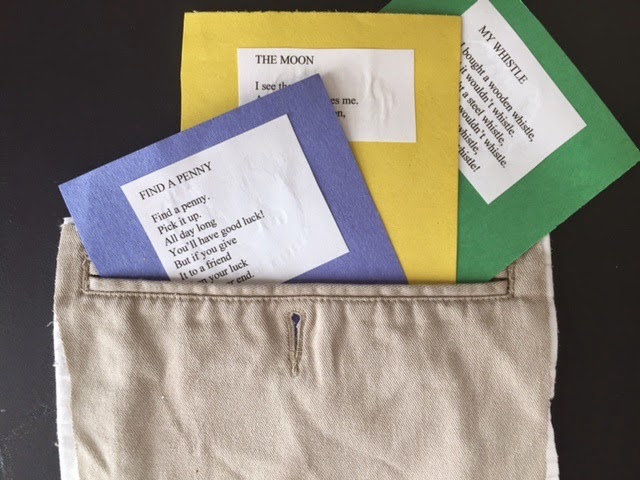
Hint! Cut a pocket off an old pair of pants and staple it to a bulletin board. Store favorite poems in the pocket so the children can read them over and over.


Syllables
After reading a poem with your students, read it again clapping the number of syllables in each word. You could also snap, stomp, hop or make other movements for the syllables.


Rhyming Words
Following a reading, mention that you heard words that sounded alike at the end. Repeat two of the words that rhyme. Let’s read the poem again and see if you can listen for other words that rhyme. As children find words that rhyme, highlight them on the poem with highlighting markers or tape. Write sets of words that rhyme on the board. Underline the letters that are the same. Have children think of other words that have the same sound at the end. Write the rhyming words on the board as the children call them out.

Alliteration
Read poems that have strong alliteration. Ask children to identify words with the same beginning sound. Highlight the words in the poem or list them on the board. Can children add other words to the list that begin with the same sound?
*Just for fun, choose an initial consonant sound and alliterate each word in a rhyme. For example: Bumpty Bumpty Bat Bon Ba Ball. Bumpty Bumpty bad ba breat ball…

Predicting
Before reading a poem, encourage the children to look at the title or illustrations and predict what the poem might be about.

High Frequency Words

Highlight word wall words that are in poems. Pass out flash cards with words and challenge children to match them with words in the poem.

Parts of Speech
Ask children to identify verbs, nouns, and other parts of speech in poetry.


Comprehension
After reading a poem, ask appropriate questions that will develop comprehension skills. Is there a main character? What was the setting? When did the poem take place? What happened at the beginning? Middle? End? Was there a problem or resolution? What will happen next? What was the main idea?

Genres of Literature
Help children recognize different types of literature through poetry. Could the poem really happen or is it pretend? Poems and books that are pretend are called “fiction” and those that are real are called “non-fiction.” Is the poem humorous or serious? Does it tell a story (epic) or is it just a rhyme?

Mental Imagery
Being able to visualize what is happening in a story, poem, or text is a strategy for improving comprehension. Have children close their eyes as you read different poems to them. Encourage the children to make a picture in their brains to go along with what they hear. After listening to the poem, encourage the children to discuss the pictures that they made in their heads.