photo 3am_dj_home_zps919fb85e.png photo 3am_dj_about_zps7cce4c75.png photo 3am_dj_website_zps73051235.png photo 3am_dj_ss_zps6759ec2a.png photo 3am_dj_bs_zps43e27832.png
Showing posts with label SEL. Show all posts

Saturday, October 10, 2026

IF YOU'RE HAPPY


Well, sometimes you are happy, and sometimes you are not - and that's O.K.!! Helping children identify different feelings and deal with emotions in an acceptable way is part of the "hidden curriculum" that teachers deal with daily. Let's get started with a few new verses to a song everyone knows.


If You’re Happy and You Know It
(Traditional tune)
If you’re happy and you know it, clap your hands.
(Clap twice.)
If you’re happy and you know it, clap your hands.
(Clap twice.)
If you’re happy and you know it,
Then your face will surely show it. (Smile.)
If you’re happy and you know it, clap your hands.
(Clap twice.)

If you’re sad and you know it cry your eyes… (Rub eyes.)

If you’re mad and you know it stomp your feet… (Stomp feet.)

If you’re scared and you know it shiver and shake…
(Wrap arms and shake.)

If you’re surprised and you know it say, “Oh, my!”…
(Open eyes wide.)

*Let children suggest other emotions and movements.

*Discuss what causes different emotions and appropriate responses. What makes you happy? What can you do when you’re happy? What makes you stressed? What can you do when you’re stressed?

*Learn sign language for the different feelings and practice them as you sing the song.


Collaborative Books
 
Make class books such as “Things to Be Happy About,” “Things that Bug Us,” or “Scary Things.”


Connections with Characters
As you read books to the class, encourage students to describe how characters are feeling. Have they ever felt like that?


Vocabulary
Extend vocabulary by brainstorming different ways to say “happy,” “sad,” “angry,” “surprised,” etc. Draw expressions on paper plates and put them on a bulletin board. Write different synonyms for each emotion underneath.

Dramatize 
Let children pantomime different feelings as friends try and guess what they are.

Here are patterns for the expression puppets:
https://drive.google.com/file/d/0B1SnEagA4jljQjJ5S3F5TUl4aW8/view?usp=sharing

Role Play - Divide children into small groups and let them make their own expression puppets. Encourage them to role play different scenarios with their puppets.

Friday, October 9, 2026

KATALINA MATALINA

Katalina and I go back a long time to when I was a girl scout in the 1950’s. I loved her then and children still love her today! She has several cousins, like Hagalena Magalena and Patalina Matalina, but the message is the same. It doesn’t matter what’s on the outside because a kind heart is the most important thing about a person. 


Children will love singing this song to the tune of “Shortnin’ Bread.” Then you can use Katalina as a catalyst for reinforcing other skills.

Chorus: Katalina Matalina Upsadina Walkadina Hoca Poca Loca was her name.

Her head was shaped like a baseball bat. (Point to head.)
And right on top was a funny, old hat. (Chorus)

She had two hairs in her head. (Point to hair.)
One was alive and the other was dead. (Chorus)

She had two eyes in her head. (Point to eyes.)
One was purple and the other was red. (Chorus)

She had two teeth in her mouth. (Point to mouth. Point up and down.)
One pointed north and the other pointed south. (Chorus)

Her neck was as long as a ten foot pole. (Point to neck.)
And right in the middle was a big, black bow. (Chorus)

Her hips were like two ships in port. (Wiggle hips.)
One headed south and the other headed north. (Chorus)

Her feet were as flat as a bathroom mat. (Point to feet.)
How did they ever get like that? (Chorus)

But she had a heart, so I’m told. (Put hands over heart.)
That was made of purest gold. (Chorus)


Syllables - Clap out the syllables in Katalina’s name. Clap out the syllables in the children’s names in your classroom. Count how many claps in each person’s name. Compare and graph.

Shared Writing - As an interactive writing activity slowly say Katalina’s name. Encourage the children to call out letters as you write them on the board. Make up silly rhymes with children’s names,

Comprehension - Have children close their eyes as you sing the song and create a picture of Katalina in their heads. Give each child a sheet of paper to draw her interpretation of Katalina. Display on a bulletin board or make a class book.

Diversity - Talk about what it means to have a heart of gold. Cut out 4 hearts and decorate with gold glitter. Punch holes in the hearts and tie on string to make necklaces. Each day when you see a child being a kind friend, let them wear Katalaina Matalina's heart of gold.


.

Saturday, September 26, 2026

HOORAY FOR RECESS

Ask any child what their favorite thing at school is and without a moment's hesitation they will say, "RECESS!" Well, those kids in New Jersey should be happy because there is a new law that will "require public school districts to provide a daily recess period of at least 20 minutes for students in grades kindergarten through 5. The recess period would be required to be held outdoors, if feasible." I hope this is a sign that other states will follow!


Here is some valuable information from experts that confirms why recess should be an essential component of the school day.

In “Give Students Time to Play” Debbie Rhea explains:

Kids are built to move. Having more time for unstructured outdoor play is like handing them a reset button. It not only helps to break up their day, but it also allows them to blow off steam, while giving them an opportunity to move and redirect their energy to something more meaningful once they return to the classroom.

When a human sits for longer than about 20 minutes, the physiology of the brain and body changes. Gravity begins to pool blood into the hamstrings, robbing the brain of needed oxygen and glucose, or brain fuel. The brain essentially just falls asleep when we sit for too long. Moving and being active stimulates the neurons that fire in the brain. When you are sitting, those neurons don't fire.

www.edweek.org/ew/articles/2014/02/26/22rhea.h33.html

In another article I found that Anthony Pellegrini, a professor of educational psychology at the University of Minnesota, emphasized that the new science of recess says that recess isn’t a waste of time at all:

Having recess is much, much, much better than not having recess…That’s unequivocal, I feel. That’s a no-brainer.
Pellegrini says, “because attacking recess has got this sort of intuitive feel: If you give kids more time doing something, they’ll do better in school. When in fact the opposite is probably the case.” Repeated studies have shown that when recess is delayed, children pay less andless attention. They are more focusedon days when they have recess. A major study in Pediatrics found that children with more than 15 minutes of recess a day were far better behaved in classthan children who had shorter recess breaks or none at all.

http://www.education.com/reference/article/Ref_Recess_Elementary/


One more fascinating article I found was “Get Tech out of Schools.” Researcher Patricia Greenfield argues that:

Precisely because young people spend so much time with digital media outside of school, schools must offer them a very different kind of education in order to even the cognitive scales. In Greenfield’s view, this means reading copious amounts of old-fashioned literature—just what young people are not doing (according to research) on their own time…. schools could also strive to provide more of the face-to-face contact, the in-person social interaction, that has been largely displaced by young people’s use of Facebook, Twitter, and texting in their off-hours.

http://www.slate.com/articles/technology/future_tense/2014/08/technology_in_the_classr

I’m obviously a believer in play and recess, and you must be as well if read my blogs. This is some powerful information that I hope you can share with your parents, administrators, and legislators!


HOW PARENTS CAN RECOGNIZE AND PROTECT THEIR CHILDREN FROM ANXIETY

Here is a great article by Laura Pearson, and I think you'll agree with me that recess and  playing outside is a wonderful antidote for anxiety.

How Parents Can Recognize and Manage Anxiety to Protect Their Kids

Busy parents with anxiety often work hard to keep daily life steady, yet worry can slip into conversations, routines, and the emotional tone at home. The core tension is painful: protecting children’s emotional well-being while managing a mind that scans for threats and can’t always relax. Anxiety effects in families are rarely loud or obvious, but children notice patterns, absorb tension, and may start reacting in ways that look like “just a phase.” Naming the parental impact on children early makes it easier to protect family mental health.

Understanding How Anxiety Spreads at Home

Parental anxiety can quietly shape the emotional “signal” kids receive each day. When a parent is tense, rushed, or scanning for problems, children often mirror that state and routines can start feeling urgent or fragile. Many kids are emotionally porous, so noticing this pattern is about awareness, not blame.

This matters because anxiety in kids is easier to support when you catch it early, before it turns into daily battles over school, sleep, or separation. The fact that parent stress is a public health concern is helpful here, since your steadiness directly supports their well-being.

Picture a morning where you double-check everything and speak faster without meaning to. Your child might respond with tears, stomachaches, irritability, clinginess, or sudden perfectionism, especially around deadlines, transitions, or conflict. Those signs are clues to a trigger, not proof anyone is failing.

Turn Job Stress Into a Realistic Plan (Not More Pressure)

When work stress is the main “carrier” of anxiety in your home, changing what’s fueling it can be just as important as changing how you cope. If your current job is driving your anxiety, improving your career prospects can create real breathing room, especially when it’s done in a way that doesn’t add more pressure to your days. Online degree programs can make it more realistic to keep working full-time (or keep up with family responsibilities) while you earn a credential, because you’re not forced into a rigid, on-campus schedule. 

The key is choosing a school with strong support systems so you’re not trying to manage everything alone. Many adults balancing work, school, and parenting benefit from emotional support (encouragement and understanding), practical support (help navigating requirements and logistics), and workplace support (communication and flexibility when it’s possible). Paired with proactive planning, mapping a doable schedule and using available university resources, those supports can make the challenges of nontraditional students feel manageable and keep you moving toward your academic goals.

Use a 7-Step Reset to Calm Yourself and Support Your Child

When your anxiety spikes, your child usually feels the ripple, through your tone, pace, and decisions. A simple “reset” helps you steady yourself first, then respond in a way that builds safety and resilience, even on busy work-and-school days.

  1. Name your stress out loud (privately) before you act: Take 10 seconds to label what’s happening: “I’m anxious about tomorrow’s deadline,” or “I’m overwhelmed and rushing.” This small self-reflection tool creates distance between the feeling and your next move, which makes it less likely you’ll snap, catastrophize, or over-control. Research showing that parental anxiety predicts child anxiety is a good reminder that your pause isn’t selfish, it’s protective.
  2. Do a 90-second body reset (breath + shoulders + feet): Inhale for 4, exhale for 6, five times. Drop your shoulders, unclench your jaw, and press both feet into the floor to cue your nervous system that you’re safe right now. Use this before school drop-off, a hard email, or helping with homework, any moment you’re about to “leak” stress into the room.
  3. Run the “Plan, not pressure” check from your work-stress map: If your schedule is already tight, don’t add a new wellness routine, attach the reset to the structure you built in your realistic plan. Ask: “What’s the next doable step, and what can wait 24 hours?” Then take one concrete action (send one message, set one reminder, choose one priority) so your brain gets proof you’re not trapped.
  4. Model a healthy stress script your child can borrow: Say one sentence about your feeling, one sentence about your coping, and one repair if needed: “I’m stressed. I’m going to take three breaths and then we’ll talk. Sorry my voice got sharp.” This teaches kids that big feelings are manageable and relationships can recover, skills they’ll use at school and with friends.
  5. Create a “safe emotional space” with a daily 10-minute check-in: Pick a consistent time (after snack, before bed) and use two prompts: “What was hard today?” and “What helped even a little?” Keep it judgment-free, no fixing unless they ask. If your child shares something small, treat it as practice for the bigger things later.
  6. Coach resilience with the 3-step problem-solving loop: When your child is upset, guide them through: Name the problem, list two options, choose one “try-it” step. Example: “Homework feels too big” becomes “Do the first two problems, then take a 5-minute break.” You’re not removing stress; you’re teaching your child they can move through it.
  7. Set a family “reset cue” for heated moments: Choose a neutral phrase like “reset time” and a simple action everyone recognizes, get a drink of water, hands on belly, then return. Use it when voices rise, especially during morning routines or work-from-home interruptions. It keeps boundaries clear without shame and shows your child that calming down is a normal, shared skill.

Questions Parents Ask About Anxiety and Kids

Q: What signs suggest my anxiety is affecting my child?
A: Watch for new clinginess, irritability, sleep changes, stomachaches, or a sudden need for constant reassurance. You may also notice your child scanning your face to “check” if things are safe. Start by tracking patterns for a week and naming one small change you can make, like speaking slower during transitions.

Q: When should we consider therapy instead of “handling it at home”?
A: Seek support if anxiety causes school refusal, frequent meltdowns, avoidance of normal activities, or lasts more than a few weeks. Therapy is also a good idea if family conflict is rising or you feel stuck in reassurance loops. Asking early can prevent anxiety from becoming your family’s default.

Q: How does treatment like CBT help kids and parents?
A: CBT teaches practical skills for handling worried thoughts, body sensations, and avoidance step by step. Research on CBT treatment shows family factors can strengthen how much child anxiety decreases, so parent involvement often helps.

Q: Can I talk about my anxiety without scaring my child?
A: Yes, if you keep it simple and pair it with a coping plan: “I’m feeling worried, and I’m taking breaths to calm down.” Avoid adult details and make space for your child’s questions. The goal is honesty plus steadiness.

Q: What should I do if I think my child’s well-being is slipping?
A: Start with basics you can influence today: sleep routine, movement, regular meals, and predictable connection time. Then loop in a pediatrician or school counselor if changes persist. Evidence linking parental stress and well-being is a reminder that caring for you is part of caring for them.

Turning Parent Anxiety Into Steady Support for Kids

When anxiety is running in the background, it can be hard to tell what’s protective parenting and what’s simply anxiety taking the wheel. A hopeful parenting approach starts with practical anxiety management: noticing patterns, naming what’s happening, and choosing grounded responses, along with self-care encouragement for parents and professional support when it’s needed. Over time, that steadiness changes the tone at home, kids feel safer, feelings become easier to talk about, and building resilience in families starts to feel possible again. Resilient families are built one steady choice at a time. 


Wednesday, September 16, 2026

DATA + DEVICES DO NOT = JOB SKILLS

IF I WERE IN CHARGE OF THE WORLD I WOULD ABOLISH TESTING AND TECHNOLOGY IN EARLY CHILDHOOD. I'M NOT IN CHARGE OF THE WORLD, BUT HERE'S SOME FOOD FOR THOUGHT! 

School districts may be winning the battle with higher test scores, but they might actually be losing the war in terms of well-rounded and educated citizens.


The studies of job skills major corporations look for in employees include:

Verbal communication
Teamwork – ability to work with others
Problem solving
Creativity
Self-motivation
Written communication
Positive attitude
Flexibility

Hmmm?? Do you see test scores, rigor, or technology in the above? The roots of what our children need one day to be successful and healthy adults are what we promote through active learning, working/playing with classmates, centers, games, and creative and open-ended activities.

When children have time to express themselves and teachers have time to listen they are developing verbal skills.

When they play games and do partner projects they are developing teamwork.

When they make choices and aren't afraid to make mistakes they are problem solving.

When they have materials and freedom they can develop creativity.

When they are allowed to make choices to explore areas they are interested in they will be self-motivated.

When they take notes, set goals, and record what they are learning in journals they are developing written communication.

When they laugh, have fun, sing, and play they will have a positive attitude.

And when they learn that there are many ways to be wonderful they will develop flexibility.

Shut your door and teach children what they really need when they grow up!!!


P.S. I don’t make this stuff up! Check it out for yourself.

http://www.foxbusiness.com/features/2013/03/14/10-job-skills-every-employer-wants.html
http://www.forbes.com/sites/susanadams/2014/11/12/the-10-skills-employers-most-want-in-2015-graduates/#186d74ec19f6
https://www.aacu.org/leap/presidentstrust/compact/2013SurveySummary
http://www.usatoday.com/story/money/personalfinance/2015/05/03/cheat-sheet-skills-college-grads-job/26574631/
http://www.apa.org/ed/precollege/psn/2013/09/job-applicants.aspx
www.kent.ac.uk/careers/sk/top-ten-skills.htm

Tuesday, September 15, 2026

LET'S HAVE A CONFERENCE

Ready or not, it will be time for parent conferences before you know it! I used to dread conferences because many of the parents didn’t want to talk about their child. They wanted to talk about the neighbor’s kid or their “ex” or whatever. Once I started using this questionnaire my conferences became much more meaningful for me and for the parents.

http://bit.ly/FamilyDrJean

A week before conferences I’d ask the children, “Would you like me to give your parents some homework? Well, here is something they need to fill out and bring to our conference next week.”

Note! If parents show up without the form, simply smile and say, “I’ll give you a few minutes to fill this out before we get started.”

CONFERENCE QUESTIONNAIRE

Please fill out this form and bring it to your conference on __________________at _________________.

Child’s name__________________________

1. My child’s favorite activity at school is________________

2. My child expresses concern about_____________________

3. My child’s strong qualities are__________________________

4. Areas I feel my child needs to work on are_____________

5. Something I would like to see my child do at school is _______

6. Is there any special information about your child that you think we should know about?

https://drive.google.com/file/d/0B1SnEagA4jljYWFnNXNybFdyZVE/view?usp=sharing


Cheers and Goals
Here’s another idea for conference time. Ask parents to write down three things positive (cheers) about their child and three goals that they have for their child. This will give the teacher insight as to what is important to parents. It will also provide the teacher with the opportunity to say, “This is what I can do at school to help your child accomplish these goals. What can you do to help at home?”


Student Led Conferences
I must admit I never did these, but many schools are now using this approach and find if very successful. You can find videos and other useful information about student led conferences on the internet.

Conference Tips
Sit beside the parent at a table, rather than behind a desk.

Keep the conversation focused on the child.

Have samples of the child’s work to share with the parents. Focus on the total child, including intellectual, physical, social, and emotional development.

If there is a problem, brainstorm solutions and develop a plan for action.

End the conference on a positive note by reassuring the parents and thanking them for their support.

Provide an interpreter for parents who do not speak English.

Follow-up with the parents after the conference.

Monday, September 14, 2026

WINNING WAYS WITH PARENTS

In Amanda Ripley’s book THE SMARTEST KIDS IN THE WORLD, one of the most interesting findings was that what parents did at home mattered significantly. Reading to children and talking about school was very important. Parents showed their children they valued education by asking about school, what they learned, what they liked, etc. Parents who modeled reading also had a positive impact.


Here are a few tips to encourage parents to communicate with their children about school.

Journal
Make daily journals for students by putting white paper in a pocket folder. At the end of each day students draw what they learned and dictate or write a sentence to go with their drawing. The journal goes home each evening so children can discuss what they did at school with their parents. The parents sign the journal, write comments or compliments, and return it the following day.


Conversation Starters
Make copies of the attached conversations starters. (Adapt them to your age level and curriculum.) Cut them apart and put them in a bag. Children draw one as they leave at the end of the day and give it to their parents to prompt a discussion about what they did.
https://drive.google.com/file/d/0B1SnEagA4jlja2w2OWtzRjlIdkk/view?usp=sharing


Hint! One school suggested that parents "turn it off" in the car when they picked up their child. The quiet time might encourage children to talk about school because they'd know they had their parent's undivided attention.


Screen Time Survey
Ask parents to keep a log of how much time their child spends in front of a screen for a week. The following week ask them to “turn it off” and spend an equal amount of time reading, playing games, doing chores around the house, etc. with their child.


Brain Tickets
Run off brain tickets similar to the ones below. To earn a brain ticket children need to tell the teacher one new thing they learned at the end of each day. Explain to the parents that their job is to ask their child what she learned to earn the ticket.


https://drive.google.com/file/d/0B1SnEagA4jljUmNfQTJld3VsV00/view?usp=sharing

HERE'S A GREAT ARTICLE BY LAURA PEARSON TO SHARE WITH PARENTS!

Building Friendship Skills at Home to Boost Kids’ Confidence at School

For busy parents of elementary and middle school kids, few things sting like hearing that making friends at school feels confusing or lonely. Many children face social development challenges that show up as missed cues, awkward starts, or conflicts that seem to come out of nowhere, even when they’re bright and kind. Children’s friendship skills shape daily comfort in the classroom, on the playground, and in group work, where peer relationships in childhood can either support learning or drain a child’s energy. A steady parental role in social skills helps kids build the confidence and habits that make school days easier.

Understanding Friendship Skills Kids Can Practice Anywhere

Friendship skills are small, learnable behaviors that help kids connect: starting a chat, taking turns talking, sharing space or materials, and noticing who is being left out. These are part of the social and conversational rules that make interactions feel smooth instead of confusing.

When kids practice these moves at home and in clubs or sports, they build social understanding they can reuse at school. Even a few extra back-and-forth exchanges matter, because conversational turns support the kind of listening and responding that friendships need.

Think of it like a rehearsal. If your child practices greeting a neighbor, sharing the remote with a sibling, and inviting a cousin into a game, school interactions feel less like guesswork. That’s why simple animated stories can make greetings, turn-taking, and including peers feel easy to repeat.

Create 5-Minute Animated Social Stories to Practice Friend Moves

Once your child can name “friend moves” like greetings, turn-taking, and inviting someone in, seeing them play out in a story makes the skills easier to remember and try. Parents and kids can use an AI animation generator to turn friendship lessons into fun visual stories you watch together and talk about. Tools like an AI animation generator can quickly transform simple text prompts, quick sketches, or images into lively 2D or 3D animations, no advanced design skills required, so it’s easier to bring your child’s ideas to life in an animated video. One day your story might show a friendly “Hi” at the classroom door; another might model a back-and-forth conversation where each person takes a turn; another could show how to invite a peer to join a game.

The process of creating shared comics, storyboards, or animation-style images is practice, too: kids get to share ideas, listen to yours, take conversational turns, and cooperate as you build the story together. That low-pressure teamwork can help them feel more confident using the same skills with classmates. If you’d like a simple place to start, Adobe Firefly AI animator can help you generate animated scenes from prompts or visuals.

Habits That Grow Friendship Skills All Week

Small, repeatable habits turn “friend moves” into automatic choices at school. When you practice briefly and consistently, your child builds confidence without feeling coached all day.

Two-Minute Connection Warm-Up

●      What it is: Practice one greeting, one question, and one compliment before school.

●      How often: Daily

●      Why it helps: It makes friendly openings feel natural in the hallway.

Model-It-First Moments

●      What it is: Let your child see you introduce yourself and include someone.

●      How often: Weekly

●      Why it helps: Kids copy what they notice, especially under pressure.

Coach-and-Release Script

●      What it is: Rehearse one sentence for joining play, then let them try.

●      How often: Per milestone

●      Why it helps: It supports independence while lowering anxiety.

Inclusion Check-In

●      What it is: Ask who sat alone, then plan one kind invite tomorrow.

●      How often: Three times weekly

●      Why it helps: It builds empathy and social-emotional development.

Screen-to-Scene Swap

●      What it is: Trade 10 minutes of scrolling for face-to-face talk or play.

●      How often: Weekly

●      Why it helps: It counters losing the opportunity to develop everyday connection skills.

Friendship Skills Questions Parents Ask Most

Q: How can I help a shy child without pushing too hard?
A: Keep it small and predictable: practice one greeting at home, then stop. Turning it into a game can lower pressure, and practice at home gives your child a “safe rehearsal” before school. Praise effort, not outcomes.

Q: What should I say when my child tells me they were left out?
A: Start with empathy: “That sounds really painful.” Then help them pick one next step they can control, like asking one classmate to partner up tomorrow. Avoid rushing to solve it immediately, which can make them feel powerless.

Q: Why does my child copy friends or act differently to fit in?
A: Wanting to belong is normal, especially in elementary and middle grades. Research with more than 350 fourth and fifth grade students shows fear of rejection can shape peer behavior. Try talking about “kind choices” versus “popular choices” and role-play a calm boundary.

Q: When should I step in with the teacher or school?
A: Step in if there is repeated exclusion, name-calling, threats, or your child seems anxious about attending school. Share concrete examples and ask what supports are available, like lunch buddies or structured group work. You can advocate while still building your child’s skills.

Q: Should I arrange playdates if my child struggles socially?
A: Yes, but keep them short and low-stakes, ideally with one child and a clear activity. Choose settings where taking turns is natural, like a simple game or craft. Afterward, ask one question about what felt easiest, then celebrate that.

Grow School Friendships by Practicing One Skill at a Time

Kids can feel stuck when friendships get confusing, especially after rejection or when shyness makes reaching out feel risky, and parents often worry about doing too much or too little. The steadier path is gentle parental involvement in friendship: notice patterns, reinforce social skills with calm coaching, and treat practice as ongoing rather than a one-time fix. Over time, that approach supports social success at school by helping children read situations, recover from bumps, and stay connected with peers. Small, repeated practice builds the confidence kids need to keep trying with peers. 

Tuesday, September 8, 2026

WORLD GRATITUDE DAY


Gratitude is an emotion of expressing appreciation for what you have, rather than what you don’t have. Psychology Today reports that gratitude can be cultivated and it can increase levels of happiness when you do. Energy, optimism, and empathy are by-products of gratitude. World Gratitude Day is September 21st, so integrate these activities into your lesson plans this week.

P.S. Have I told you lately that I'M GRATEFUL FOR YOU!!! Thanks for reading my blog!

Model Gratitude
Make it a habit to include things you appreciate into daily conversations.


Brainstorm
What does it mean to be thankful and grateful? Write children’s responses on the board. What are some synonyms for thankful?


Lists
Children love to make lists, so let them make a list (draw pictures or write) of all the things they are grateful for.

ABC
Can they think of something for each letter of the alphabet that they are grateful for?


Gratitude Journal
Let children make a special "gratitude journal." Encourage them to write what they are grateful for each day for a week.


Gratitude Box

Cut a hole in the top of a shoebox and decorate. Place on a shelf along with paper and pencils. Children can write things they are grateful for and place them in the box. Read the notes at the end of the day before children go home.

Grateful Greeting
Start the day by going around the room and asking each child to say something they are grateful for.

End with Something GOOD
End the day by having children say something good that happened at school that day.

Hot Potato Pass
Children sit or stand in a circle and begin passing the hot potato (ball or other small object) around. When the music stops or when the teacher blows a whistle the child holding the potato must say one thing they are grateful for.

Friday, September 4, 2026

READ A BOOK DAY


There are some things I just cannot part with…such as my favorite books I loved to read to my own children and the children in my classroom. Like anything, the teacher adds the magic to a book. If you love a book, then I can guarantee you that your enthusiasm will make your listeners love it as well.

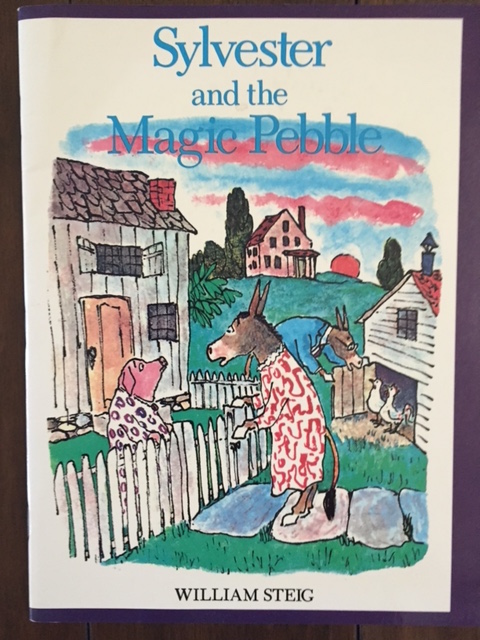
When Kalina visited many years ago I got out my “antique” collection to share with her. I just couldn’t let her grow up and not know about Ping or Sylvester or Sal. The world has changed, but Kalina and I delighted/devoured/enjoyed/savored/appreciated the books as if it time had stopped. Reading these books was like giving her a little bit of my life.  
*I wish she were five years old again and I could hold her in my lap!


The interesting thing is that as I was reading the books I looked at them through my “standard” lenses. I didn’t realize when I read Morris the Moose books that I was introducing double meanings of words. Chicken Soup with Rice was perfect for phonological awareness and Ping showed what life is like on the Yangtze River. We counted the dogs in Madeline, Sylvester was exploding with vocabulary, and we recalled the sequence of events in The Mitten. It is true that you can still teach children everything with a good book. But, I didn’t have to TEACH children with the books – they will just learned in a natural and meaningful way.


Good books are like good friends that you want to visit again and again!

Friday, August 28, 2026

WHO IS THE FRIDAY FAIRY?

It used to be more fun to be a teacher. Now I say, “We’d go to jail now for things we used to do in the classroom.” I don’t mean that literally because we never did anything mean to children, but many of the restrictions were just not an issue in the “old days.” We could take our class out for recess (Yep! Run around and play time.) whenever we wanted and we had a lot more flexibility and creativity in terms of the curriculum.


The “Friday Fairy” used to come to my room every week and nobody complained. The children LOVED the Friday Fairy because she left a little penny candy in their desk while they were at lunch. (I invited a 5th or 6th grade student to sneak in my room and distribute the goodies while we were out of the room.)

See what I mean? You’d probably get in a lot of trouble for doing that now. However, there are other things you can do to make Friday a special day. And, after the children have worked hard all week it’s nice to end on a happy note. Here are some other ideas for Fabulous Friday:

15-30 minutes free time at the end of the day.

Jamboree – Get together with your grade level and sing.

Guest Reader – Invite a parent, politician, or school helper to read.

Game Time – Children bring board games or card games from home. (NO video games)

Recess – Now, wouldn’t that be fun? 30 minutes of unstructured play outside. (One teacher said she did this and her kids asked her, “What should I do?” Sad!)

Dancing with the Stars – Play music and let the children dance.

Take off your shoes – I know this sounds stupid, but my kids thought this was the great fun.

Kinder Café – Invite a different parent each week to come in and cook.

Do Your Own Thing – Children get to read, draw, talk…

MYSTERY READER (Gina from Michigan)
Parents sign up using a google.doc so the kids do not have any idea who is coming in. We wait very quietly with the lights out and when the door is open someone is very surprised. The parents can bring a "souvenir" to help the child retell the story at home but this is not expected. 

MAKE UP YOUR MIND TO END EVERY FRIDAY WITH "DESSERT" (AKA SOMETHING FUN!)