photo 3am_dj_home_zps919fb85e.png photo 3am_dj_about_zps7cce4c75.png photo 3am_dj_website_zps73051235.png photo 3am_dj_ss_zps6759ec2a.png photo 3am_dj_bs_zps43e27832.png
Showing posts with label Feelings. Show all posts

Wednesday, February 11, 2026

ABRACADABRA

Use your finger like a magic wand as you wave it and say, "Abracadabra!." Explain that when you say a word, they must become the word. When you say, "Freeze!" they need to stand still until you wave your wand and say another word. For example, "Abracadabra! You're frogs!"


ANIMALS
Call out different animals for children to imitate.
Frog – Jump up and down.
Bird – Flap arms.
Mouse – Tip toe.
Horse – Gallop in place.
Monkey – Scratch under arms and bounce up and down.
Giraffe – Stretch arms high in the air and walk on toes.
Elephant – Arms together and swing like a trunk as you bend over.
Flamingo – Stand on one foot and balance.
Snake – Wiggle up and down.

Hint! Glue pictures to cards and hold them up for the younger children. Write words on flash cards for the older students.


SEASONAL WORDS
Use holiday or seasonal symbols to stimulate children’s brains and imaginations.

Scarecrow – Children flop arms around.
Bat – Flap arms.
Cat – Arch back and meow.
Pumpkin – Arms around head.
Spider, witch, Frankenstein, etc.


VOCABULARY WORDS
Reinforce vocabulary words by having children dramatize their meaning.

Seed – Bend down.
Roots – Stick out legs.
Stem – Stand up straight.
Leaves – Stretch out arms.
Flower – Arms around head as you smile.


PARTS OF SPEECH
Call out adjectives, adverbs, nouns, and verbs for children to dramatize.

Anxious, Brave, Curious
Slowly, Quickly, Angrily
Fire Fighter, Nurse, Chef
Chatter, Build, Sleep, Exercise
*Creativity can really blossom with this activity because there's no right or wrong way to do it.

MAGIC WAND!
How about making a magic wand out of a chop stick.  Dip the end in glue, roll in glitter, and ABRACADABRA!


Monday, October 27, 2025

TIPS AND TREATS FOR HALLOWEEN WEEK


You can do this, yes you can! As the excitement increases for Neewollah (Halloween spelled backwards) go with the flow with one of these activities.

Pumpkin Face
Play "Pumpkin Face" which is similar to Wheel of Fortune. Think of a vocabulary word or sight word. Put a blank on the board for each letter in the word. Children take turns calling out letters. If they guess correctly put the letter on the line. If their letter is not in the word begin drawing a pumpkin and then adding features. If letters are not in the word make a "bone pile" at the bottom of the board.


Real and Pretend
Do a T-chart of things that are real and pretend.


Halloween Safety
Let them work in small groups and make posters about Halloween safety.


Making Words
How many words can you make out of HALLOWEEN?


Partner Writing
Divide the children into partners and challenge them to write a ghost story together or draw a spooky picture together.


Charades
Play a game of pantomime where children act out Halloween symbols and events as their friends try and guess.


Pass the Pumpkin
Play "pass the pumpkin." (You can use a real little pumpkin for this or just pretend with a ball.) Children stand or sit in a circle and pass the pumpkin around as the music plays. When the music stops the one holding the pumpkin has to read a flash card, answer a math problem, recall information from a book, and so forth.


PATALINA MATALINA

Here's another new video to share this week.  It's Katalina's friend!

https://bit.ly/drJPatalinaYT


Wednesday, September 11, 2024

FEELINGS

It's important for children to learn how to identify feelings and how to deal with them in appropriate ways. This is a familiar song where you can change the words to act out different emotions.

If You’re Happy and You Know It
If you’re happy and you know it, clap your hands.(Clap twice.)
If you’re happy and you know it, then your face will surely show it.
If you’re happy and you know it, clap your hands.(Clap twice.)

If you’re happy and you know it, hug yourself… (Hug self.)

If you’re happy and you know it, kiss your brain… (Kiss fingers & touch head.)

If you’re happy and you know it, wiggle all over… (Wiggle.)

If you’re happy and you know it, shout, “Hoorah!”.. (Put hand in air & shout.)

If you’re happy and you know it, do them all… (Do all 5 motions.)


*Let children suggest other emotions and movements. For example, "If you're sad and you know it cry your eyes..boo hoo." "If you're angry and you know it stomp your foot."

*Discuss what causes different emotions and appropriate responses. What makes you happy? What can you do when you’re happy? What makes you stressed? What can you do when you’re stressed?

*Learn sign language for the different feelings and practice them as you sing the song.


Collaborative Books
Make class books such as “Things to Be Happy About,” “Things that Bug Us,” or “Scary Things.”

Connections with Characters
As you read books to the class, encourage students to describe how characters are feeling. Have they ever felt like that?

Vocabulary
Extend vocabulary by brainstorming different ways to say “happy,” “sad,” “angry,” “surprised,” etc. Draw expressions on paper plates and put them on a bulletin board. Write different synonyms for each emotion underneath.


Dramatize
Let children pantomime different feelings as friends try and guess what they are.

*Make “Feeling Faces” by cutting 7” circles out of the middle of card stock. Write a different emotion on each page, such as “happy,” “sad,” “angry,” “proud,” Children take turns putting their face in a circle and making appropriate facial expressions. Remind the children that it’s O.K. to have different feelings.


Journals
Let children write their names and draw “feeling faces” as they enter the classroom each day.


Friday, January 8, 2021

I'VE GOT A FEELING!

It's important for children to recognize different feelings and help them learn to cope with them in appropriate ways. This is a familiar song where you can change the words to act out different emotions.

If You’re Happy and You Know It

If you’re happy and you know it, clap your hands.(Clap twice.)
If you’re happy and you know it, then your face will surely show it.
If you’re happy and you know it, clap your hands.(Clap twice.)

If you’re happy and you know it, hug yourself… (Hug self.)

If you’re happy and you know it, kiss your brain… (Kiss fingers & touch head.)

If you’re happy and you know it, wiggle all over… (Wiggle.)

If you’re happy and you know it, shout, “Hoorah!”.. (Put hand in air & shout.)

If you’re happy and you know it, do them all… (Do all 5 motions.)


*Make puppets to hold up as you sing. Aren't emoji perfect for this?


*Make “Feeling Faces” by cutting 7” circles out of the middle of card stock. Write a different emotion on each page, such as “happy,” “sad,” “angry,” “proud,” Children take turns putting their face in a circle and making appropriate facial expressions. Remind the children that it’s O.K. to have different feelings.


Role-Play
Demonstrate various alternatives for dealing with emotions and let children role-play what they could do. For example, what can you do when someone bullies you? What can you do when you are embarrassed?

Journals
Let children write their names and draw “feeling faces” as they enter the classroom each day.


*As you read books, invite children to relate when they’ve felt like the characters in the story.

*Extend vocabulary by brainstorming different ways to say “happy,” “sad,” “angry,” “surprised,” etc.


*As you read books, invite children to relate when they’ve felt like the characters in the story.

*Extend vocabulary by brainstorming different ways to say “happy,” “sad,” “angry,” “surprised,” etc.


Thursday, October 1, 2020

HAPPY OCTOBER CELEBRATIONS!

Everybody knows about that big holiday at the end of October, but there are some other special days that you can celebrate this month.  I'll share some suggestions for these holidays in the upcoming weeks.  

Note!  Of course, you'll be able to adapt them to any day, any learning situation, or any age level.

October 2 World Smile Day

October 3 World Card Making Day

October 5 Do something Nice

October 12 Columbus Day

October 16 Dictionary Day

October 21  Count your Buttons Day

October 27  Tell a Story Day


GET READY FOR SMILE DAY TOMORROW!  Here are some simple ideas to put a smile on your children's faces.

Put on a Happy Face
Yes, your smile can set the tone for the whole day, so put on a happy face.  Sometimes you have to be part actor or actress and "fake it til you feel it."  

Smile Break
When children are inattentive, help center them with a smile break. Tell them to look at the clock or use the timer on your phone as they smile for 30 seconds. 


*You can also ask them to hug themselves, freeze, or do other motions for a specified amount of time.

Recall with a Smile
Have children close their eyes. If they can see something new they learned they can open their eyes and smile at you.


High Five Smile
Teach children how to give themselves a “high five” for a job well done. Hold up both palms facing each other in front of your chest. Pretend to wave with one hand as you hold up five fingers on the other hand and smile. (“Hi 5!” Get it?) 

Smiley Cheer
Take your index finger and pretend to poke two eyes in the air as you make a clicking sound.  Make a curved smile with your pointer under the pretend eyes as you whistle and then give a big smile.
😊😊😊

Give Yourself a Smile
Ask children to draw a picture of their face without a mouth.  Take a pencil and draw a frown on the face.  How does that look?  Erase that frown!  Now, take a red crayon and draw a big smile on the face.  Which one looks better?  Which one would you want for a friend?


Smile Hug  
Smile, close your eyes, and hug your shoulders.


Ha! Ha! He! He! (Tune: “Pretty Little Dutch Girl”)
I smile because I’m happy, (Smile.)
As happy as can be.
I smile because I like myself. (Point to self.)
I smile because I’m me!

I laugh because I’m happy,
As happy as can be. (Ha! Ha!)
I laugh because I like myself.
I laugh because I’m me! (Ha! Ha!)

Ha ha ha ha ha ha ha. (Hold stomach and fake laugh.)
He he he he he he.
Ha ha ha ha ha ha ha ha.
He he he he he he.

Wednesday, July 15, 2020

FOSTERING EMOTIONAL LITERACY

I AM SO THANKFUL THAT BARBARA GRUENER IS MY FRIEND!  HER SEL (social emotional) IQ (intelligence) IS INCREDIBLE!  SHE HAS SOME MEANINGFUL AND INSIGHTFUL STRATEGIES TO SHARE WITH US TODAY!  THANK YOU, BARBARA!


One of our biggest roles as educators, parents, mentors, and caregivers is to help the children in our care to understand and embrace their emotions; one way that we can do that is by modeling and teaching emotional regulation, one of the five Core Competencies of Social and Emotional Learning as laid out by CASEL.


Co-regulating emotions can be a difficult albeit very important job, one that might more easily be done in person, face-to-face and heart-to-heart. Since many of us will be teaching remotely, we’ve created Emotion Pops and put them in our Virtual Classroom Survival Guide to help you foster emotional literacy in your littles learners.


Simply print the feelings faces onto card stock, cut them out, and attach them to a popsicle stick or tongue depressor to make an Emotion Pop. Glue the corresponding emotion word on the stick to help children learn to name the emotion, spell it, and use it to identify how they’re feeling.


TIPS For Using Emotion Pops:  


These Emotion Pops will be the perfect addition to your morning meeting. Hold up an Emotion Pop and ask for a thumbs up from everyone who is feeling that emotion right now. Pause between feelings to validate using statements like, "Friends, it looks like seven of us are feeling happy right now." Then move on to the next feeling, again asking for thumbs up if this is something that they are feeling, then review: "So it looks like three of us are feeling sad today. I wonder what they might need from us as their friends." Move through to another feeling and continue to acknowledge that it’s a normal part of being human that feelings, which are actually a source of energy, visit us. It’s also important that children know that feelings can and will change throughout the day. Repeat the check-in until everyone has given a thumbs up to at least one emotion. 


Teach students not to label feelings as good or bad, but rather to just accept them as they are. Encourage them to invite their feelings in and make friends with them. Let each feeling stay as long as it needs to. Ask students if the picture on the Pop matches the way their faces looks when that particular feeling is choosing them. Ask: How does it look on you when you’re feeling sad? Scared? Angry? Worried? Happy? Confused? Shy? Invite them to show you how that feeling looks on their face, then practice making the feelings faces together.


Make sure children know and understand that it's possible to have two or more feelings visit at once. To punctuate that point, use the blank Emotion Pops to encourage students to draw how their face looks and feels when that happens, like when you’re hungry and angry (hangry) at the same time. 


Set time aside to talk about how our bodies express the feelings. What happens to our foreheads, eyes, mouths, jaws, cheeks, arms, hands, stomachs, feet when we're angry? How about when we're sad? When we're happy? How about when we're confused, embarrassed, scared or any of the other feelings?


Choose a feeling to be your focus feeling of the day. Watch for people who are feeling that way. Talk about what it takes to get all the way through that feeling. Think about a show, a movie, or a story when the character felt this feeling. Was it big or small? Was it easy or difficult? Was it soft or hard? What color was it? There are no wrong answers here, so set aside ample time to explore all of their emotions.


Emotion Pops are especially useful right now in helping children understand how to read emotions when a part of our faces is covered. Use the sticky part at the top of a Post-It note to make a fun face covering. Ask: Can we tell how someone is feeling just by their eyes and through their body language? Encourage students to explore how their own eyes look, what happens to the muscles in their forehead and brow, how their cheeks look and feel, what their shoulders do, how their hands feel, how their stomach feels through all of the emotions, to foster emotional regulation as well as to elevate empathy.
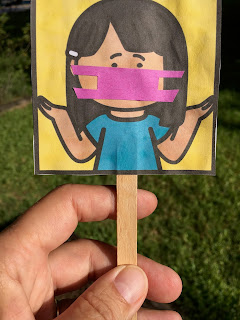


Use Emotion Pops for empathy development by asking when they've seen someone else going through that feeling. Maybe it was during a read-aloud; research shows that reading fiction helps elevate empathy. Ask: What happened in the story? How was the character feeling? How could you tell? What was it like for that character when sadness (or whatever feeling you’re discussing) visited? What did that character want or need while that feeling was visiting? What do you want or need when you’re having a similar feeling?


When you’re back in a classroom again, you could laminate a set of the Emotion Pops and put them on an O ring in a Calming Corner so that your students have access to them as they work to understand their emotions. They could also be put onto a lanyard to make them portable for when a student who might need them travels to another part of the school for specials class, 

recess, or lunch.                         


Enjoy singing this little ditty with your songsters; encourage them to add movements and to practice their feeling face after each emotion word. 


I know that you'll definitely want to check out Barbara's book and blogspot!


https://corneroncharacter.blogspot.com/p/my-book.html


Friday, June 12, 2020

GOOD IDEAS #12

Recognizing and accepting the way children feel is an essential part of making them feel comfortable. I think talking about feelings is more important now than ever with all the craziness in our world.  Start with a song...

If You’re Happy and You Know It (Traditional Song and Tune)
If you’re happy and you know it, that's O.K.…(Clap twice.)

If you’re happy and you know it, that's O.K.…(Clap twice.)
Whatever you're feeling, that's O.K.  (Hug self.)

*Insert other feeling words and actions in the song. For example:
“If you’re sad and you know it cry your eyes…” (Rub eyes.)
“If you’re angry and you know it stomp your feet…” (Stomp feet.)
“If you’re scared and you know it say, ‘Oh, my!’”…

End with, “We all have feelings, that’s O.K. (Stick up thumb.)
We all have feelings, that’s O.K.
Happy, sad, mad, or glad, 

We all have feelings and that’s O.K.” (Thumbs up.)

VIRTUAL CLASSROOM
Check in with every child and ask them to tell how they are feeling.  Stick up your thumb as you respond and say, "That's O.K."

Puppets
Make puppets of Emoji feelings similar to the one shown. Discuss things that make you angry or sad or scared. What can you do when you feel (emotion)? Role play appropriate and inappropriate responses for different emotions.


VIRTUAL CLASSROOM

Give children patterns and craft sticks to make these at home.  Tell little stories and ask them to hold up the puppet to show how they would feel.

Journals
Let children write their names and draw “feeling faces” as they enter the classroom each day.


*As you read books, invite children to relate when they’ve felt like the characters in the story.

*Extend vocabulary by brainstorming different ways to say “happy,” “sad,” “angry,” “surprised,” etc.


VIRTUAL CLASSROOM 
Make journals for children to record their feelings at home.  Encourage them to share their drawings and discuss them with their classmates.


Sunday, March 22, 2020

THINGS TO BE HAPPY ABOUT!

                                      FAKE IT 'TIL YOU FEEL IT!

Sometimes we just have to put a smile on our face to help children feel happy and confident. Here are some suggestions for each one of us and the families we impact.

Thankful Board
Use a poster, refrigerator, or door to put sticky notes of things to be grateful for.
Hint! Younger children could draw pictures.


Things to Be Happy About
Staple several sheets of paper together to make a book. Invite children to draw pictures, write, or take digital photos of things that make them happy.


Happiness Acrostic
Write the letters of the alphabet vertically on a sheet of paper. Can you think of something that you enjoy for each letter.


Note! I'm actually doing this every day in a book my granddaughter made me.


If You're Happy and You Know It
You all know this song. Several years ago Elizabeth Hofmaster shared how she sings this song each day as her children leave. What a great idea to adapt to our own children or those we love!

If you know your teacher loves you blow her a kiss.
If you know your teacher loves you and she really likes to hug you...
If you know your teacher loves you blow her a kiss.


Be a Little More Like the Grasshopper
I have one more thought to share today. I found this on a blog from 8 years ago when my grandson was 6. My daughter sent this email and it just seems to be appropriate right now for all of us to sing and dance and be happy!


Tonight KJ and I did his homework together. He had to read a story and answer some questions about it, trying to get to the theme or main idea, which I'm totally in favor of since my college students struggle with this skill. However, the story was the old fable about the grasshopper and the ant, retold. On the back, the worksheet tells parents that the theme of the story is "Be sure to work hard and save up for bad times." Okay. No problem. But in the story the ant works all summer: "She did not have time to sing and play." And what about the grasshopper? "He was happy to be alive and spent every day doing all of the things he wanted to do... He sang his grasshopper songs and played in the summer rain..." What a beautiful thing! Shouldn't we all try to be a bit happier to be alive? Shouldn't we sing and play more often? We work way too hard in this country, mostly to buy more stuff that we don't need anyway. As KJ and I were reading this story together, it struck me that our country is way too much like the ant--the ant on overdrive! We've worked and accumulated so much stuff that we don't have any time to play. And the poor grasshopper--the ant doesn't even share any of her food with him! How mean! Is that the kind of message I want to give KJ, that he shouldn't bother to help people who need help? That it's probably their fault anyway? So after he told me the "theme"--which he could do without blinking--we talked about how sad the story made me because I really like the grasshopper and I think we should all be happy to be alive, and I think we should help people when they need it. He said, "Yea--if the ant went to Disney World she probably wouldn't even go on any rides. She'd just be running around trying to find seeds and stuff and she'd get stepped on because there are way too many people at Disney World." And I thought that was pretty funny! So here's to being a little bit more like grasshoppers!

Tuesday, June 11, 2019

FEELINGS ARE O.K.

Recognizing and accepting the way children feel is an essential part of making them feel comfortable. It's important to help children learn to identify their feelings and how to deal with them in appropriate ways.

If You’re Happy and You Know It (Traditional Song and Tune)
If you’re happy and you know it, that's O.K.…(Clap twice.)

If you’re happy and you know it, that's O.K.…(Clap twice.)
Whatever you're feeling, that's O.K.  (Hug self.)

*Insert other feeling words and actions in the song. For example:
“If you’re sad and you know it cry your eyes…” (Rub eyes.)
“If you’re angry and you know it stomp your feet…” (Stomp feet.)
“If you’re scared and you know it say, ‘Oh, my!’”…

End with, “We all have feelings, that’s O.K. (Stick up thumb.)
We all have feelings, that’s O.K.
Happy, sad, mad, or glad, 

We all have feelings and that’s O.K.” (Thumbs up.)

*Go around the circle and encourage each child to tell how they are feeling.  Stick up your thumb as you respond and say, "That's O.K."

Puppets
Make puppets of Emoji feelings similar to the one shown. Discuss things that make you angry or sad or scared. What can you do when you feel (emotion)? Role play appropriate and inappropriate responses for different emotions.


*Place emotion faces on the floor. Let children choose one that expresses how they are feeling. Encourage them to explain why they feel that way.

Journals
Let children write their names and draw “feeling faces” as they enter the classroom each day.


*As you read books, invite children to relate when they’ve felt like the characters in the story.

*Extend vocabulary by brainstorming different ways to say “happy,” “sad,” “angry,” “surprised,” etc.


Friday, June 29, 2018

EMOJI FOR YOU AND ME!

I love those little graphics, don’t you? They are an example of environmental print and visual literacy that we use every day as we text and email. You can find images for facial expressions, animals, plants, places, foods, drinks, celebrations, sports, activities, flags, weather, etc. at many sites including:

http://emojipedia.org

http://getemoji.com

http://emojidictionary.emojifoundation.com 


*You can also purchase emoji stickers that you can use for some of the activities below.

So, how do we take something that is popular and “child friendly” and turn it into a learning opportunity? Well, I used my   and have come up with a few activities I’ll share today and tomorrow. 

Matching 

Make two copies of emoji animals or faces. Glue one copy to a file folder and cut the other into separate pieces. Children match up the ones that are alike.


Memory 
Cut poster board into 3” squares. Glue two if each emoji to the squares. Mix up the pieces and place face down on the floor. Children take turns looking for matching pairs by turning over two at a time. They may keep the pairs they match up.
                                 
*Hint! Start with 8 pairs and add more as the children become more confident playing the game.

Sorting 

Provide children with emojis from different categories, such as animals, people, holidays, transportation, food, etc. and challenge them to sort these. What was their sorting rule?

Feelings

Discuss different emotions that emoji are illustrating. What makes you feel that way? Remind the children that we all have different emotions and that’s O.K.!

Sign In

Children write their name under the emoji that reflects how they are feeling when they come to school each morning.

Puppets

Glue emoji to crafts sticks and let children use them to work out problems or create stories.


Emojis are a good example of something teachers can “harvest” and use for a wide variety of grade levels and skills.

Tuesday, March 13, 2018

IT'S AN EMOJI DAY!

I love those little graphics, don’t you? They are definitely an example of visual literacy that we use every day as we text and email. You can find images for facial expressions, animals, plants, places, foods, drinks, celebrations, sports, activities, flags, weather, etc. at many sites including:

http://emojipedia.org

http://getemoji.com

http://emojidictionary.emojifoundation.com

So, how do we take something that is popular and “child friendly” and turn it into a learning opportunity? Well, I used my   and have come up with a few activities I’ll share today and tomorrow.

Matching 

Make two copies of emoji animals or faces. Glue one copy to a file folder and cut the other into separate pieces. Children match up the ones that are alike.
                                      
Memory 
Cut poster board into 3” squares. Glue two if each emoji to the squares. Mix up the pieces and place face down on the floor. Children take turns looking for matching pairs by turning over two at a time. They may keep the pairs they match up.
          
*Hint! Start with 8 pairs and add more as the children become more confident playing the game.

Sorting
Provide children with emojis from different categories, such as animals, people, holidays, transportation, food, etc. and challenge them to sort these. What was their sorting rule?

Feelings
Discuss different emotions that emoji are illustrating. What makes you feel that way? Remind the children that we all have different emotions and that’s O.K.!

Sign In 
Children write their name under the emoji that reflects how they are feeling when they come to school each morning.

Puppets 
Glue emoji to crafts sticks and let children use them to work out problems or create stories.
                                               
Can you think of other activities with emojis?

Tuesday, February 13, 2018

BE A BUDDY

My grandson K.J. helped me write this song about buddies several years ago. I think it gives children some good strategies for dealing with bullies, and there are some extension activities that will reinforce standards.

Be a Buddy, NOT a Bully!
(Tune: “Harrigan”)
Give me a B – B.
Give me a U – U…D…D…Y…
What’s it spell? BUDDY!
B-u-d-d-y
I’m going to be a buddy.
I will never be a bully.
I’ll say NO to bullies!
B-u-d-d-y
That is what I’ll be.
I’ll be kind and help my friends.
I’ll protect them and defend.
A buddy, that’s ME!

What should you do if someone bullies you?
Ignore them or walk away.

What if they still bully you?
Tell them to STOP!

If they still bully you?
Get a friend to help you.

And if they still bully you?
Then tell an adult.

B-u-d-d-y
I’m going to be a buddy.
I will never be a bully.
I’ll say NO to bullies!
B-u-d-d-y
That is what I’ll be.
I’ll be kind and help my friends.
I’ll protect them and defend.
A buddy, that’s ME!

https://www.youtube.com/watch?v=EQaWZZnFww0

*Make a class book of the song by running off the lyrics as shown. Have the children close their eyes as you sing and get a picture in their brain. Let them choose which sentence they’d like to illustrate, and then put them together to make a book.
     

*Role play the steps in the song. Let children take turns being “bullies” and “buddies” and acting out what they should do.

*Make a book called “A Buddy Is…” where each child contributes a drawing of how they can be a buddy.

*Run off “Buddy Coupons” for children to distribute to friends who are kind to them. You could also have a “Buddy Board” where children write the names of buddies.
                         

*Draw a T-chart on the board and let children suggest characteristics of buddies and bullies.

Friday, September 30, 2016

IF YOU'RE HAPPY...????

Well, sometimes you are happy, and sometimes you are not - and that's O.K.!! Helping children identify different feelings and deal with emotions in an acceptable way is part of the "hidden curriculum" that teachers deal with daily. Let's get started with a few new verses to a song everyone knows.

If You’re Happy and You Know It  (Traditional tune)
If you’re happy and you know it, clap your hands. 
(Clap twice.)
If you’re happy and you know it, clap your hands. 
(Clap twice.)
If you’re happy and you know it, 
Then your face will surely show it. (Smile.)
If you’re happy and you know it, clap your hands. 
(Clap twice.)

If you’re sad and you know it cry your eyes… (Rub eyes.)

If you’re mad and you know it stomp your feet… (Stomp feet.)

If you’re scared and you know it shiver and shake… 
(Wrap arms and shake.)

If you’re surprised and you know it say, “Oh, my!”… 
(Open eyes wide.)

*Let children suggest other emotions and movements.

*Discuss what causes different emotions and appropriate responses. What makes you happy? What can you do when you’re happy? What makes you stressed? What can you do when you’re stressed?

*Learn sign language for the different feelings and practice them as you sing the song.

Collaborative Books - Make class books such as “Things to Be Happy About,” “Things that Bug Us,” or “Scary Things.”

Connections with Characters - As you read books to the class, encourage students to describe how characters are feeling. Have they ever felt like that?

VocabularyExtend vocabulary by brainstorming different ways to say “happy,” “sad,” “angry,” “surprised,” etc. Draw expressions on paper plates and put them on a bulletin board. Write different synonyms for each emotion underneath.
                          
Dramatize - Let children pantomime different feelings as friends try and guess what they are.

Here are patterns for the expression puppets:                             
https://drive.google.com/file/d/0B1SnEagA4jljQjJ5S3F5TUl4aW8/view?usp=sharing

Role Play - Divide children into small groups and let them make their own expression puppets. Encourage them to role play different scenarios with their puppets.