photo 3am_dj_home_zps919fb85e.png photo 3am_dj_about_zps7cce4c75.png photo 3am_dj_website_zps73051235.png photo 3am_dj_ss_zps6759ec2a.png photo 3am_dj_bs_zps43e27832.png
Showing posts with label Small Motor. Show all posts

Tuesday, June 9, 2026

GREAT TEACHERS 106

Through the years when I did workshops I would invite teachers to write down their ideas so I could share them on my blog.  Take a look and think about how you could adapt a few of these activities for your classroom.  

TEACHERS DON'T STEAL IDEAS...THEY HARVEST IDEAS!

I’m Done Jar (Deb Rocco)
Put pictures of activities that children can do if they finish their work (puzzle, etch-a-sketch, easel) on sticks. Place these in a jar that says “I’m Done.” When children finish their work they can choose a stick and do that activity.


Awesome Sauce
(Marilyn Borden)
Get a pump dispenser of lotion and make a new label that says “Awesome Sauce.” When kids do something great give them a squirt!


Sharing Good News (Jessica Williams)
Write children’s names on craft sticks and place in a jar that says “Good News.” The teacher starts every morning by sharing her own “good news.” The children clap or cheer for her. Next, she pulls a stick and the class sings, "Tell me something good!" That child shares their good news and then the class does a cheer. The teacher pulls the second stick and they sing, "Tell me something good" and then cheer. Do three children each day and then put those who have had a turn in an envelope and start all over again when everyone has had a turn.


I Don’t Know
Here’s a tip for getting a response from a child who is hesitant or typically replies, “I don’t know.” Just say, “Well, if you did know what would you say?” Nine out of ten times they will give you an answer.


Scissor Wizards
(Sandy Spoon)
Buy cheap drinking straws and let the children use these to practice cutting. They make a “snapping” sound that the children love when they cut. Keep the straws in a tub and they can cut and recut until they are tiny pieces that can be used for stringing on plastic lacing.
Note! This really is fun! They make a cool sound and pop all over. Your kids will love it!


Little Red Number Box (Sarah Wilson)
Put magnetic numbers in a metal tin and then sing the song as you pull out a number. Then count to that number.
For example: I wish I had a little tin box to put a 6 in. I’d take it out and count 1, 2, 3, 4, 5, 6 and put it back in.


Touch and Count
Touch different body parts as you count by tens. For example, touch your head as you count 1-9. Touch your shoulders as you count 10-19. Then touch your knees as you count 20-29, and so forth.


Criss Cross Nursery Rhymes
This activity combines two of my favorite things – nursery rhymes and crossing the midline. Wouldn’t this be a great brain break for any age? You can adapt all nursery rhymes to these movements:

Jack (extend right arm)
And Jill (extend left arm)
Went up (right hand on left shoulder)
A hill (left hand on right shoulder)
To fetch (right hand on right hip)
A pail (left hand on left him)
Of Wa- (right hand on left knee)
Ter (left hand on right knee)
(Clap Hands!)
Jack (extend right arm)
Fell down (extend left arm)
And broke (right hand on left shoulder)
His crown (left hand on right shoulder)
And Jill (right hand on right hip)
Came (left hand on left hip)
Tumbling (right hand on left knee)
After (left hand on right knee)
YEAH! (Thumbs up!)


Tuesday, May 12, 2026

LET'S COOK SOMETHING!

If they make it - they will eat it!

Let children choose which recipe they'd like to try and then make it with you. Encourage them to plan a shopping list, read the directions, and clean up.


Here's a link to download all of the the activity cards:

file:///Users/jeanfeld/Downloads/ActivityCARDS-DrJeanJuly2015-4.pdf


Here are the recipes you'll find for KIDS IN THE KITCHEN!

Trail Mix

Monkey Tail Sandwich

Letter Bread

Spider Sandwich

Zoo Train

Ants Go Marching

Carrot Hot Rods

Two Babies in the Bed

Fire Cracker Sandwich

Peanut Butter Play Dough

Polka Dot Pizza

Stir Fried O’s


file:///Users/jeanfeld/Downloads/ActivityCARDS-DrJeanJuly2015-2.pdf

Thursday, April 2, 2026

BLOCK BOOK AND PLAY DOUGH BOOK


These books are a perfect way to integrate literacy in practical ways in learning centers. Children will be engineers and mathematicians as they develop small motor skills and eye-hand coordination.


BLOCK BOOK
1. Cut small squares and rectangles similar to unit blocks out of construction paper.
2. Arrange on file folders to make structures similar to the ones shown.


3. Punch holes and bind together to make a book.
4. Place in the block center and challenge children to look at the designs and then make them with the blocks.
5. Can they look at the design and then turn it over and make it without looking?


PLAY DOUGH BOOK
1. Write “Can you make lines?” at the top of one folder.
Make lines similar to the one shown.

2. Draw curves on another folder and write “Can you make curves?” at the top.

3. Make shapes (square, rectangle, circle, triangle) on another folder and write “Can you make shapes?”

4. Draw simple objects (nest and eggs, hotdogs, bunny, etc.) on the last folder and write “What else can you make?”

5. Punch holes in the folders and attach with book rings.

6. Place the book in a center with play dough and challenge the children to roll the dough and place it on top of the lines and shapes.

Monday, March 30, 2026

FIDGET FIXERS

There are some children who just can’t keep their fingers still. You try finger plays, cheers, and all the tricks you can, but those fingers just keep on moving. Here are a few ideas that might be an outlet for those frisky fingers.

Brain Toys (pre-K and K)
Fill a shoebox or basket with stress balls, sponge balls, knotted socks, etc. Suggest children get a “brain toy” when they can’t keep their hands to themselves.


Fiddle Stick (primary grades)
Wrap a 20” piece of string around a jumbo craft sticks. Children keep these in their desk and get them out when their hands need to fiddle.


Stress Button

Glue the hook side of Velcro to a poker chip to make a “stress button.”  Children can keep it in their pocket and then rub it when they feel anxious.


Twisty and Bendy


Give children a pipe cleaner or straw to twist and manipulate.


Fidget Cube
The fidget cube is a toy with different things that move, such as a toggle switch, clicking button, gears, etc. Apparently, they are helpful for adults and children with ADHD. I found several online and they vary in price from $1.00 on up.

Thursday, March 19, 2026

SPRING PENCIL WALK

Here's a "Spring Pencil Walk" that I hope your children will enjoy. Story symbols can help children develop top to bottom and left-to-right orientation. They’re also an engaging way to develop small motor skills. These stories should be told multiple times so children can practice the pre-writing strokes and feel more competent. You might want to do the same story every day for a week as you invite the children to recall what will come next.

Hint! Demonstrate these stories on the board or a large chart so children will be able to copy what you do on white boards or clip boards.

A SPRING WALK
Let’s put a green dot at the top of the page to show us where to start. And let’s put a red dot down here at the bottom to show where our story will stop. Pick up your pencil and let’s use it to tell a story.

It’s a beautiful spring day, so let’s go for a walk.

The grass is growing nice and tall.

The sun is shining in the sky.

The clouds are rolling around.

The insects buzz up and down.

The little rabbits hop around.

The kites are flying in the air.

All of a sudden, the wind starts to blow.

The wind is blowing in every direction.

Better run home as fast as we can!

Home at last!

https://drive.google.com/file/d/0B1SnEagA4jljc0J0SF95WHZnS2s/view?usp=sharing

*Make a tape of the story to put in a listening center.


A Walk in the Zoo
Here's another pencil story about a walk in the zoo. Can you guess what the different symbols represent?


https://drive.google.com/file/d/0B1SnEagA4jljY0FscXBmekxxSDg/view?usp=sharing


Pencil Power
To help children have better control of their pencil give them a silly band or rubber band to wear on their wrist. Loop the end of the pencil through the band so it doesn't flip flop around.


Thursday, March 12, 2026

NURSERY RHYME CRAFTS

Jack and Jill
Trace around the puppet pattern on heavy paper. Challenge the children to make the puppet look like “Jack” on one side and “Jill” on the other side. Attach a straw and use as a puppet.


What happened after Jack fell down? Here’s more to the story!

So up got Jack
And said to Jill
As in his arms he took her.
You’re not hurt, brush off that dirt.
Now, let’s go fetch that water.
So up got Jack and
Up got Jill to fetch that pail of water.
They brought it back to mother dear
Who thanked her son and daughter.

Humpty Dumpty
Give children the oval shape and scrap paper. Have them tear the scrap paper into little pieces and then glue it on the oval to make a collage. Attach a stick and use it as a puppet.


What happened to Humpty Dumpty?
So the good children got
Some tape and some glue
And they fiddled and faddled
Til’ he looked like new.
Then they carefully placed him
Back on the wall
And said, “Humpty Dumpty,
Please don’t fall!”


HUMPTY DUMPTY'S TROUBLES

How about some new Humpty Dumpty rhymes? Thank you Alex May (webmaster)!


https://www.youtube.com/watch?v=u7X1r5fT-B
M


Here's a version where the children can fill in the missing rhyme.


https://www.youtube.com/watch?v=ZJiVJyGWb_A


Baa Baa Black Sheep
Cut the sheep and the tops of the 3 bags of wool from the front of a file folder. Insert colored paper starting with black. Remove the black paper and then fill in the appropriate color word. (This would be something for the teacher to make and use with the children.)
Baa baa green sheep
Have you any wool?


Would you like patterns for the above craft activities?

https://drive.google.com/file/d/0B1SnEagA4jljTHpaLUk4MXVJY1k/view?usp=sharing


Websites
Here are some good websites where you can download free nursery rhyme posters:
curry.virginia.edu/go/wil/rimes_and_rhymes.htm
enchantedlearning.com
prekinders.com

Saturday, February 21, 2026

IF YOU GIVE ME A BOOK...

If you give a little boy or girl a hammer, they’ll find a million things to hammer.
And, if you give a little boy or girl a book, they’ll think of a million things to write in it.


Many years ago a professor remarked:
IF a child can do a ditto, it’s a waste of time.
If a child can’t do a ditto, it’s a waste of time.
Why do dittoes?

Some of you might not even know what a “ditto” is. Dittoes existed before copy machines, but they were purple and smelled like alcohol. However, the point remains the same. There are so many more meaningful things to do instead of worksheets - such as BLANK BOOKS!

TOP TEN REASONS TO USE BLANK BOOKS

1st – They are perfect for differentiated instruction. Blank books are open-ended to challenge children at different skill levels.

2nd – Blank books can be used to reinforce reading and writing standards across the curriculum.

3rd – Writing and drawing activate more areas of the brain than typing a key on a computer.

4th – Many children don’t have books in their home so this is a great way for children to share reading with their families.

5th – Blank books are much more engaging than worksheets and encourage creativity.

6th – Blank books nurture the belief in children that they really are “authors.”

7th - If children write a book they will be more motivated to read the book.

8th – Children have a tangible project that demonstrates learning when they make a book.

9th – When children make books they are developing the executive function of “task initiation” and “task completion.”

10th - Blank books can be used in learning stations or as an activity with a partner or small group.

Note! Blank books don’t always have to have a purpose. Sometimes you can put them out in a writing center and let children write or draw whatever they want!

Helpful hints when making books!

A. Make these books with a small group of children, such as a guided reading group. It’s much easier to help 5 or 6 children learn the steps than the whole class at once.

B. Model making the book from start to finish. The brain remembers as a whole. The second time the children can make the book with you as you slowly go through the steps.

C. Make the same book each day for a week, assigning different tasks with the book. Once children have mastered making several of these blank books you can use them for assignments the rest of the year.

D. Suggest children use as many colors as they are in age in their books. For example, if you are five years old you should use at least five colors. If you’re seven, you should use seven colors.

*You could also ask older students to use as many words in their sentences as they are in age.

E. Blank books are a perfect activity for parent volunteers to do with the class.

F. Save blank books throughout the year as part of their writing portfolio.


Snip Snap Book
If you’ve been to my workshops you already know how to make this book. Talk about simple, easy, and useful!

Materials: 2 sheets of white paper

Directions: Fold two sheets of paper in half. Make
tears (or snips) about a thumbnail apart down the
fold. Bend one tab forward, then the next
backward, and so on to bind the pages together.


Use for: retelling a story/story elements
letter book/vowel book
number book/shape book
“The Book”/ “A Book”
coordinate with a unit or theme
environmental print/cut out words they can read
word families, opposites
write the room
writing original stories, journals
chit chat books (teacher and child write back & forth)
note taking
vocabulary/spelling words
Monday – write a word on each page
Tuesday – write the definition
Wednesday – illustrate or cut out a picture
Thursday – write a sentence


Hint! Fold paper lengthwise to make a tall book.
Cut paper in half to make a little book.
Use a colored sheet of paper on the outside and a white sheet on the inside.


Making Books


Picnic Books - https://bit.ly/drJPicnicBks

Narrated version: https://bit.ly/drJPicnicNar


Easy Fast Little Books - https://bit.ly/drJEasyFast

Narrated version: https://bit.ly/drJFastLittleNar


Easy Steps Blank Books - https://bit.ly/drJEasyStepsBks

Narrated version: https://bit.ly/drJBlankNar


Brochure / Step Books - https://bit.ly/drJBrochureStep

Narrated version: https://bit.ly/drJBrochureNar


Flip Books - https://bit.ly/drJFlipBks

Narrated version: https://bit.ly/drJFlipNar


Picnic Book Handout -


https://bit.ly/drJPicnicBk


Little Book Handout -


https://bit.ly/drJLittleBkAct


Saturday, January 24, 2026

WRANGLE RANCH FOR A WINTER DAY

 Yeehaw!  I just played my first video game and I'm addicted.  This is the cutest darn game you've ever seen!  It's fun for children and for "old ladies" like me!  If you like animals and you ever wanted to live on a farm, this is the game for you because you get to "wrangle" livestock with a lasso and take them safely to the barn.  The music is awesome because it was composed by my favorite grandson - KJ!  


Thursday, January 22, 2026

PUZZLE DAY

National Puzzle Day is January 29th, but I'm going to talk about puzzles in today's blog.

There have been numerous research studies that confirm the importance of puzzles in cognitive development. Other benefits of puzzles include:

Small motor skills
Eye-hand coordination
Task initiation and completion
Sense of accomplishment

Puzzles also provide the opportunity for children to collaborate and cooperate with a partner or small group.

Here are a few ideas to incorporate puzzles into your plans January 29th or any day.

Story Puzzles


Have children draw pictures and write stories on cardstock. Next, let them cut the paper into puzzle pieces. (I’ve found it best to give them a limit of 8-15 pieces or they’ll end up with confetti.) Put these in an envelope and exchange with friends. After putting the puzzles together they can read each other’s stories. 

Word Puzzles

Write vocabulary/spelling/sight words on sentence strips. Cut between the letters and place them in an envelope. Children put the letters together and read the word.


Hint! Write the word on the back of the envelope so they can self-check.
Ask them to write the words after they complete the puzzles.

Poem Puzzles

Make 2 copies of nursery rhymes or poems. Glue one to the front of a clasp envelope. Make a puzzle of the other rhyme by cutting between the lines or words. Store in the envelope. Children place the puzzle pieces on top of the original and then read.


Magazine Puzzles
Let children cut out favorite pictures from a magazine. (These could relate to a theme or unit.) Glue pictures to a piece of cardstock and then cut into puzzle pieces.

Cereal Box Puzzles 


Ask children to bring empty cereal boxes from home. Cut the front sections off the boxes and cut into puzzle pieces.
*For younger students it works best to use two boxes that are the same. One can be cut up and then they can place the pieces on the whole.

Greeting Card Puzzles

Ask parents to save old greeting cards. Child can cut off the front of the cards and then use them to make puzzles.


Jigsaw Puzzle
Put a jigsaw puzzle (50-100+ pieces depending on the age and ability of your students) on a table. Explain that you will leave it out all week and if they finish their work early they can try and put it together. (You’ll quickly be able to identify the children who have done puzzles at home with their families.)

Tuesday, January 13, 2026

SELF CHECK GAMES

These games have a built in feedback. Children can play them over and over and you’ll make sure they are learning the correct information. These games can be played with a partner or individually.

Flippers
Why? letters, sounds, math facts, contractions, antonyms, etc.
What? spatula or pancake turner, corrugated cardboard, fun foam
How? Cut 3 ½” circles out of cardboard or fun foam. Write uppercase letters on one side and lowercase letters on the other. Place the circles on the floor or a table. Children name the letter on one side, and then flip it over to self-check.

*Write words on one side and glue matching pictures on the back.

*Write children’s names on one side and glue their picture on back.

*Put pictures on one side and initial consonants or vowels on back.

*Write questions on the front and the answer on the reverse side.

*Write antonyms on opposite sides.

*Write two words on the front and the contraction on the back.

Sharks
Why? numerals, math facts, phonics, contractions, etc.
What? heavy paper
How? Cut out paper sharks using the pattern on the following page. Fold down the top fin. Make a set on the body and then lift the fin and write the numeral. 


https://drive.google.com/file/d/0B1SnEagA4jljTTNTLWI0MEwwZ0k/view?usp=sharing

Touchdown
Why? math facts; number words, phonics, review questions
What? construction paper
How? Fold construction paper in half. Place a football pattern with the top of the pattern on the fold. Write math facts, number words, etc. on the front of the footballs. Write the answers on the inside.

Peeking Puppies
Why? words and pictures, upper and lowercase letters, antonyms, math facts and answers, etc.
What? construction paper
How? Cut puppies out of construction paper. Bend down the ear. Write one thing on the puppy’s body and write the answer under the ear.


https://drive.google.com/file/d/0B1SnEagA4jljZGxkcDZmaFQ4UVU/view?usp=sharing


Use Your Brain!
Why? math facts, phonics, antonyms, etc.
What? poster board, hole punch, golf tee or pencil
How? Cut a brain out of poster board using the pattern on the following page. Punch 10-12 holes around the outside of the edge. Near each hole write a math fact. On the reverse side, write the answer to the math problem near the hole. Outline the shape with markers and decorate. The child sticks a pencil or golf tee in the front and then turns it over to check their answer.

*Two children can also play this game. One “pokes” and the other confirms.

https://drive.google.com/file/d/0B1SnEagA4jljZVZ4VDhsU1czUUU/view?usp=sharing


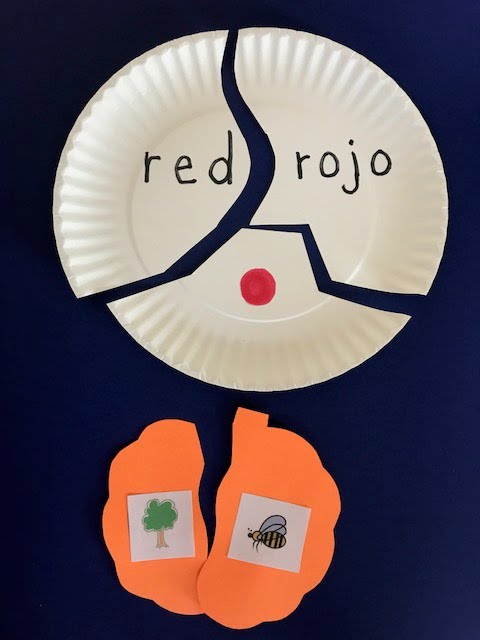
Puzzlers
Why? rhyming words, compounds, math concepts, blends, etc.
What? paper plates, rhyming pictures, markers, scissors, zip bag
How? Cut paper plates in half using puzzle designs similar to those shown. Glue pictures that rhyme on each half. Mix up the pieces. Children say the words and match up the plates that rhyme. The game is self-checking because the pieces will fit if they match the correct pictures.
*Use hearts, kites, pumpkins, or other seasonal shapes to make puzzlers.

Monday, January 12, 2026

GAMES FOR LEARNING CENTERS

These games are perfect for children to play with a partner or with a small group. Peer teaching is one of the best ways for children to learn, so children who have mastered skills will be able to help their classmates succeed.

Pony Round-Up
Why? upper and lowercase letters, numbers, beginning sounds, etc.
What? spring clothespins, heavy paper
How? Cut ponies and saddles out of cardstock paper using the pattern on the following page. Print an uppercase letter on each pony, and a lowercase letter on each saddle. Children take the ponies and stand them up using the clothespins as legs. Next, children match the correct saddle for each pony.

https://drive.google.com/file/d/0B1SnEagA4jljMXRUdG1rOUp2Y0k/view?usp=sharing


Teddy Bear, Teddy Bear
Why? matching upper and lowercase letters, pictures and sounds, sets and numerals, math facts and answers, etc.
What? heavy paper, clothespins
How? Cut bears and shirts out of paper. Write uppercase letters on the bears and lowercase letters on the shirts. Children match bears and shirts with clothespins.


https://drive.google.com/file/d/0B1SnEagA4jljTTAxcXBUZzU1dHc/view?usp=sharing


My Messy House
Why? sight words, letters, numerals, shapes, etc.
What? different colors of construction paper, clothes pins, piece of string
How? Cut clothes out of construction paper and write skills on them. Tie a string (clothesline) between two chairs. Spread the clothes on the floor as you say, “My house is so messy. Who can help me clean it up?” Children take turns choosing an item, reading it, and then hanging it on the clothesline.

https://drive.google.com/file/d/0B1SnEagA4jljSDk1Z2ZjUldqSlU/view?usp=sharing

Concentration ~ Memory
Why? visual skills, shapes, sets, things that go together, etc.
What? poster board, stickers
How? Take ten 4” cardboard squares and put like stickers (or draw like pictures) on two of the squares. Place the cards face down on the floor or on a table. One at a time, children turn over two cards. If the stickers on the cards match, then they may keep the pair and have another turn. If the cards do not match, then the next person may have a turn. Children must use visual memory skills to try and remember where matching pairs are.

*Use holiday and seasonal stickers to make concentration games.

Monday, January 5, 2026

FINGER PLAY

AUTHENTICITY is imperative when teaching young children. Finger plays are REAL! There is no screen or music or clown costumes or puppets or polka dots! It's just YOU looking in children's eyes and connecting with them visually, auditorially, kinesthetically, and emotionally. Oh, and they are FREE! It doesn't get much better than that!

I've heard people say, "Finger plays are old fashion." Well, you might call them that, but then you'd have to call chocolate chip cookies and mashed potatoes and BINGO and swings and hugs...old fashion as well. Let me share just a few things children can learn when you do a finger play. (You might want to enlighten some administrators or supervisors or parents with this information. Sometimes they just don't "get" what we do!)


Engagement – Doing a finger play is a natural way to engage children’s attention and help them focus.

Oral language – Repetition of finger plays builds oral language skills.

Auditory memory – Children activate their short term memory as they memorize finger plays.

Comprehension – Most finger plays have a simple story plot for children to follow.

Imagination – With so much time spent in front of a screen, finger plays encourage children to make pictures in their brains.

Sequence – Remembering the sequence in finger plays can help children retell stories.

Phonological awareness – Finger plays build a foundation for rhyme, rhythm and alliteration.

Eye-hand coordination
– Visual connections with finger plays are important for writing and reading.

Small motor skills – Doing finger plays is like sending the fingers to the gym to exercise.

Active Learning - Multiple senses are engaged as children watch and wiggle their fingers and repeat rhymes.

Purposeful Practice for Automaticity
(aka repetition) - Children will enjoy saying these rhymes over and over.

Brain Breaks - Children will be oxygenating the brain and crossing the midline as they do finger plays. Memorizing poems and rhymes is also good for short term memory.

Executive function – Children develop self-regulation and impulse control when they participate in finger plays.

Social skills – All children can be successful with finger plays with this group experience.

Transitions - Finger Plays can be used to entertain children during transitions or any time you’ve got a minute or two.

Best of all, finger plays are FREE! They can be used to entertain children during transitions or any time you’ve got a minute or two.

*If you’ll go to my website (drjean.org), you’ll find 5 free videos where I demonstrate finger plays. 

*Go to my September, 2011, website and you’ll find a download with the words. I would suggest taking one each week and putting it on an index card. (You could also write it on a language experience chart or use it on an interactive white board for choral reading.) At the end of the week punch a hole in the rhyme and attach it to a book ring. If you’ll do this every week, in a few months you’ll have a whole RING OF RHYMES.

https://www.drjean.org/html/monthly_act/act_2010/07_Jul/pg00.html