photo 3am_dj_home_zps919fb85e.png photo 3am_dj_about_zps7cce4c75.png photo 3am_dj_website_zps73051235.png photo 3am_dj_ss_zps6759ec2a.png photo 3am_dj_bs_zps43e27832.png
Showing posts with label Self Regulation. Show all posts

Monday, March 30, 2026

FIDGET FIXERS

There are some children who just can’t keep their fingers still. You try finger plays, cheers, and all the tricks you can, but those fingers just keep on moving. Here are a few ideas that might be an outlet for those frisky fingers.

Brain Toys (pre-K and K)
Fill a shoebox or basket with stress balls, sponge balls, knotted socks, etc. Suggest children get a “brain toy” when they can’t keep their hands to themselves.


Fiddle Stick (primary grades)
Wrap a 20” piece of string around a jumbo craft sticks. Children keep these in their desk and get them out when their hands need to fiddle.


Stress Button

Glue the hook side of Velcro to a poker chip to make a “stress button.”  Children can keep it in their pocket and then rub it when they feel anxious.


Twisty and Bendy


Give children a pipe cleaner or straw to twist and manipulate.


Fidget Cube
The fidget cube is a toy with different things that move, such as a toggle switch, clicking button, gears, etc. Apparently, they are helpful for adults and children with ADHD. I found several online and they vary in price from $1.00 on up.

Saturday, February 14, 2026

BRAIN BREAK CARDS

If you've enjoyed my blogs about the BRAIN, here's a special treat you'll definitely want to download.


Here are three pages of brain breaks that are quick, easy, and fun.


https://drive.google.com/file/d/0B1SnEagA4jljNWNWalMwQjh5UnM/view?usp=sharing

It’s important for the teacher to model brain breaks and participate with the students. These activities have an additional benefit by reducing stress and boredom – in adults and children!

My suggestion would be to choose one at a time and practice it for several days. (Not all of these are going to work, so just throw the ones your students don’t like in the trash and move on to another one.) Glue popular activities to an index card or jumbo craft stick and save them in a bag. After a few weeks you’ll have a bag full of brain breaks.
*Older students will enjoy choosing a brain break and leading their classmates.

Note!  You can watch me demonstrate these on this video.
https://www.youtube.com/watch?v=ZtLKKrJ4KSs

Sunday, December 14, 2025

ALL IS CALM?

Need a few new tricks to calm those excited children this week?

QUIET Man (Candace Reed)
Make "quiet man" with your fingers by sticking up pinky and pointer and touching thumb, ring man, and tall man. When the teacher holds up "quiet man" the children respond by making "quiet man" and focusing on the teacher.


Magic Triangle (Cathy Crady)
Remind children that they all have a magic triangle in their pocket. (Place pointers and thumbs next to each other to form a triangle.) When the children need to calm down ask them to take out their magic triangle and hold it in front of their mouth. Tell them to take a deep breath in through their nose, and then slowly blow through the triangle.


Body Check
Explain that it's important to listen with your eyes, ears, and bodies.

*Teacher: Are your eyes looking at me?
Children: Check!
Teacher: Are your ears ready to listen?
Children: Check!
Teacher: Are your bodies sitting quietly?
Children: Check!
Teacher: Are you ready to learn?
Children: Check!

Breath through Your Nose
Tell children to slowly breath in and out their noses. It’s surprising how this will calm them – and they won’t be able to talk!


Bubbles
Blow bubbles and see if the children can be sitting quietly before all the bubbles pop.


Self Control (Becky Gilsdorf)
Use this visual cue to help children who are out of control:

Cross hands over your chest. (Self)
Slide both hands down the sides of your body. (Control)
As the child repeats the movements silently it will calm them down.

Thursday, November 20, 2025

A CUP OF IDEAS

Plastic cups for classroom management!!! Here are a few new "tricks" for you to try!

Help Me!
Give each child a red and green cup to keep in their desk. When they are doing independent work have them place the cups on their desk with the green on top. Green means they are good to GO! If they need help they put the red cup on top to indicate, “Please STOP and help me.”

Group Check
You’ll need a red, green, and yellow cup for this activity. Stack the red (bottom), yellow (middle), and green (top) cups in that order and place them in the middle of a table where students sit. If the group gets loud, remove the green cup and the yellow will be a warning to calm down. If the noise continues remove the yellow cup and they must stop all talking.


Note! I didn’t think of this. There are several variations of it on the internet.

Dippers and Fillers
This is a popular management system that many schools use. When children are unkind or say something hurtful they are “dippers.” When they are kind they are “fillers.” Punch holes in the sides of a cup and tie on a string or pipe cleaner so children can hang them on their chairs or a bulletin board. The teacher or friends can put a token in their cup to thank them for being a “filler.”
                                        

Storage
Plastic cups can be used for organizing art materials, pencils, and other supplies.
*How about a cup for “Lost and Found Crayons” or “Lost and Found Pencils”?


Snack Cups
In addition to using cups for liquids, they’re handy for serving popcorn and other snacks to children.

*Decorate with stickers and use for party treats.

Lucky Sticks
Let each child decorate a craft stick with her name. Place the sticks in a cup labeled “lucky sticks.” When you have a special job to be done pull a stick from the cup. That’s the “lucky” winner. Put their stick in your desk after they’ve had a turn and when all the sticks are in your desk put them back in the cup and start all over.


Review Questions
Write a question on the front of the cup and write the answer inside for a self-check activity.


Brainstorm
Divide students into groups of 4. Give each group a cup and challenge them to come up with as many uses for the cup as they can in 5 minutes.

Thursday, October 30, 2025

SMILE BREAK

Here's a simple little classroom management trick that might help your kids keep their "cool" with all the candy and partying today.

When children are wound up, help center them with a smile break. Tell them to look at the clock and smile for 30 seconds. (Use the timer on your phone or have them look at the clock until the big hand is on the 6.)


You can also ask them to hug themselves, sit and freeze, or do other motions for a specified amount of time.

Breath Through Your Nose
I love this idea to help children focus and clam down. Have them close their lips and breath through their noses. (Works like a charm because they can’t talk!)


Babble Break
A brain break that students will love is a “talking break.” Set a timer for one minute or whatever and tell students they can talk with a friend until the timer goes off. Once the time goes off there's no more talking!

Hint! You can focus the talking break by having children discuss a story you’ve read or talk about a topic you are studying.

Sunday, October 26, 2025

HALLOWEEN WEEK

Yes, the person who drew this cartoon must have been an elementary teacher!  Here are some tips to help you get through the week.

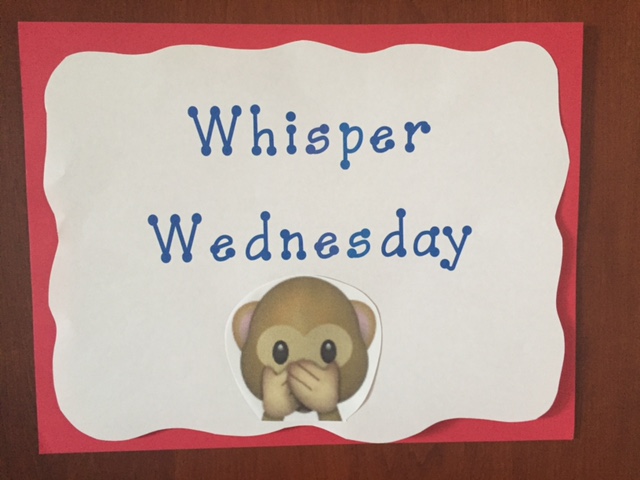
Whisper Wednesday
This Wednesday make a sign for your door that says “Whisper Wednesday.” Greet the children at the door as you whisper, “Welcome to whisper Wednesday. All day long we are going to use our whisper voices. Take yours out of your pocket and put it on.”


Do the morning routine, songs, reading group, and all other activities with a quiet voice.

Hint! Ask children to help you by putting their index finger on their lips to remind friends to remember to whisper.

Here are a few other relaxation ideas to try today or any other crazy day!

Vacation
Tell your class to give their mouth and their eyes a “vacation” by closing their eyes and mouths. Next, ask them to practice breathing through their noses. You’ll be amazed at how this brings down their energy level and helps them focus.

Eye” Exercise
Demonstrate how to hold your two index fingers a few inches from your eyes on either side of your head. Look at the right index finger with both eyes and then look at the left index finger.

Tighten~Relax 
Tighten up your body as tight as you can and squeeze, squeeze, squeeze. Then relax and let it all go. Repeat several times.
*Starting with the toes, call out one body part at a time for children to squeeze and then relax. For example, toes, feet, knees, legs, hips, back, fingers, arms, shoulders, necks, faces, and then a whole body SQUEEZE!

Rag Dolls and Soldiers 
When the teacher calls out “rag dolls” everyone flops over like a rag doll. When the teacher says, “soldiers,” everyone stands up tall and stiff. Continue calling out “rag dolls” and “soldiers” faster and faster.

Criss Cross Applesauce
Do this on each other’s backs:
Cross cross, (Make an “x” on back.)
Applesauce, (Wiggle fingers down back.)
Spiders crawling up your back. (Crawl fingers up back.)
Warm breeze. (Gently blow on neck.)
Gentle squeeze. (Hug from behind.)
Now you’ve got the shiveries! (Tickle fingers down back.)
Hint! Have children stand in a circle and face right. That way they will each have a back to write on.

How about two new ideas to help children sit down and line up?

Sit Down Song (Alissa DeKemper)
Howdy Neighbor,
What’d ya say
It’s gonna be a beautiful day!
So clap your hands
And stomp your feet,
Turn around and take a seat!

Line Up Chant (Alissa DeKemper)
My hands upon my head I place,
On my shoulders near my face,
On my knees,
And at my side,
Then behind me they will hide.
(Lower your voice as you say it!)

Monday, July 28, 2025

THE RULES OF THE CLASSROOM

Rules help children feel secure and know what behavior is expected of them. Here are a few simple rules that children can review with a chant and dance each morning.

Rules Rap
Chorus:
The rules, the rules, the rules of the classroom. (Snap fingers.)
The rules, the rules, the rules of the classroom.

Follow, follow, follow directions, (Point index fingers.)
Follow, follow, follow directions. Chorus

Feet and hands, feet and hands, (Point to feet and hands.)
Feet and hands to yourself. Chorus

Small voices inside, tall voices on the playground. (Quiet and loud voice.)
Small voices inside, tall voices on the playground. Chorus

Work together, don’t fight, or you’ll get in trouble. (Clasp hands.)
Work together, don’t fight, or you’ll get in trouble. Chorus


Class Rule Book

After teaching the class the “Rules Rap” discuss why rules are important. Say, “I know everyone in our class has a good rule to share with us.” Give each child a sheet of paper to draw a rule. Older students can write the rule and younger students can dictate the rule. Put their rules together, make a cover, and bind to make a book. Explain that when adults agree to do something they sign a contract. Invite the children to sign their names on the book to indicate they agree to the rules. When children are doing something they shouldn’t be doing take the book and point to a page as you say, “Look, it says _______ in the book. Show me the right thing to do.” (Most of them can’t read anyway, so you can turn to any page in the book!)


If You Don't Know What to Do

Here's a song to "If You're Happy and You Know It" that will suggest a positive model for children who are not following directions.

If you don't know what to do, look at (child's name).
He/she will show you what to do so you can do it, too.
If you don't know what to do, look at (child's name).


Behavior Management
Circle time is the perfect opportunity to discuss behavior problems. Explain, “I’ve noticed problem. I need your help to figure out how we can solve this problem. Let’s brainstorm to see how we can fix it.”

Note! Accept all responses and then summarize at the end. 


DR. KNICKERBOCKER - Two versions

Children can learn to listen and follow directions in a fun with with Dr. Knickerbocker.

https://bit.ly/drJKnicker


Thursday, February 13, 2025

AUTISM CIRCUIT

www.autismcircuit.net

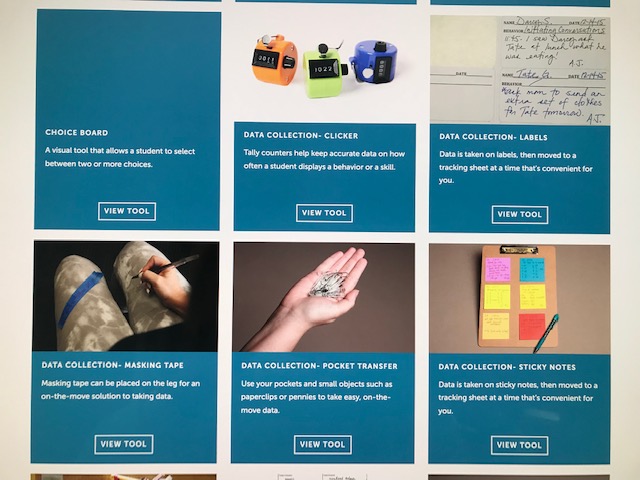
The Texas Autism Circuit has created tools and techniques for students on the autism spectrum, but I guarantee you that these would be useful in any classroom. They explain how and when to use the tools and give you printable templates and resources.

Best of all - it's ALL FREE!

Behavior cue cards to reinforce verbal directions or quietly redirect a student.


First/then cards to use as a visual support for transitions.


Take a break card for when students might need a break or if they seem frustrated.


But wait, there’s more!!!

You’ll find ideas for collecting data,


helping children with time management,


and other social skills!


For every tool, you'll find an explanation of when and how to use it.  Take a look!

Tools

SOCCSS: Situation, Options, Consequences, Choices, Strategy,...

Behavior

· Social

· Classroom Organization

· Docking Station

· Key Chain Rules

· Help Signals
About

Choice Board
When to use: Choice boards are effective in many situations...

Token Board

When to use: Use when a student is ready to progress beyond...
Visual Countdown

When to use: Use to help with transitions from one activity...
Turn-Taking Card

Saturday, September 14, 2024

SELF REGULATION TOOLS

A "sitter spot" and "brain toys" are tangible tools to help children self-regulate.

Sitter Spot
Cut 8” circles out of fun foam or felt and write the children’s names on them. Arrange for circle time to give children a special place to sit. Arrange spots to disperse problems and encourage social interactions. 


*Children can also use these for their “special spot” for doing quiet activities like independent reading.


Brain Toys
Fill a shoebox or basket with stress balls or knotted socks. Suggest children get a "brain toy" when they can’t keep their hands to themselves. You'll be surprised how a knotted sock can keep little hands still and help them focus.


Stress Button
Glue the hook side of Velcro to a poker chip to make a “stress button.”


Fiddlesticks
Wrap a 20” piece of string around a jumbo craft sticks. Children keep these in their desk and get them out when their hands need to fiddle.

Friday, September 13, 2024

SELF REGULATION HUG

Self-regulation is a key ingredient in SEL. These chants will help "center" children and remind them that they are the "boss" of themselves.

Brain Hug
Children repeat each line after the teacher demonstrates.

Thumbs up. (Extend arms and stick up thumbs.)
Thumbs down. (Thumbs down.)
Cross your arms. (Cross right fist over left.)
Clasp your fingers. (Clasp fingers.)
Give yourself a brain hug. (Bring clasped fingers down and up as you hug your chest.)


Criss Cross
Children say this with the teacher as they do the movements.

Criss Cross (Demonstrate how to cross legs and sit quietly.)
Be your own boss!! (Cross arms over chest.)


Hall Hug
Cross index and middle finger and wiggle as you look at a friend.


A “hand hug” can be done by placing your palm next to a partner’s palm. Wrap your thumbs around, squeeze, look in your partner’s eyes, and smile!


Secret Hands (Melinda Ainslie)
Several years ago at a workshop Melinda shared this idea. She said that when her daughter started kindergarten she came home from school and asked, “Mama, can you keep a secret? When you put your hands together like this (cross your fingers), it’s MAGIC because you can see better and hear better!”


Thursday, April 18, 2024

WIGGLE WORMS, ZAP, AND BOOM!

ZAP, BOOM, WIGGLE WORMS, AND STARS are all adaptions of a classroom game that your students will love (and learn from) when you've got a few extra minutes.

SKILLS: letters; words; phrase cards; math facts; shapes, etc.


MATERIALS: small can with a smooth edge (such as one from chips,
frosting, etc.), large craft sticks, markers, wrapping paper

DIRECTIONS: Cover the can with paper and write ZAP! on it as shown.

On the bottom of sticks print words or other skills. On several sticks write “ZAP!” Place all the sticks in the can with the words towards the bottom of the can. Have the children sit in a circle. One at a time, children hold the can and pull out a stick and identify the word on it. When a child chooses a stick with “Zap!” on it, they return all their sticks to the can. Continue passing the can until there is one person left.


Hint! If children can’t identify the information on their stick, let them “phone a friend” for the answer.

More! For older students, add sticks that say, “You get two turns.” “Take a peek.” “Loose a turn.” “Skip.”

BOOM!
Write "Boom!" on several sticks and when children choose that stick they jump up and shout, "BOOM!


WIGGLE WORMS
Write "Wiggle Worms!" on several sticks. Children stand and wiggle like a worm if they pull this stick.


STARS
Glue stars to several sticks. If children choose this stick they get to keep it.


*You can also adapt this game for different holidays or units of study. For example, in October you could use skeleton stickers and the children could “shake their bones.” In January glue a snowman and they have to shiver.


Stinky Cheese
Why? sight words, fluency phrases, letters, math facts, shapes, etc.
What? lunch bag, yellow construction paper, marker
How? Cut cheese slices out of poster board or fun foam. Write letters, words, numbers, etc. on most of the cheese slices. On two slices write “Stinky Cheese!” Place the cheese slices in a lunch sack. Children pass around the sack drawing out one slice at a time. If they can identify the information on the slice they get to keep it. If they get “Stinky Cheese!” everyone holds their noses and says, “Stinky Cheese!” That person must then put all her slices back in the bag.


*How about a game of “stinky feet” or “stinky socks”?
*An empty cheese cracker box makes a more durable container for the game.


Saturday, February 24, 2024

CHECK MATE

Need some new "tricks" to help your children focus?


Check Mate
Before starting a lesson, post a checklist of what students will need. As you read down the list, students respond, “Check!” if they are all set.

Pencils? – Check!
Paper? – Check!
Crayons? – Check!
Eyes Watching? – Check!
Ears Listening? – Check!
Hands and Feet Quiet? – Check!

Self Control Cue (Becky Gilsdorf)
Use this visual cue to help children who are out of control.
Cross hands over your chest. (Self)
Slide both hands down the sides of your body. (Control)
As the child repeats the movements silently it will calm them down.

Class Callbacks (Sara Quinn)
Try these callbacks to help children focus:
Teacher says: Hands on top. (Students put their hands on their heads.)
Students say: That means stop!
Teacher says: Holy Moly!
Students say: Guacamole!
Teacher says: All set?
Students say: You bet!

*You can go on all day with callbacks. Marco - Polo; Peanut Butter - jelly; Criss cross – sit like a boss, etc.

Finger Friends (Focus those fidgety hands with this rhyme.)
Two little houses closed up so tight. (Make fists)
Open the windows and let in some light. (Open hands)
Ten little finger friends so tall and straight (Fingers up and wiggle)
Hurry to school so they won’t be late. (Bounce hands)

Self Control Lotion
I recall a teacher who kept a bottle of lotion on her desk and called it “self control lotion.” When her students were having trouble paying attention she would give them a squirt of lotion and tell t
Hint! This would be a great idea for sanitizer lotion.


Wednesday, December 13, 2023

ALL IS CALM?

Does it seem like the closer you get to the holidays, the more the noise escalates in your classroom? Here are a few tips teachers have shared that they use in their classrooms. 


QUIET Man (Candace Reed)
Make "quiet man" with your fingers by sticking up pinky and pointer and touching thumb, ring man, and tall man. When the teacher holds up "quiet man" the children respond by making "quiet man" and focusing on the teacher.


Magic Triangle (Cathy Crady)
Remind children that they all have a magic triangle in their pocket. (Place pointers and thumbs next to each other to form a triangle.) When the children need to calm down ask them to take out their magic triangle and hold it in front of their mouth. Tell them to take a deep breath in through their nose, and then slowly blow through the triangle.


Body Check
Explain that it's important to listen with your eyes, ears, and bodies.

*Teacher: Are your eyes looking at me?
Children: Check!
Teacher: Are your ears ready to listen?
Children: Check!
Teacher: Are your bodies sitting quietly?
Children: Check!
Teacher: Are you ready to learn?
Children: Check!

Breathe through Your Nose
Tell children to slowly breath in and out their noses. It’s surprising how this will calm them – and they won’t be able to talk!

Self Control (Becky Gilsdorf)
Use this visual cue to help children who are out of control.
Cross hands over your chest. (Self)
Slide both hands down the sides of your body. (Control)
As the child repeats the movements silently it will calm them down.

Popcorn Cheer (Kristen Reed)
The popcorn cheer is the perfect way to release wiggles before they explode. The teacher says, “Assume the position,” as all the children squat down on the floor. The teacher points quickly to each student and she/he jumps up and yells “POP” and then squats back down. After pointing to every child the teacher says, “EVERYBODY!” and they all jump up and say, “POP!”


Wiggles
With a wiggle wiggle here
And a wiggle wiggle there
I wiggle my fingers around in the air.
I wiggle my shoulders up and down
I wiggle my nose and smile like a clown.
I wiggle my legs both left and right
I wiggle my thumbs with all my might.
With a wiggle wiggle here
And a wiggle wiggle there
Then I wiggle right down
And sit in my chair!

* I love to learn new things.  I recently met Jo Proffitt and she taught me this great wiggle break.  Thank you, Jo!

Tuesday, October 25, 2022

CALM DOWN TIPS

Here’s an “Emergency Kit” for when you are about to loose your cool!


Take a Vacation 
Tell your class to give their mouth and their eyes a “vacation” by closing their eyes and mouths. Next, ask them to practice breathing through their noses. You’ll be amazed at how this brings down their energy level and helps them focus.


Calm Down Lotion
You know that drawer full of body lotion you've received as gifts? Take the label off one and print a new one that says "Calm Down Lotion." Give each child a little squirt to rub on their hands and arms to help them relax.


Tony Chestnut
Have children sing "Tony Chestnut" (one of my free youTube videos). As you sing each verse lower your voice until you are whispering.


https://www.youtube.com/watch?v=fHUYa8oZVVs&feature=youtu.be

*Sing other songs using a whisper voice. You'll be amazed at how it calms down the class.

Turn off the Lights
Something as simple as turning off the lights can reduce stress and energy. You could also play some quiet music as children enter the classroom.


Take a Deep Breath

Have children pretend to breath in hot chocolate as you slowly count to 8. Blow out the birthday candles as you slowly count to 8. Continue counting slowly as children breath in and out.


The Quiet Game
One child is selected to be “it.” “It” stands in front of the room and says, “Mousie, mousie, how quiet can you be? When I clap my hands 1, 2, 3 (slowly clap 3 times), we shall see!” “It” chooses the classmate who is being the quietest and then that child comes to the front of the room and is the new “it.” (My class LOVED this game. It was a great way to develop self-regulation and calm them down. We played this game in the classroom and in the hall while waiting)

Use Your Imagination
Ask the children to close their eyes as you read a story. Challenge them to make “pictures in their brains.” Give them a sheet of paper to illustrate the story.


Chit Chat Break
Set the timer for three to five minutes.  Children can "chit chat" with their friends as long as they use a whisper voice!