photo 3am_dj_home_zps919fb85e.png photo 3am_dj_about_zps7cce4c75.png photo 3am_dj_website_zps73051235.png photo 3am_dj_ss_zps6759ec2a.png photo 3am_dj_bs_zps43e27832.png
Showing posts with label Executive Function. Show all posts

Wednesday, September 16, 2026

DATA + DEVICES DO NOT = JOB SKILLS

IF I WERE IN CHARGE OF THE WORLD I WOULD ABOLISH TESTING AND TECHNOLOGY IN EARLY CHILDHOOD. I'M NOT IN CHARGE OF THE WORLD, BUT HERE'S SOME FOOD FOR THOUGHT! 

School districts may be winning the battle with higher test scores, but they might actually be losing the war in terms of well-rounded and educated citizens.


           

The studies of job skills major corporations look for in employees include:

Verbal communication
Teamwork – ability to work with others
Problem solving
Creativity
Self-motivation
Written communication
Positive attitude
Flexibility

Hmmm?? Do you see test scores, rigor, or technology in the above? The roots of what our children need one day to be successful and healthy adults are what we promote through active learning, working/playing with classmates, centers, games, and creative and open-ended activities.

When children have time to express themselves and teachers have time to listen they are developing verbal skills.

When they play games and do partner projects they are developing teamwork.

When they make choices and aren't afraid to make mistakes they are problem solving.

When they have materials and freedom they can develop creativity.

When they are allowed to make choices to explore areas they are interested in they will be self-motivated.

When they take notes, set goals, and record what they are learning in journals they are developing written communication.

When they laugh, have fun, sing, and play they will have a positive attitude.

And when they learn that there are many ways to be wonderful they will develop flexibility.

Shut your door and teach children what they really need when they grow up!!!


P.S. I don’t make this stuff up! Check it out for yourself.

http://www.foxbusiness.com/features/2013/03/14/10-job-skills-every-employer-wants.html
http://www.forbes.com/sites/susanadams/2014/11/12/the-10-skills-employers-most-want-in-2015-graduates/#186d74ec19f6
https://www.aacu.org/leap/presidentstrust/compact/2013SurveySummary
http://www.usatoday.com/story/money/personalfinance/2015/05/03/cheat-sheet-skills-college-grads-job/26574631/
http://www.apa.org/ed/precollege/psn/2013/09/job-applicants.aspx
www.kent.ac.uk/careers/sk/top-ten-skills.htm

Sunday, September 13, 2026

CHORES FOR KIDS

It can be a "chore" to get children to do chores, but housekeeping jobs help children feel "worthy" and a valuable part of the family unit. Chores can also be a powerful way to develop "task initiation and task completion" (aka the executive function).

One teacher explained that when she had parent conferences she emphasized the importance of having children do chores and take responsibility for helping their family. There are several good website with ideas for chores children can do:

www.webmd.com/parenting/features/chores-for-children


www.focusonthefamily.com/...kids-to.../age-appropriate-chores

parenting.blogs.nytimes.com/.../age-appropriate-chores-for-children


We often “assume” that children know how to do a task and then we get frustrated when they don’t do it correctly. That’s why it’s important to model expectations and demonstrate specific steps. Here's an activity that would be perfect for a learning center or housekeeping area.

Setting the Table
Bring in some plastic plates, utensils, and cups and demonstrate how to set the table. You might want to trace around the items on a paper placemat so the children can match one to one.


Training Tools
Go to the dollar store and purchase a dustpan, broom, duster, etc. Demonstrate how to use these and then invite children to help you keep the classroom clean.

Teeny Tiny Duties
Let children share the chores that they have at home. Make a list of these tasks on the board. Ask children to choose three or four that they could do to help at home and make a job chart. Tell them to hang it on the refrigerator and keep track for a week. Demonstrate how to make a check mark each day when they complete the task.

Thursday, July 23, 2026

RULES RAP

Rules help children feel secure and know what behavior is expected of them. Choose a few simple rules and state them in a positive way.

Hint! This "Rules Rap" will be a fun way to start your day singing and dancing.

Rules Rap
Chorus:
The rules, the rules, the rules of the classroom. (Snap fingers.)
The rules, the rules, the rules of the classroom.

Follow, follow, follow directions, (Point index fingers.)
Follow, follow, follow directions. Chorus

Feet and hands, feet and hands, (Point to feet and hands.)
Feet and hands to yourself. Chorus

Small voices inside, tall voices on the playground.
(Quiet voice, then loud voice.)
Small voices inside, tall voices on the playground. Chorus

Work together, don’t fight, or you’ll get in trouble.
(Clasp hands, then hold nose.)
Work together, don’t fight, or you’ll get in trouble. Chorus
YEAH!


Here's a video where your children can do the "Rules Rap" with me.
https://www.youtube.com/watch?v=z60vA7vVYUY

After teaching the class the “Rules Rap” discuss why rules are important. Say, “I know everyone in our class has a good rule to share with us.” Give each child a sheet of paper to draw a rule. Older students can write the rule and younger students can dictate the rule. Put their rules together, make a cover, and bind to make a book. Explain that when adults agree to do something they sign a contract. “Everyone made these rules. Are you all going to obey these rules? (Of course, they’ll agree!) Then I’m going to let you put your thumb on an ink pad and stamp your thumbprint on our book to show that you will abide by these rules.”


When children are doing something they shouldn’t be doing take the book and point to a page as you say, “Look, it says _______ in the book. Show me the right thing to do.”


If You Don't Know What to Do

Here's a song to "If You're Happy and You Know It" that will suggest a positive model for children who are not following directions.

If you don't know what to do, look at (child's name).
He/she will show you what to do so you can do it, too.
If you don't know what to do, look at (child's name).


Tuesday, July 21, 2026

CLASSROOM MANAGEMENT SECRETS

As I was going through some old files I came across a handout titled “Top Ten Secrets of Classroom Management.” Although it was written years ago, I believe the points are as timely as ever. It was a reminder once again that GOOD TEACHING IS GOOD TEACHING! I hope you’ll find at least one or two tips that will ring clear for you this new school year.


1. Be firm, fair, and consistent. (I actually learned this in my first education class. It’s one of those things that sounds simple, but it’s not always easy.)

*Keep cool, calm, and use a quiet voice. (As you lower your voice and breath slowly you will “pull” them in.)

2. Follow a daily schedule.

*Start each day in a happy way. (Of course, a Dr. Jean silly song always works.)


https://www.youtube.com/watch?v=z60vA7vVYUY

*Use routines and rituals. (My handshakes, attention grabbers, and cheers are what I’m talking about.)

3. Communicate clearly and concisely. (Say what you mean and mean what you say.)

*Use your body language, facial expression, and tone of voice. (Develop your own “look” that means “get it together now!”)

*Use sign language.

4. Have classroom rules that are few, simple, and affirmative. (Let’s hear it for the “Rules Rap.”)


https://www.youtube.com/watch?v=z60vA7vVYUY

*Be specific about what is acceptable and unacceptable behavior. (You may do this, but you may not do that!)

5. Use positive guidance techniques.

*Redirect. (Give them something positive to do to replace the negative behavior.)

*Natural consequences. (You hurt Juan’s feelings. How can you make him feel better?)

*Discipline in private. (I found it worked best to pull a child quietly aside, hold their hands, look in their eyes, and talk to them about what they needed to do.)

6. Prevent problems whenever possible.

*Divide and conquer. (Separate those trouble makers!)

*Problem solve with the children. (Talk to them when there is a classroom issue. Get their input into how to improve the situation.)

*Observe and document. (Children tell us things by their behavior. Do they argue over a classroom object? Are they fidgety before math? How can you manipulate the environment and schedule to alleviate the issue?)

7. Use a variety of teaching strategies and grouping techniques. (Another timeless tip I learned my first year in college was to vary the instructional strategies. You can’t do the same thing over and over.)

*Large group.
*Small group.
*Independent.
*Choices.

8. Provide children with opportunities to vent energy.

*Brain breaks. (This is nothing new. Children have always needed to wiggle. And teachers need to wiggle, too!)

*Sing and dance. (I’ve got lots of free videos to help you.)

*Exercise.

*Talking recess. (Let them have a babble break and just walk around the room and chit-chat with their friends for a few minutes.)

9. Only do what only you can do!
(Don’t wear yourself out doing menial tasks.)

*Encourage children to accept responsibility.

*Be a model for them. (They won’t know how to wash the tables or put away materials if you don’t demonstrate first.)

*Set high expectations. (It’s amazing what little children can do if you expect it.)

10.Keep a bag of tricks up your sleeve….and that’s what I’ll share with you today! Come back tomorrow for some of those tricks!

Wednesday, July 1, 2026

BRAIN BREAK CARDS


https://www.youtube.com/watch?v=ZtLKKrJ4KSs

According to research, brain breaks actually increase INSTRUCTIONAL TIME by reinforcing skills and helping children stay alert and interested. Glue your favorite brain breaks to index cards and place them in a bag. Pull one out and you’ll be ready to release all day long.


https://drive.google.com/file/d/1QzLsIfxcCf8r9sGZ-VWeBP4TKwgKQhdv/view?usp=sharing


Shake It Up
Hold up your right hand and shake five times as you count. 1, 2, 3, 4, 5.
Hold up your left hand and shake five times as you count. 1, 2, 3, 4, 5.
Hold up your right foot and shake five times as you count. 1, 2, 3, 4, 5.
Hold up your left foot and shake five times as you count. 1, 2, 3, 4, 5.
Count to four with each arm and leg…then three…two…one.
End by saying, “Oh yeah!” as you extend your arms and make the letter “Y.”


Balancing Brains
Have children stand. How long can they balance on their right foot? How long can they balance on their left foot?
Can they balance on their toes?
Can they balance on their right foot and extend their left leg in the air?
Can they balance on their left foot and extend their right leg in the air.
Can they balance on one foot with their eyes closed?


https://www.youtube.com/watch?v=Thq9MTAUfSY

Jumping Brains

Ask children to stand and challenge them to jump in their space as long as they can. When they get tired they can sit back in their seats.


Hanky Panky

Tell the students when you throw the handkerchief (or tissue) up in the air they can start doing a silly dance and make funny noises. When the hanky hits the ground they must freeze. Do this several times to get rid of wiggles.


Chop Wood

Hands together as if holding an ax. Place hands on your right shoulder and then cross over your body to your left foot as you pretend to chop wood. Place hands on the left shoulder and chop to the right foot.

Sunday, May 31, 2026

TAKE A DEEP BREATH!

MOST OF YOU ARE OUT OF SCHOOL, BUT FOR THOSE WHO ARE STILL TRYING TO KEEP IT TOGETHER, YOU MAY FIND SOME TIPS ON TODA'S BLOG!

Here’s an “Emergency Kit” for this week (or any day when things get crazy)!


Calm Down Lotion
You know that drawer full of body lotion you've received as gifts. Take the label off one and print a new one that says "Calm Down Lotion." Give each child a little squirt to rub on their hands and arms to help them relax.


Hint! Lavender and vanilla are suppose to be particularly good for reducing stress.


Silent Singing
Sing the "Alphabet Song" or any song lowering your voice each time until you are lip singing. You'll be amazed at how it calms down the class.


Turn off the Lights
Something as simple as turning off the lights can reduce stress and energy. You could also play some quiet music as children enter the classroom.


Take a Deep Breath
Have children pretend to breath in hot chocolate as you slowly count to 8. Blow out the birthday candles as you slowly count to 8. Continue counting slowly as children breath in and out.


Give Your Mouth a Vacation
Challenge children to “give their mouths a vacation” and practice breathing through their noses.


Whisper Wednesday
Before the children leave Tuesday explain that tomorrow will be “Whisper Wednesday” and that you will only use whisper voices in your classroom all day. (I might make up a little story about an elf telling me to do that because he has such big ears and loud noises really bother him!) Make a sign for your door that says “Welcome to Whisper Wednesday. Please put on your whisper voice before entering today!” Greet the children at the door by whispering, “Good morning! I’m so glad you’re here today!” Sing, talk, read, and whisper through the day.

You might enjoy Whisper Wednesday so much you will want to continue doing it every Wednesday in the New Year.


Make Rain
Hold up your palm as you say, “Let’s make rain. Do what I do.”
Tap pointer finger on palm for several seconds.
Tap pointer finger and middle finger.
Tap pointer, middle, and ring finger.
Tap pointer, middle, ring, and pinky on palm.
Clap hands together loudly.
Clap hands and stomp feet and then reverse the movements.
Clap hands.
Tap pointer, middle, ring, and pinky on palm.
Tap pointer, middle, and ring finger.
Tap pointer and middle finger.
Tap pointer finger on palm.
Slowly bring palms together and put in your lap.

*This will really sound like a rainstorm is coming and going. Children will want to do it again and again. Woe be unto the child who does not cooperate with the group!

Saturday, May 9, 2026

LET'S PLAY A GAME!

People don't stop playing because they grow old -

They grow old because they stop playing!

Stay YOUNG as you play one of these games with your children!


Here's a link to download all of the the activity cards:

file:///Users/jeanfeld/Downloads/ActivityCARDS-DrJeanJuly2015-4.pdf


Check out these games for indoor and outdoor fun.

Play Ball

Juggling and Balance Beam

Follow the Leader and Mirror

Jump the Creek

Camping

Step School

Going on a Trip

Penny-Penny

Tower Topple

Charades


Saturday, April 18, 2026

TESTING! TESTING!

If I were in charge of the world you wouldn't be allowed to test little children! Unfortunately, I'm not in charge of the world, and even young children are experiencing "test anxiety" this time of year. How ridiculous for a four or five year old to be worried about a test! Bless their hearts...and bless your hearts.

Nevertheless, here are some activities that might help children relax and focus before a test. They might also be a good break between tests.

Deep Breathing – Inhale slowly as you count to 8. Exhale slowly as you count backwards from 8 to 1. Breath in hot chocolate. Breathe out and blow the candles out on a birthday cake. 


Tighten~Relax – Tighten up your body as tight as you can and squeeze, squeeze, squeeze. Then relax and let it all go. Repeat several times.
*Starting with the toes, call out one body part at a time for children to squeeze and then relax. For example, toes, feet, knees, legs, hips, back, fingers, arms, shoulders, necks, faces, and then a whole body SQUEEZE!


Rag Dolls and Soldiers – When the teacher calls out “rag dolls” everyone flops over like a rag doll. When the teacher says, “soldiers,” everyone stands up tall and stiff. Continue calling out “rag dolls” and “soldiers” faster and faster.


“Eye” Exercise - Demonstrate how to hold your two index fingers a few inches from your eyes on either side of your head. Look at the right index finger with both eyes and then look at the left index finger.


Balancing Act
– Ask children to stand. How long can they balance on their right foot? How long can they balance on their left foot? Can they balance on their right toes? Left toes? Can they balance on their right foot and extend their left leg in the air? Can they balance on one foot with their eyes closed?
Hint! Classical music is lovely for balancing activities.


Vacation – Tell your class to give their mouth and their eyes a “vacation” by closing their eyes and mouths. Next, ask them to practice breathing through their noses. You’ll be amazed at how this brings down their energy level and helps them focus.


Lip Sinc – Make motions as you mouth the words to finger plays and songs. Invite children to join you when they recognize what you are doing.


Silly Dance - Play some catch music for the children to do the silly dance. When you stop the music they have to "freeze." Continue playing and stopping the music as the children dance and freeze.

Hint! The "finger neurobics" that K.J. demonstrated several years ago would also be an excellent way to calm children.

https://www.youtube.com/watch?v=sB4lXUhRfMU

Saturday, January 17, 2026

INDOOR GAMES FOR A WINTER DAY

The weather outside is frightful,
But inside our game is delightful.
And since we can’t go out to play
Here are some indoor games for today.

Silent Touch
This is a great game to quiet children and build memory skills. The first child gets up and touches an object and then sits down. The second child gets up, touches the first object, then touches an additional object. The third child touches the first object, second object, and adds a third object. The game continues as classmates touch what the previous children have touched in sequential order and then add a new item. When a child forgets, simply begin the game all over again.


Four Corners (This is the BEST indoor game ever!)
Number each of the corners in the room ~ 1, 2, 3, 4. (You can write the numerals on paper and hang them up if you want.) Choose one person to be “it.” “It” hides their eyes and slowly counts from one to ten as the rest of the class tiptoes to a corner in the room. When “it” says “freeze,” everyone must be in a corner. “It” then calls out a number (1, 2, 3, or 4) and the children in that corner are out of the game. They sit down in the “stew pot” in the middle of the room. “It” counts to ten again as everyone moves to a new corner. The game continues until there is one person left. That person becomes the new “it.”
Hint! Shorten the game by having “it” call out two corners at a time.

*If there is no one in the corner, ask “it” to call out another number.

*Label the corners with letters, numbers, sight words, vocabulary words, etc.


Detective
One child is the “detective.” The detective describes a “missing child” (classmate), giving their eye color, hair color, description of clothing, likes, etc. The first person to identify the missing child gets to be the new detective.

Hint! Here is another variation of this game. Send the detective out in the hall. Select one child and hide him or her under your desk or behind a shelf. The detective returns to the classroom and tries to identify the missing child. (You can also let two children exchange seats and see if the detective can spot the switch.)


Hot Potato
You can use a small ball, bean bag, or stuffed animal for this game. Children sit or stand in a circle. Children begin passing the “hot potato” (ball or bean bag) around the room when the music starts. Explain that it is a “hot potato” and they need to pass it quickly to the next friend. When the music stops, the one holding the “hot potato” is out of the game and must leave the circle. If two children are holding it they are both out. The last child remaining is the winner. Begin the game again.


Silent Ball
You will need a small, soft ball for this game. Explain that the object of the game is to see how many times you can toss the ball without talking. Look at the person you are throwing the ball to so they will be ready. Silently count how many times we can throw the ball without talking or dropping it. If someone talks or drops the ball, then the game begins all over again.


Tower Topple
This game is similar to Jenga. Have children get a block and then sit in a circle. The first child begins building the tower by placing her block in the middle of the circle. The second child places his block on top of hers...The game continues as children try to build the tower higher and higher. When it falls over every shouts "tower topple" and the game begins again.


Going On A Trip
The first player begins by saying, “I’m going on a trip and I’m taking (names an object).” Second player says, “I’m going on atrip and I’m taking (names first object and names a second
object).” Next child says, “I’m going on a trip and I’m taking(names first object, second object, and names a third object).” The game continues as each player tries to remember previous
objects. When a player forgets, begin the game all over again.

*You can also name objects in alphabetical order. For example, the first person says something that begins with an “A,” the second person names something that begins with a “B,” and so on.
Change the game to “going on a picnic,” “going to the moon,” etc.


Penny ~ Penny
One person is “it.” “It” chooses three friends to leave the classroom. While the three are out of the room, “it” walks around the room and places a penny in one child’s hands. All the children
cup their hands as if they are holding the penny. The three children are then called back into the classroom. The three walk around the room opening hands until one finds the penny and says, “Penny, penny, I found the penny!” That child then becomes “it” and the game continues.

*Let children hide a seasonal toy, such as a bunny or a pumpkin.
*Play a similar game by having one child leave the room as youhide a small object. Guide her to the object by saying “cold” when she is far away and “hot” as she gets closer to the object.

Charades
Children will have fun “performing” and “stumping” their classmates with this game. One child at a time gets up in front of the room. The child acts out a nursery rhyme as her friends try to guess which one it might be. The first child to guess correctly gets to act out the next rhyme. (You might need to suggest rhymes to younger children.)

*Children could also act out book titles, songs, feelings, animals, or other categories.
*Children can make sounds or simply pantomime.
“Statues” is a similar game where children work in groups and freeze in position to symbolize a book, song, or other event.

Tuesday, January 13, 2026

SELF CHECK GAMES

These games have a built in feedback. Children can play them over and over and you’ll make sure they are learning the correct information. These games can be played with a partner or individually.

Flippers
Why? letters, sounds, math facts, contractions, antonyms, etc.
What? spatula or pancake turner, corrugated cardboard, fun foam
How? Cut 3 ½” circles out of cardboard or fun foam. Write uppercase letters on one side and lowercase letters on the other. Place the circles on the floor or a table. Children name the letter on one side, and then flip it over to self-check.

*Write words on one side and glue matching pictures on the back.

*Write children’s names on one side and glue their picture on back.

*Put pictures on one side and initial consonants or vowels on back.

*Write questions on the front and the answer on the reverse side.

*Write antonyms on opposite sides.

*Write two words on the front and the contraction on the back.

Sharks
Why? numerals, math facts, phonics, contractions, etc.
What? heavy paper
How? Cut out paper sharks using the pattern on the following page. Fold down the top fin. Make a set on the body and then lift the fin and write the numeral. 


https://drive.google.com/file/d/0B1SnEagA4jljTTNTLWI0MEwwZ0k/view?usp=sharing

Touchdown
Why? math facts; number words, phonics, review questions
What? construction paper
How? Fold construction paper in half. Place a football pattern with the top of the pattern on the fold. Write math facts, number words, etc. on the front of the footballs. Write the answers on the inside.

Peeking Puppies
Why? words and pictures, upper and lowercase letters, antonyms, math facts and answers, etc.
What? construction paper
How? Cut puppies out of construction paper. Bend down the ear. Write one thing on the puppy’s body and write the answer under the ear.


https://drive.google.com/file/d/0B1SnEagA4jljZGxkcDZmaFQ4UVU/view?usp=sharing


Use Your Brain!
Why? math facts, phonics, antonyms, etc.
What? poster board, hole punch, golf tee or pencil
How? Cut a brain out of poster board using the pattern on the following page. Punch 10-12 holes around the outside of the edge. Near each hole write a math fact. On the reverse side, write the answer to the math problem near the hole. Outline the shape with markers and decorate. The child sticks a pencil or golf tee in the front and then turns it over to check their answer.

*Two children can also play this game. One “pokes” and the other confirms.

https://drive.google.com/file/d/0B1SnEagA4jljZVZ4VDhsU1czUUU/view?usp=sharing


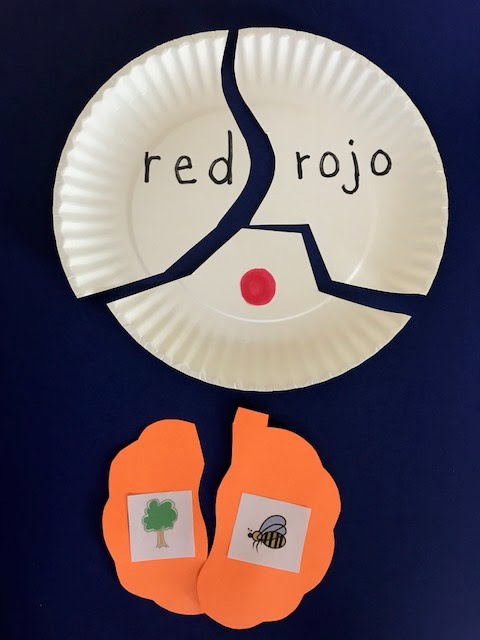
Puzzlers
Why? rhyming words, compounds, math concepts, blends, etc.
What? paper plates, rhyming pictures, markers, scissors, zip bag
How? Cut paper plates in half using puzzle designs similar to those shown. Glue pictures that rhyme on each half. Mix up the pieces. Children say the words and match up the plates that rhyme. The game is self-checking because the pieces will fit if they match the correct pictures.
*Use hearts, kites, pumpkins, or other seasonal shapes to make puzzlers.

Friday, January 9, 2026

FLASH CARD GAMES

You can take advantage of all the little “teachable times” in your school day with these ideas. Keep flashcards handy for when you have a few extra minutes before lunch, as children wash hands, or while waiting for the bell to ring. Make a different set of flashcards every few weeks that focus on specific skills your students need to master. You can use these games for letters, shapes, numbers, sight words, math facts, etc.

*Store games in a sand bucket on your desk for easy access.

*Keeping Score – Try this idea to avoid students being too aggressive. Cut out two circles from poster board and glue them together. Write “high” on one side and “low” on the other. After playing a game toss the circle. If “high” appears the team with the highest score wins. If “low” comes up the team with the lowest score is the winner.


Hint! If children don’t know the answer when playing games allow them to “phone a friend” (ask a friend) or “ask the audience” (ask the class).

BOOM!
Write “BOOM!” with a bright marker or glitter pen on several of the flashcards. As you “flash” through the cards, children identify the information. When “BOOM!” appears, children jump up and shout out “Boom!” 

*Change the surprise word for different holidays and seasons. In January use a snowman sticker and write “Brrrr!” The children stand up and pretend to shiver when it appears.

*Another fun version is “cowboys” and “chickens.” Insert pictures of a few cowboys and a few chickens. When the cowboy appears the children stand up and pretend to twirl a lasso. When the chicken appears they stand up and flap their arms and cluck.


Kids vs. Teacher
Draw a T chart on the board with “Kids” on one side and “Teacher” on the other side. Hold up a flash card. If a child raises her hand and correctly reads the word, she gets a point for the “kids.” If any child shouts out the answer, then the teacher gets a point.

(If children keep talking out of turn, just continue to give points to the teacher. They’ll figure it out!)

Pick Up
Place the flash cards randomly on the floor in the middle of the room. Divide the class into two teams. Choose one child from each team to come up and play. Call out a word. The first child to pick it up wins a point for their team.

*At the beginning of the school year write the children’s names on plates. Have children stand in a circle and place 5 plates on the floor. Sing, “If your name is on a plate pick it up” to the tune of “If You’re Happy and You Know It.”

Musical Plates

You remember the old game where you placed chairs in a circle and walked around until the music stopped? If you didn’t find a chair you were OUT! This is a similar game that can be used to reinforce letters, words, math facts. etc. Write information you want to reinforce on paper plates. Scatter them on the floor. Play some catchy music for the children to dance to. When the music stops each child finds a paper plate and picks it up. The teacher randomly points to various children to identify the information on their plate.


Word Worm
Draw the face of a worm on a 9” circle. Pass out a word card to each child. One at a time children come up and place their word next to the worm’s head. Each child reads all of the previous words before placing her word down. How long can the worm grow?
Note! Children can “ask the audience” to read with them if they are unsure of the words.

Thursday, January 8, 2026

LET'S PLAY A GAME


WHY PLAY GAMES?

All you have to say is, “Let’s play a game!” and you will naturally engage your students. But there’s more than PLAY going on with these games!

Standards – Sugar coat those standards by developing a game around the skills you want to reinforce.

Executive Function – Through games children can develop task initiation and completion because there is a beginning and an end. They also learn self- regulation and delayed gratification.

Active Learning – With games children can talk, interact with friends, and use multi-sensory materials.

Purposeful Practice for Automaticity – In order to master skills children need to repeat and practice them. Clearly, kids would rather do that with a game than with a worksheet.

Intentional Teaching – Teachers can create flashcard games, board games, or a variety of games based on any skill (letters, numbers, sight words, vocabulary, math facts, science or social studies, etc.) Think about skills in your curriculum and there’s the content for your game.

21st Century Skills – Children will naturally develop cooperation, collaboration, and communication as they share and play games.

Brain Research – The brain likes anything that is novel and challenging. Games add that element of fun and motivation to academic content.

Differentiated Instruction – Games can be adapted for specific needs and used for small group, independent, or take home practice.

Limited English Learners – Games can provide that visual and auditory connection in a non-threatening way.

Instructional Time – Take advantage of transitions and those few extra minutes during the school day by playing games.


HOW?
Look at your standards. What skills do your students need to master? 

Are they struggling with any letters, sight words, shapes, math facts?

Be specific with the content you choose. Start simple and make the games increasingly complex. Remember, nothing succeeds like success.

WHAT?
construction paper, poster board, fun foam, file folders, scissors, tape, glue, hole punch, jumbo craft sticks, magnetic letters, markers, recycled materials, small toys and inexpensive items you can find in a dollar store

Tip!
You can make games yourself.
You can ask parents to make games for you.
You can share games and rotate them with other teachers.

WHERE?
Store games in zip bags, manila envelopes, pencil boxes, plastic tubs, or other containers. *Hint! Color code with stickers to indicate content area.

WHEN?
Demonstrate how to play the games and keep the rules simple. It often takes several times for the children to “get” a game. Model how to care for the materials and clean up.

Games can be used for large group instruction during transitions. They can be used with small skill based instructional groups. And, they can be used for independent practice.

Tip! Use games to motivate your students by saying, “If you work hard we will have time to play a game.”

*Try using “Brain Lotion” before playing games with pieces. (Take the label off a bottle of hand sanitizer and replace it with a label that says “Brian Lotion.” This will keep your games clean and germ free.)


ONLY YOU!

I can't do anything about the skills you have to teach, the checklists you have to complete, or the tests you have to administer, but over the next few days I can share some of my favorite games to make those standards "taste" better. Remember that YOU add the magic!

Wednesday, November 12, 2025

CHORES

It can be a "chore" to get children to do chores, but housekeeping jobs help children feel "worthy" and a valuable part of the family unit. Chores can also be a powerful way to develop "task initiation and task completion" (aka the executive function).

One teacher explained that when she had parent conferences she emphasized the importance of having children do chores and take responsibility for helping their family. There are several good website with ideas for chores children can do:

www.webmd.com/parenting/features/chores-for-children

www.focusonthefamily.com/...kids-to.../age-appropriate-chores

parenting.blogs.nytimes.com/.../age-appropriate-chores-for-children


 We often “assume” that children know how to do a task and then we get frustrated when they don’t do it correctly. That’s why it’s important to model expectations and demonstrate specific steps. Here's an activity that would be perfect for a learning center or housekeeping area.

Setting the Table
Bring in some plastic plates, utensils, and cups and demonstrate how to set the table. You might want to trace around the items on a paper placemat so the children can match one to one.

 
Training Tools
Go to the dollar store and purchase a dustpan, broom, duster, etc. Demonstrate how to use these and then invite children to help you keep the classroom clean.

Teeny Tiny Duties
Let children share the chores that they have at home. Make a list of these tasks on the board. Ask children to choose three or four that they could do to help at home and make a job chart. Tell them to hang it on the refrigerator and keep track for a week. Demonstrate how to make a check mark each day when they complete the task.

Sunday, July 13, 2025

HOW TO MANAGE LEARNING CENTERS

Since I’ve been at this rodeo for over 50 years I have seen many ways to manage centers. There is no “right” or “wrong” way, but you do have to adapt to your district’s requirements, the age of your students, and your standards. Take a look at the strategies below and see if you can find one that would work for your classroom.

Weekly Contract
Each week my students received a “contract” with ten centers they “got” to visit during the week. We did center rotation for 45 minutes at the end of the day when they were too exhausted to sit and listen. They got to choose where they went and how long they stayed in each center, but the goal was to do all ten activities by the end of the week. If they finished they got “Fabulous Friday”! What was Fabulous Friday?? They got to take their shoes off and do whatever they wanted. They LOVED it!!!


https://drive.google.com/file/d/1vZDUXcND9hjVewlJLkmdEg3E-25eS7tW/view (black & white)

https://drive.google.com/file/d/15ToM6nqTjRomfwH-MuKC9OcskocyIWa5/view (color)


After visiting a center they colored it in and then raised their hand. My assistant walked around with a hole punch and would punch the activity after they explained what they did or learned. (During this time I could pull one or two students to give them extra help.)
Yes, I did limit the centers to 2 or 4 at a time. On Monday we’d go around the circle and they chose where they’d like to start. If a center already had four people they had to make another choice. When someone left a popular center then they could go there. This really worked itself out. If they wanted to stay in blocks all day Monday they could, but then they’d have to work a little faster the rest of the week to complete their center cards. It was amazing how they became self-directed learners by the end of the year!


Numbered Centers
I visited another kindergarten that had something similar. Children had index cards with numbers 1-10 on them. These were tied to a string that they wore around their necks. Scattered around the room were the numbers 1-10 with something to do at each station. As children completed the activity they raised their hand and the teacher punched their card.


Check List
Another idea might be to have a class list with the children’s names at each center. Write the focus goal at the top. As children complete assignments they make a smiley face or other comment next to their name.


Center Rotation
Center rotation is another option if you want all children to work in small groups and experience different centers and activities. Each day you will have the opportunity to work with a small group, and then they can rotate through 3 different centers.

How? Write the numbers “1, 2, 3, 4” on small pieces of paper and put them in a basket. You will need as many pieces of paper as there are children in your room. Children choose a number and that is where they will begin. After 15-20 minutes children clean up and rotate in a clockwise direction. For example, children in station one go to two, two go to three, three go to four, and four go to one. Within an hour children will have the opportunity to experience four activities, including working with the teacher.

1. Teacher Directed
Phonological Awareness
Reading Readiness

2. Social Play
Housekeeping
Blocks

3. Small Motor
Puzzles
Play dough
Erase boards
Blank Books

4. Independent
Listening Center
Library
Math
Technology


Tickets to Centers
Cut out pictures representative of the different centers in your classroom. Cut out the same number of pictures for each area as children who can play in that area. Glue the pictures to poster board cut in 4” squares. At center time, shuffle up the cards and allow each child to draw one. Children then go to the centers on their card.


Tips for Center Rotation

*You can either create four groups based on skills, or randomly assign children to different stations where they should start.

*Use a timer to make sure everyone gets the same amount of time in an area.

*Exercise or do a brain break between rotations.

*Adapt the length of time to the age and ability of your students.

*Have several choices in each station. After children complete the “main course” (assigned task) they can have “dessert” (choice).

Monday, March 3, 2025

I'M FINISHED - NOW WHAT?

In every classroom you will have racehorses and turtles. Make assignments and by the time you turn around the racehorses are saying, “I’m finished.” Meanwhile, the turtles never seem to make it to the finish line.

Here are several ideas to focus children’s attention and give them something to do when they complete their work. Most of the activities are open-ended and can be adapted to different age levels.

Super Duper Stars
Make a list of 10 things children can do if they finish their work. (Choose from the list below or create your own.) Children start with one and work through the activities in sequential order.

Note! I did this in my kindergarten and it worked like a charm. Eventually, the children realized there was no reason to hurry through their work because there was more waiting for them as a super duper star!

Bonus Cards
Write activities on strips of paper and put in a can. Children get to draw a “bonus” card when they complete their work.


*Here's where you can download the bonus cards:

https://drive.google.com/file/d/0B1SnEagA4jljbHZuSmtxd1BCRXc/view?usp=sharing

BINGO
Each month draw a “BINGO” grid and write a different activity in each section. Whenever children have extra time, they do an activity and color it in. Who can fill in their whole card by the end of the month? Who can get a line across, down, or diagonally? Each child can win!
*Thanks to Jenny Ianero for sharing this idea she uses with her first graders.