photo 3am_dj_home_zps919fb85e.png photo 3am_dj_about_zps7cce4c75.png photo 3am_dj_website_zps73051235.png photo 3am_dj_ss_zps6759ec2a.png photo 3am_dj_bs_zps43e27832.png
Showing posts with label Motivation. Show all posts

Friday, April 10, 2026

POETRY SONGBOOK

If I were in charge of the world, this is something that I would put in each child's hands. It's so simple and inexpensive, but it could give a lasting memory to a child. This idea could be adapted for any age group or skill level.

On a personal note! I have a friend with Alzheimer's who has a difficult time carrying on a conversation. Another friend took her out to lunch, and I asked, "What did you talk about?" She replied, "Oh, we don't talk. I put on the 50's radio station and we sing!" And that's why we must sing with children and teach them poems. Those songs and rhymes will stay tucked in their brain, and they might give them a smile and a few minutes of happy memories one day!


What? pocket folders with 3 prongs, copies of poems and songs, markers, art media

Why? love of reading, oral language, phonological awareness, social skills, reading skills

When? large group, small group, independent, home/school

How? Purchase a pocket folder for each child. This will be a good project for them to decorate the first week of school. Think of 4 or 5 simple songs, nursery rhymes, or poems that you would like to introduce the first month of school. (I would not put illustrations on these because the children will be able to make a personal connection with their own drawings.) Run off copies of these and insert them in the pocket folder. Each week introduce one of the songs using the strategies below. As the year progresses add new songs or rhymes that would engage the children or relate to a theme or season.

Hint! Some good songs might include: “Twinkle Little Star,” “BINGO,” “Baa Baa Black Sheep,” “The Itsy Bitsy Spider,” “The Farmer in the Dell,” “London Bridge,” “Yankee Doodle,” “Jack and Jill,” “Mary Had a Little Lamb,” “Row, Row, Row Your Boat,” “The Alphabet Song,” or “Rain, Rain, Go Away.”


Monday - Introduce the poem as a shared reading experience. Reread the poem several times using one of these strategies:

Shadow Reading– Teacher reads a line and then students repeat.

Magic Word– Choose a “magic word” (high frequency word) in the text. Every time you come to that word, the children get to clap, jump, snap, etc.

Say What? Read the wrong way and have children correct you by shouting out, “Say what?”

Missing Word – Omit a word and have the children fill it in.

Read with me IF
you…like chocolate ice cream
like broccoli have a dog
can ride a bike are wearing red

Stand and Read – Children stand and take a small step to the right for each word. At end of the line jump “down” to the next line. Everyone moves back to the left and quickly moves to the right with every word until the end of the next line. Repeat until the end of the poem.

Take a Turn- Divide children into groups and each section reads a different line. For example: Let boys and girls alternate reading lines.

Tuesday - Let children use pointers to find letters or words they can recognize, point out words that rhyme, punctuation, etc. Have children illustrate the poem or song as an independent activity.

Wednesday - Use the poem for skill work during small group. Highlight parts of speech, sight words, etc.

Thursday - Children bring notebooks to large group and reread this week’s rhyme and review previous poems.

Friday - Children read poems independently or with a buddy.

Weekend Homework - On Friday, let children take home their poetry notebooks. Ask children to read the poem to someone in their family over the weekend. Encourage parents to sign their name and write their comments and compliments on each poem.

Wednesday, April 8, 2026

POET TREE

HERE'S A POEM FOR YOUR POCKET!

A Poem 
By Dr. Holly

A poem, a poem
Is a very special thing.
It takes the words
And makes them sing.

A poem is a present,
A poem is a treat
With words piled like ice-cream
In your bowl to eat!

A poem, a poem
Is a treasure and an art
So always carry one
With you in your heart.

Let children make a pocket and keep their favorite poem in it. Encourage them to exchange poems with classmates and read to each other.

Hint! To make a poetry pocket seal an envelope, cut it in half, punch holes and tie on a string. Children can decorate these and then wear them around their neck.

Here are some other ideas for celebrating poetry month in your classroom:

A Poem a Day
Choose a poem and read it to your class at the beginning of each day. You can read it and “let it be.” Or, you could use the poem to introduce vocabulary or to spark a discussion.
*Assign each child a different day to be responsible for bringing in the poem. This would be a good activity for children to do with their parents.


Poet “Tree”

Use an old Christmas tree or stick several large, dry branches in a pot of dirt. Invite children to write or illustrate a poems on index cards and then attach to the tree with clothespins. Encourage children to “pick a poem” and read!


Laurel Wreath

Just for fun, let children make laurel wreaths out of paper plates and leaves. The Greeks awarded these in Olympic events for sports as well as poetic meets. 

Tuesday, April 7, 2026

POETRY MONTH

When your give children a song and rhyme,

You give them a gift that will last for all time!

It’s true! We keep songs and poems that we learn when we are young in our hearts and minds all of our lives. Since April is National Poetry Month, I’m going to focus my blogs this week on poetry.


Here are eight great reasons for integrating poetry in your classroom:

Poetry develops oral language.
Poetry develops auditory memory.
Poetry helps children make print connections.
Poetry develops phonological awareness (rhyme, rhythm, alliteration).
Poetry enhances fluency.
Poetry develops vocabulary.
Poetry sparks children’s interest in reading.
Poetry helps children fall in love with language.

With all the emphasis on standards and assessment, poems can be like a breath of fresh air. They can add joy, imagination, creativity, and FUN to your classrooms!

Here are some ways to celebrate poetry month in your classroom or in your school.

Poetry Club
Write “Poetry Club” on a poster and decorate with glitter. Explain that anyone who stands up in front of the class and recites a nursery rhyme or poem can be a member of the poetry club. (You might want to model reciting a poem for them.) After they’ve recited their poem, let them sign their name on the poster.


*Design a membership card for the poetry club and run off on card stock. Present one to the children after they’ve recited a poem for their classmates.

Poetry Café
Plan a poetry party for your students called the “Poetry Café.” Involve children in planning refreshments, making decorations, writing invitations, etc. Encourage each child to learn and practice reciting a poem. Explain that in the coffee houses instead of clapping, the audience would “snap” their fingers for the poets.


Parents and Poems

Ask children to interview their parents about poetry using some of the prompts below:

Do you like poems? Why? Why not?
What’s your favorite poem?
Do you have a favorite poet?
Did you learn any poems when you were a child?
Do you have a poetry book?


Visiting Poet
Invite a poet from your community to visit and read poetry. Encourage the children to generate questions to ask the author before her visit.


Poetry Wall of Fame
Decorate a bulletin board in the front hall or lunchroom and encourage teachers to display their students’ poems on it.


Poetry Detectives

Challenge the children to be “detectives” and locate the poetry section in your school library. Learn this rhyme:
For an emergency call 911 any time.
In the library 811 for a poem or rhyme.

Poetry Hunt
Cut out magazine pictures of different objects and glue them on index cards. Place the cards in a sack and have each child draw one. Can they find a poem to go with their picture? Where could they look to find a poem?

Thursday, March 5, 2026

SELLING READING

I like to read,

Oh, yes, I do!

I like to read.

I’ll read with you!!

I was volunteering at a school and I saw the above chant on a bulletin board. Wouldn’t that be a good way to focus children’s attention before reading together? Which reminds me - we have got to SELL children on reading. Children have always longed to do what they see adults do, so reading used to be an easier thing to get children to buy into. Now, how many children actually see their parents reading a book, newspaper, or magazine?

One time when I visited a school I said to the teacher, “I can't believe how well your students can read!” The teacher smiled and said so all could hear, “You know, my children have learned how much fun it is to read and they just want to read all the time!” That’s the power of positive thinking and the power that we have to influence children’s feelings and interests.

When you read to your class remember to say, “I love to read. It’s so special to read with you.”

If your class is reading independently you can comment, “WOW! This is a class of amazing readers! It makes me happy to see all of you reading and enjoying books like I do.” 


Here’s a chant that my daughter wrote a few years ago. It’s done like “Cadence” where children repeat each line.

We Like Books
We like to read, yes we do. (Slap thighs and step from side to side.)
We like books. How about you? (Point to self and then others.)

Books are my friends wherever I go.
When I have a book I’m never alone. (Shake head.)

Search for treasure, solve mysteries. (Hand over forehead.)
Meet famous people from history.

Ride on a dinosaur long ago.
Or fly to the future with a UFO. (Slap hands.)

You can travel to faraway places. (Arms out like airplane.)
Mountains, beaches, or desert oasis.

Learn about pandas and rattle snakes. (Palms together like snake.)
Just look in a book, that’s all it takes.

If you’re feeling sad or blue (Look sad.)
Books are always there for you. (Smile and open palms like a book.)


*Encourage your students to talk about why they like to read. Let them each contribute a page for a class book called "We Like Books."


READ, READ, READ A BOOK

This is a song I recorded many years ago when we emphasized the LOVE of reading over the SCIENCE of reading.

Don’t You Just Love to Read?


Read a book, read a book,

Don’t you just love it?

Read a book, read a book,

Don’t you just love it?

Read a book, read a book,

Don’t you just love it?

Don’t you just love to

Read, ready, read!

Prissy style…monster style…alien style…whisper style


*Let children think of additional styles for singing the song

(i.e. under water, with a cold, with emotions, etc.).

*Make a graph of favorite authors or books.

*Have children interview parents, the principal, etc.

about why they love to read.

*Invite guest readers to your classroom and ask

them why they like to read.

https://www.youtube.com/watch?v=fcnBm1lUZcY

Saturday, February 21, 2026

IF YOU GIVE ME A BOOK...

If you give a little boy or girl a hammer, they’ll find a million things to hammer.
And, if you give a little boy or girl a book, they’ll think of a million things to write in it.


Many years ago a professor remarked:
IF a child can do a ditto, it’s a waste of time.
If a child can’t do a ditto, it’s a waste of time.
Why do dittoes?

Some of you might not even know what a “ditto” is. Dittoes existed before copy machines, but they were purple and smelled like alcohol. However, the point remains the same. There are so many more meaningful things to do instead of worksheets - such as BLANK BOOKS!

TOP TEN REASONS TO USE BLANK BOOKS

1st – They are perfect for differentiated instruction. Blank books are open-ended to challenge children at different skill levels.

2nd – Blank books can be used to reinforce reading and writing standards across the curriculum.

3rd – Writing and drawing activate more areas of the brain than typing a key on a computer.

4th – Many children don’t have books in their home so this is a great way for children to share reading with their families.

5th – Blank books are much more engaging than worksheets and encourage creativity.

6th – Blank books nurture the belief in children that they really are “authors.”

7th - If children write a book they will be more motivated to read the book.

8th – Children have a tangible project that demonstrates learning when they make a book.

9th – When children make books they are developing the executive function of “task initiation” and “task completion.”

10th - Blank books can be used in learning stations or as an activity with a partner or small group.

Note! Blank books don’t always have to have a purpose. Sometimes you can put them out in a writing center and let children write or draw whatever they want!

Helpful hints when making books!

A. Make these books with a small group of children, such as a guided reading group. It’s much easier to help 5 or 6 children learn the steps than the whole class at once.

B. Model making the book from start to finish. The brain remembers as a whole. The second time the children can make the book with you as you slowly go through the steps.

C. Make the same book each day for a week, assigning different tasks with the book. Once children have mastered making several of these blank books you can use them for assignments the rest of the year.

D. Suggest children use as many colors as they are in age in their books. For example, if you are five years old you should use at least five colors. If you’re seven, you should use seven colors.

*You could also ask older students to use as many words in their sentences as they are in age.

E. Blank books are a perfect activity for parent volunteers to do with the class.

F. Save blank books throughout the year as part of their writing portfolio.


Snip Snap Book
If you’ve been to my workshops you already know how to make this book. Talk about simple, easy, and useful!

Materials: 2 sheets of white paper

Directions: Fold two sheets of paper in half. Make
tears (or snips) about a thumbnail apart down the
fold. Bend one tab forward, then the next
backward, and so on to bind the pages together.


Use for: retelling a story/story elements
letter book/vowel book
number book/shape book
“The Book”/ “A Book”
coordinate with a unit or theme
environmental print/cut out words they can read
word families, opposites
write the room
writing original stories, journals
chit chat books (teacher and child write back & forth)
note taking
vocabulary/spelling words
Monday – write a word on each page
Tuesday – write the definition
Wednesday – illustrate or cut out a picture
Thursday – write a sentence


Hint! Fold paper lengthwise to make a tall book.
Cut paper in half to make a little book.
Use a colored sheet of paper on the outside and a white sheet on the inside.


Making Books


Picnic Books - https://bit.ly/drJPicnicBks

Narrated version: https://bit.ly/drJPicnicNar


Easy Fast Little Books - https://bit.ly/drJEasyFast

Narrated version: https://bit.ly/drJFastLittleNar


Easy Steps Blank Books - https://bit.ly/drJEasyStepsBks

Narrated version: https://bit.ly/drJBlankNar


Brochure / Step Books - https://bit.ly/drJBrochureStep

Narrated version: https://bit.ly/drJBrochureNar


Flip Books - https://bit.ly/drJFlipBks

Narrated version: https://bit.ly/drJFlipNar


Picnic Book Handout -


https://bit.ly/drJPicnicBk


Little Book Handout -


https://bit.ly/drJLittleBkAct


Friday, February 20, 2026

SELLING WRITING

Good teachers are sales people and they have to SELL children on writing. How empowering to tell a child, "YOU ARE A WRITER!" "YOU ARE AN AUTHOR!"

Here's a great chant where children can move and get their "writing groove" going!

The Writing Process
Children repeat each line to this chant as you open your arms wide and clap as you step from side to side.

Chorus:
Who knows the writing process?
(Children repeat.)
I know the writing process.
(Children repeat.)

First step. (Hold up one finger.)
(Repeat)
Brainstorm. (Hands on the side of your head and shake down.)
(Repeat)
Chorus

Second step…(Hold up 2 fingers.)
(Repeat)
Write it down…(Pretend to write with index finger on palm.)
(Repeat)
Chorus

Third step…(Hold up 3 fingers.)
(Repeat)
Edit your work…(Shake finger.)
(Repeat)
Chorus

Fourth step…(Hold up 4 fingers.)
(Repeat)
Publish your work…(Brush hands together.)
(Repeat)
Chorus

Oh, yeah! (Hands on hips with an attitude.)
(Repeat)


Writer's Wall of Fame
Here’s a simple idea that will save you time and encourage all those little “authors” and “illustrators” in your classroom. All you need is a file folder to make a display pocket for each child. Cut a 1 ¼” border around the top half of the file folder. Let children decorate it with their name and pictures. Open and laminate. Fold in half and staple to a bulletin board or tape to a wall. Children can display their own work by slipping drawings, stories, etc. in the pocket.

Handy Edit
Teach children how to edit their work with this “handy” idea.
(Make a fist with your right hand to begin.)

1. If you started your sentence with a capital letter you can stick up your thumb.

2. If you read the sentence and it makes sense you can stick up your index finger.

3. If you remembered to put punctuation at the end you can stick up your pinky finger.

4. Then you can say, “I love my sentence.” (Turn your fist over and you will be making sign language for “love.”)


Ready for Writing Rap (Traci Wade)
1, 2…sit up, please do.
3, 4…feet flat on the floor.
5, 6…push your chair in quick.
7, 8…lay your paper straight.
9,10…write neatly then.

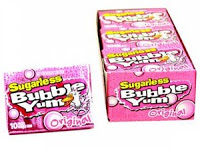
Chew and Write
Give children a piece of sugarless gum. Once they write their name they can open the gum and start chewing. They are allowed to chew the gum as long as they keep on writing!


Tuesday, November 18, 2025

COLOR YOUR DAY HAPPY

Something old...something new!

Did you know that Crayola makes WINDOW MARKERS and WINDOW MARKERS WITH CRYSTAL EFFECTS that are washable and will bring out creativity in anyone. I bet you could think of a dozen more ways to use these in your classroom.  (Yep!  Available on Amazon!)

Reading
Write letters, words, numerals, shapes, or anything you want to reinforce on windows or mirrors.
*Let children wear sunglasses and identify the information with a pointer.

Writing
Let children practice writing letters, numerals, spelling words, etc. on classroom windows.
* How about rainbow writing? Make giant letters, shapes, words, etc. on windows. Children can take the markers and trace around the figures with different colors.

Reward
Use these as a reward or when children finish their work early.

Reminders

Use the classroom mirror as a message board to write words of encouragement, reminders, or to celebrate accomplishments.

Special Days
Let children decorate classroom windows for holidays, seasons, themes, or other special events.

Brainstorm!
Write a word or theme and invite children to add their own thoughts to the window.

Sign In
Children can write their name or a special message when they come to school each morning.

Graffiti
What an open-ended art center this could be throughout the year!

Note! You could even have “window washer” as a classroom job. I found it was best to wipe off the marks with a wet towel before using a window cleaner.


ITSY BITSY SPIDER

How about another new video for your children?


Sunday, November 16, 2025

RHYME TO READ

Nursery rhymes have been kept alive by children for hundreds of years. That is certainly testimony to their appealing quality to children. Nursery rhymes are short, simple, and are part of our literary heritage. Nursery rhymes are also FREE and can be integrated throughout the day to engage children.

What skills can children develop by saying nursery rhymes?
*oral language,
*auditory memory
*phonological awareness (rhyme, rhythm, alliteration)
*concepts about print (left to right, words)
*story elements (characters, setting, problem and resolution)
*motivation to read

Hint! Although some claim nursery rhymes are violent and stereotypic, the children only hear the surface level and the music of the language.


Piggy Back Tunes
You can sing traditional nursery rhymes to tunes such as “100 Bottles
of Pop on the Wall,” “Yankee Doodle,” and ”Gilligan’s Island.”

Story Elements
Discuss the characters, setting, problem, resolution, etc. in nursery rhymes.

Rhyme of the Week
Select a rhyme each week and write it on a poster or language experience chart. Reread the rhyme each day.
*Clap the syllables.
*Find words that rhyme.
*Listen for words that start the same.
*Look up unusual words in the dictionary.
*Dramatize the rhyme.
*Say the rhyme the wrong way and let children correct you.
*Leave out a word and let the children fill in the missing word.
*Connect with art by letting children make puppets, play dough characters, etc.


Nursery Rhyme Club
Make a poster that says “Nursery Rhyme Club.” Whenever a child can say a rhyme, they get to sign their name on the poster. It would also be fun to give them a membership card!

Would you like some membership cards?

https://drive.google.com/file/d/0B1SnEagA4jljZmpEYnVyWFNaVk0/view?usp=sharing


My Nursery Rhyme Book

Every child will need a spiral notebook or composition book for this project. Each week run off a copy of a rhyme you want to focus on. (Be sure and increase the font for little eyes.) Children cut out the rhyme and glue it on the left and then illustrate the rhyme on the right. Use the rhyme for choral reading and to reinforce specific skills (letters, left to right, sight words, punctuation, etc.) throughout the week. On Friday children take home their books and read the rhyme to their parents. Encourage parents to write their "comments and compliments" in the book.


Note! Research reinforces with the skills children can develop from nursery rhymes.
rhymes:www.earlyliteracylearning.org
https://www.researchgate.net/publication/20396377_Nursery_Rhymes_Phonological_Skills_and_Reading


HEY, DIDDLE DIDDLE

Here are two more videos from Alex May.  

Tuesday, October 21, 2025

READ AND WIN

Several years ago while visiting a school I saw two shiny new bikes on display in the library. Every time a child read a book they got to put their name on a ticket to win the bike. What a great way to motivate children to read! These ideas aren’t quite as big as a bike, but I bet you might spark a little interest with them.

 
Book Drawing
You will need a roll of tickets (purchase at an office supply store) or make your own. Each time a child reads a book she gets to write her name on a ticket. Collect these in a sack during the week. On Friday, draw a name out of the sack and that child WINS a book!


Note! It could be a book that you purchased or a book that the class has made.

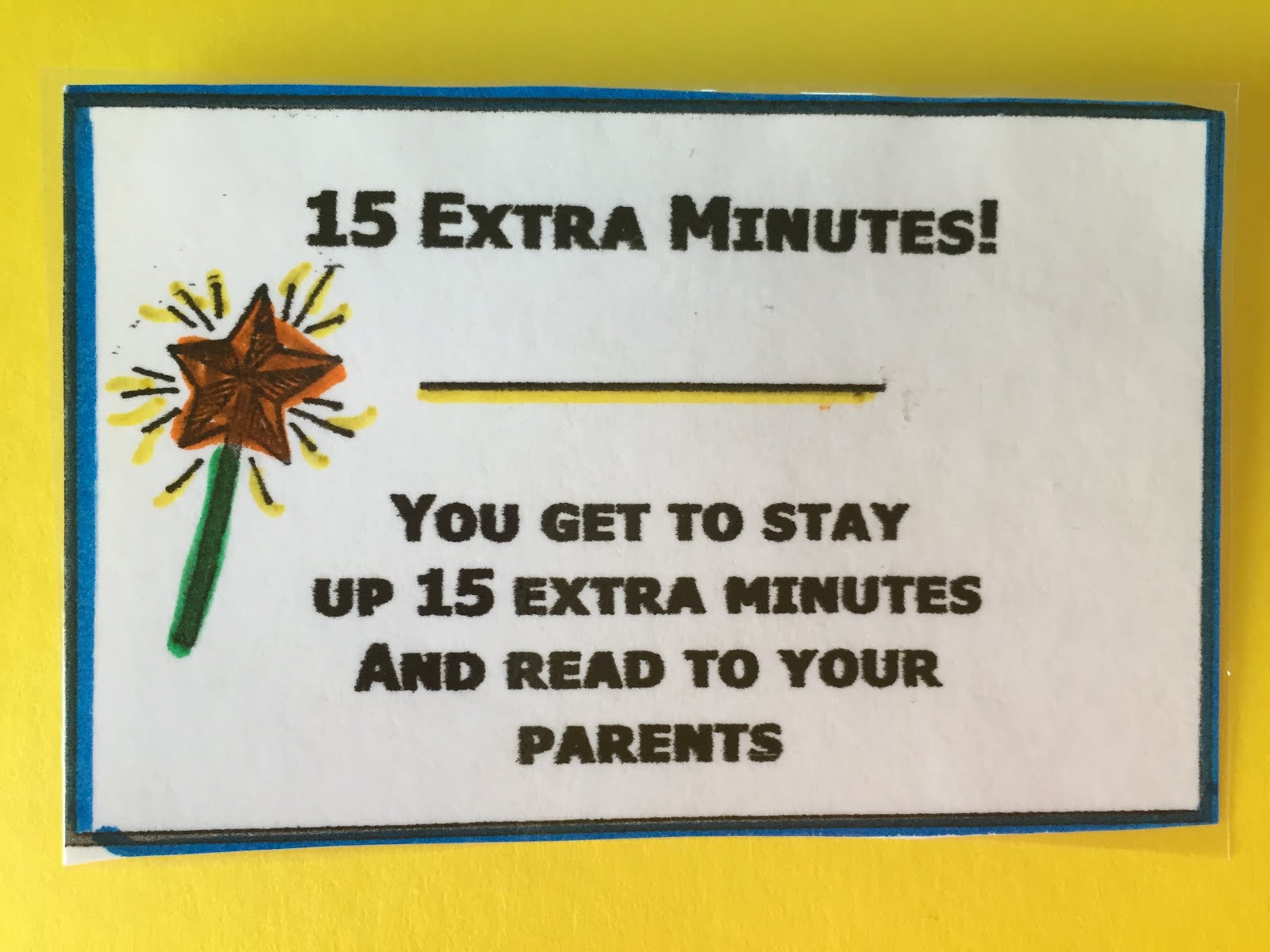
Stay Up Late and Read

To reward children make copies of “Extra 15 Minutes” coupons similar to the one shown. Children who earn the ticket get to stay up an extra 15 minutes at bedtime and read to their parents.


Book Bucks
Run off "reading-bucks." (Free if you do a google search.) When children read a book they earn a "buck." They can save these to buy a book or other prize.


Popcorn Party
Get a large jar and write “Popcorn Party” on it. Every time any student reads a book she gets to add a cotton ball to the jar. When the jar is full the whole class gets a popcorn party.


Reading Incentives
I asked Mr. Google about "reading incentives" and he gave me lots of great links.

Saturday, September 13, 2025

READ AT HOME

Here's an idea for active learning that will involve families and encourage children to read, read, read. You can buy these or just start simple by creating two book bags. You could rotate these through your class for a month so each child would have two turns with different books and animals. Children will anticipate "their turn" and taking the bag home.

BOOK BAGS
Directions: Place a book and coordinating toy in each bag. Add blank paper, crayons, and a pencil. Rotate allowing children to take home “book buddy” bags. Remind them to do each of the activities below before returning the book bag to school.

1. Read the book to yourself.

2. Read the book to your book buddy (stuffed animal).

3. Read the book in the mirror.

4. Read the book to someone in your family.

5. Read the book one more time to your pet, a toy, or something else.

6. Draw a picture of your favorite part of the story.

When children return the book bag to school, invite them to sit in the “teacher’s chair” or "reader's chair" and read a few pages to their classmates.


TAKE HOME TEDDY
Put a stuffed bear (or other animal), spiral notebook, and pencil in a backpack. Choose a different child to take home the backpack each evening. The child writes or dictates a story to their parents about the bear.
*Just for fun add a toothbrush, pajamas, and other items for the bear.


PARENT LETTER
Here is a letter for parents that you can adapt to reinforce the important role that they play in helping their children learn to read.

Dear Parents,

You’ve heard it before, and I’ll say it again. You are your child’s first and most important teacher! The best way to help your child learn to read is to read, read, read!

Model reading in front of your child. Read directions on recipes, the newspaper, labels on clothing, and street signs. Show your child the importance of reading, and also the pleasure we can get from reading.
Set aside a special time each day to read with your child. It might be right before bed, or you could wake your child up each morning with a story.
Point your finger under the words as you read them.
Talk about the title of the book, the author, illustrator, etc. What is the setting? Who are the characters? Could this really happen or is it just pretend?
Take your child to the library. Help your child get her own library card and take responsibility for books.
Create a special basket or shelf in your home where you keep books and magazines for your child to read. You might also want to keep a backpack filled with books in your car.
Happy reading!

Friday, June 13, 2025

BORROW AND ADAPT


If you ever attended one of my workshops I usually started by telling teachers that they would have to earn a BA and a BS from me.

BA – Borrow and Adapt what I do!
BS – Borrow and Steal what I do!


Where do you think I got 99% of the activities and tips? Yes, from teachers just like you!

Always remember that we have to hold hands and stick together like we tell our children!


THROWBACK

Sitter Spot (You've got to make these this year!)
Cut 8” circles out of fun foam or felt and write the children’s names on them. Arrange for circle time to give children a special place to sit. Arrange spots to disperse problems and encourage social interactions.
*Children can also use these for their “special spot” for doing quiet activities like independent reading.

Tuesday, June 10, 2025

ALL CHILDREN ARE GIFTED!


Life and teaching are full of surprises!

Have you ever had a child pick up a book and say, "I can read!" It's a little magic, isn't it?

Have you ever had a child finally put the pieces of writing together and create something that touches your heart?

Have you ever seen a "light bulb" go off in a child's head when you're introducing a new concept?

Have you ever had a shy child finally join in with on a silly song?

Have you ever seen an introverted child go out of their way to help a classmate?

Miracles happen every day, but they don't happen in the same way and in the same order. One size doesn't fit all! That's why it's so important to provide children with many different opportunities and materials to learn.

Give them time.

Don't judge too quickly!

Remember!  All children are GIFTED!   Some just open their gifts a little earlier than others.


THROWBACK

I CAN DO SOMETHING SPECIAL DAY!
Plan a special day where each child is invited to sing, dance, tell a joke, make something, share a hobby, etc. Emphasize that there are many ways to be wonderful!!

Me Box
Spray paint a shoe box gold or silver. Write "ME" on the front with glue and sprinkle with glitter. Write a note similar to the one below and tape it to the inside lid of the box. Choose one child each day to take home the box. Let them share their treasures with classmates the following day.

Dear Parents,
Your child is bringing home the "ME" box today. Please help him/her find
special objects, photographs, or souvenirs to put in the box. Your child will
have the opportunity to share these things with classmates tomorrow, and
then we will return them to you.
Thanks for helping us "celebrate" your child!


*You could also use a gift bag for this activity.

Monday, June 9, 2025

TEACHERS WHO LOVE TEACHING


Good teachers have to be good actors/actresses.  You have to put on a "happy face" each day and tell your students and yourself, "IT'S GOING TO BE A GREAT DAY!"  Yes, and sometimes you have to FAKE IT TIL YOU FEEL IT!

You also have to be a good salesperson and SELL children on learning.  They will believe you when you say, "Isn't reading fun?  You love to read just like me!"  Or, "Our room is full of mathematicians!  You can kiss your brain because you are so smart!"

Remember!  The only way to the head is through the heart!


THROWBACK
Positive self-talk is a simple strategy to remind children that they are important and capable. Have children start the day by repeating each line of this chant after you. 

What Are You?
(Adapted from “The Help.”)
Teacher asks: What are you?
Children respond: I am kind. (Touch the heart.)
I am smart. (Touch the head.)
I am important. (Give self a hug.)


Morning Mantra
Teacher: What is my job today?
Children: Your job is to teach us and to love us.
Teacher: What is your job today?
Children: Our job is to learn and to love each other.


Hint! If children are misbehaving you might ask them, "What is your job? Show me how to do your job."


Sunday, June 8, 2025

SHUT YOUR DOOR!


Yes, sometimes you just have to SHUT YOUR DOOR, follow your heart, and do what is best for your children. (It also is easier to ask forgiveness than permission!)

Here is a sign that one teacher told me she put on her door. I showed it at a workshop and a participant came up at the end and said, "Dr. Jean, I don't think my principal would like that." Well, sometimes you just have to have a sense of humor!!!


THROWBACK

Let’s Look Important!
Diane Ringer told me she taught her children how to "look important." I think it would be perfect when you have an unexpected visitor walk into your room.

Would you like to know how to look important?
Put your right hand over your heart like this. (Demonstrate)
Put your left hand across your chest and fold your arms like this. (Demonstrate)
Lift up your chin and smile importantly.
Now look at all my important people!


Friday, June 6, 2025

RABBIT TRAPS


Wood Smethurst was one of my favorite professors at Emory University. His area of expertise was reading, but he didn't push phonics and skills. He focused on the LOVE of reading! For every child there is a topic or book that they are interested in, and the trick is to match up what the child is interested in with a book. Nope! Not a website or game - a HOLD IN YOUR HANDS AND TURN THE PAGE book!

As educators, you don't have a lot of choice in the curriculum your district/state chooses or the standards that guide instruction. Your challenge is to think of a "rabbit trap" that will interest your students and engage them in the learning process. All children are different and might be tempted by different "rabbit traps." That's why providing children with a wide range of learning opportunities (hands-on, games, partner projects, songs, etc.) is so critical. And that's why making those personal connections with each child and discovering what makes them "tick" is more important than any check list!


THROWBACK

There are tons of "rabbit traps" on my blog (drjeanandfriends.blogspot.com). This paper plate game is easy to make and can be adapted for any skill, such as letters, shapes, numbers, sight words, math facts, etc.


Directions: Do you remember the old game where you placed chairs in a circle and walked around until the music stopped? If you didn’t find a chair you were OUT! This is a similar game that can reinforce letters, words, colors, math facts, etc. Scatter the paper plates on the floor. Play some catchy music for the children to dance to. When the music stops each child finds a paper plate and picks it up. The teacher randomly points to a few children to identify the information on their plates. Have the children place the plates back on the floor and continue dancing.
*If the child is unsure about what is on their plate, invite them to “ask the audience.”


Friday, May 9, 2025

WRITE ON THIS SUMMER

You will need a pocket folder for each child for this summer writing activity. Remind the children what wonderful writers they have become and how important it is for them to keep writing over the summer. Explain that many famous writers started keeping diaries and journals just like them when they were young. Motivate them to make their own “Summer Fun Journal” so they can record all the special things they will be doing over the summer.

Provide the children with markers, crayons, construction paper, and other art media to decorate the front of their pocket folders. (You might suggest they title it “Summer Fun.”) Run off copies with the attached writing prompts or create your own based on the interests of your students. You might even want to ask your class to brainstorm topics for these journals.

Hint! Be sure and include some blank paper at the end.

*Encourage students to add photos, brochures, or other special keepsakes.

*Add a line for the date on each page.

*Tell your students you’d love to see their journals when the come back for the new school year.

*For younger children encourage parents to have their children illustrate the topic and then dictate sentences for their parents to write.


Here are some summer writing prompts.

I like summer because

My favorite book is

This is one of my chores

My family is going

This is what I like to do outside

These are my favorite summer foods

My goal for this summer is

These are my friends

I wish

When it’s hot I

These are games I like to play

This is what I like to wear in the summer

This is my favorite place to play

These are my favorite toys

My worst day ever

My best day ever

I can’t wait for school to start because

Best of all, Carolyn Kisloski has created a free download of the summer fun journal. You're going to LOVE it, and we hope it will inspire your students to write over the summer. (Each writing prompt has three choices so you can choose your favorite one.)

https://www.teacherspayteachers.com/Product/Summer-Writing-Prompts-Journal-2521920


Thursday, May 8, 2025

SUMMER READS

Reading is like anything else. The more you do it, the better you will become. Here are a few ideas to get children started on a summer reading adventure.

Library Card
What better gift can you give your students at the end of the year than a library card? Take a field trip to your local library or ask the children’s librarian to visit your school and describe all their summer reading activities.


Summer Reading List
It’s easy to do an internet search and find a suggested reading list for your grade level. Parents would probably appreciate this when helping their child choose books to read over the summer.


*I found this summer reading challenge and book list at scholastic.com.


Postcards
Cut card stock the size of a postcard. Let children decorate one side with markers or crayons. On the reverse side draw a line down the middle. Have the children write the teacher’s name on one half. Explain that if they send you the postcard over the summer and write you a note that you will write back to them.


*You could also give the children a pre-stamped envelope addressed to you.
Explain that whenever they write you, you will write them back.


Journals
Make travel brochures for children to write in over the summer.