photo 3am_dj_home_zps919fb85e.png photo 3am_dj_about_zps7cce4c75.png photo 3am_dj_website_zps73051235.png photo 3am_dj_ss_zps6759ec2a.png photo 3am_dj_bs_zps43e27832.png

Saturday, September 17, 2016

MONEY IN YOUR POCKET?

Have you ever put on something you haven’t worn in awhile and found money in the pocket? When I look through old files and find good ideas it’s like finding a twenty dollar bill. Let me share this "money" with you today!
 
BIRTHDAY HAT
Let the children make birthday hats from sentence strips and wear them as you sing “Happy Birthday Letters.”  (Our old stick pony is modeling the birthday hat for you.)

                           
WHERE'S BEAR?
You'll need bathroom cups, a marker, and a small toy bear to play this game.  Write words, letters, numbers, or any skill you want to reinforce on the cups.  Have children close their eyes as you hide the bear under a cup.  Call on different children to say what is on the cup and then look under the cup to see if they can find the bear.  If they find the bear they get to hide it next time. 


STICKER GAME
Here's a similar game Heather Diaz turned into a classroom favorite. She writes words, letters, etc. on index cards and places them on the floor. Heather also uses a seasonal sticker to hide under the cards. Her students “hide their eyes” while she hides the sticker under one of the flashcards. Then she chooses one child to take a pointer and guess where the sticker is. After identifying the word, that child turns the card over. If there is no sticker, then another child gets a turn. The game continues until a child finds the sticker. Then that child gets to hide the sticker for the next game.

I SPY LETTERS
You’ll need a large plastic jar, salt, letter beads, and a grid with alphabet letters for this activity that children can do independently or with a friend in a center. Fill the jar half full with salt and then insert the letters. Shake. Children roll the jar around and then color in the letters on the grid as they find them.
                                   
FOUR SEASONS
This is a song Lisa Powers shared to the tune of “Frere Jacques.”
Four seasons,
Four seasons
Here we go.
Here we go.
Winter, spring, summer, fall.
Seasons come.
Seasons go.


PLEASE AND THANK YOU
Wish I could take credit for this additional verse to the “Rules Rap.”
Say please, thank you, excuse me, and may I.
The rules, the rules, the rules of the classroom.


SHEET PROTECTOR POEMS
Each week give children a poem to put in a sheet protector. On Monday they can use erasable markers to highlight words that rhyme. Tuesday they can use a different colored marker and highlight word wall words. Wednesday they can highlight punctuation, and so forth.
                      
CLASS PHONE BOOK
Write each child’s phone number on a different page. (You will need to get parental permission for this or just make up a phone number if you don’t have permission.) Let children draw their picture and then use stickers or dots to make sets under each numeral as shown.

DAILY CD
Make a CD for each day of the week with a different good morning song, calendar song, phonics song, movement song, and good-bye song.

15 MINUTES OF WALKING/EXERCISING
Try building 15 minutes of walking each day as you count, sing letter songs, say days of the week, months, and review other information. 



Friday, September 16, 2016

CENTERS WITH STEAM

IT LOOKS LIKE I’M PLAYING BUT….

Play is a child’s work, and through learning centers children can discover their world as they play. Centers are the perfect vehicle to help children STEAM ahead!  Use these descriptions to label centers in your classroom.  Invite parents, administrators, and other visitors to walk around the room to find out all the skills children are developing as they play, work, and learn with their friends.
                                        
Blocks - It looks like I’m playing, but I am an engineer as I plan and build. I’m also being a mathematician as I explore shapes and space. I’m using my small motor skills and developing the executive function as I organize, complete a task, and take responsibility for cleaning up my projects. I’m using my 21st Century skills as I cooperate, collaborate, and communicate with my friends.

Science - It looks like I’m playing, but I’m doing what scientists do by observing, predicting, experimenting, recording, and reporting. I’m developing a curiosity about the world and using my senses as I problem solve and explore. I’m discovering how to learn by reading books, doing research on the internet, and asking questions. The way I learn best is with HANDS ON materials in the science center.
                      
Art – It looks like I’m playing, but I’m developing my creativity, small motor skills, social skills, independence, and responsibility. As I plan my design I’m using engineering skills. When I use scissors, glue, or a hole punch I’m using technology. Art gives me a visual way to show what I know and what I’m learning.
                                         
Math - It looks like I’m playing, but I’m really a mathematician as I count objects, measure, and sort. I’m also developing concepts about quantity, shapes, addition, and subtraction. When I use tangrams, a ten frame, a ruler, or a calculator I’m learning to feel confident with my ability to use math tools. Doing math is like a puzzle that’s fun to solve.
                                                            
Table Toys - Yes, even when I’m playing with puzzles, play dough, beads, and pegboards I’m an engineer. I plan, think about what I want to design, and then adapt as I create. I’m developing small muscles, eye-hand coordination, attention span, social skills, and math concepts about size, shape, and pattern.
                                         

Sensory Motor (aka Sand and Water Area) – I love to explore (mess around!) with water, sand, rice, and other sensory materials. Give me some measuring cups and I’m doing math. Give me a water wheel, shovel, or tongs and I’m using technology. Give me objects to predict if they will sink or float and I’m a scientist.
                   

Classroom Library – I’m developing reading skills, a love books, and I’m discovering how to learn new things in the classroom library. Animal books, nature magazines, brochures, and field guides all spark my interest in new topics. No matter where I go or what I become it will be important to read and write in the future.
                                           

Writing - Paper, pencils, blank books, markers, crayons, and a variety of writing materials give me the opportunity to plan, record data, imagine, recall information, and use my reading and writing skills in a meaningful way.
                                                                    

Dramatic Play – It looks like I’m playing, but I’m developing oral language, social skills, emotional skills, independence, my imagination, responsibility, and the executive function. I’m also learning to sort, predict, and do critical thinking as I role-play and solve problems.

                           
EVERY MOMENT OF EVERY DAY – 
I’M PLAYING AND LEARNING IN MY OWN SPECIAL WAY!

FULL STEAM AHEAD!!!!
                                             
*Thanks to Carolyn Kisloski (
ckisloski.blogspot.com) for sharing the pictures of her precious class.

Thursday, September 15, 2016

HATS OFF TO YOU TODAY!

September 15th is “Make a Hat Day,” but kids love to make hats and wear hats any day of the year. Here are some ways that you can tie in hats with themes or skills you are working on.

Sentence Strip Hat
Materials: sentence strips or heavy paper cut in 2 ½” x 24”, markers, crayons, stickers
Directions: Let children decorate the sentence strip and then fit to their head and staple or tape in place.

Children can write letters, numerals, or vocabulary words on the headband. Sure beats doing a worksheet and accomplishes the same thing!
                         
Children can add ears or other details to create an animal from a story. Let them wear their hats to retell the story.

*Wouldn’t this be more fun than a written book report?

How about an “all about me” headband?

Children can make an autograph hat with friends’ names.

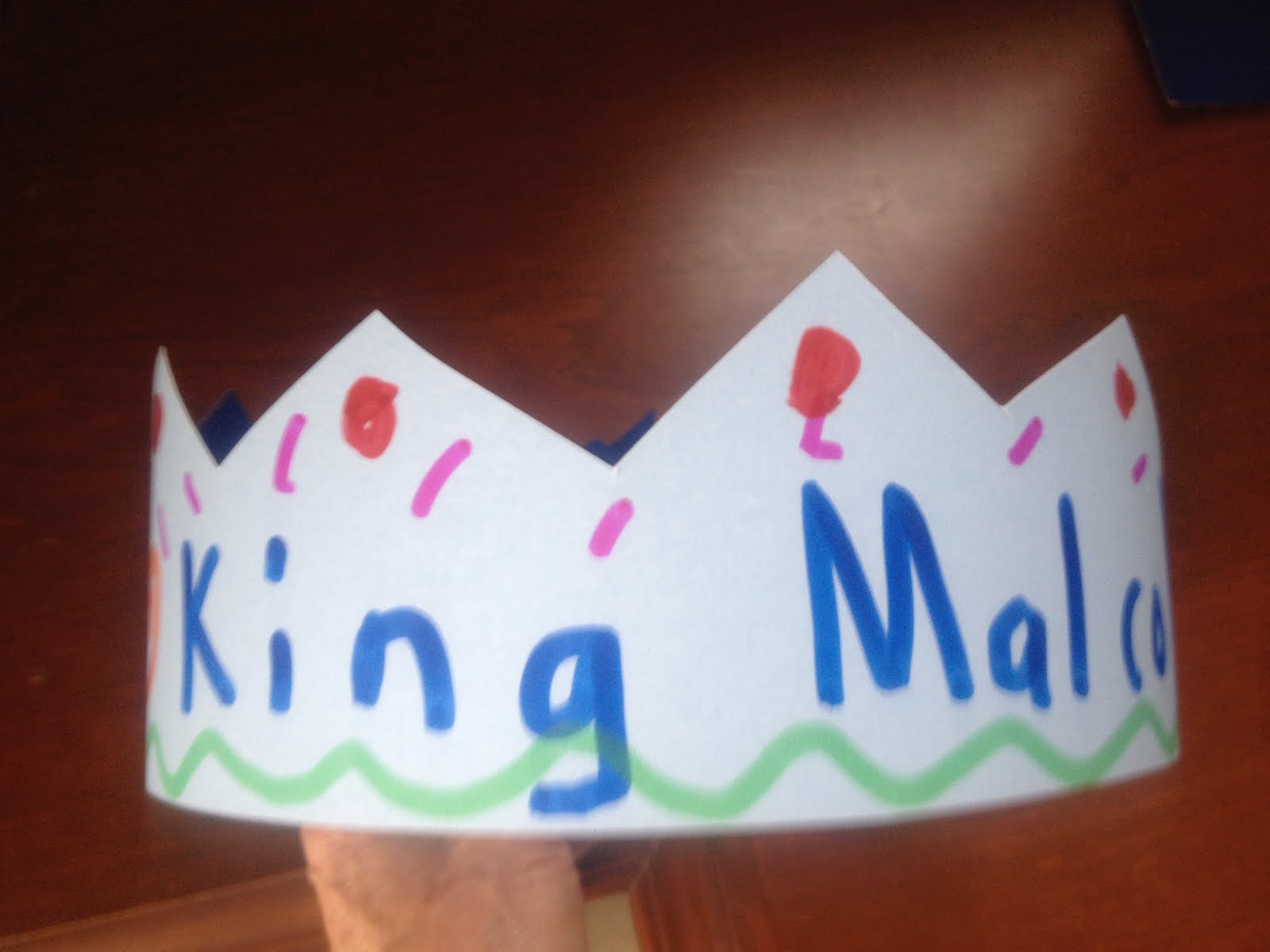
If you cut a zigzag line on one side every child can be king or queen for the day!
                        
Hint! Two brad fasteners and a rubber band will make the hat easier to adjust to the head, but it’s a lot more trouble.

                                  HATS OFF TO YOU TODAY!

Wednesday, September 14, 2016

SPORTS AND SKILLS - PRACTICE, PRACTICE, PRACTICE!

By acting out various sports your students can oxygenate their brains, cross the midline, and reinforce skills.

*Model how to do each sport and then “practice” for a minute or two. Once students know the movements you can adapt the moves to count, spell words, read sight words, review math facts, say months of the year – it’s all good!

Baseball – Pick up the ball and throw it as you count by ones, fives, etc.
*Pretend to bat the ball as you say the letters in a word and swing around and hit a homerun as you say the word.

Football – Feet apart and run quickly in place with arms out in front of you as you read word wall words or count.
                 
Soccer – Kick across your body with your right foot and then kick across with your left foot as you spell words or count.
                                      
Tennis – Shuffle as you say addends and then pretend to hit the ball as you say the sum.
(Use for subtraction, multiplication, and other facts.)
                                                                              
Basketball – Dribble on letters and pretend to shoot as you say the word. (Jump up on toes.)
*Use for addition and subtraction facts by dribbling on numbers and jumping as you say the answer.

Karate
– Feet spread apart with knees bent. Pretend to chop with your right hand and then chop with your left hand as you count, say the days of the week, read words, and so forth.
                                  
Skiing – Knees together and bend to the left as you swing your arms. Knees to the right as you swing your arms. Count by ones, fives, tens, etc. as you swing left and right.
                                                                       
Ice Skating – Alternate arms in front as you pretend to glide on different legs while counting, spelling words, reading sight words, and so forth.

Hint! Encourage your students to think of other sports and how they can use them to practice skills.

SURE BEATS DRILL AND KILL, DOESN’T IT?

I'm doing an edwebinar on October 20th where I'll demonstrate lots of the strategies.  
Stay tuned for details!

Tuesday, September 13, 2016

WHAT'S YOUR NUMBER?

As adults, we don’t memorize phone numbers any more because everything we need is in the palm of our hands. However, it’s still important for children to know their full name, birthday, phone number, and address. One year I had a little boy and I said, “What’s your name?” He replied, “Bubba.” I said, “No honey, your full name.” Well, he straightened me out as he said, “Bubba Bubba!”

Here are some tips to remind parents how to help their child learn this information at home.

Full Name
Help children learn their full name “The Wheels on the Bus.”
My full name is (first) (middle) (last),
____, ____, ____,
____, ____, ____,
My full name is (first) (middle) (last),
That’s my full name.

Birthday
Birthdays can be sung to “Happy Birthday to You.”
September 24th, 
September 24th,
My special birthday is
September 24th.

Phone Number
Phone numbers can be learned by singing them to “Michael Row Your Boat Ashore.”
213-297-4308
213-297-4308

Address
Addresses can be sung to “Do You Know the Muffin Man?”
874 Pine Oak Circle,
Cincinnati, Ohio

Zip Code
Learn zip codes by singing them to the tune of “BINGO.”
There is a zip code where I live
And I will sing it to you.
54892, 54892, 54892
Now I know my zip code.

These are good rhymes to transition children, as well as to reinforce birthdays, phone numbers, and addresses.

Apples, pears, peaches, plums,
Tell me when your birthday comes.

Candy, candy, ice cream cone.
Tell me the number of your telephone.

Rabbit, dog, cat, mouse,
Tell me the number on your house.

Hint! Have a “cheat sheet” with the information so you can prompt the children that don’t know.


CONFERENCE TIME ALREADY???


Ready or not, it's time for parent conferences! I used to dread conferences because many of the parents didn’t want to talk about their child. They wanted to talk about the neighbor’s kid or their “ex” or whatever. Once I started using this questionnaire my conferences became much more meaningful for me and the parents.

A week before conferences I’d ask the children, “Would you like me to give your parents some homework? Well, here is something they need to fill out and bring to our conference next week.”

Note! If parents show up without the form, simply smile and say, “I’ll give you a few minutes to fill this out before we get started.”

                                  CONFERENCE QUESTIONNAIRE

Please fill out this form and bring it to your conference on __________________at _________________.

Child’s name__________________________

1. My child’s favorite activity at school is________________

2. My child expresses concern about_____________________

3. My child’s strong qualities are__________________________

4. Areas I feel my child needs to work on are_____________

5. Something I would like to see my child do at school is _______

6. Is there any special information about your child that you think we should know about?
                                     
https://drive.google.com/file/d/0B1SnEagA4jljYWFnNXNybFdyZVE/view?usp=sharing

Cheers and Goals
Here’s another idea for conference time. Ask parents to write down three things positive (cheers) about their child and three goals that they have for their child. This will give the teacher insight as to what is important to parents. It will also provide the teacher with the opportunity to say, “This is what I can do at school to help your child accomplish these goals. What can you do to help at home?”
                    
Student Led Conferences
I must admit I never did these, but many schools are now using this approach and find if very successful. You can find videos and other useful information about student led conferences on the internet.

Conference Tips
Sit beside the parent at a table, rather than behind a desk.

Keep the conversation focused on the child.

Have samples of the child’s work to share with the parents. Focus on the total child, including intellectual, physical, social, and emotional development.

If there is a problem, brainstorm solutions and develop a plan for action.

End the conference on a positive note by reassuring the parents and thanking them for their support.

Provide an interpreter for parents who do not speak English.

Follow-up with the parents after the conference.

Monday, September 12, 2016

HO HO HOMEWORK

Every year around this time I hear horror stories about primary grade children having several hours of homework each evening. The child ends up crying - the parents end up yelling – what’s the point?

First of all, if a young child goes to school and sits and listens and works and learns for six hours, they deserve to do what they want when they get home. The need to play, move, laugh, yell, imagine, and be KIDS!

Homework should teach children responsibility. Homework should be a tool to help parents see what their child is doing at school. Homework should extend learning from the classroom to the home. Homework should be MEANINGFUL!

If I were in charge of the world, primary grade children would NOT be allowed to spend more than 30 minutes on homework each night. They might be asked to read 20+ minutes and then have ONE other assignment. I would try to make the assignment engage with the parent and connect the real world with what’s going on in the classroom. For example, the assignment might be to ask their parents what a veteran is and to find out who the veterans in their family are. The assignment might be to ask their parents how they use math in their jobs. The assignment might be to cut out a picture from the newspaper and write one or two sentences about it. Drill and kill worksheets should be banned!

My daughter brought up the point that many parents WANT homework and are impressed with lengthy assignments because they think it will make their children smarter. In the book Battle Over Homework: Common Ground for Administrators,Teachers, and Parents, Harris Cooper put together a variety of research studies on homework. He found that in elementary school, homework has almost no impact on academic achievement. In middle school, the results are mixed. In high school, moderate levels of homework can help the learning process.

Here are some ideas that might encourage children to develop responsibility and positive attitudes about homework.

Tic Tac Toe HomeworkMake a tic-tac-toe grid and put a different assignment in each section. Children can do as many activities as they choose, but they must do at least 3 to get tic-tac-toe by the end of the week.
Hint! This is perfect for the parents and children who actually “like” homework because they can do all nine.
                                    
Homework Folders
You will need a pocket folder, crayons, and markers to make a homework folder. First, let children decorate the outside of their folders. Trace around their “left” hand on the left pocket. At the end of each day children put completed work in that pocket and it is “left” at home. Trace around their “right” hand on the right pocket. Use a homework sheet similar to the one below. Fill out assignments for the whole week and place it in the “right” hand side of the child’s folder on Monday. On Friday save homework sheets in children’s folders. Review with parents at conferences.


Weekly Homework Sheet

Monday ________________ Tuesday ______________

_______________________ ______________________

_______________________ ______________________

Parent Signature/Comments Parent Signature/Comments

_______________________ ______________________

Wednesday_____________ Thursday_______________ 

_______________________ ______________________

_______________________ ______________________

Parent Signature/Comments Parent Signature/Comments

_______________________ ______________________


Clipboard Homework
Each child will need a clipboard that she can decorate with her name, stickers, etc. Each night clip the homework assignment to children’s clipboards. (Think outside the box with interactive activities, rather than worksheets!) Make sure parents know that their job is to look at the clipboard each night, help their child with the assignment, and send it back to school the next day. 
                    
Monthly Calendar
Send a calendar home at the beginning of each month and ask parents to complete at least ten activities and return by the end of the month.
Note!  You can download these free on my website drjean.org.