photo 3am_dj_home_zps919fb85e.png photo 3am_dj_about_zps7cce4c75.png photo 3am_dj_website_zps73051235.png photo 3am_dj_ss_zps6759ec2a.png photo 3am_dj_bs_zps43e27832.png

Tuesday, September 19, 2023

WHERE DO YOU LIVE?

Some of your children might have checked all the boxes on your assessment, but do they know where they live? Do they know their phone number? Here are tips that you can send home to parents so they can help their children learn this basic personal information.


Where do you live?

Addresses can be sung to “Do You Know the Muffin Man?”

874 Pine Oak Circle, Pine Oak Circle, Pine Oak Circle.
874 Pine Oak Circle, Cincinnati, Ohio


What’s your zip code?
Learn zip codes by singing them to the tune of “BINGO.”

There is a zip code where I live and I know my zip code.
54892, 54892, 54892 is my zip code.


When is your birthday?

Birthdays can be sung to “Happy Birthday to You.”
September 24th, September 24th,
That is my birthday, September 24th.


What’s your phone number?
Phone numbers can be learned by singing them to “Michael, Row Your Boat Ashore.”
481-297-4308
481-297-4308


Crafty Idea
Want a bulletin board idea to help children learn their addresses? Let children decorate a lunch bag to look like their house. Give them newspaper to stuff inside, fold down the top, and staple on a roof. Let them write (or you can write for the younger children) their name and street address at the top.

*You can staple these to a bulletin board or use in the block center to build your community.


Line Up Rhymes
These are good rhymes to transition children, as well as to reinforce birthdays, phone numbers, and addresses.

Apples, pears, peaches, plums,
Tell me when your birthday comes. (Children say birthday before lining up.)

Candy, candy, ice cream cone.
Tell me the number of your telephone. (Children say phone number before transitioning.)

Rabbit, dog, cat, mouse,
Tell me the number on your house. (Children tell their address.)

Monday, September 18, 2023

SHOE SHERIFF IS LOOKING FOR YOU!!!

It’s pretty amazing that children have better technical skills than many adults, but they don’t know how to tie their shoes. Believe it or not, "knows how to tie shoes" was on our checklist in the old days.

When my kids were little I got a big stuffed animal and used an apron to teach them how to tie. The apron strings were much bigger and easier to manipulate than shoestrings.


Here are two poems that might help children with this task.

1-2-3-4 – TYING SHOES
Let’s get ready to tie your shoes.
Over and under. Now, what to do? (Pull strings tight.)
1. Make a loop that looks like a tree. (Make a loop with right string.)
2. The other string is a rabbit you see. (Hold up left string.)
3. The rabbit goes around and in a hole. (Take left string around loop and stick in the hole.)
4. Pull the loops tight and there is your bow! (Take both loops and pull.)

Hint! Take a marker and color one half of the shoe string. It will be easier for children to tell which loop is the "rabbit' and which is the "hole" if they are different colors.


TYING SHOES VERSION 2
Take the 2 strings (Make loops with each string.)
And make two bunny ears.
Over and under
And a knot will appear. (Tie loops in a knot.)
Pull the ears tight
And what do you know? (Pull loops.)
You’ve tied your shoes
And there is your bow!

Hint! One teacher suggested getting a bag and sending home the shoe with a different child each night. It would be a nice reminder that children still do need to know how to tie their shoes in 2023!

SHOE SHERIFF CLUB 
You’ll love this idea from Karen Hansen and Karen Aikin! When children learn to tie their shoes they get to sign their name on a poster that says “Shoe Sheriff Club.” Each day a child on the poster gets to wear a badge and be Shoe Sheriff for the day. If someone’s shoes come untied, they have to go to the Sheriff instead of bothering the teacher.


*Ashley Swedell puts shoes on table legs and if children finish their work early they can practice their tying.

Note! Janet Cantrell has children practice tying using their own leg!


Passport of Accomplishment
Make an award similar to the one below to distribute to children when they learn to tie their shoes.

Sunday, September 17, 2023

HOMEWORK DEBATE

Every year around this time I hear horror stories about primary grade children having several hours of homework each evening. The child ends up crying - the parents end up yelling – what’s the point?

First of all, if a young child goes to school and sits and listens and works and learns for six hours, they deserve to do what they want when they get home. The need to play, move, laugh, yell, imagine, and be KIDS!

Homework should teach children responsibility. Homework should be a tool to help parents see what their child is doing at school. Homework should extend learning from the classroom to the home. Homework should be MEANINGFUL!

If I were in charge of the world, primary grade children would NOT be allowed to spend more than 30 minutes on homework each night. They might be asked to read 20+ minutes and then have ONE other assignment. I would try to make the assignment engage with the parent and connect the real world with what’s going on in the classroom. For example, the assignment might be to ask their parents what a veteran is and to find out who the veterans in their family are. The assignment might be to ask their parents how they use math in their jobs. The assignment might be to cut out a picture from the newspaper and write one or two sentences about it. Drill and kill worksheets should be banned!

My daughter brought up the point that many parents WANT homework and are impressed with lengthy assignments because they think it will make their children smarter. In the book Battle Over Homework: Common Ground for Administrators,Teachers, and Parents, Harris Cooper put together a variety of research studies on homework. He found that in elementary school, homework has almost no impact on academic achievement. In middle school, the results are mixed. In high school, moderate levels of homework can help the learning process.


Here are some ideas that might encourage children to develop responsibility and positive attitudes about homework.

Tic Tac Toe Homework
Make a tic-tac-toe grid and put a different assignment in each section. Children can do as many activities as they choose, but they must do at least 3 to get tic-tac-toe by the end of the week.
Hint! This is perfect for the parents and children who actually “like” homework because they can do all nine.


Homework Folders
You will need a pocket folder, crayons, and markers to make a homework folder. First, let children decorate the outside of their folders. Trace around their “left” hand on the left pocket. At the end of each day children put completed work in that pocket and it is “left” at home. Trace around their “right” hand on the right pocket. Use a homework sheet similar to the one below. Fill out assignments for the whole week and place it in the “right” hand side of the child’s folder on Monday. On Friday save homework sheets in children’s folders. Review with parents at conferences.


Weekly Homework Sheet

Monday ________________ Tuesday ______________

_______________________ ______________________

_______________________ ______________________

Parent Signature/Comments Parent Signature/Comments

_______________________ ______________________

Wednesday_____________ Thursday_______________

_______________________ ______________________

_______________________ ______________________

Parent Signature/Comments Parent Signature/Comments

_______________________ ______________________


Clipboard Homework
Each child will need a clipboard that she can decorate with her name, stickers, etc. Each night clip the homework assignment to children’s clipboards. (Think outside the box with interactive activities, rather than worksheets!) Make sure parents know that their job is to look at the clipboard each night, help their child with the assignment, and send it back to school the next day.

Monthly Calendar
Send a calendar home at the beginning of each month and ask parents to complete at least ten activities and return by the end of the month.
Note! You can download these free on my website drjean.org.


Here's a great article by Laura Pearson to share with your families!

Image via Pexels


Staying Organized as a Busy Parent

Being a parent is hard work. With a day job, taking care of children, and running errands, staying organized can be a challenge. However, there are some cost-efficient solutions that can help make the daily balancing act easier. Taking advantage of these simple technology ideas from Dr. Jean and Friends can help keep your life in order and reduce stress. 

Organize Your Child's Medical History With PDF Tools

It is important to keep track of your children's medical history and schooling documents. With PDF tools, you can easily manage, organize and store these important documents in one place. Furthermore, you probably want to try a PDF file converter so you can access them from any device with an internet connection.

Generate a List of Tasks

Chore charts can help keep the house clean while teaching responsibility to your children. Assign age-appropriate chores that each child can do independently or together with parents. This makes it easier for everyone to pitch in and take ownership of tasks around the house which helps reduce stress for busy parents in the long run.


Assigning weekly chores helps to teach responsibility within a family and holds everyone accountable for specific tasks. For example, taking out garbage and recycling on Tuesday nights. This reduces stress in the household, as everyone knows what is expected of them without needing constant reminders from mom or dad. Moreover, this helps to instill good habits in children and can even help with budgeting by teaching them about setting aside resources for completing chores.


Create a Cleaning Schedule


PureWow notes that creating a cleaning routine for your home can seem like an overwhelming task. However, breaking down the process into smaller, manageable chunks makes it easier to keep up with and maintain. With regular cleaning, you'll find that your home is tidier and more organized than before, while the process itself becomes faster and more enjoyable.

Add Organizing Time to Your Schedule

Organizing time should be set aside in your weekly schedule so that you can regularly go through papers, forms, bills, toys, clothes, etc. Reader’s Digest suggests setting aside even just a few minutes each day for organizing tasks so that it does not get overwhelming over time. This also sets an example for kids who will learn how important organization is in their everyday lives.

Meal Planning

Meal planning is essential for busy parents, as it saves time spent on grocery shopping trips and cooking meals from scratch each day. By having a meal plan, families can shop smarter and take advantage of bulk discounts at the grocery store or use coupons when possible. Additionally, having a meal plan helps ensure that families are eating healthier meals at home without spending extra money eating out.

Family Calendar

Busy parents have a lot on their plate, so staying organized is key. A great way to do this is by having one calendar that can be seen by all family members, like near the entrance door. Keeping track of activities and appointments with this shared calendar will make it easier to keep tabs on what everyone needs to do during the week ahead, as well as keep them in the loop about upcoming plans and activities.


Being a busy parent can be overwhelming, especially when it comes to trying to maintain order in the chaos. To help make life easier, it's important to stay organized. There are lots of cost-efficient ways to get and stay organized, such as using PDF tools, creating chore charts, and making cleaning schedules. These strategies can go a long way in helping you maintain sanity and manage all your daily responsibilities without breaking the bank.


Saturday, September 16, 2023

COLLECT ROCKS DAY

"Collect Rocks Day" is September 16th, but rocks are everywhere every day. Rocks can be a perfect spark for scientific investigations if you add a little STEAM. When you collect rocks or look at rocks, explain that scientists who study rocks are called geologists. Remind the children that they can be geologists, too!


Take a nature walk and invite each child to pick up ONE rock. You might need to limit the size to a rock that will fit in their hand. Take the rocks to the classroom and ask the children to observe their rock for one minute without talking. Go around the room and ask each child to make one statement about their rock. Encourage them to use descriptive words.

*Ask older children to write descriptions about their rocks.

*Place the rocks in a basket. Gently shake the rocks and then pass the basket around the class to see if each child can find his rock.

*Let the children sort the rocks. What was their sorting rule? Can they sort them another way?

*Check out a book on rocks from the library. Place it in the science center along with a magnifying glass. Ask the children to do research and identify the different rocks they collected. (Remind the children to return the rocks to nature after they have finished investigating them.)

*Are rocks older than you or younger than you?

*Make a list of all the things that rocks are used for.

*Have children make a design and build something with rocks.

*Let children paint rocks or use other art media to make paperweights.

*Place rocks in the math center for children to explore with the balance scale.

*For homework, ask families to take a walk and look for different kinds of rocks in their neighborhood.

*Encourage children to start their own rock collection with this idea. Cut an egg crate in half. Attach a pipe cleaner handle and use it to collect little rocks and pebbles.

Friday, September 15, 2023

MAKE A HAT DAY

September 15th is “Make a Hat Day,” but kids love to make hats and wear hats any day of the year. Here are some ways that you can tie in hats with themes or skills you are working on.


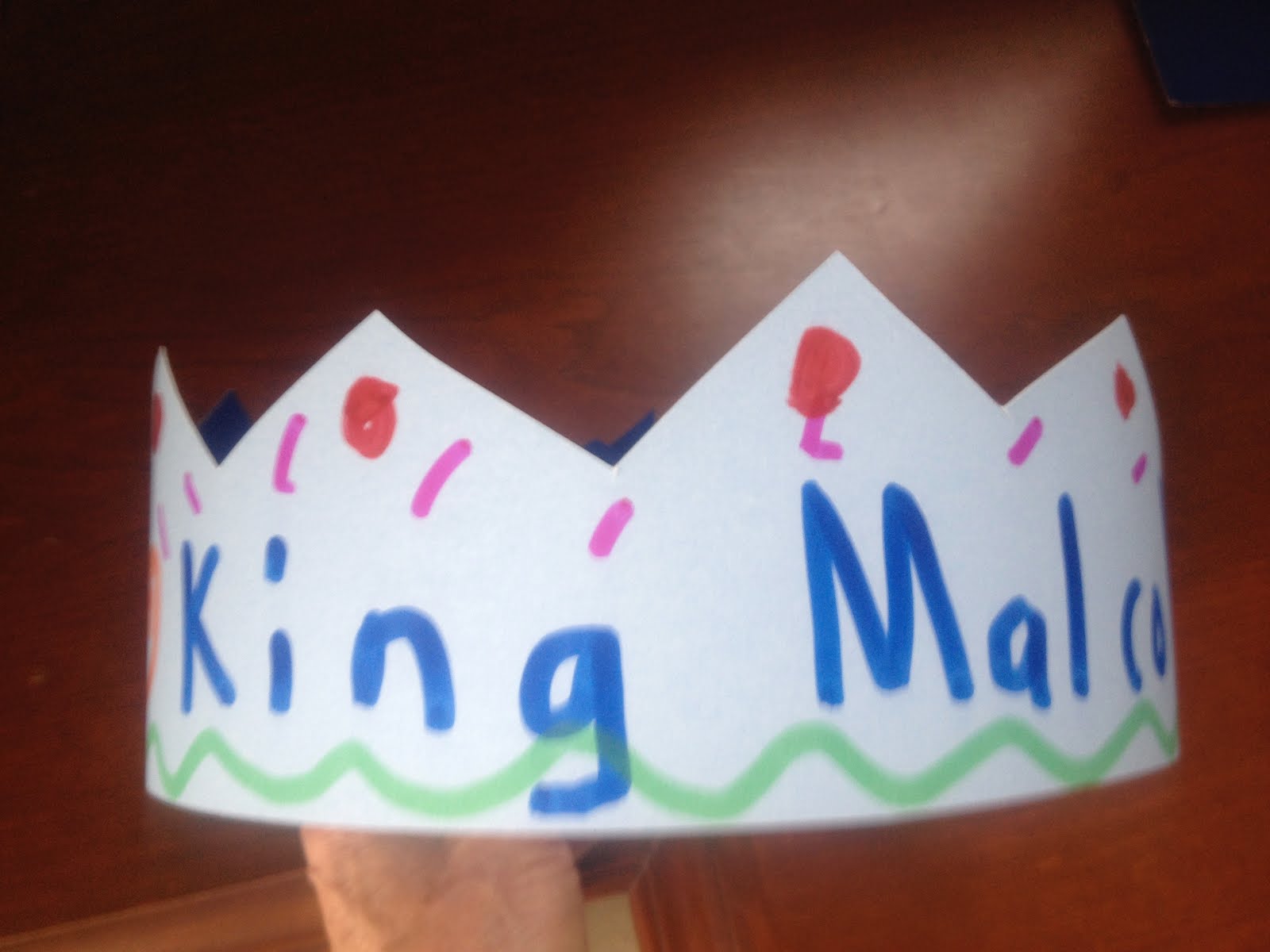
Sentence Strip Hat
Materials: sentence strips or heavy paper cut in 2 ½” x 24”, markers, crayons, stickers
Directions: Let children decorate the sentence strip and then fit to their head and staple or tape in place.

Children can write letters, numerals, or vocabulary words on the headband. Sure beats doing a worksheet and accomplishes the same thing!


Children can add ears or other details to create an animal from a story. Let them wear their hats to retell the story.


*Wouldn’t this be more fun than a written book report?

How about an “all about me” headband?

Children can make an autograph hat with friends’ names.

If you cut a zigzag line on one side every child can be king or queen for the day!


Hint! Two brad fasteners and a rubber band will make the hat easier to adjust to the head, but it’s a lot more trouble.

HATS OFF TO YOU TODAY!

Thursday, September 14, 2023

WIN/WIN WITH PARENTS

Several years ago I read Amanda Ripley’s book THE SMARTEST KIDS IN THE WORLD, one of the most interesting findings was that what parents did at home mattered significantly. Reading to children and talking about school was very important. Parents showed their children they valued education by asking about school, what they learned, what they liked, etc. Parents who modeled reading also had a positive impact.


Here are a few tips to encourage parents to communicate with their children about school.

Journal
Make daily journals for students by putting white paper in a pocket folder. At the end of each day students draw what they learned and dictate or write a sentence to go with their drawing. The journal goes home each evening so children can discuss what they did at school with their parents. The parents sign the journal, write comments or compliments, and return it the following day.


Conversation Starters
Make copies of the attached conversations starters. (Adapt them to your age level and curriculum.) Cut them apart and put them in a bag. Children draw one as they leave at the end of the day and give it to their parents to prompt a discussion about what they did.

https://drive.google.com/file/d/0B1SnEagA4jlja2w2OWtzRjlIdkk/view?usp=sharing


Hint! One school suggested that parents "turn it off" in the car when they picked up their child. The quiet time might encourage children to talk about school because they'd know they had their parent's undivided attention.

Screen Time Survey

Ask parents to keep a log of how much time their child spends in front of a screen for a week. The following week ask them to “turn it off” and spend an equal amount of time reading, playing games, doing chores around the house, etc. with their child.

Brain Tickets
Run off brain tickets similar to the ones below. To earn a brain ticket children need to tell the teacher one new thing they learned at the end of each day. Explain to the parents that their job is to ask their child what she learned to earn the ticket.


https://drive.google.com/file/d/0B1SnEagA4jljUmNfQTJld3VsV00/view?usp=sharing


Laptops for Every Child
A teacher explained at her first parents’ meeting that she recommended that every child needed at least one laptop – two if possible. It’s not the kind of laptop that you plug in, but the kind with two knees. This laptop is perfect for reading, talking, hugging, and singing!

Wednesday, September 13, 2023

LET'S HAVE A CONFERENCE

Ready or not, it will be time for parent conferences before you know it! I used to dread conferences because many of the parents didn’t want to talk about their child. They wanted to talk about the neighbor’s kid or their “ex” or whatever. Once I started using this questionnaire my conferences became much more meaningful for me and for the parents.
A week before conferences I’d ask the children, “Would you like me to give your parents some homework? Well, here is something they need to fill out and bring to our conference next week.”

Note! If parents show up without the form, simply smile and say, “I’ll give you a few minutes to fill this out before we get started.”

CONFERENCE QUESTIONNAIRE


Please fill out this form and bring it to your conference on __________________at _________________.

Child’s name__________________________

1. My child’s favorite activity at school is________________

2. My child expresses concern about_____________________

3. My child’s strong qualities are__________________________

4. Areas I feel my child needs to work on are_____________

5. Something I would like to see my child do at school is _______

6. Is there any special information about your child that you think we should know about?

https://drive.google.com/file/d/0B1SnEagA4jljYWFnNXNybFdyZVE/view?usp=sharing


Cheers and Goals
Here’s another idea for conference time. Ask parents to write down three things positive (cheers) about their child and three goals that they have for their child. This will give the teacher insight as to what is important to parents. It will also provide the teacher with the opportunity to say, “This is what I can do at school to help your child accomplish these goals. What can you do to help at home?”

Student Led Conferences
I must admit I never did these, but many schools are now using this approach and find if very successful. You can find videos and other useful information about student led conferences on the internet.


Conference Tips
Sit beside the parent at a table, rather than behind a desk.

Keep the conversation focused on the child.

Have samples of the child’s work to share with the parents. Focus on the total child, including intellectual, physical, social, and emotional development.

If there is a problem, brainstorm solutions and develop a plan for action.

End the conference on a positive note by reassuring the parents and thanking them for their support.

Provide an interpreter for parents who do not speak English.

Follow-up with the parents after the conference.