photo 3am_dj_home_zps919fb85e.png photo 3am_dj_about_zps7cce4c75.png photo 3am_dj_website_zps73051235.png photo 3am_dj_ss_zps6759ec2a.png photo 3am_dj_bs_zps43e27832.png

Saturday, February 28, 2026

MY BONNIE BOUNCE

You probably all know the song "My Bonnie Lies Over the Ocean." You'll be surprised how much exercise you get as you stand up or sit down every time you say a word that starts with the /b/ sound. Join me on this video.


Warning! One teacher said her kids loved it so much they kept begging to do it over and over. She said she could hardly walk up the stairs when she got home!

My Bonnie Bounce (Tune: “My Bonnie Lies over the Ocean”)
My Bonnie (Stand up.)
Lies over the ocean.
My Bonnie (Sit down.)
Lies over the sea.
My Bonnie (Stand up.)
Lies over the ocean.
Oh, bring (Sit down.)
Back (Stand up.)
My Bonnie (Sit down.)
To me.
Bring (Stand up.)
Back (Sit down.)
Bring (Stand up.)
Back (Sit down.)
Oh, bring (Stand up.)
Back (Sit down.)
My Bonnie (Stand up.)
To me, to me.
Bring (Sit down.)
Back (Stand up.)
Bring (Sit down.)
Back (Stand up.)
Oh, bring (Sit down.)
Back (Stand up.)
My Bonnie to me. (Sit down.)

A little faster…
Super fast…


You can also move and release wiggles in a confined space with this song.

Chair Can Can
Have children sit in their seat, bounce their feet to the beat, and make the following movements.


Bend right knee and then kick. (Right leg up and kick out.)
Bend left knee and kick. (Left leg up and kick out.)
Cross kick right and then cross kick left. (Kick feet in opposite directions.)
Rainbow arms from left to right. (Swish arms in a big arch.)
Bounce your feet up and down as you rainbow your arms.
Right heel up. (Put up right heel.)
Left heel up. (Put up left heel.)
Open and close arms like an elevator door. (Open arms out and together.)
Hands on the sides of your chair and lift and sit. (Lift body.)
Lift, hold, hold, sit. (Lift, hold for several seconds, and sit.)
Kick right leg out straight and the left leg out straight. (Kick straight leg.)
Wave arms high in the air. (Arms up and move back and forth.)
Take a bow.

https://www.youtube.com/watch?v=WIOSRvmYp94


How about a new video from Alex May?

Friday, February 27, 2026

PUNCTUATION PAYS

What Is a Sentence (Tune: “Where Is Thumbkin?”)
What is a sentence?
What is a sentence?
A complete thought.
A complete thought.
It starts with a capital letter.
And ends with a punctuation mark.

Punctuation Sticks
Use jumbo craft sticks or paint sticks for this activity. Draw a “.” “?” and “!” on the end of each stick with a marker. Write simple sentences on the board. Take one stick at a time and place it at the end of a sentence. Children practice reading with that expression.


ABC?
Say the abc’s according to the punctuation marks.
A B C.
D E F ?
G H I J!
K L M ?
N O P !
Q R S T.
U V W?
X Y Z!


Statements and Questions
Seal envelopes and cut in half as shown to make a puppet. Make a period on one side and a question mark on the other side. If the teacher says a question the children hold up the question mark. If the teacher makes a statement they hold up the period.


Glass Pebbles
Let children use glass pebbles to find punctuation in books and magazines.
*Can they tally how many periods, exclamation, and question marks they find on a selected page?


Thursday, February 26, 2026

PICNIC BOOK

Sometimes children like big books and sometimes they like little books. This book is so much easier to make when you tell the story about going on a picnic.

Make a picnic book by telling this story:

Let’s go on a picnic. First we need a picnic basket.
(Fold the paper in half.)

Next, we need hotdogs.
(Fold the paper in fourths.)

We also need hamburgers.
(Fold the paper into eighths.)

We’ll need a picnic bench to sit at.
(Open so it’s folded in half. Bring one bottom flap to the fold. Turn
over and bring the other bottom flap to the fold.)

A picnic is more fun if we share it with a friend. (Tear down middle crease
until you reach the fold.)

Now all we need is a book to write a story about our adventures on our picnic.
(Hands on top of bench, bend down, and fold around to make a book.)


Use for: letter books, word families
reading the room, writing the room
fact families
shape or color books
unit or theme
spelling words (picture/sentence)
friends’ names and phone numbers
opposites, story elements
original stories

Hint! Let children decorate an individual cereal box to store their picnic books.


Picnic Books - https://bit.ly/drJPicnicBks

Narrated version: https://bit.ly/drJPicnicNar


Wednesday, February 25, 2026

"STEP" INTO WRITING WITH A STEP BOOK

This is a little challenging the first time you make it, but after a few times you’ll be ready to step into writing.

Brochure / Step Books - https://bit.ly/drJBrochureStep

Narrated version: https://bit.ly/drJBrochureNar 

Layer two sheets of paper about 1” apart as shown. Fold backwards to create a step book with 4 layers.


Use for: four seasons sets and numerals
4 sentences or facts about a topic of study
sequence
two words and contraction under flap
layers in a rain forest or ocean
steps in cooking or doing an art project
letters and words that begin with that sound


Hint! Use more sheets of paper to create books with 6, 8, or 10 pages. (These could be used for the 5 senses, days in the week, planets in the solar system, continents, etc.)


Tuesday, February 24, 2026

BROCHURES

Giving children a “brochure” to write in is much more "inviting" than a blank sheet of paper.

Directions: Fold a sheet of paper into thirds to create a brochure.
*Or try this easy version: roll paper into a burrito/circle and “smush” flat.

Brochure / Step Books - https://bit.ly/drJBrochureStep

Narrated version: https://bit.ly/drJBrochureNar


Use for: 

story elements (title, favorite character, beginning, middle, end)
consonants or vowels (capital, lower case, pictures; long a, short a, aw sound)
all about me
assessment
field trip, vacation, place they’d like to visit
unit or theme (K-W-L)
sorting (pictures, letters, words, syllables)
fact families
biography (facts, accomplishments)
letters with lines, curves, lines and curves
inflicted endings
drawing a body


Monday, February 23, 2026

EASY PEASY LITTLE BOOKS

Instead of giving children a worksheet, you can easily make these books to reinforce reading skills, math, science concepts, etc.


Easy Fast Little Books - https://bit.ly/drJEasyFast

Narrated version: https://bit.ly/drJFastLittleNar


Lay four to six pieces of paper on top of each other. Staple the four corners. Cut into fourths, and you’ll have four little books.


Use for: days of the week (seven sheets of paper) 
Seasons (four sheets of paper)
Senses (five sheets of paper)
Sequence of a story
List of things to do

Long Skinny Books


Staple four times on the short side and then cut horizontally to make “skinny books.” Use for writing names, sentences, ABC’s, numbers, making patterns, and so forth.

READ, WRITE QUIET BOXES

Read, Write, Quiet Boxes are a nice way to blend skills with creativity and reading and writing for pleasure.

Materials: empty food boxes, construction paper, paint, art media
blank books, pencils

Directions: Each child will need to bring in an empty food box from home. Cut the top off the box and make slanted sides. Children can paint their boxes or decorate them with construction paper. Store blank books, pencils, and simple books that they can read in the boxes. Children can use their boxes as a quiet activity after lunch or if they finish their work early.

Sunday, February 22, 2026

FLIP FOR A FLIP BOOK

Here's a peek-a-boo book that can be used in so many different ways.


Flip Books - https://bit.ly/drJFlipBks

Narrated version: https://bit.ly/drJFlipNar


1st.  Make a hotdog fold. (Fold in half.)


2nd  Make a hamburger fold. (Fold in fourths.)

3rd.  Make a juice box. (Fold in eighths.)

Open in half. Cut down each crease to the middle fold.

Fold in half to make four flips.


*Children also like to call this a “garage door” book.

Use for: 
sequence of a butterfly
story elements
letters and pictures that begin with the sound
opposites
before and after
parts of a plant
what’s inside an egg
mother and baby animals
sequence of your day
sets and numerals
riddles or questions and answers
four seasons
animals and their homes
spelling word – picture or definition

card (“Some gifts are large. Some gifts are small.
Some gifts are round. Some gifts are tall.
But a gift from the heart is the best gift of all!)


Saturday, February 21, 2026

IF YOU GIVE ME A BOOK...

If you give a little boy or girl a hammer, they’ll find a million things to hammer.
And, if you give a little boy or girl a book, they’ll think of a million things to write in it.


Many years ago a professor remarked:
IF a child can do a ditto, it’s a waste of time.
If a child can’t do a ditto, it’s a waste of time.
Why do dittoes?

Some of you might not even know what a “ditto” is. Dittoes existed before copy machines, but they were purple and smelled like alcohol. However, the point remains the same. There are so many more meaningful things to do instead of worksheets - such as BLANK BOOKS!

TOP TEN REASONS TO USE BLANK BOOKS

1st – They are perfect for differentiated instruction. Blank books are open-ended to challenge children at different skill levels.

2nd – Blank books can be used to reinforce reading and writing standards across the curriculum.

3rd – Writing and drawing activate more areas of the brain than typing a key on a computer.

4th – Many children don’t have books in their home so this is a great way for children to share reading with their families.

5th – Blank books are much more engaging than worksheets and encourage creativity.

6th – Blank books nurture the belief in children that they really are “authors.”

7th - If children write a book they will be more motivated to read the book.

8th – Children have a tangible project that demonstrates learning when they make a book.

9th – When children make books they are developing the executive function of “task initiation” and “task completion.”

10th - Blank books can be used in learning stations or as an activity with a partner or small group.

Note! Blank books don’t always have to have a purpose. Sometimes you can put them out in a writing center and let children write or draw whatever they want!

Helpful hints when making books!

A. Make these books with a small group of children, such as a guided reading group. It’s much easier to help 5 or 6 children learn the steps than the whole class at once.

B. Model making the book from start to finish. The brain remembers as a whole. The second time the children can make the book with you as you slowly go through the steps.

C. Make the same book each day for a week, assigning different tasks with the book. Once children have mastered making several of these blank books you can use them for assignments the rest of the year.

D. Suggest children use as many colors as they are in age in their books. For example, if you are five years old you should use at least five colors. If you’re seven, you should use seven colors.

*You could also ask older students to use as many words in their sentences as they are in age.

E. Blank books are a perfect activity for parent volunteers to do with the class.

F. Save blank books throughout the year as part of their writing portfolio.


Snip Snap Book
If you’ve been to my workshops you already know how to make this book. Talk about simple, easy, and useful!

Materials: 2 sheets of white paper

Directions: Fold two sheets of paper in half. Make
tears (or snips) about a thumbnail apart down the
fold. Bend one tab forward, then the next
backward, and so on to bind the pages together.


Use for: retelling a story/story elements
letter book/vowel book
number book/shape book
“The Book”/ “A Book”
coordinate with a unit or theme
environmental print/cut out words they can read
word families, opposites
write the room
writing original stories, journals
chit chat books (teacher and child write back & forth)
note taking
vocabulary/spelling words
Monday – write a word on each page
Tuesday – write the definition
Wednesday – illustrate or cut out a picture
Thursday – write a sentence


Hint! Fold paper lengthwise to make a tall book.
Cut paper in half to make a little book.
Use a colored sheet of paper on the outside and a white sheet on the inside.


Making Books


Picnic Books - https://bit.ly/drJPicnicBks

Narrated version: https://bit.ly/drJPicnicNar


Easy Fast Little Books - https://bit.ly/drJEasyFast

Narrated version: https://bit.ly/drJFastLittleNar


Easy Steps Blank Books - https://bit.ly/drJEasyStepsBks

Narrated version: https://bit.ly/drJBlankNar


Brochure / Step Books - https://bit.ly/drJBrochureStep

Narrated version: https://bit.ly/drJBrochureNar


Flip Books - https://bit.ly/drJFlipBks

Narrated version: https://bit.ly/drJFlipNar


Picnic Book Handout -


https://bit.ly/drJPicnicBk


Little Book Handout -


https://bit.ly/drJLittleBkAct


Friday, February 20, 2026

SELLING WRITING

Good teachers are sales people and they have to SELL children on writing. How empowering to tell a child, "YOU ARE A WRITER!" "YOU ARE AN AUTHOR!"

Here's a great chant where children can move and get their "writing groove" going!

The Writing Process
Children repeat each line to this chant as you open your arms wide and clap as you step from side to side.

Chorus:
Who knows the writing process?
(Children repeat.)
I know the writing process.
(Children repeat.)

First step. (Hold up one finger.)
(Repeat)
Brainstorm. (Hands on the side of your head and shake down.)
(Repeat)
Chorus

Second step…(Hold up 2 fingers.)
(Repeat)
Write it down…(Pretend to write with index finger on palm.)
(Repeat)
Chorus

Third step…(Hold up 3 fingers.)
(Repeat)
Edit your work…(Shake finger.)
(Repeat)
Chorus

Fourth step…(Hold up 4 fingers.)
(Repeat)
Publish your work…(Brush hands together.)
(Repeat)
Chorus

Oh, yeah! (Hands on hips with an attitude.)
(Repeat)


Writer's Wall of Fame
Here’s a simple idea that will save you time and encourage all those little “authors” and “illustrators” in your classroom. All you need is a file folder to make a display pocket for each child. Cut a 1 ¼” border around the top half of the file folder. Let children decorate it with their name and pictures. Open and laminate. Fold in half and staple to a bulletin board or tape to a wall. Children can display their own work by slipping drawings, stories, etc. in the pocket.

Handy Edit
Teach children how to edit their work with this “handy” idea.
(Make a fist with your right hand to begin.)

1. If you started your sentence with a capital letter you can stick up your thumb.

2. If you read the sentence and it makes sense you can stick up your index finger.

3. If you remembered to put punctuation at the end you can stick up your pinky finger.

4. Then you can say, “I love my sentence.” (Turn your fist over and you will be making sign language for “love.”)


Ready for Writing Rap (Traci Wade)
1, 2…sit up, please do.
3, 4…feet flat on the floor.
5, 6…push your chair in quick.
7, 8…lay your paper straight.
9,10…write neatly then.

Chew and Write
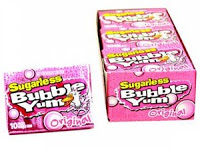
Give children a piece of sugarless gum. Once they write their name they can open the gum and start chewing. They are allowed to chew the gum as long as they keep on writing!


Thursday, February 19, 2026

DOG BISCUIT DAY

February 23rd is a big day if you are a dog because it's INTERNATIONAL DOG BISCUIT APPRECIATION DAY.  Here are some activities to include in your lesson plans for next week.

Make a “Woof! Woof” game. Cut out dog bones and write sight words, math facts, letters, etc. on them. On a few write “Woof! Woof!” Pass the box around and let each child pull out a bone and identify the information. If they select “Woof! Woof!” they have to get down on the floor on all fours and bark like a dog. (They love it!)


Use the dog biscuits for math activities. Add, subtract, make sets, sort… This dog dish with two sections is perfect for tens and ones or onsets and rimes.


Make a book about pets. Cut the front and back off the box and cut paper the size of the box. Give each child a sheet of paper so they can draw a picture of their pet and write or dictate a sentence about it. (If they don’t have a pet they can draw a picture of a pet they would like to have.) Put their pictures between the covers of the box, hole punch, and you’re ready to read.


Puppy Chow Snack

This may not be the healthiest snack, but the kids sure will get a kick out of it.

Ingredients:
9 cups Rice Chex™, Corn Chex™ or Chocolate Chex™ cereal (or combination)
1 cup semisweet chocolate chips
1/2 cup peanut butter
1/4 cup butter or margarine
1 teaspoon vanilla
1 1/2 cups powdered sugar

Directions:
Measure cereal and set aside.
In 1-quart microwavable bowl, microwave chocolate chips, peanut butter and butter uncovered on High 1 minute; stir. Microwave about 30 seconds longer or until mixture can be stirred smooth. Stir in vanilla. Pour mixture over cereal, stirring until evenly coated. Pour into 2-gallon resealable food-storage plastic bag.
Add powdered sugar. Seal bag; shake until well coated. Spread on waxed paper to cool. Store in airtight container in refrigerator.

Wednesday, February 18, 2026

DAY OF UNPLUGGING

NATIONAL DAY OF UNPLUGGING is Friday, March 6, but I'm telling you about this a few weeks early because it's going to take some planning to get "unplugged" for the day.


From sundown to sundown, beginning Friday (March 1), some are putting down their cellphones, shutting off computers, and ignoring the Internet in celebration of the annual National Day of Unplugging.

https://www.nationaldayofunplugging.com/

Check out this free booklet that you can download on the website:


I loved this little cell phone sleeping bag.


There are many things we do in schools that don’t have an impact on children, but I bet if you “unplugged” for one day it would leave a lasting impression. It could also lead to some great learning opportunities. Students could write opinions, do a T-Chart of things to do with a screen and without a screen, graph preferences, make a book about what to do without technology, do a Venn diagram...


Have you read BLACKOUT by John Rocco. It’s a delightful tale about what happens when a family in a big city loses power. I won’t tell you what happens, but I bet you can guess. I was talking to some children recently about the “olden days” before televisions, video games, cell phones, and computers. They were stunned and said, “What did you do?” I smiled and replied, “You know what? We played outside and had lots of fun!”


sos
So, what are you going to do without technology?  Laura Pearson has some great ideas for you!!!

Easy Indoor Activities That Make Learning Fun and Stress-Free

Early childhood educators, childcare teams, and parents of young children all know the same pressure: keeping children entertained at home or in class while managing child energy indoors, short attention spans, and big feelings. Indoor days can turn into a tug-of-war between what kids need and what adults can realistically provide, especially with limited preparation time challenges and shared spaces. The good news is that indoor educational activities don’t have to be complicated to feel purposeful and steady. Expect quick, low-prep ideas that support learning while keeping the room calm.

Understanding Developmentally Appropriate Indoor Play

At the heart of stress-free indoor learning is choosing developmentally appropriate activities that feel like play and still build skills. Think of each activity as a simple blend of three ingredients: sensory engagement, cognitive development, and social-emotional learning, sized to the children in front of you. Many indoor ideas fit naturally into activities done in free time, not working or employed, which makes them easier to sustain.

This balance matters because kids stay regulated longer when their hands, minds, and feelings all have a job. It also helps you meet mixed needs in one room without turning the day into constant behavior management.

For example, a “washing station” can become sorting, counting, and turn-taking practice with calm sensory input. You can keep it safe by using lukewarm water and remembering water too hot more than 120-degrees Fahrenheit is a burn risk. With that lens, a ready-to-use menu of low-material indoor activities becomes easy to choose.

Try 15 Indoor Activities Across STEM, Literacy, Art, Movement, SEL

When indoor time stretches long, it helps to have a simple “menu” that balances bodies, brains, and feelings. Use the ideas below like building blocks, choose what fits your group’s age, attention span, and sensory needs.

  1. Run a 3-Station “Pick 1” Menu (STEM–Literacy–Calm): Set out three bins: a quick STEM challenge, a literacy game, and a calming SEL choice. Children pick one station for 8–10 minutes, then rotate, or stay if they’re deeply engaged. This supports developmentally appropriate play by offering both active and quiet options without forcing everyone into the same task.
  2. Try a Paper-Only STEM Challenge (Build–Test–Talk): Give each child 10 sheets of paper and tape (or no tape) and ask: “Can you build the tallest tower that stands for 10 seconds?” Add a second round where they redesign after a “wind test” (fan or gentle hand wave). The magic is in the quick cycle of predicting, testing, and explaining what changed.
  3. Play a 5-Minute Literacy Game You Can Reset Fast: Keep it simple: write 6–10 letters on sticky notes and hide them around the room for a “letter hunt,” or put picture cards in a bag for “Mystery Object” storytelling. For older preschoolers, sort items by beginning sound and make a silly sentence together. Short, repeatable games reduce frustration and keep literacy joyful, especially when attention spans are still growing.
  4. Create an Art “Prompt + Limits” Invitation: Offer one prompt and two boundaries, such as “Make a creature that lives in the snow” using “only circles and lines” with “three colors.” Limits actually help many children feel safer and more creative because the choices aren’t overwhelming. Finish with a 30-second “gallery walk” where children practice noticing details and giving kind feedback.
  5. Use Movement Bursts That Count as Real Activity: Set a timer for 4 minutes and lead a “Move Like…” circuit: hop like a frog, tiptoe like a cat, push like a bulldozer, stretch like a star. Rotate through 3 bursts with a 1-minute water break to support regulation and stamina. The American Heart Association recommends 60 minutes of daily physical activity, and these mini-bursts help you build that habit indoors.
  6. Practice SEL With “Feelings Tools” Children Can Touch: Teach one coping strategy at a time using concrete cues: a “breathing star” traced with a finger, a calm-down jar, or a feelings chart paired with sentence starters like “I feel ___ because ___.” Reinforce it during play: “Show me your breathing star before we take turns.” This keeps SEL developmentally appropriate, skills are practiced in the moment, not only talked about.
  7. Combine It All With a Theme Day (One Topic, Many Angles): Pick one simple theme (bugs, weather, community helpers) and plan one activity from each area: STEM (sink/float “rain”), literacy (theme word wall), art (collage), movement (bug yoga), SEL (kindness to living things). Themes cut planning time and help children connect ideas across domains. A small set of themes can carry you through weeks without starting from scratch.

Habits That Keep Indoor Learning Light and Consistent

Try these repeatable rhythms to keep it simple.

Habits reduce decision fatigue and help children know what to expect, so learning feels safe, playful, and doable. When you repeat a few small practices, your indoor options stay engaging without constant reinvention.

Post-the-Week Plan

      What it is: Choose one theme and list three quick activity options on a clipboard.

      How often: Weekly

      Why it helps: Clear choices increase engagement and reduce your planning fatigue.

Run a Mini Rotation

      What it is: Set up three spots based on a series of stations children move through.

      How often: 2 to 4 times weekly

      Why it helps: Predictable flow supports independence and smoother transitions.

Keep a Two-Minute Prep Basket

      What it is: Refill one basket with paper, crayons, tape, and a few counters.

      How often: Daily

      Why it helps: Ready materials make it easier to start before energy spikes.

Close With a One-Sentence Reflection

      What it is: Note one win and one tweak after indoor play ends.

      How often: Daily

      Why it helps: Tiny reflections improve next time without extra meetings.

Teach One Calm Cue

      What it is: Practice a simple breath or hand signal before transitions.

      How often: Daily

      Why it helps: Consistent routines strengthen regulation and learning readiness.

Pick one habit this week, then adapt it to your group’s needs.

Quick Answers for Stress-Free Indoor Learning

When questions pop up, these quick fixes keep play moving.

Q: What are some simple indoor activities that keep children both entertained and mentally engaged?
A: Try low-prep “brain and hands” tasks like pattern copying with blocks, scavenger hunts by sound or color, and story retells with puppets. Keep options short and repeatable, then add one small twist, like a new rule or challenge card. This supports focus because attention span grows when children can succeed in manageable chunks.

Q: How can I create a structured routine with indoor activities to reduce my child’s restlessness?
A: Use a predictable sequence such as move, make, then share, with a visual schedule children can point to. Set a timer for brief blocks and build in a purposeful movement reset between tasks. Offer two choices per block to keep structure without power struggles.

Q: How can sponsors help provide resources or kits to make indoor activities easier for busy parents?
A: Resource support can simplify prep by providing ready-to-use materials that still allow open-ended play. Ask for kits that include adaptable prompts, extra consumables, and directions that work across ages and abilities; for example, an art pack might pair paper tools with simple creative prompts or optional digital inspiration like an AI painting generatorthat helps families brainstorm themes before making something hands-on. For screen balance, remember many children get significant screen exposure each day, so hands-on kits can make offline time easier to choose.

Q: What are effective ways to use common household items for fun educational projects with kids?
A: Turn paper, tape, and recycled boxes into “design challenges” like building a bridge for a toy or making a mail center for name writing. Use bottle caps or socks for sorting, counting, and patterning, then ask children to explain their thinking. Keep a small prompt bank of challenge starters so you are never inventing from scratch.

Q: How can relaxation and mindfulness exercises be incorporated into a child’s indoor playtime?
A: Add a one-minute “reset” before transitions, such as belly breathing with a stuffed animal or finger tracing a slow square. Pair it with a calm cue like dimming lights or a soft chime so children learn what calm feels like. Place a calm corner choice card nearby so the strategy stays available without feeling like a consequence.

Keep it light, keep it flexible, and celebrate small wins you can repeat tomorrow.

Choose Three Indoor Activities and Keep Learning Playfully Consistent

When indoor days feel long, it’s easy for learning time to turn into pressure, cleanup stress, or screen-time debates. The steadier path is a mix of mixed learning activities guided by beginner-friendly teaching methods and supported by flexible indoor routines, where adapting activities for children is expected, not a setback. With that mindset, motivation for educational play grows because the plan stays doable, and small wins show up more often than struggles. Keep the routine flexible, and the learning will follow. Choose three activities this week, one creative, one movement-based, and one quiet, and adjust the materials, prompts, or time to fit your group. That consistency builds calm, confidence, and connection that carries into every day.