photo 3am_dj_home_zps919fb85e.png photo 3am_dj_about_zps7cce4c75.png photo 3am_dj_website_zps73051235.png photo 3am_dj_ss_zps6759ec2a.png photo 3am_dj_bs_zps43e27832.png
Showing posts with label Animals. Show all posts

Friday, November 7, 2025

DON'T FORGET YOUR MANNERS!

Manners can take you a long way in this world - although they are not included in most state standards! Manners are part of the “hidden curriculum” that we can nurture daily in little ways. This is a perfect time of year to talk about thanking others and what it means to be polite. Here’s a simple echo song to encourage children to use their “magic words.”

I Have Manners (Tune: “Are You Sleeping?” - Children repeat each line.)
I have manners,
I have manners,
Every day,
Every day.
If I want something
If I want something
“Please,” I’ll say.
“Please,” I’ll say.

I have manners,
I have manners,
Every day,
Every day.
When someone is nice
“Thanks,” I’ll say.
“Thanks,” I’ll say.

*Role play when to say, “please,” “thank you,” “you’re welcome,” and “excuse me.”

*Teach children these signs and use them as prompts:
Please - palm open on chest and circle around
Thank you - fingers on chin and then down to palm

*Let the children use puppets to model what to do in similar situations:

How do you greet a new student?
How do you call a friend and invite them for a play date?
What do you do when someone pays you a compliment?
What do you do when someone gives you a gift?
What do you do when someone has a book that you want?
Table Manners
There are several good books about manners, but I liked to use a stuffed animal to demonstrate negative behavior. I’d ask the children to help me show the toy the correct thing to do.
“Coco always chews with his mouth open. Who can show Coco the correct way to chew your food?”
"Coco just grabs food that he wants. What is the polite thing to do when you want someone to pass you food?”
“Coco eats his food and then runs out to play. What should Coco say before he leaves the table?”


Animal Sounds

Don't forge to thank my webmaster Alex May for this new video.  He's really getting good with AI!


Wednesday, September 3, 2025

THE COLOR FARM

This is a song your students will enjoy singing, but there are many skills “camouflaged” here. *This song reinforces the concept that when you put letters together you make a word.
*Children can learn to read the color words.
*More advanced children can learn to spell the color words.

The Color Farm
(Tune: “BINGO”)
There was a farmer had a cat
And Black was her name-o
B-L-A-C-K (Clap on each letter.)
B-L-A-C-K
B-L-A-C-K
And Black was her name-o.

Dog – BROWN
Cow – PURPLE
Horse – GREEN
Duck – ORANGE
Bird – BLUE
Chick – YELLOW
Pig – RED


https://www.youtube.com/watch?v=LlgZjI_K8vA


Activities:
Let the children make stick puppets that they can hold up as you sing.


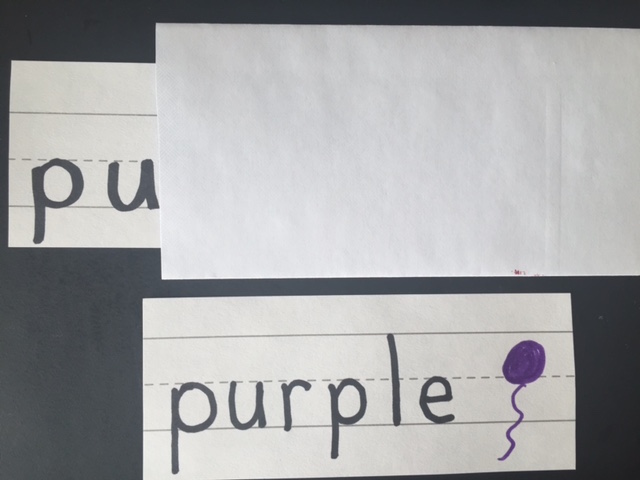
Write the color word and put a picture clue by it on a sentence strip. Pass these out for the children to hold up as you sing.


Cut a 7” circle out of the top of a file folder. Add ears, tails, and other features for each animal. Children hold it up around their face as you sing.


Hint! Make up additional verses for other colors. For example, a pink flamingo, tan turtle, grey goat, white sheep, etc.


Word Puzzles
Materials: sentence strips, envelopes, markers


Directions: Write sight words on sentence strips. Cut between the letters to make a puzzle. Place the puzzle pieces in an envelope. Make a balloon the appropriate color on the front of the envelope. Children remove the letters and try to put them together to make the word.
Hint! Write the word on the back of the envelope so children can self-check.


Pull and Read
Materials: sentence strips, envelopes, markers


Directions: Write sight words on 10” sections of sentence strips with a black marker. Draw a small balloon the appropriate color at the right end of each word. Seal a letter size envelope and then trim off the left end. Insert the sight words in the envelope. Children pull out one letter at a time and try to blend the sounds and identify the color word. They can self-check with the balloon at the end.


Configuration Puzzles
Write color words on the board. Invite children to trace around the outside shape of each word. Erase the letters inside the outlines. Can children identify the word from the shadow?


Friday, August 29, 2025

I HAD A BIRD

Most children love animals, but learning to recognize farm animals and their sounds can also help children get ready to read. In Early Childhood 101 you learned that children go from real and concrete to abstract. You also learned that children need to go from simple to complex. Take a look at how farm animals can nurture these pre-reading skills.

Visual Memory
Visual memory is critical for remembering letters, sight words, etc. If children can recognize farm animals they will develop the visual skills that will help them remember letters, numbers, shapes, etc.

Visual Discrimination

When children can recognize the difference between a horse and a cow, they'll be on the path for discriminating an "m" from an "n" and "the" from "that."

Auditory Discrimination
As children learn to tell the difference between sounds animals make like "baa baa" and "moo," they are developing auditory skills that will help them tell the difference between /b/ and /m/.

Auditory Memory
What sound does the duck make? Well, isn't that very similar to learning that the letter D makes the /d/ sound? 


I Had a Bird
(Make signs for the animals as you sing.)
I had a bird, and the bird pleased me.
I fed my bird by yonder tree.
Bird went, “Tweedle dee dee.” (Open and close index finger and thumb by mouth.)

Cat - "meow, meow" (Pretend to stroke whiskers.)
Dog – “woof-woof” (Pretend to call your dog by patting your leg.)
Pig – “oink, oink” (Put palm of hand under chin and wave fingers.)
Duck – “quack, quack” (Open and close index and middle fingers and thumb by mouth.)
Cow – “moo-moo” (Extend thumb and little finger to look like horns and place on head.)

And here are some picture cards for the song.

http://bit.ly/DrJeanBirdPrintables


Old MacDonald

Sing along with me.
https://www.youtube.com/watch?v=Q5iDjbNN1Og

Wednesday, May 14, 2025

MEET ME AT THE ZOO

I love to go to the zoo. I hope I never lose the thrill of seeing the animals and watching what they will do to entertain the people. Whether you take a real trip to the zoo or an imaginary trip on the internet, over the next three days you’ll find some activities that children will enjoy. These ideas could also be related to literature, such as making the elephant puppet when you read HORTON HEARS A WHO. Other ideas could be adapted to literature standards (poems or riddles about zoo animals) or informative writing (habitats, body covering, babies, food).


We’re Going to the Zoo
(Tune: “The Bear Went over the Mountain”)
We’re going to the zoo.
Won’t you come, too?

The elephants swing their trunks. (Stick out one arm like a trunk
The elephants swing their trunks. and stomp from side to side.)
The elephants swing their trunks.
And we can do it, too.

*Insert other animal names and these motions:
Kangaroos jump around… (Bend elbows like paws and jump.)
Bears put all fours on the ground…(Put hands and feet on ground and walk.)
Giraffes walk on tippy toes…(Stretch neck and walk on toes.)
Zebras gallop to and fro…(Gallop in place.)
Snakes slither and wiggle…(Wiggle as you go up and down.)
Penguins wobble and jiggle…(Palms out by sides and wobble.)


Guess Who?
Let children take turns pantomiming different zoo animals as their friends try and guess who they are.

Zoo Animal Puppets
Let children create their favorite zoo animal from a lunch bag, paper plate, craft stick, or envelope.


Animal Cheers
Seal of Approval – Extend arms in front of you and cross them over each other. Clap as you make a barking noise.
Elephant Cheer - Stick one arm out straight from under your chin. Put top lips over bottom lip as you blow and make a trumpeting sound.
Snake Cheer – Palms folded together next to your chest. Keeping them together wiggle them out as you make a “Ssssss” sound. Stick your tongue quickly in and out of your mouth.
Tiger Cheer – You’re GGGRRREEEAAATTT! (Stick fist in the air.)


Imagination Bag
Give each child an empty lunch bag. Demonstrate how to open the bag and ask them to do the same. Explain that you are going to take an imaginary trip to the zoo. Ask them to look in their bags to see what they can find. Encourage children to name the animals in their bag as they create an imaginary zoo on the floor in front of them.


Matching Game
Make a matching game where children match up mother zoo animals and their babies. Can they tell you the names for the different animal babies?
*You could also play a memory game with these cards.
Hint! I found my pictures at google images.

Wednesday, May 15, 2024

ANIMAL CRACKERS

Some things like animal crackers never go out of style!

Animal Crackers
By Dr. Holly
Lions, and tigers, and bears, oh, my!
In my box that’s what I spy.
Take them out.
Should I run?
No, I’ll eat them!
Yum! Yum! Yum!

Descriptions
Pass out an animal cracker to each child. Encourage them to write descriptive sentences about their cracker. I see… I smell… I feel… I hear… I taste!


Tag Along Book
Cut the front and back off a box of animal crackers. (Be sure and leave the string attached.) Cut paper the size of the box. Give each child a sheet and ask them to draw a zoo animal or write a description of a zoo animal. Put their pictures between the front and back of the box and staple to make a book.
Hint! This is called a tag along book because they can hold it and it will tag along with them!

Math
Use zoo animal plates for simple addition. Children make sets in each ear and then join them together and count the sum. You can use math counters, buttons, popcorn, or cereal.


Vocabulary
What does it mean to be a carnivore? Herbivore? Omnivore? What are you? Do some research to find out eating habits of different zoo animals.

Sorting
Use animal crackers, toy animals, or pictures to sort zoo animals. Ask children what sorting rule they used. Can they think of another way to sort the animals?

Put Me in the Zoo

Do a language experience chart where children fill in the sentence:
If I were in the zoo I would be…
Let them draw pictures of which animal they would like to be. Why did they choose that animal?

Zoo Treats

You will need graham crackers, animal crackers, and peanut butter to make this snack. Children put a small amount of peanut butter on the graham cracker and stand animal cookies up on it.

*You can using icing or cream cheese for children with peanut allergies.

Tuesday, May 14, 2024

GOING TO THE ZOO

I loved going to the zoo as a child, as a teacher with my students, and even as an "old lady."  Whether you take a field trip to the zoo or an imaginary trip on the internet, I've got some activities that children will enjoy. Many of these ideas could be adapted to literature (poems or riddles about zoo animals) or informative writing and science (habitats, body covering, babies, food).

We’re Going to the Zoo
(Tune: “The Bear Went over the Mountain”)
We’re going to the zoo.
Won’t you come, too?

The elephants swing their trunks. (Stick out one arm like a trunk
The elephants swing their trunks. and stomp from side to side.)
The elephants swing their trunks.
And we can do it, too.

*Insert other animal names and these motions:

Kangaroos jump around… (Bend elbows like paws and jump.)
Bears put all fours on the ground…(Put hands and feet on ground and walk.)
Giraffes walk on tippy toes…(Stretch neck and walk on toes.)
Zebras gallop to and fro…(Gallop in place.)
Snakes slither and wiggle…(Wiggle as you go up and down.)
Penguins wobble and jiggle…(Palms out by sides and wobble.)


Guess Who?
Let children take turns pantomiming different zoo animals as their friends try and guess who they are.
(I couldn't resist using this picture. My mother made this lion costume for my son when he was four. K.J. and Kalina both had fun playing in it when they were little.)


Zoo Animal Puppets

Let children create their favorite zoo animal from a lunch bag, paper plate, craft stick, or envelope.


Animal Cheers

Seal of Approval – Extend arms in front of you and cross them over each other. Clap as you make a barking noise.
Elephant Cheer - Stick one arm out straight from under your chin. Put top lips over bottom lip as you blow and make a trumpeting sound.
Snake Cheer – Palms folded together next to your chest. Keeping them together wiggle them out as you make a “Ssssss” sound. Stick your tongue quickly in and out of your mouth.
Tiger Cheer – You’re GGGRRREEEAAATTT! (Stick fist in the air.)


Imagination Bag
Give each child an empty lunch bag. Demonstrate how to open the bag and ask them to do the same. Explain that you are going to take an imaginary trip to the zoo. Ask them to look in their bags to see what they can find. Encourage children to name the animals in their bag as they create an imaginary zoo on the floor in front of them.


Matching Game

Make a matching game where children match up mother zoo animals and their babies. Can they tell you the names for the different animal babies?
*You could also play a memory game with these cards.
Hint! I found my pictures at google images.

Tuesday, September 5, 2023

I HAD A BIRD

Most children love animals, but learning to recognize farm animals and their sounds can also help children get ready to read. In Early Childhood 101 you learned that children go from real and concrete to abstract. You also learned that children need to go from simple to complex. Take a look at how farm animals can nurture these pre-reading skills.

Visual Memory
Visual memory is critical for remembering letters, sight words, etc. If children can recognize farm animals they will develop the visual skills that will help them remember letters, numbers, shapes, etc.

Visual Discrimination
When children can recognize the difference between a horse and a cow, they'll be on the path for discriminating an "m" from an "n" and "the" from "that."

Auditory Discrimination
As children learn to tell the difference between sounds animals make like "baa baa" and "moo," they are developing auditory skills that will help them tell the difference between /b/ and /m/.

Auditory Memory
What sound does the duck make? Well, isn't that very similar to the sound that the letter "D" makes?


I Had a Bird
(Make signs for the animals as you sing.)
I had a bird, and the bird pleased me.
I fed my bird by yonder tree.
Bird went, “Tweedle dee dee.” (Open and close index finger and thumb by mouth.)

Cat - "meow, meow" (Pretend to stroke whiskers.)
Dog – “woof-woof” (Pretend to call your dog by patting your leg.)
Pig – “oink, oink” (Put palm of hand under chin and wave fingers.)
Duck – “quack, quack” (Open and close index and middle fingers and thumb by mouth.)
Cow – “moo-moo” (Extend thumb and little finger to look like horns and place on head.)

And here are some picture cards for the song.

http://bit.ly/DrJeanBirdPrintables


Old MacDonald
Sing along with me.
https://www.youtube.com/watch?v=Q5iDjbNN1Og

Saturday, May 13, 2023

MONKEY AROUND

We love our little monkeys in our classrooms, don’t we?

Caps for Sale
This was always one of my favorite books to read to my class. It was such fun to let the children be the monkeys and act out the tale. We did this in the classroom as well as outside on the playground equipment.

Monkey on a Swing
Cut a sheet of paper as shown. Roll down the top section and staple to make the monkey’s head. Decorate with markers or crayons. Glue on a tail. Staple the monkey’s hands to a straw and watch him swing.


Compare and Contrast
Get several copies of Curious George books. Compare and contrast George’s adventures. How are they alike? How are they different? Could those adventures really happen?


Five Little Monkeys
Five little monkeys jumping on the bed. (Hold up five fingers.)
One fell off and bumped her head. (Touch your head.)
Momma called the doctor and the doctor said, (Pretend to hold a phone.)
“That’s what you get for jumping on the bed!” (Point finger.)
Four…three..two…one…
No little monkeys jumping on the bed.
They are sick with broken heads!

*Change the number of monkeys in the song. Children will also get a kick out of saying, "Five little mommies jumping on the bed..."

Monkeys and Alligator 
Five little monkeys swinging from a tree, (Hold up five fingers.)
Teasing Mr. Alligator, “Can’t catch me.”
Along came Mr. Alligator quiet as can be,
And snatched a monkey right out of that tree!
Four little monkeys… (Hold up appropriate number of
Three…two…one… fingers on hand.)
“Missed me, missed me. (Stick thumbs in ears and tease.)
Now you gotta kiss me!”

*Choose five children to be monkeys and one child to be the alligator to act out this song.

Monkey Tail Sandwich
You will need:
Hot dog buns
Bananas
Peanut butter (or substitute)
1. Wash your hands.
2. Spread peanut butter in the bun.
3. Peel the banana and insert it in the bun.
4. Yum! Yum!

Friday, May 27, 2022

WHAT A NOSE!!!!

Elephants are amazing creatures. I read a book called ELEPHANT BILL about how elephants were used in Burma in WWII - absolutely fascinating! I never knew that elephants have feelings and protect each other's children just like humans.

Here's a silly elephant puppet that my children always enjoyed making. There's nothing like putting a puppet on your hand to tell a story or sing a song.


Materials: old socks, paper plates, crayons, brad fasteners, gray construction paper.

Hint! Ask each child to bring in an old sock. This shouldn't be too difficult because everyone has a lost sock or two.

Directions: Cut 2 ears out of the gray construction paper. Cut a circle large enough for the child’s hand out of the middle of the paper plate. (Color the plate gray if you desire.) Draw a face on the plate as shown. Attach the 2 ears to the sides of the plate with brad fasteners. Insert the hand in the sock and then stick the sock through the back of the plate to create the elephant’s nose.

 
What a Nose!
(Tune: "I'm a Little Teapot")
Elephants walk like this and that. (Stick out one arm like a trunk and stomp
from side to side.)
They’re terribly big and terribly fat. (Arms out wide.)
They have no hands. (Hold up hands and shake head no.)
They have no toes. (Point to feet and shake head no.)
But, goodness, gracious, what a nose! (Stick out arm like a trunk.)


One Elephant Went out to Play (Tune:  "Five Little Ducks")
One elephant went out to play - (Hold up one finger.)
Out on a spider's web one day. (Roll hands around.)
She had such enormous fun. (Stick arms out wide.)
She called for another elephant to come. (Cup arms by mouth.)
Two elephants went out to play.... (Hold up two fingers.)

*Let children act out this rhyme. The first child chooses the second child. The second child chooses the third child, etc.

*What does "enormous" mean? What are other things that are enormous? 

*Could an elephant really play on a spider's web? Why not?


CD Puppet
You can also make an elephant puppet from an old CD. Draw a face on the CD with permanent markers. Tape on construction paper ears and let the children insert their index finger in the hole to make a trunk. (Obviously, my big finger was too large for the hole!)

Note!  This is kind of like a history lesson because kids don't know what a CD is like most of you don't remember records!!!!

Thursday, May 26, 2022

ANIMAL CRACKERS

Some things like animal crackers never go out of style!


Animal Crackers
By Dr. Holly
Lions, and tigers, and bears, oh, my!
In my box that’s what I spy.
Take them out.
Should I run?
No, I’ll eat them!
Yum! Yum! Yum!

Descriptions
Pass out an animal cracker to each child. Encourage them to write descriptive sentences about their cracker. I see… I smell… I feel… I hear… I taste!


Tag Along Book
Cut the front and back off a box of animal crackers. (Be sure and leave the string attached.) Cut paper the size of the box. Give each child a sheet and ask them to draw a zoo animal or write a description of a zoo animal. Put their pictures between the front and back of the box and staple to make a book.

Hint! This is called a tag along book because they can hold it and it will tag along with them!


Math
Use zoo animal plates for simple addition. Children make sets in each ear and then join them together and count the sum. You can use math counters, buttons, popcorn, or cereal.


Vocabulary
What does it mean to be a carnivore? Herbivore? Omnivore? What are you? Do some research to find out eating habits of different zoo animals.


Sorting
Use animal crackers, toy animals, or pictures to sort zoo animals. Ask children what sorting rule they used. Can they think of another way to sort the animals?


Put Me in the Zoo
Do a language experience chart where children fill in the sentence:
If I were in the zoo I would be…
Let them draw pictures of which animal they would like to be. Why did they choose that animal?


Zoo Treats

You will need graham crackers, animal crackers, and peanut butter to make this snack. Children put a small amount of peanut butter on the graham cracker and stand animal cookies up on it.

*You can use icing or honey for children with peanut allergies.

Wednesday, May 25, 2022

MEET ME AT THE ZOO

I love to go to the zoo. I hope I never lose the thrill of seeing the animals and watching what they will do to entertain the people. Whether you take a real trip to the zoo or an imaginary trip on the internet, I've got some activities that children will enjoy. These ideas could also be related to literature, such as making the elephant puppet when you read HORTON HEARS A WHO. Other ideas could be adapted to literature standards (poems or riddles about zoo animals) or informative writing (habitats, body covering, babies, food).


We’re Going to the Zoo
(Tune: “The Bear Went over the Mountain”)
We’re going to the zoo.
Won’t you come, too?

The elephants swing their trunks. (Stick out one arm like a trunk
The elephants swing their trunks. and stomp from side to side.)
The elephants swing their trunks.
And we can do it, too.

*Insert other animal names and these motions:
Kangaroos jump around… (Bend elbows like paws and jump.)
Bears put all fours on the ground…(Put hands and feet on ground and walk.)
Giraffes walk on tippy toes…(Stretch neck and walk on toes.)
Zebras gallop to and fro…(Gallop in place.)
Snakes slither and wiggle…(Wiggle as you go up and down.)
Penguins wobble and jiggle…(Palms out by sides and wobble.)


Guess Who?
Let children take turns pantomiming different zoo animals as their friends try and guess who they are.


Zoo Animal Puppets
Let children create their favorite zoo animal from a lunch bag, paper plate, craft stick, or envelope.


Animal Cheers
Seal of Approval – Extend arms in front of you and cross them over each other. Clap as you make a barking noise.
Elephant Cheer - Stick one arm out straight from under your chin. Put top lips over bottom lip as you blow and make a trumpeting sound.
Snake Cheer – Palms folded together next to your chest. Keeping them together wiggle them out as you make a “Ssssss” sound. Stick your tongue quickly in and out of your mouth.
Tiger Cheer – You’re GGGRRREEEAAATTT! (Stick fist in the air.)


Imagination Bag
Give each child an empty lunch bag. Demonstrate how to open the bag and ask them to do the same. Explain that you are going to take an imaginary trip to the zoo. Ask them to look in their bags to see what they can find. Encourage children to name the animals in their bag as they create an imaginary zoo on the floor in front of them.


Matching Game
Make a matching game where children match up mother zoo animals and their babies. Can they tell you the names for the different animal babies?
*You could also play a memory game with these cards.
Hint! I found my pictures at google images.

Wednesday, May 26, 2021

WHAT A NOSE!

Elephants are amazing creatures. I read a book called ELEPHANT BILL about how elephants were used in Burma in WWII - absolutely fascinating! I never knew that elephants have feelings and protect each other's children just like humans.

Here's a silly elephant puppet that my children always enjoyed making. There's nothing like putting a puppet on your hand to tell a story or sing a song.


Materials: old socks, paper plates, crayons, brad fasteners, gray construction paper.
Hint! Ask each child to bring in an old sock. This shouldn't be too difficult because everyone has a lost sock or two.

Directions: Cut 2 ears out of the gray construction paper. Cut a circle large enough for the child’s hand out of the middle of the paper plate. (Color the plate gray if you desire.) Draw a face on the plate as shown. Attach the 2 ears to the sides of the plate with brad fasteners. Insert the hand in the sock and then stick the sock through the back of the plate to create the elephant’s nose.https://drive.google.com/file/d/0B1SnEagA4jlja2xZQmxOVUtCYjg/view?usp=sharing


What a Nose!
(Tune: "I'm a Little Teapot" - Dr. Jean & Friends CD)
Elephants walk like this and that. (Stick out one arm like a trunk and stomp
from side to side.)
They’re terribly big and terribly fat. (Arms out wide.)
They have no hands. (Hold up hands and shake head no.)
They have no toes. (Point to feet and shake head no.)
But, goodness, gracious, what a nose! (Stick out arm like a trunk.)


One Elephant Went out to Play
One elephant went out to play - (Hold up one finger.)
Out on a spider's web one day. (Roll hands around.)
She had such enormous fun. (Stick arms out wide.)
She called for another elephant to come. (Cup arms by mouth.)
Two elephants went out to play.... (Hold up two fingers.)

*Let children act out this rhyme. The first child chooses the second child. The second child chooses the third child, etc.
*What does "enormous" mean? What are other things that are enormous?
*Could an elephant really play on a spider's web? Why not?

                        
CD Puppet
You can also make an elephant puppet from an old CD.  (You must have one some place!) Draw a face on the CD with permanent markers. Tape on construction paper ears and let the children insert their index finger in the hole to make a trunk. (Obviously, my big finger was too large for the hole!)

Tuesday, May 25, 2021

ANIMAL CRACKERS

Some things like animal crackers never go out of style!

Animal Crackers
By Dr. Holly
Lions, and tigers, and bears, oh, my!
In my box that’s what I spy.
Take them out.
Should I run?
No, I’ll eat them!
Yum! Yum! Yum!


Descriptions

Pass out an animal cracker to each child. Encourage them to write descriptive sentences about their cracker. I see… I smell… I feel… I hear… I taste!


Tag Along Book
Cut the front and back off a box of animal crackers. (Be sure and leave the string attached.) Cut paper the size of the box. Give each child a sheet and ask them to draw a zoo animal or write a description of a zoo animal. Put their pictures between the front and back of the box and staple to make a book.
Hint! This is called a tag along book because they can hold it and it will tag along with them!


Math
Use zoo animal plates for simple addition. Children make sets in each ear and then join them together and count the sum. You can use math counters, buttons, popcorn, or cereal.


Vocabulary
What does it mean to be a carnivore? Herbivore? Omnivore? What are you? Do some research to find out eating habits of different zoo animals.


Sorting
Use animal crackers, toy animals, or pictures to sort zoo animals. Ask children what sorting rule they used. Can they think of another way to sort the animals?

Put Me in the Zoo
Do a language experience chart where children fill in the sentence:
If I were in the zoo I would be…
Let them draw pictures of which animal they would like to be. Why did they choose that animal?


Zoo Treats
                                            
You will need graham crackers, animal crackers, and peanut butter to make this snack. Children put a small amount of peanut butter on the graham cracker and stand animal cookies up on it.
*You can using icing or honey for children with peanut allergies.