photo 3am_dj_home_zps919fb85e.png photo 3am_dj_about_zps7cce4c75.png photo 3am_dj_website_zps73051235.png photo 3am_dj_ss_zps6759ec2a.png photo 3am_dj_bs_zps43e27832.png
Showing posts with label Poem. Show all posts

Saturday, September 19, 2026

FALL Y'ALL

SEPTEMBER 22

Happy Autumn! Football, pumpkins, colorful leaves, and FUN are in the air! 

Leaves Are Falling
(Tune: “Where Is Thumbkin?”)
Leaves are falling (Echo song. Children repeat each line.)
Leaves are falling (Flutter fingers down.)
To the ground. (Touch the ground.)
To the ground.
Red, orange, and yellow (Flutter fingers.)
Red, orange, and yellow
Falling down. (Touch the ground.)
Falling down.
*Let children dramatize being leaves and dancing in the wind. As the song ends they fall quietly to the ground.

*What happens to leaves after they fall from the trees? Later in the fall when there are lots of leaves on the ground demonstrate how to pick up a handful of leaves and crumple them in your hands. Explain how those leaves will decay and turn into soil.

Fall
Why do you think they call this season “fall”? What’s another name for fall?
What season comes before fall? What season comes after fall? Fall is a cool off time between hot summer and cold winter.

Signs of Fall

Brainstorm signs of fall and write them on the board. What kind of clothes do we wear in fall? What’s the weather like in the fall? Are there any special seasonal foods we eat? What kind of sports are popular in fall? What holidays do we celebrate in the fall? What do animals do to get ready for winter? What do plants do in the fall?

*Let children make an attribute web and label it with pictures or words of things that remind them of fall. Older children can do this as a writing assignment, but for younger children this can be an opportunity for the teacher to model writing and develop vocabulary.


Nature Walk

Go on a nature walk and look for signs of fall. Provide children with tablets, paper, and pencils so they can record their “observations” on the walk.

I LIKE AUTUMN
Language Experience Chart
Let children dictate sentences about why they like autumn. Older children could write their own original stories about, “Fall, Fall, Best of All!”

Acrostic Poem
Write the words “fall” or “autumn” vertically down the side of a sheet of paper. Children think of a word that starts with each letter that relates to fall.


Saturday, May 16, 2026

ANIMAL CRACKERS

Some things like animal crackers never go out of style!

Animal Crackers
By Dr. Holly
Lions, and tigers, and bears, oh, my!
In my box that’s what I spy.
Take them out.
Should I run?
No, I’ll eat them!
Yum! Yum! Yum!

Descriptions
Pass out an animal cracker to each child. Encourage them to write descriptive sentences about their cracker. I see… I smell… I feel… I hear… I taste!


Tag Along Book
Cut the front and back off a box of animal crackers. (Be sure and leave the string attached.) Cut paper the size of the box. Give each child a sheet and ask them to draw a zoo animal or write a description of a zoo animal. Put their pictures between the front and back of the box and staple to make a book.

Hint! This is called a tag along book because they can hold it and it will tag along with them!


Math
Use zoo animal plates for simple addition. Children make sets in each ear and then join them together and count the sum. You can use math counters, buttons, popcorn, or cereal.


Vocabulary
What does it mean to be a carnivore? Herbivore? Omnivore? What are you? Do some research to find out eating habits of different zoo animals.


Sorting
Use animal crackers, toy animals, or pictures to sort zoo animals. Ask children what sorting rule they used. Can they think of another way to sort the animals?


Put Me in the Zoo

Do a language experience chart where children fill in the sentence:
If I were in the zoo I would be…
Let them draw pictures of which animal they would like to be. Why did they choose that animal?


Zoo Treats


You will need graham crackers, animal crackers, and peanut butter to make this snack. Children put a small amount of peanut butter on the graham cracker and stand animal cookies up on it.


*You can use icing or honey for children with peanut allergies.

Friday, March 20, 2026

SPRING INTO WRITING

Spring is the perfect time to "grow writers"!

Spring Acrostic

After a spring walk, have children write the word spring vertically down the left side of their paper. Can they write a word (or sentence) for each letter that is a sign or symbol of spring? 


Hint! With younger children do this as an interactive writing activity.


Spring Poem
Have children fill in the words to create their own poem or a book.


SPRING
Spring looks like____.
Spring smells like ____.
Spring sounds like ____.
Spring feels like ____.
Spring tastes like ____.
I like spring!


Web
Brainstorm spring vocabulary words and then encourage children to make a web using words or drawings.


I Want to Go Out and Play Book
(Writing an opinion)
Give each child a sheet of paper and ask them to draw a picture of why they like to go outside. Ask them to write (or dictate) a sentence about their drawing. Make a cover that says, “I Want to Go Out and Play.” Put their pages together, hole punch, and insert book rings.


Sit and Write

(Descriptive writing)
Each child will need paper, a clipboard or cardboard to write on, and a pencil or crayon. Have children spread out in a comfortable area and write stories, poems, or descriptions of what they see.

Tuesday, November 4, 2025

THANKSGIVING STORY BRACELET

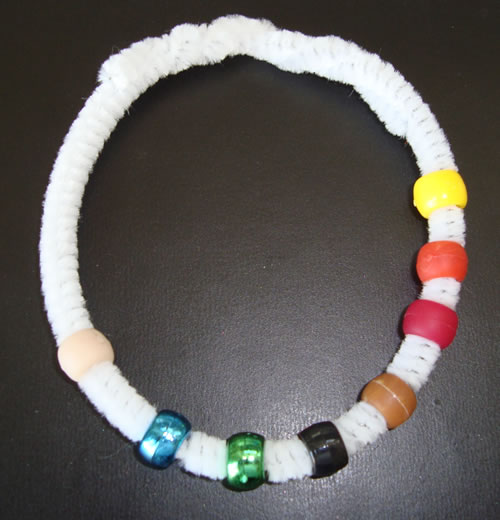
This has been one of the most popular posts on my website. I have done this countless times with different age groups and they always love it. (A big craft distributor "borrowed" this idea and sells a kit - and you'll see countless adaptations on Pinterest.) But, if you want the original REAL deal with the poem my daughter wrote, here it is! It's a craft that reinforces oral language, sequencing, and retelling a story.

Hint! It's going to be an "investment" when you buy the beads, so this might be a project to hand over to a parent. You can buy individual bags of beads or just buy a large container of beads at Walmart and let the children pick out the colors they will need. The only color I had difficulty finding was brown, so I just bought a little package of brown wooden beads.


Materials: white, blue, green, black, brown, red, orange, yellow beads, pipe cleaners

Directions: Say the poem and demonstrate how to insert the beads when the appropriate color is mentioned. Model this several times and encourage the children to recall the colors and fill in words that rhyme.

Write the colors in order and put the pipe cleaners and beads in a center for the children to construct independently. You could also do this as a small group activity with younger children. Practice telling the story as the children touch the beads for a prompt. Make sure to send home a copy of the poem with the bracelet so parents can reinforce this activity at home.

Thanksgiving Story Bracelet

With this bracelet you will know (Start with a pipe cleaner.)
The first Thanksgiving that was long, long ago.
The Pilgrims set sail from far away
On the Mayflower with tall white sails. (Insert a white bead.)
They sailed many days across the ocean blue. (Add a blue bead.)
The seas were rough, but the ship came through.
At last they spotted land so green. (String on a green bead.)
They were so happy they cheered and screamed.
The first year was so hard and black. (Now a black bead.)
Many died and wished that they could go back.
But the Native Americans gave them a hand
And helped them survive in the strange new land.
They decided to celebrate in a special way
And that became the first Thanksgiving day.
They prepared a feast with turkeys brown (Add a brown bead.)
And red cranberries that they had found. (Time for a red bead.)
Yellow corn that they had learned to grow (Insert a yellow bead.)
And orange pumpkin pies, don’t you know! (Last an orange bead.)
But before they ate the turkey and dressing,
They all held hands for a thankful blessing.
(Twist the ends of the pipe cleaner to make a bracelet.)

Friday, March 28, 2025

PECK, PECK, PECK!

PECK, PECK, PECK!
Peck, peck, peck,
On the soft little egg. Out comes a neck.
Out comes a leg.
How does a chick
Who’s not been about
Discover the secret
Of how to get out?

This is a great poem to read together again and again. Ask children how they think the chick gets out of the egg. Why do birds need a beak?

Here’s a craft activity to go along with the poem. Cut two ovals out of construction paper. Decorate one with crayons and then cut a zig zag down the middle. Make a head for your bird out of a circle and small orange triangle. Use brad fasteners to attach the head and the wings. Children can unfold the egg as they repeat the rhyme.


What’s in the Egg? 

First, brainstorm all the different animals that come out of an egg. Now, you’re ready to make a flip book called “What’s in the Egg?” Fold a sheet of paper in half lengthwise, then fourths and eighths. Open and cut the crease to the middle fold. Fold in half to make 4 little flaps. Children draw eggs on the front of each flap. Open the flaps and challenge children to draw 4 different things that might come from an egg. When they hold this book up to the light, they will see their little critters inside the egg.


Bird Nest Snack
Give children a Rice Crispie treat to mold into a nest. Put a few jelly beans in the nest and place a marshmallow “peep” on top. (Yeah, I know this is total junk but the kids will love it!  Sugar makes memories!)


Sunday, March 23, 2025

GREEN


The world is turning GREEN this time of year. Here are some ways to 
celebrate the color with a poem, reading, math, science, and art.

Green
by Dr. Holly

Green grass,
Green trees,
Green pickles,
Green peas.

Green grows
And green makes
Green lizards,
Green snakes.

Green leaves
Pop out in the spring;
Green is such
A lovely thing!

Color Recognition
(Visual Skills)
Sing this song to the tune of “Do You Know the Muffin Man?”
Do you see the color green, the color green, the color green?
Do you see the color green somewhere in the room?
Each child gets up and touches an object that is green. (Adapt the song for other colors, beginning sounds, etc.)

Hint! Cover a cardboard roller from a pants hanger with green paper to make a green pointer!


Remember (Listening Skills and Model Writing)
Read the poem to the children one time. Ask them to recall the different objects in the poem that are green. Write their responses on the board. Read the poem a second time and see how many more objects they can remember. Read over the list together.

If I Were Green (Oral Language)
Have children close their eyes and pretend they are green. What are they? Write this sentence at the top of a sheet of paper and run off a copy for each child. “If I were green I would be ________.” (Younger children can dictate their responses, while older children complete their own sentences.) Put their papers together to make a class book.


“Eye” Can Graph (Math Comparisons)
Pass a small mirror around the classroom. Encourage each child to look at their eyes and describe what color they are. Make a bar graph by cutting out eyes from construction paper. Let each child color in a section by the color of their eyes. What color do the most people have? What color do the least number have? Have children go home and look at their parents’ eyes. Are they the same color as their eyes?


Natural Green (Science Investigation)
Ask the children to think about all of the things in nature that are green. Write their list on the board as they call out objects. “Are all of these the same shade of green?” Take the class on a nature walk and have each child collect one “specimen” that is green. Bring their objects back in the classroom and compare. Are they all the same? Have children describe their differences. Can they sort the objects? Did they collect plants or animals? What animals are green? What time of year do you see the most green?

Green Collage (Creativity)
Provide children with green paint, green crayons, green markers, and green paper. Invite children to create a “green collage” on a piece of cardboard or a paper plate.

Scratch and Sniff Green (Word Recognition)
Give each child a heavy piece of paper. Write the word “green” on their paper with school glue. (An adult will need to do this for younger children.) Let each child take a spoonful of lime jello and sprinkle it over the glue. (Model how to shake it around and then dump off the excess.) After it dries, children can “scratch and sniff” the word green.

Wednesday, May 15, 2024

ANIMAL CRACKERS

Some things like animal crackers never go out of style!

Animal Crackers
By Dr. Holly
Lions, and tigers, and bears, oh, my!
In my box that’s what I spy.
Take them out.
Should I run?
No, I’ll eat them!
Yum! Yum! Yum!

Descriptions
Pass out an animal cracker to each child. Encourage them to write descriptive sentences about their cracker. I see… I smell… I feel… I hear… I taste!


Tag Along Book
Cut the front and back off a box of animal crackers. (Be sure and leave the string attached.) Cut paper the size of the box. Give each child a sheet and ask them to draw a zoo animal or write a description of a zoo animal. Put their pictures between the front and back of the box and staple to make a book.
Hint! This is called a tag along book because they can hold it and it will tag along with them!

Math
Use zoo animal plates for simple addition. Children make sets in each ear and then join them together and count the sum. You can use math counters, buttons, popcorn, or cereal.


Vocabulary
What does it mean to be a carnivore? Herbivore? Omnivore? What are you? Do some research to find out eating habits of different zoo animals.

Sorting
Use animal crackers, toy animals, or pictures to sort zoo animals. Ask children what sorting rule they used. Can they think of another way to sort the animals?

Put Me in the Zoo

Do a language experience chart where children fill in the sentence:
If I were in the zoo I would be…
Let them draw pictures of which animal they would like to be. Why did they choose that animal?

Zoo Treats

You will need graham crackers, animal crackers, and peanut butter to make this snack. Children put a small amount of peanut butter on the graham cracker and stand animal cookies up on it.

*You can using icing or cream cheese for children with peanut allergies.

Tuesday, April 23, 2024

THE BUG DANCE

If your kids are "antsy" then I've got a new video that will get rid of their wiggles!


The Bug Dance
By Dr. Holly

Bugs, bugs everywhere!
On my shoulders, in my hair!
Fat and lean ones, in-between ones
Orange ones, red ones, pink and green ones!
Crickets, beetles, ladybugs too—
One just landed on my shoe!
Caterpillars, grasshoppers, spiders, ants
One is crawling up my pants!
I like bugs both big and small.
I like them marching up the wall.
I like them on flowers and in trees,
But please, oh please, get them off of me!

Choral Reading – Teacher reads the first line and then children repeat it.

Visual Imagery – Children close their eyes as they repeat the rhyme and “make pictures” in their brain.

Drawings – Have children illustrate the poem.

Bug Books – Check out books from the library and ask children, “What can you find out about bugs?” Encourage them to take notes and share what they learned.

Thumbprint Bugs – Children make thumbprints on a page and then add details with markers to create bugs.


Bug Paintings – Cut paper to fit in a shoebox or similar box with a lid. Put plastic bugs in paint and then use a spoon to transfer them to the box. Put the lid on and shake the box. The bugs will “paint” a picture for you!

Play Dough – Let children create bugs out of play dough and sections of pipe cleaners. Encourage them to name their bugs.


Swat the Fly 
Cut flies out of construction paper and write numerals on them. Tape to the wall or staple to a bulletin board. Give one child a fly swatter and have them turn their back to the wall as you say this rhyme:
Turn around and swat the fly.
Tell me the number that you spy.
The child turns around, swats a fly, and identifies the number.


*Write letters, words, etc. on the flies.

*Make a game with two teams. One child from each team holds a fly swatter. The teacher calls out a number, word, math fact, etc. and the first child to swat it correctly wins a point for their team.

Bug Me
Cut bugs out of construction paper and write letters, numerals, words, etc. on them. Place on the floor or tape to a wall.

Download the fly and bug pattern here:

https://drive.google.com/file/d/0B1SnEagA4jljS2NweVFYTlVTVWs/view?usp=sharing&resourcekey=0-an4i1dBrde78QIOBS3eRHA


Thursday, March 21, 2024

SPRING INTO WRITING

Spring is the perfect time to "grow writers"!

Spring Acrostic

After a spring walk, have children write the word spring vertically down the left side of their paper. Can they write a word (or sentence) for each letter that is a sign or symbol of spring? 


Hint! With younger children do this as an interactive writing activity.


Spring Poem
Have children fill in the words to create their own poem or a book.


SPRING
Spring looks like____.
Spring smells like ____.
Spring sounds like ____.
Spring feels like ____.
Spring tastes like ____.
I like spring!


Web
Brainstorm spring vocabulary words and then encourage children to make a web using words or drawings.


I Want to Go Out and Play Book
(Writing an opinion)
Give each child a sheet of paper and ask them to draw a picture of why they like to go outside. Ask them to write (or dictate) a sentence about their drawing. Make a cover that says, “I Want to Go Out and Play.” Put their pages together, hole punch, and insert book rings.


Sit and Write

(Descriptive writing)
Each child will need paper, a clipboard or cardboard to write on, and a pencil or crayon. Have children spread out in a comfortable area and write stories, poems, or descriptions of what they see.

Saturday, September 23, 2023

FIRST DAY OF FALL

It's the first day of fall! Football, pumpkins, colorful leaves, and FUN are in the air!

Leaves Are Falling
(Tune: “Where Is Thumbkin?”)
Leaves are falling (Echo song. Children repeat each line.)
Leaves are falling (Flutter fingers down.)
To the ground. (Touch the ground.)
To the ground.
Red, orange, and yellow (Flutter fingers.)
Red, orange, and yellow
Falling down. (Touch the ground.)
Falling down.

*Let children dramatize being leaves and dancing in the wind. As the song ends they fall quietly to the ground.

*What happens to leaves after they fall from the trees? Later in the fall when there are lots of leaves on the ground demonstrate how to pick up a handful of leaves and crumple them in your hands. Explain how those leaves will decay and turn into soil.

Fall
Why do you think they call this season “fall”? What’s another name for fall?
What season comes before fall? What season comes after fall? Fall is a cool off time between hot summer and cold winter.

Signs of Fall
Brainstorm signs of fall and write them on the board. What kind of clothes do we wear in fall? What’s the weather like in the fall? Are there any special seasonal foods we eat? What kind of sports are popular in fall? What holidays do we celebrate in the fall? What do animals do to get ready for winter? What do plants do in the fall?

*Let children make an attribute web and label it with pictures or words of things that remind them of fall. Older children can do this as a writing assignment, but for younger children this can be an opportunity for the teacher to model writing and develop vocabulary.


Nature Walk
Go on a nature walk and look for signs of fall. Provide children with tablets, paper, and pencils so they can record their “observations” on the walk.

I Like Autumn Language Experience Chart
Let children dictate sentences about why they like autumn. Older children could write their own original stories about, “Fall, Fall, Best of All!”

Acrostic Poem
Write the words “fall” or “autumn” vertically down the side of a sheet of paper. Children think of a word that starts with each letter that relates to fall.

Saturday, March 18, 2023

HUNTING FOR SPRING

I hear spring calling, don’t you? 
Come out and play! 
Go outside and learn!
Spring Hunt
Make a worksheet with signs of spring that children could find on your playground. Divide children into groups of 2 and attach a copy of the spring things to a clipboard. Partners can color in the objects that they find as they walk around the playground. 


Scavenger Hunt
Here’s a spring hunt for older students. Divide them into groups of 4 and give each group a clipboard with the items below. Have them record their answers. When you return to the classroom groups can share their results and compare answers.

Spring Scavenger Hunt 

Can you find a sign of spring? 

Can you find something older than you? 

Can you find something younger than you? 

Can you find something rough? 

Can you find something that feels soft? 

Can you find something living? 

Can you find something dead? 

Can you find something smaller than your fingernail? 

Can you find something bigger than you? 

Can you find something green? 

Can you find something yellow? 

Can you find something that smells good? 

Can you find some trash? Pick it up and throw it away! 


Spring Acrostic

After a spring walk, have children write the word spring vertically down the left side of their paper. Can they write a word (or sentence) for each letter that is a sign or symbol of spring? 
 Hint! With younger children do this as an interactive writing activity.


Web
Have children make a web of spring using words or drawings.

Spring Words

How many words can they write from the letters in “spring”?

Thursday, December 29, 2022

MITTEN WEATHER

Mittens can keep your hands warm, but they can also
make some fun games for your classroom.

 
Mitten Weather
Thumbs in the thumb place (Stick out thumbs.)
Fingers all together. (Put fingers together.)
This is the song
We sing in mitten weather. (Wiggle palms left and right.)
When it is cold (Wrap arms around self and shiver.)
It does not matter whether (Shake head.)
Mittens are wool (Hold out right hand.)
Or made of finest leather. (Hold out left hand.)


Mitten Applause
This is a quiet way to teach the children to applaud. Thumbs up and palms open facing each other. Pretend to clap stopping about 2" from each palm as if wearing mittens.

The three little kittens may have lost their mittens, but here's a pattern so you can make your own mittens for these games.

https://drive.google.com/file/d/0B1SnEagA4jljeFdMMzBGdTc0Qjg/view?usp=sharing

Visual Matching
Cut mittens out of a wallpaper book or wrapping paper. Cut two out of each pattern and then mix them up. Give children clothespins to clip the matching ones together. Introduce vocabulary to describe various patterns, such as “stripes,” “checked,” “plaid,” “solid,” “polka dots,” “animal print,” etc.


*Make mitten matching games with upper and lowercase letters or with pictures and beginning sounds.
*Make mitten matching games with antonyms or synonyms.
*How about a matching game with math facts and answers?


Hint! Hang a piece of string between two chairs so the children can hang up their matching mittens.


Kitten Game
One person is “Mama” or “Papa” cat. “Mama” or “Papa” go out in the hall while the teacher selects 3-5 students to be their kittens. All students put their heads on their desks. The students who are kittens begin make quiet “meowing” noises. “Mama” or “Papa” cat must walk around the room and try to identify their kittens. When a kitten is found that student puts her hand in the air. The last kitten to be found becomes the new “Mama” or “Papa” cat.


Mitten Art
Let children trace around mitten patterns and cut out two. Can they decorate the mittens with crayons or markers so they look exactly the same? Hole punch around the sides of the mittens and sew with yarn.
Hint! Wrap the end of the yarn with tape to make it easier to sew.


The Mitten
Select several different versions of “The Mitten” and read them to your class. Compare and contrast stories and illustrations. Let the children vote on their favorite.
*This is also a delightful tale to dramatize. A blanket on the floor works just fine as a mitten.