photo 3am_dj_home_zps919fb85e.png photo 3am_dj_about_zps7cce4c75.png photo 3am_dj_website_zps73051235.png photo 3am_dj_ss_zps6759ec2a.png photo 3am_dj_bs_zps43e27832.png
Showing posts with label Observation. Show all posts

Thursday, October 22, 2026

HUNTER'S MOON

I see the moon
And the moon sees me...

October 25th is a full moon and it's also called a HUNTER'S MOON because it lights up the sky.


From the time children are toddlers, most of them are fascinated with the moon. The moon is FREE and it belongs to EVERYONE! Wouldn’t it be interesting to have children look at the moon every night for a month with their parents and draw a picture of what the moon looks like? What a meaningful way for families to do a little science together.

Facts for kids about the moon:

The moon goes around the earth.

The moon has no light, but it reflects the sun’s light.

The light of sun on the moon creates the different phases of the moon.

That’s why it looks different to us throughout the month.

It’s called a new moon when you can’t see it.

When the moon gets a little larger at night it’s called waxing.

A full moon is when it looks like a circle.

As the moon gets smaller it’s called waning.

The moon is always up in the sky, but during the day when the sun is bright you can’t see it.

Here’s a neat website where you can get a calendar of the moon’s phases and other learning activities:
http://stardate.org/nightsky/moon.


*Let one child pretend to be the earth and stand in the middle of the room. Let another child pretend to be the moon and circle the earth.

*What other things can you see in the sky? Take children outside and let them draw pictures of the things they see.

*Is there really a man in the moon? The moon has craters that make it look like a face.
Give children uncolored play dough and let them make a moon/pancake. Have them make craters in their moon with a pencil eraser or the end of a marker.


Here’s a book from Scholastic with the phases of the moon:
http://www.scholastic.com/parents/resources/free-printable/science-printables/minibook-moon-phases


Don’t forget to read two of my favorite books GOOD NIGHT, MOON, and HAPPY BIRTHDAY MOON.


Friday, April 3, 2026

SENSES

Senses are like pathways to the brain, and children can learn about them with this song.


Senses (Tune: BINGO)
There are five senses that we use to help us learn each day.
See (Point to eyes.)
Hear (Point to ears.)
Smell (Point to nose.)
Taste (Point to mouth.)
Touch (Hold up hands.)
See, hear, smell, taste, touch,
We use them every day.


https://www.youtube.com/watch?v=4-jMyDR6kSQ


Sense Walk
*Go on a walk and have children touch various objects. “How does it feel?”
*Have them close their eyes and try to identify objects by their sense of touch.
*Take a listening walk where children close their eyes and try to identify different sounds in the environment.


Descriptive Writing 

Give children a clipboard and encourage them to explore the playground as they fill in the blanks (write or draw pictures). Let children share their findings with classmates and then put their pages together to make a class book.


Wednesday, March 18, 2026

SPRING"ING" INTO SKILLS

Spring, spring, where are you? March 20th is the “official” first day of spring, so here are some activities that you can use in your lesson plans to help kids PLAY and LEARN!

Spring-O
Make a bingo card with signs of spring and objects that children can find on your playground. Children can walk around the playground and and color in the objects as they find them. Children could do this activity individually or with a partner.


Scavenger Hunt
Here’s a spring hunt for older students. Divide them into groups of 4 and give each group a clipboard with the items below. Have them record their answers. When you return to the classroom groups can share their results and compare answers.


Can you find a sign of spring? 

Can you find something older than you? 

Can you find something younger than you? 

Can you find something rough? 

Can you find something that feels soft? 

Can you find something living? 

Can you find something dead? 

Can you find something smaller than your fingernail? 

Can you find something bigger than you? 

Can you find something green? 

Can you find something yellow? 

Can you find something that smells good? 

Can you find some trash? Pick it up and throw it away! 


Long and Short
Give children a piece of string or yarn. Challenge them to walk around the playground and find objects that are "longer" than their string and "shorter" than their string.


Alphabet Walk
Divide children into groups of four and give each group a sheet of paper with the letters of the alphabet. (They will also need a pencil and a clipboard to write on.) Challenge groups to find as many objects as they can for the letters in the alphabet. For example: A-acorn, B-bird, C-cloud, D-dirt, etc.

Shape Hunt
Cut circles, squares, rectangles, and triangles out of construction paper and put them in a bag. Children choose a shape and then try to match it up with a similar shape on the playground.
*Have children lie on the ground and make shapes with their bodies. Take photos to make a class book.

Bounce and Count
How many times can they bounce a ball and catch it? How many times can they toss a ball with a friend and not drop it?
*Have each child silently count the steps from the classroom to the playground. Compare their answers.

Sunday, March 30, 2025

EGG EXPERIMENTS

There's more to eggs than dying them!


Rubber Egg
Materials: clear jar with lid
vinegar
raw egg in its shell

1. Put a raw egg in a jar and then cover it with vinegar. Screw on the lid and set it aside for 3-5 days.
2. Observe the egg each day and describe what is happening to it.
3. After 3-5 days, the eggshell should be almost invisible. Remove the egg, rinse it off, and hold it up to the light. How does the shell feel? Hold the egg several inches from the table and drop it. Does it break?


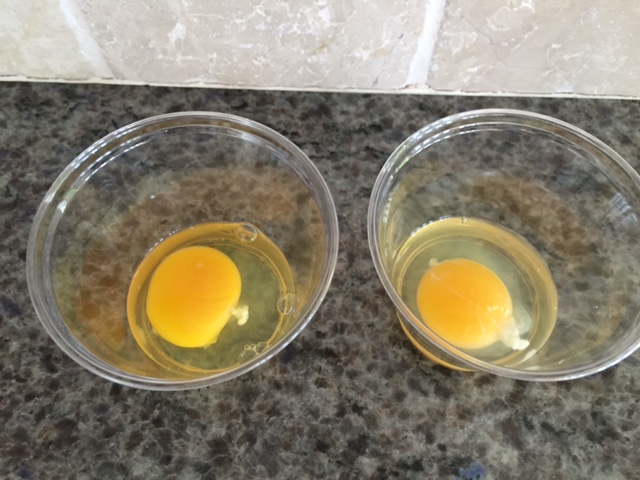
EggStra Special
Materials: 2 clear cups
1 brown egg
1 white egg

1. Pass around the eggs for the children to gently hold and observe.
2. Discuss how the eggs are alike and how they are different.
3. Ask the children to predict if they are alike or different on the inside.
4. Break each egg into a different cup and compare.
5. How are people like the eggs? Do people look alike on the outside? Are people the same on the inside?
*They made good scrambled eggs, too!


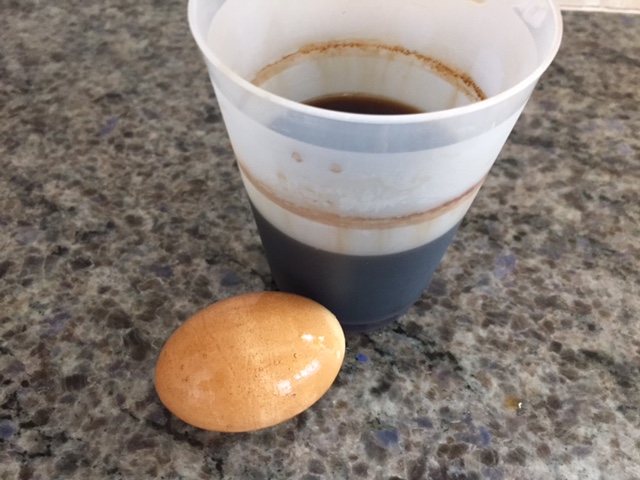
Happy Teeth
Materials: 4 raw white eggs
4 clear cups
tea, coffee, cola, water

1. Place each egg in a different cup and cover with one of the liquids.
2. Observe the eggs for several days to see what happens.
3. Remove the eggs and encourage the children to describe what happened to each egg and why.
4. How are teeth like the eggs? What will happen to your teeth of you drink tea and coffee all the time?
*Brush the eggs gently with toothbrush and toothpaste and see what happens.

Note! Brushing the egg with toothpaste didn't work too well. I might have left the egg in the coffee too many days. Or, maybe it was the toothpaste???


What’s in an Egg?
Materials: plastic egg
small toy animal that would hatch from an egg (fish, bird, alligator, frog, spider, snake, etc.)

1. Put the toy in the egg? Let the children shake it and try and guess what it is.
2. Have them make a list of all the animals they can think of that hatch from eggs.
3. Open the egg to confirm their guess.
*Make a t-chart of animals that come from eggs and animals that do not hatch from eggs.


Natural Dyes
Did you know you could dye eggs with berries, vegetables, and spices? There are many ideas on the internet if you want to give it a try.

Sunday, March 23, 2025

GREEN


The world is turning GREEN this time of year. Here are some ways to 
celebrate the color with a poem, reading, math, science, and art.

Green
by Dr. Holly

Green grass,
Green trees,
Green pickles,
Green peas.

Green grows
And green makes
Green lizards,
Green snakes.

Green leaves
Pop out in the spring;
Green is such
A lovely thing!

Color Recognition
(Visual Skills)
Sing this song to the tune of “Do You Know the Muffin Man?”
Do you see the color green, the color green, the color green?
Do you see the color green somewhere in the room?
Each child gets up and touches an object that is green. (Adapt the song for other colors, beginning sounds, etc.)

Hint! Cover a cardboard roller from a pants hanger with green paper to make a green pointer!


Remember (Listening Skills and Model Writing)
Read the poem to the children one time. Ask them to recall the different objects in the poem that are green. Write their responses on the board. Read the poem a second time and see how many more objects they can remember. Read over the list together.

If I Were Green (Oral Language)
Have children close their eyes and pretend they are green. What are they? Write this sentence at the top of a sheet of paper and run off a copy for each child. “If I were green I would be ________.” (Younger children can dictate their responses, while older children complete their own sentences.) Put their papers together to make a class book.


“Eye” Can Graph (Math Comparisons)
Pass a small mirror around the classroom. Encourage each child to look at their eyes and describe what color they are. Make a bar graph by cutting out eyes from construction paper. Let each child color in a section by the color of their eyes. What color do the most people have? What color do the least number have? Have children go home and look at their parents’ eyes. Are they the same color as their eyes?


Natural Green (Science Investigation)
Ask the children to think about all of the things in nature that are green. Write their list on the board as they call out objects. “Are all of these the same shade of green?” Take the class on a nature walk and have each child collect one “specimen” that is green. Bring their objects back in the classroom and compare. Are they all the same? Have children describe their differences. Can they sort the objects? Did they collect plants or animals? What animals are green? What time of year do you see the most green?

Green Collage (Creativity)
Provide children with green paint, green crayons, green markers, and green paper. Invite children to create a “green collage” on a piece of cardboard or a paper plate.

Scratch and Sniff Green (Word Recognition)
Give each child a heavy piece of paper. Write the word “green” on their paper with school glue. (An adult will need to do this for younger children.) Let each child take a spoonful of lime jello and sprinkle it over the glue. (Model how to shake it around and then dump off the excess.) After it dries, children can “scratch and sniff” the word green.

Thursday, February 6, 2025

MAKE A CLOUD

This is one of the coolest, easiest, most amazing science experiments that you can do in your classroom. (My husband was even impressed!!) Several teachers had told me about this activity, but seeing is believing and I finally got a bar of Ivory soap and gave it a try.

You will need:

1 bar of Ivory soap

1 plate (paper or glass)

microwave

Directions:

Put the bar of soap on a plate. Place in the microwave for 90 seconds. (I actually only did it for 70 seconds.) Observe. Talk about magic! The soap will turn into a mass that looks like a fluffy cloud. Remove, cool, and then explore the texture.


Hint! Invite the children to record what the soap looks like before and after microwaving.
*What caused the change?
*How does it feel?
*Can they still use it like soap?


There are many informative books about clouds, as well as whimsical tales like CLOUDY WITH A CHANCE OF MEATBALLS, IT LOOKED LIKE SPILT MILK, and THE LITTLE CLOUD.


I also found some free videos and resources if you want to learn more about clouds:

https://www.youtube.com/watch?v=eCumUup9vWQ

https://www.youtube.com/watch?v=EhLT11hKyok

https://www.youtube.com/watch?v=QAqeFSa60TE

http://www.weatherwizkids.com/weather-clouds.htm


Thursday, April 25, 2024

SEA SCIENCE

If you're going to the beach save some shells and sand. If you're not going to the beach you can still do these science activities.

Sink and Float
You’ll need a file folder, tub of water, and a collection of small objects (pencil, crayon, paper clip, ball, block, pebble, leaf, etc.) On one side of the file folder write “float” and on the other side write “sink.” Children place the items according to whether they think they will float or sink. They can then test each object by putting it in the water and readjusting where it should go.


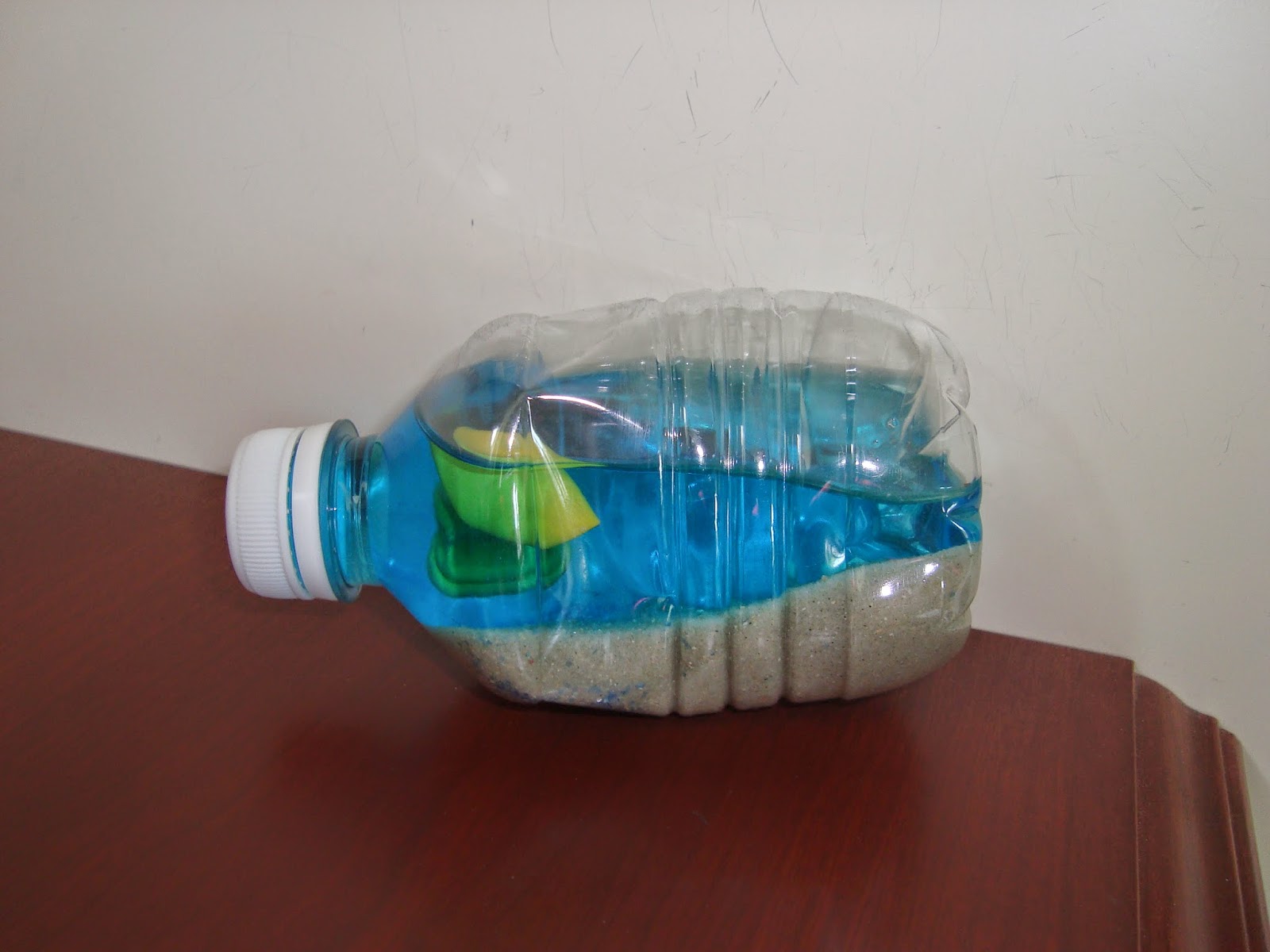
Beach Bottle
Put ½ cup sand in a bottle. Add some shells and fill half way with water. Add a drop of blue food coloring. Make a small fish from Styrofoam or a water balloon.


Wave Bottle
Fill 2/3 full with water. Add a drop of food coloring. Fill to the top with vegetable oil or Baby oil. Slowly rotate the bottle on its side to make waves.
*Add glitter if you like.


Sand Collections
Collect sand from various beaches in jars or bottles and label. Children can use a magnifying glass to observe the contents. How are they alike? How are they different?

*They could do descriptive writing about what they see in the bottle.

*A good way to get sand samples is to have children write friends and relatives who live near a lake or ocean and ask them to sand a small bag of sand to their class. (Be aware that there are some restrictions as to sending natural objects into the continental 48 states.)


Research

Purchase a bag of shells from a dollar store and put it out with a book about seashells. Children can look through the book and identify the shells.

Thursday, March 21, 2024

SPRING INTO WRITING

Spring is the perfect time to "grow writers"!

Spring Acrostic

After a spring walk, have children write the word spring vertically down the left side of their paper. Can they write a word (or sentence) for each letter that is a sign or symbol of spring? 


Hint! With younger children do this as an interactive writing activity.


Spring Poem
Have children fill in the words to create their own poem or a book.


SPRING
Spring looks like____.
Spring smells like ____.
Spring sounds like ____.
Spring feels like ____.
Spring tastes like ____.
I like spring!


Web
Brainstorm spring vocabulary words and then encourage children to make a web using words or drawings.


I Want to Go Out and Play Book
(Writing an opinion)
Give each child a sheet of paper and ask them to draw a picture of why they like to go outside. Ask them to write (or dictate) a sentence about their drawing. Make a cover that says, “I Want to Go Out and Play.” Put their pages together, hole punch, and insert book rings.


Sit and Write

(Descriptive writing)
Each child will need paper, a clipboard or cardboard to write on, and a pencil or crayon. Have children spread out in a comfortable area and write stories, poems, or descriptions of what they see.

Thursday, February 8, 2024

ART APPRECIATION

Aesthetic appreciation is probably not one of your standards, but I enjoyed introducing famous artists to my students. And the parents always got a kick out of their children talking about Picasso or Van Gogh. These strategies could easily be adapted to any teaching situation.

Art Appreciation 101

Each week choose a famous artist – anyone from Vermeer to Rockwell to Picasso. You can go online and download prints or check out books from the library. On Monday, give a little background about the artist and show one painting and give the title. Explain that artists always give a “name” or title to their work. “What title would you give this painting?” “What do you see?” “Why do you think the artist painted this?” “What do you think happened before?” “After?” “What do you think the people are saying?” “How does this painting make you feel?” “What materials did the artist use to create this picture?”


On Tuesday show another picture by the same artist. “Do you remember the title of yesterday’s painting? What do you think is the title of today’s painting?” Compare and contrast. “How are they alike?” “How are they different?”

Continue introducing a different painting every day.


*Use paintings to introduce new vocabulary words.
*Use paintings as springboards for writing stories or poems.
*Paintings can also be used for informative writing where children describe details.
*On Friday let children graph which painting they liked best. Why did you like that one? Is there one you did not like?

So, a funny thing happened because I was going to end this blog with an idea about Michelangelo. I was going to suggest you tell the children how he painted the ceiling of the Sistine Chapel on his back. Wouldn’t it be fun to tape paper under the table and let the children draw like Michelangelo? Well, guess what? That’s a myth. He actually stood up as he painted and then they attached the panels to the ceiling. You learn something new every day, don’t you?
*I still think it would be fun to tape paper to the bottom of a table and draw!


TIPS FOR ENCOURAGING YOUR CHILDREN TO EMBRACE THE ARTS!

Here's another great article from Laura Pearson that you can share with your families.

Photo via Pexels


Tips for Encouraging Your Children to Embrace the Arts


As parents, we strive to provide our children with well-rounded experiences that nurture their personal growth and development. One of the most powerful avenues for self-expression and imagination is the world of art. Whether it's painting, music, dance, or theater, the arts offer several benefits, including enhanced creativity, improved cognitive skills, and increased self-confidence. However, in today’s fast-paced world, it can be challenging to steer our children away from screens and towards artistic pursuits. That’s why Dr. Jean & Friends has compiled the following tips to help you encourage your children to embrace the arts.
 

Create a Multi-Purpose Arts and Crafts Room


Having a dedicated arts and crafts space in your home can go a long way toward fostering your child’s interest in the arts. A multi-purpose arts and crafts room provides an environment where your child can freely explore their creativity, focus on their projects, and immerse themselves in the artistic process. 


When designing your at-home art space, you’ll need to consider functional furniture and storage solutions, adequate lighting and ventilation, and child-friendly workspaces and seating options. You may also need to come up with some organizational solutions for art supplies, using storage bins, containers, or wall-mounted organizers to keep everything orderly. 


As you make further updates and modifications to your multi-purpose arts and crafts room, it's also essential to keep track of these changes for future reference. By documenting the improvements made, you can report them to an appraiser when selling your home in the future. Not only will this help showcase the added value of your property, but it can potentially secure a higher appraisal value by highlighting a dedicated creative space that might appeal to potential buyers.


Preserve and Share Your Children’s Artwork


Preserving your child’s artwork can provide your children with validation, recognition, and a sense of achievement that will encourage them to continue their artistic pursuits. Don’t have enough fridge space for all your children’s artwork? The Simplicity Habit suggests digitizing their creations to ensure they’re cherished for years to come. Scanning artwork is quick and convenient, especially if you want to share your children’s creations with friends and family. Just keep in mind that PDF files are ideal for sharing! Not only will digitizing your child’s artwork make it easier to share, but it will also safeguard their creations and preserve their artistic endeavors as lasting memories.


Explore Various Art Forms and Their Benefits


Exposing your children to various forms of art can help them discover their unique interests. For example, painting and drawing foster creativity, self-expression, and emotional development. Music is known for enhancing cognitive skills, memory, and emotional well-being. Dancing is great for boosting physical coordination and self-confidence, while crafting supports the development of fine motor skills and problem-solving abilities. Finally, acting or theater is fantastic for cultivating communication skills, empathy, and teamwork. 


By encouraging your children to have fun exploring various art forms, you’ll help them discover their strengths, express themselves, and find joy in the artistic journey. To get started, Artwork Archive suggests taking your children to art museums, plays, musical performances, and other displays of art in your community. When your child expresses interest in a specific art form, encourage them to give it a try! This might mean signing them up for private lessons, joining group classes, or simply purchasing some art supplies to use at home.


Encouraging your children to embrace the arts is a great way to nurture their creativity, boost their confidence, and enrich their overall development. By creating a dedicated arts and crafts room, digitizing your children’s artwork, and exposing your children to various art forms, you can help them discover their unique interests and support their artistic passions.


Whether you’re looking for educational tips or you just need a break, Dr. Jean & Friends is here to help! Feel free to post a reply if you have any questions