photo 3am_dj_home_zps919fb85e.png photo 3am_dj_about_zps7cce4c75.png photo 3am_dj_website_zps73051235.png photo 3am_dj_ss_zps6759ec2a.png photo 3am_dj_bs_zps43e27832.png
Showing posts with label Observations. Show all posts

Monday, May 18, 2026

WRITE RIGHT OUTDOORS

What better place to do REAL writing about REAL experiences than out on the playground!

Cameras
Cut 5" off the top of lunch bags. Give children scrap paper and markers to decorate like a camera. (Oops! Some of them might not know about cameras any more so you might need to explain that to them!!) Punch holes and tie on string so the camera can be worn around the neck. Cut 4 1/2" squares and place inside the camera. Take children on an nature walk and invite them to take "photos" of things they see. When you return to the classroom ask them to draw their favorite thing on the paper in their camera. Next, ask them to write or dictate a sentence about their "photo."

*Note! Tie this into science themes by having them take "photos" of signs of summer, animal homes, living objects, and so forth.


Opinion - What I Like to Do Outside

Make blank books by folding two sheets of paper in half and stapling the side. Give children the books, something to write on, and inspire them by sitting under a tree on the playground. 


Descriptive – My Senses 

Prepare a worksheet with the following:


I see _______. 
I hear _______. 
I smell _______. 
I touch ______. 


Give children a clipboard and encourage them to explore the playground as they fill in the blanks (write or draw pictures). Let children share their findings with classmates and then put their pages together to make a class book.


Narrative - Cartoon

Prepare cartoon frames for children with 3 or 4 sections. Have them use the cartoon frames to illustrate something they have done outside. Demonstrate how to add dialogue bubbles so the characters can talk.


I Wonder Research

Make “thinking pads” for children by cutting paper into fourths and stapling several sheets together. Explain that you will take a “wonder walk” on the school grounds. If they see something they’d like to know more about, they can draw a picture or write it on their thinking pads. Let children share what they recorded when you return to the classroom. Brainstorm how they can find out more about their topic. 
*Let them do “research” with their parents for homework.

Sunday, October 5, 2025

I SEE THE MOON!

I SEE THE MOON!
I SEE THE FULL MOON!
I SEE THE SUPERMOON!
OCTOBER 6, 2025

I see the moon
And the moon sees me...

From the time children are toddlers, most of them are fascinated with the moon. The moon is FREE and it belongs to EVERYONE! Wouldn’t it be interesting to have children look at the moon every night for a month with their parents and draw a picture of what the moon looks like? What a meaningful way for families to do a little science together.

Facts for kids about the moon:

The moon goes around the earth.

The moon has no light, but it reflects the sun’s light.

The light of sun on the moon creates the different phases of the moon.
That’s why it looks different to us throughout the month.

It’s called a new moon when you can’t see it.

When the moon gets a little larger at night it’s called waxing.

As the moon gets smaller it’s called waning.

The moon is always up in the sky, but during the day when the sun is bright you can’t see it.

*What other things can you see in the sky? Take children outside and let them draw pictures of the things they see.

*Is there really a man in the moon? The moon has craters that make it look like a face.
Give children uncolored play dough and let them make a moon/pancake. Have them make craters in their moon with a pencil eraser or the end of a marker.

https://www.freehomeschooldeals.com/free-printable-moon-phases-mini-book/


Don’t forget to read two of my favorite books GOOD NIGHT, MOON, and HAPPY BIRTHDAY MOON.


Wednesday, February 5, 2025

GET ON MY CLOUD

You can spend a lot of money on science equipment for your classroom, or just go outside and look up in the sky and you’ve got a lesson that will intrigue your kids. Clouds, glorious clouds! They change daily and are great way for you students to be scientists as they observe, predict, and record.

Let’s Get Started

Ask your students what they know about clouds.

Are all the clouds the same?

Why are there different kinds of clouds?

Why are most clouds white?

What makes clouds move?


HOW CAN WE FIND OUT?

This is a perfect springboard for demonstrating how to find new information by searching on the internet, going to the library, asking their parents, and so forth.

Cloud Watch
Give children clipboards, blue paper, and a white piece of chalk. Go out on the playground and challenge them to draw the clouds in the sky. Can they predict what the weather will be?


My Cloud Book
Fold 2 sheets of paper in half and staple to make a cloud book for each child. Ask them to write the name of a different cloud on each page and illustrate it. (Older children could write descriptive sentences.) On the last page ask them to name their favorite cloud and tell why they like it.


Class Graph
Each day look at the sky and graph the type of clouds in the sky.

Flip Book
Make a flip book with the four basic clouds. (Put “flip book” in my search engine to see how to make this book.)

Cotton Clouds
Challenge children to make the different types of clouds out of cotton.


Homework
Look at the sky with your parents. Name the cloud formations that you see.


Types of Clouds

Cirrus Clouds
Cirrus clouds look like wispy streaks high up in the sky. If the sky is blue with a few cirrus clouds it’s going to be a nice day.

Cumulus Clouds
Cumulus clouds look like puffy white cotton balls in the sky. When they turn dark it means it’s going to rain.

Stratus Clouds
Stratus clouds look like a dark blanket in the sky. Look for rain or snow when it is cold.
Nimbus Clouds (Also known as cumulonimbus)

Nimbus Clouds (Also known as cumulonimbus.)
Nimbus clouds are dark and have rain or snow falling from them.

*FOG
Can you walk through a cloud? Yes, you can! Fog is a cloud on the ground so when you walk in the walk you are walking through a cloud!

Come back tomorrow and I'll tell you how to make a cloud!

Wednesday, September 25, 2024

LEAF LABS

Take advantage of the science lab on your playground with these leaf activities.


Leaf Hunt
Give each child a lunch sack and let them collect 2 or 3 leaves from the ground. Bring these back in the classroom and sort by shape, color, etc. You could also graph the leaves by shape. (Whenever you collect items outside emphasize the importance of taking things from the ground. Return the objects to where you found them after exploring with them in the classroom.)

Science Center
Let children investigate leaves in the science center with a magnifying glass or microscope. Ask children to draw the enlarged leaf.

Hint! You can also take a photo of a leaf with your phone and enlarge it to show the veins and details.

Research
Check out a leaf identification book from the library. Can children match up their leaves with those in the book to identify which tree they came from?

Leaf Rubbings
Lay a sheet of paper on top of a leaf. Remove the paper from an old crayon and rub the side over the leaf to make a print.Hint! Use rubber cement to glue the leaf to the table. It will be easier for the children to make a rubbing, and you can just rub off the rubber cement after the activity.


Leaf Book
Let each child find a "favorite" leaf. To preserve, place the leaf in a sheet of newspaper and put a book on top overnight. Place the leaf in a zip baggie. Encourage children to dictate or write a sentence about their leaf. 

*Put several baggies together to make a book.

I Wonder Why?
Brainstorm why leaves turn colors and fall off trees in the fall. Have children go home and do a little research with their parents and report results in class the following day.

Deciduous Trees (Sandra Kelley)
Tune: "Do Your Ears Hang Low?"
Do your leaves fall down?
Do they tumble to the ground?
Do you lose your leaves in the fall?
Then you are deciduous that we know
because in the fall your leaves all go!

*What's the difference between deciduous trees and evergreen trees? Take a nature walk and ask children to identify both types of trees.

Friday, March 15, 2024

"EGG" SPERIMENTS

There's more to eggs than dying them!


Rubber Egg
Materials: clear jar with lid
vinegar
raw egg in its shell

1. Put a raw egg in a jar and then cover it with vinegar. Screw on the lid and set it aside for 3-5 days.
2. Observe the egg each day and describe what is happening to it.
3. After 3-5 days, the eggshell should be almost invisible. Remove the egg, rinse it off, and hold it up to the light. How does the shell feel? Hold the egg several inches from the table and drop it. Does it break?


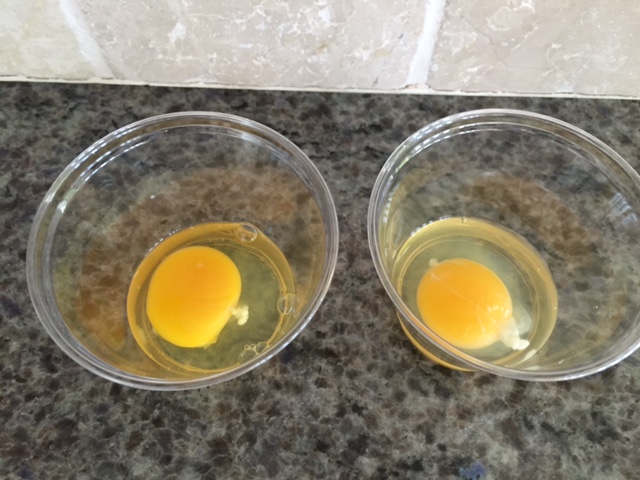
EggStra Special
Materials: 2 clear cups
1 brown egg
1 white egg
1. Pass around the eggs for the children to gently hold and observe.
2. Discuss how the eggs are alike and how they are different.
3. Ask the children to predict if they are alike or different on the inside.
4. Break each egg into a different cup and compare.
5. How are people like the eggs? Do people look alike on the outside? Are people the same on the inside?
*They made good scrambled eggs, too!

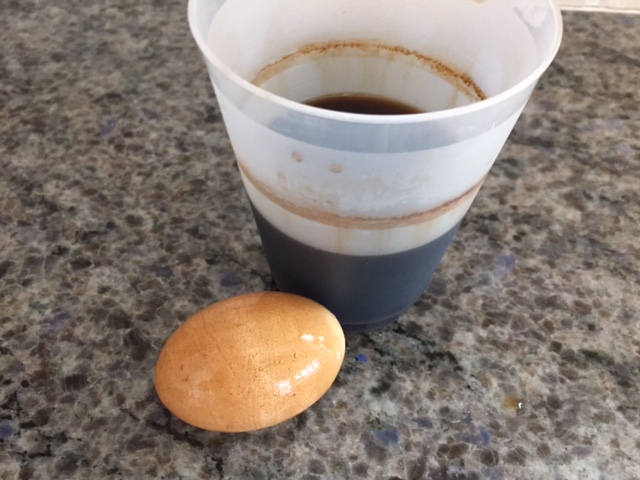
Happy Teeth
Materials: 4 raw white eggs
4 clear cups
tea, coffee, cola, water

1. Place each egg in a different cup and cover with one of the liquids.
2. Observe the eggs for several days to see what happens.
3. Remove the eggs and encourage the children to describe what happened to each egg and why.
4. How are teeth like the eggs? What will happen to your teeth of you drink tea and coffee all the time?
*Brush the eggs gently with toothbrush and toothpaste and see what happens.


Note! Brushing the egg with toothpaste didn't work too well. I might have left the egg in the coffee too many days. Or, maybe it was the toothpaste???

What’s in an Egg?

Materials: plastic egg
small toy animal that would hatch from an egg (fish, bird, alligator, frog, spider, snake, etc.)

1. Put the toy in the egg? Let the children shake it and try and guess what it is.
2. Have them make a list of all the animals they can think of that hatch from eggs.
3. Open the egg to confirm their guess.
*Make a t-chart of animals that come from eggs and animals that do not hatch from eggs.

Natural Dyes
Did you know you could dye eggs with berries, vegetables, and spices? There are many ideas on the internet if you want to give it a try.

Tuesday, March 5, 2024

LOOK! LOOK!

This is a meaningful way to encourage children to observe nature. It’s also a powerful way for them to make print connections and write descriptive sentences.

WHAT?

cardboard paper towel rolls, string, hole punch, wide packaging tape, markers, crayons

HOW?

1. Cut the cardboard rollers into 4” sections and tape together to make binoculars. Punch a hole in each side and tie on a piece of string that can easily go over children's heads.


2. Let the children decorate their binoculars with markers.
3. Go on a nature walk and encourage children to observe through their binoculars. What do you see when you look up? What do you see when you look down?
4. When you return to the classroom give each child a sheet of paper with two large circles. Ask them to draw their favorite thing they saw through their binoculars in the circles.
5. Older children can write descriptive sentences about what they saw. 


Younger children can dictate this sentence:
(Child’s name) saw (what they saw).
Encourage each child to read over the sentence with you as you point to the words.

6. Make a cover for the book that says “Look! Look!”
Add a page that says “Authors and Illustrators” where children sign their names. Put their pictures together, bind, and you’ll have a wonderful class book that all your students will want to read.
*Let one child take the book home each evening to share with their families.

Hint! Use binoculars to focus on themes you are studying in science. This time of year they could start looking for signs of spring. When you are studying birds they could try and identify different birds.

Wednesday, February 7, 2024

GET ON MY CLOUD!

You can spend a lot of money on science equipment for your classroom, or just go outside and look up in the sky and you’ve got a lesson no matter what your teaching situation might be.

Clouds, glorious clouds! They change daily and are great way for you students to be scientists as they observe, predict, and record.

Let’s Get Started

Ask your students what they know about clouds.

Are all the clouds the same?

Why are there different kinds of clouds?

Why are most clouds white?

What makes clouds move?

HOW CAN WE FIND OUT?
This is a perfect springboard for demonstrating how to find new information by searching on the internet, going to the library, asking their parents, and so forth.

My Cloud Book
Fold 2 sheets of paper in half and staple to make a cloud book for each child. Ask them to write the name of a different cloud on each page and illustrate it. (Older children could write descriptive sentences.) On the last page ask them to name their favorite cloud and tell why they like it.


Class Graph
Each day look at the sky and graph the type of clouds in the sky.

Flip Book
Make a flip book with the four basic clouds. (Put “flip book” in my search engine to see how to make this book.)


Cotton Clouds
Challenge children to make the different types of clouds out of cotton.


Types of Clouds

Cirrus Clouds
Cirrus clouds look like wispy streaks high up in the sky. If the sky is blue with a few cirrus clouds it’s going to be a nice day.

Cumulus Clouds
Cumulus clouds look like puffy white cotton balls in the sky. When they turn dark it means it’s going to rain.

Stratus Clouds
Stratus clouds look like a dark blanket in the sky. Look for rain or snow when it is cold.
Nimbus Clouds (Also known as cumulonimbus)

Nimbus Clouds (Also known as cumulonimbus.)
Nimbus clouds are dark and have rain or snow falling from them.

*FOG
Can you walk through a cloud? Yes, you can! Fog is a cloud on the ground so when you walk in the walk you are walking through a cloud!

Homework
Look at the sky with your parents. Name the cloud formations that you see.

Tuesday, February 6, 2024

MAKE A CLOUD

It's about time for a science experiment. This is one of the coolest, easiest, most amazing science experiments that you can do in your classroom.

*Your families would probably love the directions so they can repeat this at home! 

You will need:

1 bar of Ivory soap

1 plate (paper or glass)

microwave

Directions:
Put the bar of soap on a plate. Place in the microwave for 90 seconds. (I actually only did it for 70 seconds.) Observe. Talk about magic! The soap will turn into a mass that looks like a fluffy cloud. Remove, cool, and then explore the texture.


Hint! Invite the children to record what the soap looks like before and after microwaving.

*What caused the change?


Cloud Watch
Give children clipboards, blue paper, and a white piece of chalk. Go out on the playground and challenge them to draw the clouds in the sky. Can they predict what the weather will be from observing the clouds?


There are many informative books about clouds, as well as whimsical tales like CLOUDY WITH A CHANCE OF MEATBALLS, IT LOOKED LIKE SPILT MILK, and THE LITTLE CLOUD.


I also found some free videos and resources if you want to learn more about clouds:

https://www.youtube.com/watch?v=eCumUup9vWQ

https://www.youtube.com/watch?v=EhLT11hKyok

https://www.youtube.com/watch?v=QAqeFSa60TE

http://www.weatherwizkids.com/weather-clouds.htm

Come back tomorrow for more science activities to do with clouds.

Wednesday, March 15, 2023

CLIP BOARDS

“Ownership” is important to children. They like their own space and materials. Yes, you can buy clipboards, but don’t you think that children will find it more meaningful if they get to decorate their very own clipboard. 

What? 9” x 12” piece of corrugated cardboard, 1” butterfly clip


Why? writing, science observations, sight words, surveys

When? Learning center, independent, partner work

How? Attach a butterfly clip, insert paper, and let the writing begin!

Use the clip boards for:

Observations (weather, nature walk, clouds, etc.)

Surveys (favorite food, ice cream, animal, sports team, etc.)

Write the room (2 syllable words, seasonal words, nouns, shapes, letters, etc.)

Read the room (check off words they find, shapes, letters)

Note taking (write or draw pictures as they listen to a book or watch a video)

Interviews (parents, grandparents, friends)

What I learned (record what they learn as you do a unit of study)


Lists
And here's a LIST of lists children can make on clipboards.

List of what they are thankful for.

List of their favorite books, songs.

List of their favorite foods.

List of their favorite subjects at school.

List of their favorite animals/pets.

List of their favorite sports or games.

List of what they can do if they finish their work early.

List of things that make them happy.

List of how to be a buddy/friend.

List of “cheers” and “goals.”

Sunday, February 21, 2021

MAKE A CLOUD

It's about time for a science experiment. This is one of the coolest, easiest, most amazing science experiments that you can do in your classroom or virtually.
You will need:

1 bar of Ivory soap

1 plate (paper or glass)

microwave

Directions:
Put the bar of soap on a plate. Place in the microwave for 90 seconds. (I actually only did it for 70 seconds.) Observe. Talk about magic! The soap will turn into a mass that looks like a fluffy cloud. Remove, cool, and then explore the texture.


Hint! Invite the children to record what the soap looks like before and after microwaving.
*What caused the change? 

Cloud Watch
Give children clipboards, blue paper, and a white piece of chalk. Go out on the playground and challenge them to draw the clouds in the sky. Can they predict what the weather will be from observing the clouds?  


There are many informative books about clouds, as well as whimsical tales like CLOUDY WITH A CHANCE OF MEATBALLS, IT LOOKED LIKE SPILT MILK, and THE LITTLE CLOUD. 


I also found some free videos and resources if you want to learn more about clouds:

https://www.youtube.com/watch?v=eCumUup9vWQ

https://www.youtube.com/watch?v=EhLT11hKyok

https://www.youtube.com/watch?v=QAqeFSa60TE

http://www.weatherwizkids.com/weather-clouds.htm


Come back tomorrow for more science activities to do with clouds.