photo 3am_dj_home_zps919fb85e.png photo 3am_dj_about_zps7cce4c75.png photo 3am_dj_website_zps73051235.png photo 3am_dj_ss_zps6759ec2a.png photo 3am_dj_bs_zps43e27832.png

Sunday, September 17, 2017

GRANNY AT THE FAIR

Hope you can join me this Wednesday, 9/20,
for Facebook Live at Five!  It's going to be a fall festival of ideas!

In some areas of the country the county fair or state fair are an exciting event that comes once a year. However, your students will get a kick out of singing this song all year long. It's a great brain break - if you don't believe me just see how challenging it is for you to do it!!!
                                            
Granny at the Fair (Echo chant - children repeat each line.)
My granny went
To the county fair.
And she bought
A rocking chair. (Begin rocking back and forth.)
And she rocked, and she rocked, and she rocked, and she rocked.

And she bought a fan there... (Begin fanning yourself with right hand.)

And she bought some scissors there…(Cut with left hand.)

And she bought some gum… (Begin chewing.)

And she blew a bubble there…

And she blew, and she blew, and she blew, and POP! (Extend hands by mouth.)

                  
Here's my new video on youtube:

http://bit.ly/drjean_granny_fair

Saturday, September 16, 2017

ROCK ON!

"Collect Rocks Day" is September 16th, but rocks are everywhere every day. Rocks can be a perfect spark for scientific investigations if you add a little STEAM. When you collect rocks or look at rocks, explain that scientists who study rocks are called geologists. Remind the children that they can be geologists, too!
                          
Take a nature walk and invite each child to pick up ONE rock. You might need to limit the size to a rock that will fit in their hand. Take the rocks to the classroom and ask the children to observe their rock for one minute without talking. Go around the room and ask each child to make one statement about their rock. Encourage them to use descriptive words.

*Ask older children to write descriptions about their rocks.

*Place the rocks in a basket. Gently shake the rocks and then pass the basket around the class to see if each child can find his rock.

*Let the children sort the rocks. What was their sorting rule? Can they sort them another way?

*Check out a book on rocks from the library. Place it in the science center along with a magnifying glass. Ask the children to do research and identify the different rocks they collected. (Remind the children to return the rocks to nature after they have finished investigating them.)

*Are rocks older than you or younger than you?

*Make a list of all the things that rocks are used for. 


*Have children make a design and build something with rocks.

*Let children paint rocks or use other art media to make paperweights.

*Place rocks in the math center for children to explore with the balance scale.

*For homework, ask families to take a walk and look for different kinds of rocks in their neighborhood.

*Encourage children to start their own rock collection with this idea. Cut an egg crate in half. Attach a pipe cleaner handle and use it to collect little rocks and pebbles.

Friday, September 15, 2017

LET'S MAKE A HAT TODAY!

September 15th is “Make a Hat Day,” but kids love to make hats and wear hats any day of the year. Here are some ways that you can tie in hats with themes or skills you are working on.

Sentence Strip Hat 
Materials: sentence strips or heavy paper cut in 2 ½” x 24”, markers, crayons, stickers 
Directions: Let children decorate the sentence strip and then fit to their head and staple or tape in place. 

Children can write letters, numerals, or vocabulary words on the headband. Sure beats doing a worksheet and accomplishes the same thing! 
                         
Children can add ears or other details to create an animal from a story. Let them wear their hats to retell the story.  

*Wouldn’t this be more fun than a written book report?

How about an “all about me” headband? 

Children can make an autograph hat with friends’ names. 

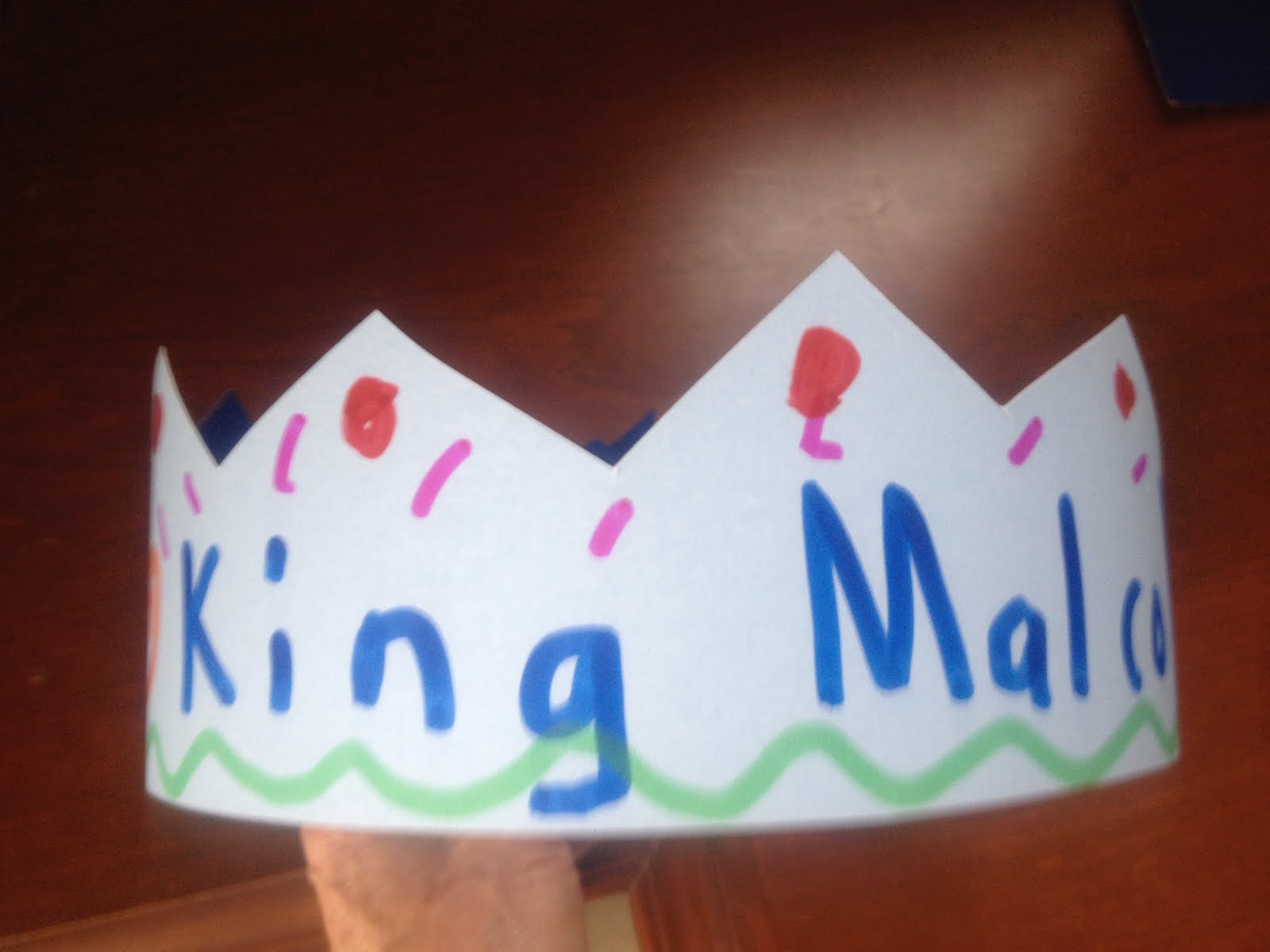
If you cut a zigzag line on one side every child can be king or queen for the day! 
                        
Hint! Two brad fasteners and a rubber band will make the hat easier to adjust to the head, but it’s a lot more trouble. 

                                  HATS OFF TO YOU TODAY!

Thursday, September 14, 2017

LETTERS MAKE WORDS

The idea of manipulating letters and sounds to make words is a key to beginning reading.

Name Puzzles

Write children’s names on a sentence strip. Cut between the letters. Place the puzzle pieces in an envelope. Write each child’s name and glue their photo to the front of the envelope. Children can practice putting the puzzles together and reading friends’ names.
                                    
*Make name puzzles with Unifx cubes.
Cut Up Sentences
Write a simple sentence on a sentence strip. (For example, “We like to read books.”) Place the sentence in a pocket chart and invite the children to read it with you as you move your finger from left to right under the words. Say, “I’m going to cut this sentence up,” as you cut between the words. Place the letters in a paper bag and pretend to shake them up. Let children come up and select a word and place it in the pocket chart. Guide them as they unscramble the words and make the sentence. Call their attention to the capital letter “W.” There’s always a capital letter at the beginning of a sentence. Point out the period and remark, “You’ll always find a period or punctuation at the end of a sentence.”
              
*Let each child complete the sentence “I like _____.” Have them cut between their words and place them in a bag. Can they put their own sentence back together?

Happy Birthday 
Whenever a child has a birthday, you’ll be able to celebrate and learn at the same time with this idea. Write each line of “Happy Birthday” on a sentence strip. Cut between the words. Arrange each line on a pocket chart. The birthday child gets to scramble the words and then friends sing along the silly lyrics. Arrange the words in the correct order and sing again.
                                     
Spaceman
Glue the figure of a “spaceman” to a jumbo craft stick. (I found my little guy at google images.) Use spaceman to find spaces on classroom print. Sing the Batman tune as you go, “Da-da-da-da-da-da-da-da Spaceman!” Encourage children to use spaceman when writing.

Wednesday, September 13, 2017

TOP TO BOTTOM - LEFT TO RIGHT

Here are some tricks and tips for helping children learn basic concepts about print.

Magic Fingers 

Have children hold up their pointer and explain that it is their “magic finger” to help them read. Put a little spritz (magic lotion) on their finger. Use the finger to touch the front of the book and the back of the book. Touch the top of the page and the bottom of the page. Sweep your magic finger under each line from left to right.

When You Read You Start at the Top
Children can sing this song to the tune of “London Bridge” as they practice the movements:
          When you read you start at the top,
          Start at the top,
          Start at the top.
          When you read you start at the top
          And go to the bottom of the page.
          When you read go left to right,
          Left to right,
          Left to right.
          When you read go left to right
          And then go to the next line.

Yummy Pointers
Give children Bugles to put on their fingers to practice following a line of print. They can eat them when they are finished.
                                           
*Pretzel sticks also make edible pointers.

Envelope Bookmark 
Cut a diagonal corner off an envelope. (One envelope will make 4 of these.) Let children decorate these with markers. Practice reading books and putting the bookmark on the upper corner to “save your place.”
     
Simon Says
Each child will need a book to play this variation of “Simon Says.”
          Simon Says show me the front of the book.
          Simon Says show me the back of your book.
          Simon Says show me the first page in your book.
          Simon Says show me the last page in your book…

Talking Stories 
Give each child a sheet of paper. (Younger children will need large sheets.) Demonstrate how to draw a green line down the left side. “Green means GO! We’ll always start there.” Demonstrate how to draw a red line down the right side. “Red means STOP! We’ll always stop when we get to that line.” Explain that they can use their crayons to tell a story. “First, let’s walk to the zoo. Put your crayon on the green line at the top of your page. ‘Walk’ it across your paper. When you get to the red line stop. Go back to the green line. There are some ducks swimming. Make your crayon ‘swim’ across the page.” Continue telling the story below as children make the symbols. When you are finished, challenge the children to retell/read the story by looking at the symbols.

          A Walk in the Zoo
          Let’s walk to the zoo.
          See the ducks swim.
          The monkeys are swinging in circles.
          The snakes are wiggling.
          The kangaroos are hopping.
          The elephants are stomping down.
          The seals are splashing.
          The lion roars.
          Oh, it’s late!
          We better run home!
                                                                         

Tuesday, September 12, 2017

GROUP READING

Here are some meaningful ways to encourage children to read throughout the day.

Morning Message

Write a message to the children about special activities each morning before they arrive at school.
Hint! Children will get a kick out of this message if it is written by a class mascot (aka stuffed animal or puppet).

          Good morning, friends!
          Today is Tuesday, September 12.
          It’s going to be a terrific day!
          We have P.E. with Ms. Coleman
          and it’s Joshua’s birthday.
          I’m so glad you’re here.
                   Love, Ted E. Bear
      
Choral Reading – Children read together.
Shadow Reading – Teacher reads a line and then students repeat.
Take a Turn - Divide children into groups and each section reads a different line. (For example, let boys and girls alternate reading lines.)

Read with me IF you…like chocolate ice cream
like broccoli          have a dog
can ride a bike      are wearing red


Mirror Mini Message 
Write a short message each day on a classroom mirror with a dry erase marker. It might be a “teaser” to interest children in a book you are going to read, it might praise a child for a special accomplishment, or it might be a reminder to whisper in the hall. 

Pocket Chart 
Use a pocket chart to list songs, nursery rhymes, or cheers children select each day.

Poems and Songs
Write words to poems, songs, and finger plays on posters and follow along as you sing and chant.

Big Books
Rereads of big books will develop children’s confidence and interest in reading.

Voice Box
Make copies of fluency cards (free on drjean.org) and place them in a small box. Let children choose a card and then reread books or poems using that “voice.”


Monday, September 11, 2017

AUTHOR AND ILLUSTRATOR

Of course, I have a song to help children identify the author and illustrator of a book.

Hi Ho Libario (Tune:  “The Farmer in the Dell”)
The author writes the book.
Hi ho librario
The author writes the book.

The illustrator draws the pictures…

The publisher makes the book…

The parts of a book...
Hi ho librario, we know the parts of a book.

Class Books 
Make class books and include a page for the children to sign their names as authors, illustrators, or authors and illustrators. Include a copyright date and the school as the publisher. Don’t forget a title page and “The End.” You might also want to add a page for “comments” and let children take the book home to share with their families. You could even add a dedication or an ISBN number!


Blank Books 
When children make individual books encourage them to include the author, illustrator, date, publisher, etc.

Author/Illustrator Party 
Invite children to write and illustrate original stories. You could integrate computer skills and editing in the process. Plan a party where each child can share her book and read a page to the audience. You could invite families or another class to your party. Let children make invitations, plan refreshments, etc.

Author Study 
Keep a basket in your classroom library for a variety of books by a specific author. Compare the different books that she writes. How are they alike? How are they different? Do an internet search to find out more about children’s favorite authors.

Skype an Author 
Go to http://skypeanauthor.wikifoundry.com/ or http://teacher.scholastic.com/products/tradebooks/inviteanauthor.htm to discover how to connect with an author.