photo 3am_dj_home_zps919fb85e.png photo 3am_dj_about_zps7cce4c75.png photo 3am_dj_website_zps73051235.png photo 3am_dj_ss_zps6759ec2a.png photo 3am_dj_bs_zps43e27832.png

Thursday, November 14, 2019

COOPERATIVE WORK GROUPS

Cooperative work groups provide children with the opportunity to set goals, plan, communicate, problem solve, and be creative.  

It might be interesting to assign roles, such as the supervisor (leader), secretary (takes notes), and reporter (shares information), cheerleader (team member who encourages).

Hint! To enable different students to have leadership roles, you could have a “lucky draw” for these positions. Write “supervisor,” “secretary,” “reporter,” and “cheerleader” on jumbo craft sticks. Place in a can, shake, and then let team members chose a random role.
                    

Here are a few opportunities for small groups:

Do a social studies or science project around an assigned theme. They could make a poster, write a report, do a skit, make a video, etc.

Brainstorm! Make lists!

Do surveys and collect data.

Write a play, story, poem, rap, or song and present it to the class.

Play a board game.


Work on a science experiment together.

Write letters to politicians, authors, or other famous people.

Make books together.

Answer questions. Teacher asks a question and they get together to come up with an answer they agree on.

Work on an invention.

Do an internet search.

How about a PowerPoint or video?


Pass the Pat
Encourage children to recognize the efforts of each member in their group. Have them stand in a circle and take turns patting each other on the back and saying a contribution each team member made.


Upper Grade Buddies  
Do collaborative learning activities with different groups.  Kindergarteners could be paired with 4th graders or classes on the same grade level could be partnered. 

Wednesday, November 13, 2019

BUDDY TIME

One of the best ways to help children learn to work with others is with "buddy time." Besides, it's more fun to learn with a friend than it is alone. Take a look at this list and you'll probably find at least five strategies you can use in your classroom this week.

Buddy Sticks
If you let children choose who they want to work with you might end up with two that shouldn't be together or someone that is left out. Buddy sticks are a great solution!


Put like stickers on the bottoms of two craft sticks.  (You will need as many sticks as there are children in your classroom.)  Place sticks in a plastic cup with stickers facing down.  Children choose a stick and then find the person whose stick matches theirs.  That is their partner.

*If there is an odd number, let the last child choose the group she wants to work with.

Weekly Study Buddy

To make buddy management a little simpler, have children use buddy sticks on Monday to find their "study buddy" for the week.  Whenever you want them to work with a partner, just say "study buddy" and you'll be all set!

Elbow Buddies

Children extend elbows and the first person their elbow touches is their partner.


What can children do with a study buddy?

Read together.

Look at books or magazines together.

Retell a story. They can also discuss who, what, where, when, why, the problem, resolution, what might happen next, etc.

Whisper a prediction in each other’s ear.

Review information after a science lesson, social studies, etc.

Clean up a center or each other’s desks.

Read around the room. Give them pointers and empty glasses frames for more fun.

Write the room. Give them clipboards and ask them to write words that would reinforce a skill you are working on. For example, they could write compound words, words with the “th” diagraph, two syllable words, etc.

Sing a song or say nursery rhymes together.
             
Help with dressing, such a zipping coats and tying shoes.

Draw a picture together. They could draw their favorite part of a story, illustrate a poem, draw a picture of their teacher, and so forth.

Build together with blocks, Legos, etc.

Play with play dough or clay together. They can make objects that begin with a certain sound, shapes, sets, etc.

Play a computer game.

Review flashcards.


Partner Pop Up Q & A 
Students stand and face their study buddy. The teacher poses a question. The students talk it over, agree on an answer, and then stoop down. When the teacher sees all students down she says, “Pop!” The students pop up and say their answer out loud. 

Tuesday, November 12, 2019

GENIUS HOUR

                                  
Genius hour is an exciting movement that might actually help children develop meaningful job skills that I discussed yesterday. It’s based on Google’s 20% policy which allows engineers to spend 20% of their time on any project they are interested in. It’s estimated that half of Google’s projects (such as Gmail) have been created during this time period. Other corporations are discovering that giving employees one hour a week really does increase creativity.

I know that many of you are frustrated by cookie cutter curriculums and time schedules, but this might be a way to help your administration support a little creativity and exploration in your classroom. Can't we give kids at least one hour a week to find some joy in learning what they WANT to learn?

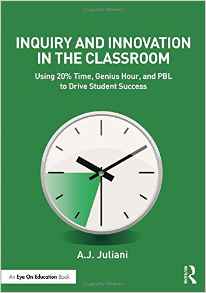
A.J. Juliani wrote this book that explains the goals and success of INQUIRY AND INNOVATION IN THE CLASSROOM. The three pillars of genius hour are:

     1. You have to research something.
     2. You have to create something.
     3. You have to present something.


Here's what Kid President says:

https://www.youtube.com/watch?v=l-gQLqv9f4o

Here’s another video introduction to genius hour:
https://www.youtube.com/watch?v=NMFQUtHsWhc

You might also want to check out this website:

geniushour.com


My idea of genius hour in kindergarten would be an hour of open-ended learning centers every Friday afternoon. Wouldn’t it be wonderful to just let kids play and explore for one hour a week?  That one hour could truly make a difference in a child’s learning, sense of self worth, attitude about school, and their life!!!!

Monday, November 11, 2019

DATA + DEVICES DO NOT EQUAL JOB SKILLS!

School districts may be winning the battle with higher test scores, but they might actually be losing the war in terms of well-rounded and educated citizens.


The studies of job skills major corporations look for in employees include:

Verbal communication
Teamwork – ability to work with others
Problem solving
Creativity
Self-motivation
Written communication
Positive attitude
Flexibility

Hmmm?? Do you see test scores, rigor, or technology in the above?  The roots of what our children need one day to be successful and healthy adults are what we promote through active learning, working/playing with classmates, centers, games, and creative and open-ended activities.

When children have time to express themselves and teachers have time to listen they are developing verbal skills.

When they play games and do partner projects they are developing teamwork.

When they make choices and aren't afraid to make mistakes they are problem solving.

When they have materials and freedom they can develop creativity.

When they are allowed to make choices to explore areas they are interested in they will be self-motivated.

When they take notes, set goals, and record what they are learning in journals they are developing written communication.

When they laugh, have fun, sing, and play they will have a positive attitude.

And when they learn that there are many ways to be wonderful they will develop flexibility.

Shut your door and teach children what they really need when they grow up!!!  

Sunday, November 10, 2019

TODAY IS SUNDAY


And here's the Spanish version that my webmaster Alex May created.

   http://bit.ly/drjean_hoydomingo

                                               
Song Visuals    
You can also write the days of the week on seven paper plates as shown. Glue pictures to the plates or let children draw the foods.  Pass these out to seven children and let them stand in front of the room and hold up their plate at the appropriate time in the song.


https://drive.google.com/file/d/0B1SnEagA4jljalMxc0ZobWJOY1E/view?usp=sharing

Calendar Time
Every morning you can sing, "Today is day of the week.  Day of the week (special like music, PE, art).  All you lucky children, well, that's O.K."

My Favorite Foods
Fold two sheets of paper in half and staple to make a book. The children can write a different day on each page and then draw their favorite foods. (The teacher who shared this idea years ago said one little boy who was a picky eater drew macaroni and cheese on every page!)


Saturday, November 9, 2019

BUTTON, BUTTON, WHO'S GOT THE BUTTON?

November 16 is Button Day…for real! Here are some thoughts on how to integrate buttons into your lesson plans any day. And, don't forget to read Eric Lintwin's PETE THE CAT AND HIS FOUR GROOVY BUTTONS!


Hint! I bought my bag of buttons at Walmart, but you could ask parents to send in extra buttons they don’t want for a learning activity. (That might be a good homework assignment.)

Math
*Have children count the number of buttons they have on. Who has the most? Who has zero? Tally how many in the entire class.

*Have children form groups with friends who have the same number of buttons.

*Use the buttons children bring in for math activities. Let them sort the buttons. What was their sorting rule? Can they sort them another way? 


*Write numerals on cups and have children make appropriate sets in the cups using the buttons.


*Make patterns with buttons and use buttons for addition and subtraction.


Crafts
*Let children choose one button and glue it in the middle of a sheet of construction paper. Can they create a picture incorporating the button?


*Give children pipe cleaners or dental floss and let the string buttons to make necklaces and bracelets. (You’ll probably have to limit the number of buttons each child can use.)    


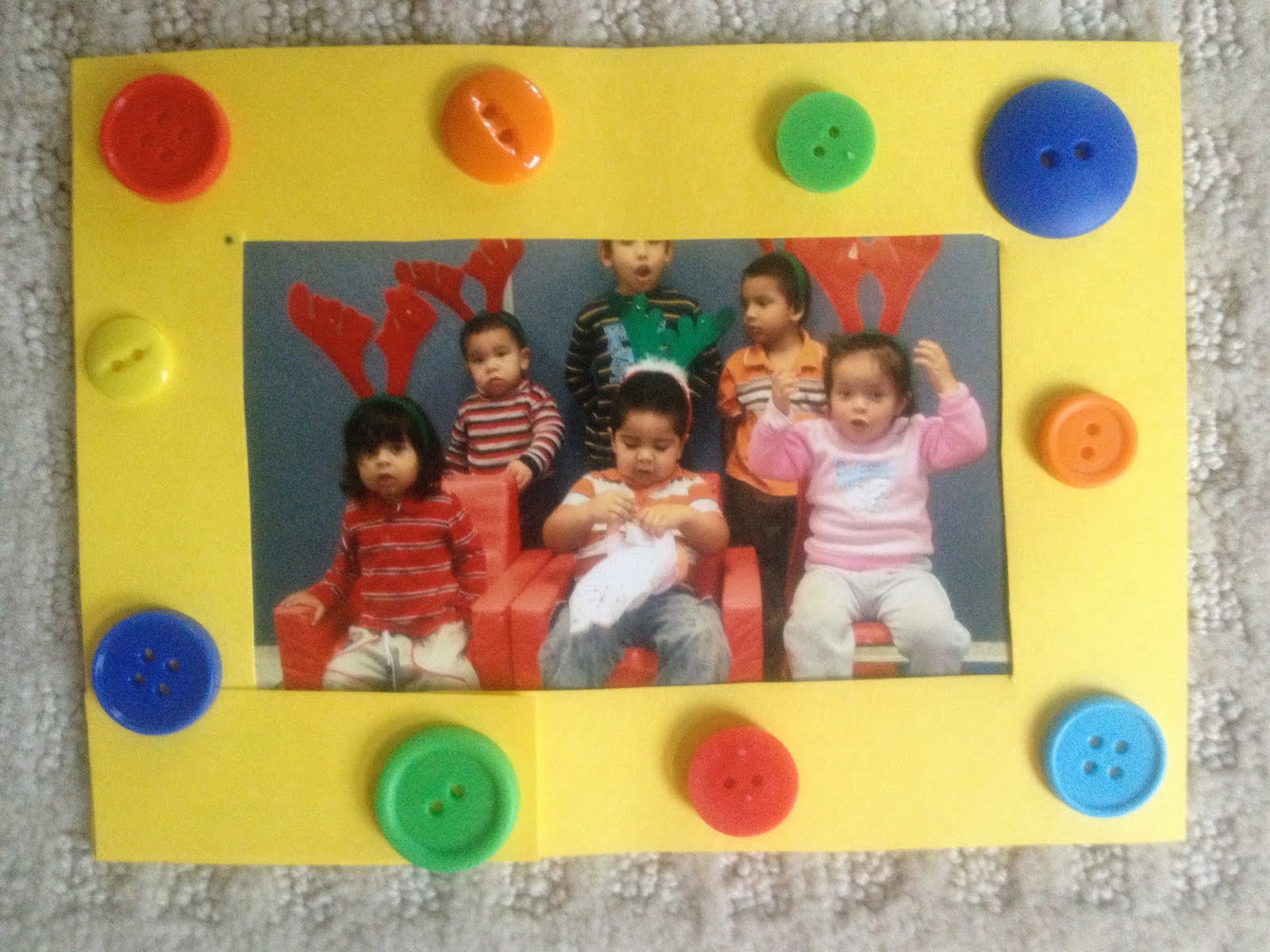
*Make cardboard picture frames and let children glue on buttons. Insert their photo for a perfect gift for mom or dad.


Game
*Play “Button, Button, Who’s Got the Button?” This is really a silly game, but my kids loved it. Choose one child to be “it” and hide a button. Choose 3 or 4 other children to leave the classroom and stand in the hall. The rest of the students cup their hands together as if they are holding something. “It” walks around the room and places the button in one friend’s cupped hands. The children in the hall are then called back to the classroom and everyone chants, “Button, button, who’s got the button?” The students from the hall walk around opening hands until someone finds the button. They become the new “it” and the game continues.

*Let children make up their own game using buttons.

*Demonstrate how to sew on a button. Now, that’s a novel idea! I bet some of your kids have never seen someone use a needle and thread.

Friday, November 8, 2019

READING INCENTIVES

Teachers have to be sales people!  We have to SELL children on reading and encourage them to read, read, read!

Several years ago while visiting a school I saw two shiny new bikes on display in the library. Every time a child read a book they got to put their name on a ticket to win the bike. What a great way to motivate children to read! These ideas aren’t quite as big as a bike, but I bet you might spark a little interest with them.
                                                    
Book Drawing

You will need a roll of tickets (purchase at an office supply store) or make your own. Each time a child reads a book she gets to write her name on a ticket. Collect these in a sack during the week. On Friday, draw a name out of the sack and that child WINS a book! 


*It could be a book that you purchased or a book that the class has made.

Stay Up Late and Read 
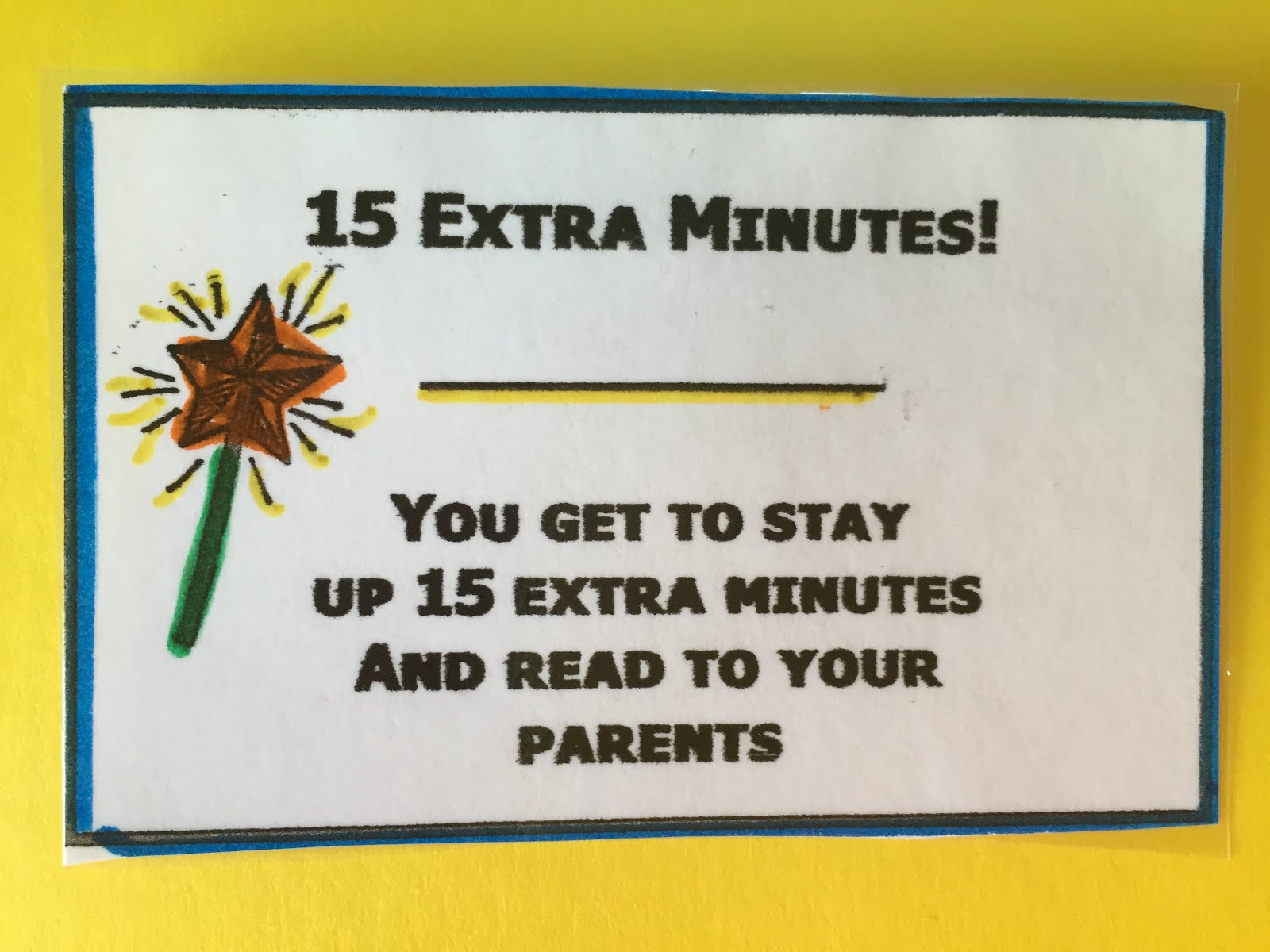
To reward children make copies of “Extra 15 Minutes” coupons similar to the one shown. Children who earn the ticket get to stay up an extra 15 minutes at bedtime and read to their parents.


Book Bucks
Run off "reading-bucks."  (Free if you do a google search.)  When children read a book they earn a "buck."  They can save these to buy a book or other prize.


Ideas for the whole class to compete and get involved!

Pajama Party
The students work together to read a certain number of books. When they reach their goal they earn a pajama party and get to watch a video of a book.

Popcorn Party
Get a large jar and write “Popcorn Party” on it. Every time any student reads a book she gets to add a cotton ball to the jar. When the jar is full the whole class gets a popcorn party.

Note! There are some who think "bribing" children to read will backfire. That's why I have offered several choices here that do not reward children for the number of books they read. I agree that "reading" itself is the reward, but many children LOVE a challenge.

I found this BINGO card on https://www.reading-rewards.com/blog/11-reading-incentives-classroom/. I like something like this because children could choose their own reward for whatever they wanted to read.