photo 3am_dj_home_zps919fb85e.png photo 3am_dj_about_zps7cce4c75.png photo 3am_dj_website_zps73051235.png photo 3am_dj_ss_zps6759ec2a.png photo 3am_dj_bs_zps43e27832.png

Monday, September 17, 2018

ROCK ON DAY

"Collect Rocks Day" was yesterday (9/16), but rocks are everywhere every day. Rocks can be a perfect spark for scientific investigations if you add a little STEAM. When you collect rocks or look at rocks, explain that scientists who study rocks are called geologists. Remind the children that they can be geologists, too!


Take a nature walk and invite each child to pick up ONE rock. You might need to limit the size to a rock that will fit in their hand. Take the rocks to the classroom and ask the children to observe their rock for one minute without talking. Go around the room and ask each child to make one statement about their rock. Encourage them to use descriptive words.

*Ask older children to write descriptions about their rocks.

*Place the rocks in a basket. Gently shake the rocks and then pass the basket around the class to see if each child can find his rock.

*Let the children sort the rocks. What was their sorting rule? Can they sort them another way?

*Check out a book on rocks from the library. Place it in the science center along with a magnifying glass. Ask the children to do research and identify the different rocks they collected. (Remind the children to return the rocks to nature after they have finished investigating them.)

*Are rocks older than you or younger than you?

*Make a list of all the things that rocks are used for. 


*Have children make a design and build something with rocks.

*Let children paint rocks or use other art media to make paperweights.

*Place rocks in the math center for children to explore with the balance scale.

*For homework, ask families to take a walk and look for different kinds of rocks in their neighborhood.

*Encourage children to start their own rock collection with this idea. Cut an egg crate in half. Attach a pipe cleaner handle and use it to collect little rocks and pebbles.


Sunday, September 16, 2018

WORLD GRATITUDE DAY


Gratitude is an emotion of expressing appreciation for what you have, rather than what you don’t have. Psychology Today reports that gratitude can be cultivated and it can increase levels of happiness when you do. Energy, optimism, and empathy are by-products of gratitude.  This Friday is World Gratitude Day, so here are some activities you can easily integrate into your lesson plans this week.

P.S.  Have I told you lately that I'M GRATEFUL FOR YOU!!!  Thanks for reading my blog!


Model Gratitude
Make it a habit to include things you appreciate into daily conversations.

Brainstorm
What does it mean to be thankful?  Write children’s responses on the board.  What are some synonyms for thankful?
              
Lists
Children love to make lists, so let them make a list (draw pictures or write) of all the things they are grateful for.

ABC
Can they think of something for each letter of the alphabet that they are grateful for?
                                             
Gratitude Journal
Let children make a special "gratitude journal."  Encourage them to write what they are grateful for each day for a week.
                                                                                       
Gratitude Box
Cut a hole in the top of a shoebox and decorate.  Place on a shelf along with paper and pencils.  Children can write things they are grateful for and place them in the box.  Read the notes at the end of the day before children go home.

Grateful Greeting
Start the day by going around the room and asking each child to say something they are grateful for.

End with Something GOOD
End the day by having children say something good that happened at school that day.

Hot Potato Pass
Children sit or stand in a circle and begin passing the hot potato (ball or other small object)  around.  When the music stops or when the teacher blows a whistle the child holding the potato must say one thing they are grateful for.

Saturday, September 15, 2018

HATS OFF TO YOU!

September 15th is “Make a Hat Day,” but kids love to make hats and wear hats any day of the year. Here are some ways that you can tie in hats with themes or skills you are working on.

Sentence Strip Hat 
Materials: sentence strips or heavy paper cut in 2 ½” x 24”, markers, crayons, stickers 
Directions: Let children decorate the sentence strip and then fit to their head and staple or tape in place. 

Children can write letters, numerals, or vocabulary words on the headband. Sure beats doing a worksheet and accomplishes the same thing! 


Children can add ears or other details to create an animal from a story. Let them wear their hats to retell the story.  

*Wouldn’t this be more fun than a written book report?

How about an “all about me” headband? 

Children can make an autograph hat with friends’ names. 

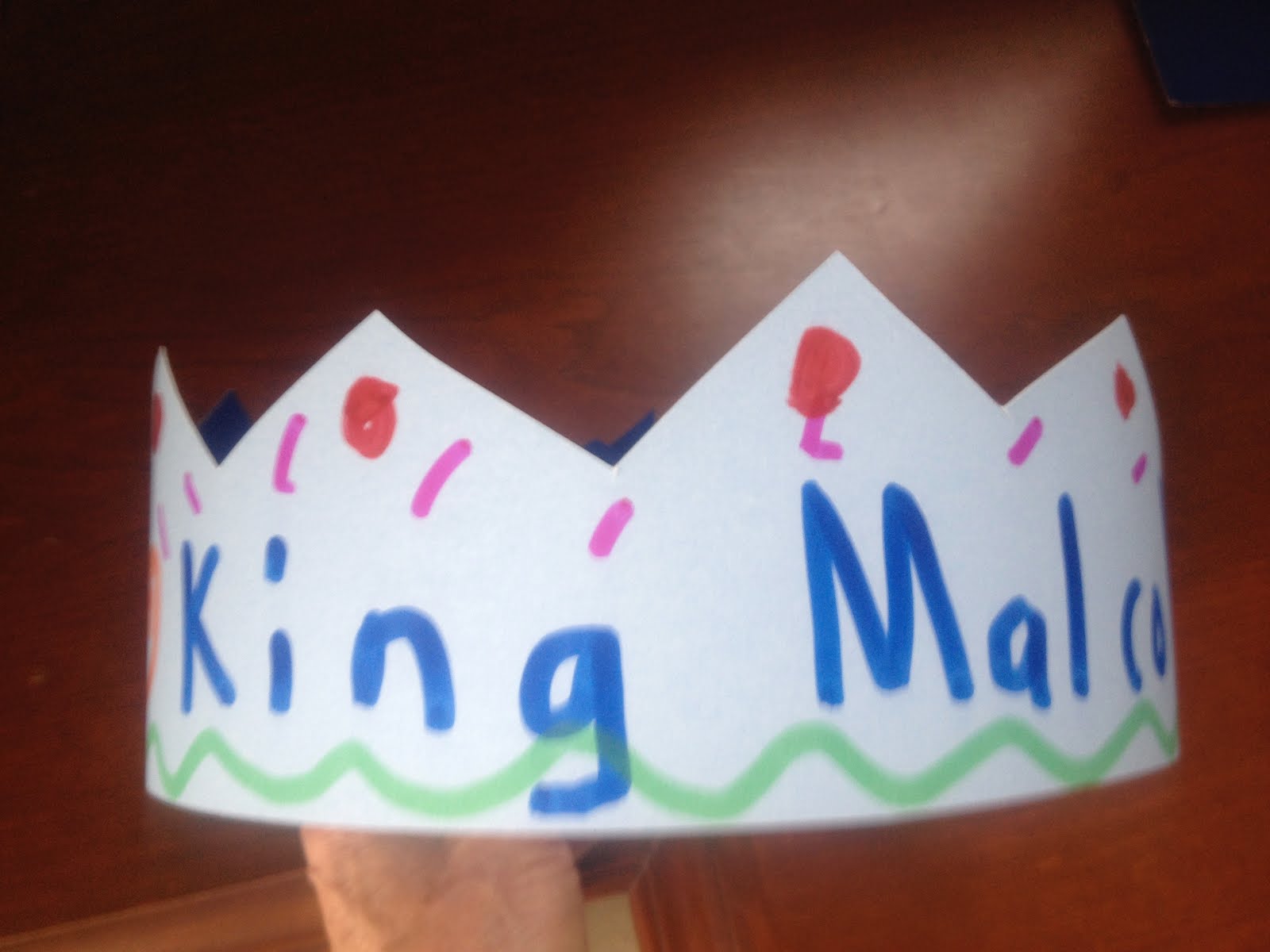
If you cut a zigzag line on one side every child can be king or queen for the day! 


Hint! Two brad fasteners and a rubber band will make the hat easier to adjust to the head, but it’s a lot more trouble. 

                                  HATS OFF TO YOU TODAY!

Friday, September 14, 2018

"NOTE" THIS!

I found this idea for notecards from a "Mrs. Young" when I was cleaning out some old files. It might just be my age, but I do appreciate an old fashion paper "thank you" note, and I'm sure your parents and volunteers would as well.  I also like this idea because it's very "child centered" and you don't need permission from parents to use their child's photo.

Directions:  "Mrs. Young" asked each child to draw their picture with a black pen. She reduced the size and did a little cut and paste magic to get them on half a sheet of paper. On the other half it says, “Created especially for YOU by Mrs. Young’s Kindergarten Class of 20--.” Here's the open version as well as what it looks like folded into a card.


Hint! These could be run off on cardstock, seasonal colors, or plain white paper.

Writing Center Stationery
Here's another idea that will encourage your students to write.  Draw off 1 1/2" squares similar to the ones shown around the edge of a sheet of paper.  Let the children draw their picture and write their name in one of the squares. Run off many, many copies so the children can use them to write notes to their friends.
       

Thank You for Helping Us Bloom and Grow
I loved this thank you note I received from some children. Their thumbprints are flowers and it says "Thank you for helping us bloom and grow." Something similar to this could also be used to make class stationery and notes.
                                                      
You know, everybody wants to be appreciated, and these notes would be treasured by the recipients. "Thumb" body thanks you for reading my blog today!!!

Thursday, September 13, 2018

READING MEETING - WACKY WORDS

SIGHT WORDS
Choose 4 to 5 words each week to practice daily with one of these strategies.

Sign Language - As you introduce new words, teach children the signs for the words by using the dictionary at aslpro.com.
                             

Karate Writing
Spell out words with karate writing.  For letters that start at the top dotted line punch up high. For letters that start at the middle dotted line punch out in front of your waist. For letters with a tail that go below the line give a little kick.
                  A – punch from waist
                  B – punch up in the air
                  C – punch from waist
                  D – punch up in the air
                  E – punch from the waist
                  F – punch up in the air
                  G – give a little kick…etc.

Sports Spell - Pretend to be athletes and spell out words.
Basketball – bounce on letters and make a basket as you say the word.
Baseball – swing on letters and twirl around and hit a home run as you say the word
Soccer – small kicks on the letters and kick a goal as you say the word
Let children make up motions for other sports, such as swimming, fishing, etc.


High Five Words
Cut hands out of construction paper and write the words you want to practice on the hands.  Tape to your classroom door.  Every time you leave the classroom stand at the door and call words out to the students.  They must high five that hand before exiting.


Sing to Cadence
Children echo each line as you sing, march, and slap your thighs.
     There are some words you need
     If you want to learn to read
     ___ ____ ____ ____
     ___ ____ ____ ____

Mystery Word
Play a game where you give clues about the words. For example: “I start with “L” and rhyme with “book.”

Sentences
Encourage children to make up sentences using sight words.


VOCABULARY WORDS
Each week choose a word (or two) from a book, unit of study, or of personal interest to your students.  Call them POWER WORDS or SPARKLE WORDS.  Make a big deal of introducing the words by saying:

     Give a drum roll….(pat knees and make a sound).

     Give a Beethoven…(pretend to hold a violin and hum the first few notes of Beethoven’s 5th Symphony).
     Give me a trumpet…(pretend to hold a horn and toot).

*Dramatize the words.

*Invite students to make up sentences using the words.

*Put the word in a name badge and wear it throughout the day.  At random times in the day say, “If you know my special word smile at me.” “If you can read my word shout it out!” “If you can read my word whisper it out.”

*Give children a cheer when they use a power word.

Wednesday, September 12, 2018

READING MEETING - PHONO FUN AND ABC'S

PHONOLOGICAL AWARENESS
Choose a rime (aka word family) from the poem of the week. As children identify rhyming words from the poem write them on the board. Circle the letters that are the same in each word. Can they add other words to the list? 

Word Family Song
Sing this song to the tune of “Bingo.” For example, if you read "Jack and Jill" you could sing:
         There is a word family you should know
         And “ill” is it’s name-o.
         J – I – L – L Jill
         H – I – L – L hill
         W – I – L – L will
         They end in “ill” you know.

                               
*Write the word family in a large house and encourage the children to add rhyming words throughout the week.

Rhyme Ball 
You will need a ball, beanbag, or other object to toss for this game. Children sit or stand in a circle. The teacher says a word and then tosses the ball to a child. As the child catches the ball, she must say a word that rhymes.

Syllabication
Clap, snap, hop or make other movements to words in the rhyme.

Instruments 
Have children beat out syllables with instruments.
*You could also use cardboard rollers, straws, pencils, etc. like drum sticks to tap out rhythms and syllables.

Sound Sack

Take a small sack and fill it with common objects or small toys. Capture children’s interest with this song to the tune of “I’m a Little Teapot.”
            What’s in the sound sack, who can tell?
            Maybe it’s a book or maybe it’s a shell?
            What’s in the sound sack, who can say?
            Blend the sounds, you’ll know right away!

Choose and object and stretch out the sounds. When children can blend the sounds and say the word, remove It from the sack and place it on the floor. Before putting each item back in the bag, segment the sounds again.


Body Letters
Choose letters from the poem of the week and challenge the children to make the letters with their bodies.
                                                       
Air Writing

Write letters in the air with your index finger or another body part.

Sign Language
Teach manual signs for letters as you introduce them.

Pinkies UP
Children listen as you say a group of words. If a word begins with the letter sound you are working on they put up their pinky finger.

Tuesday, September 11, 2018

READING MEETING - MORNING MESSAGE AND RHYME A WEEK

MORNING MESSAGE
The morning message is a powerful way to demonstrate the importance of reading and writing. When a class mascot (stuffed animal or puppet) has a message waiting for the children it will give them something to anticipate each day.

Here's a song to the tune of “My Darlin Clementine” to focus children’s attention for the 
morning meeting:
         We are readers.
         We are writers.
         And we like to learn it’s true.
         We will read the morning message
         So we’ll know just what to do.


Hocus – Pocus – Focus
Did you know that if you tell your brain that something is important it’s more likely to remember it? If you have your children put on their focus goggles before you call their attention to something on the morning message it just might work. Say, “Hocus, pocus, goggles, focus!” as you demonstrate making circles with your thumbs and index fingers and placing them around your eyes.

To the Point
You probably already have some pointers, but it’s easy to make seasonal ones by placing finger puppets on the end of a cardboard pants roller.

Cut out the center of a butterfly net and add some fancy ribbon and you’ll be able to frame letters, words, and other key details.

Correct the Teacher
As the year goes along you can make spelling and punctuation errors so the children can “correct” you.


RHYME A WEEK


Each week write a poem on a chart and introduce it on Monday. Read over the rhyme using different strategies suggested below. Review the rhyme each day and then on Friday read and review rhymes from previous weeks.

Try choral reading with these strategies:

Shadow Reading– Teacher reads a line and then students repeat.

Magic Word– Choose a “magic word” (high frequency word) in the text. Every time you come to that word, the children get to clap, jump, snap, etc.

Say What?Read the wrong way and have children correct you by shouting out, “Say what?”

Missing Word – Omit a word and have the children fill it in.

Read with me IF you…like chocolate ice cream
      like broccoli         have a dog
      can ride a bike     are wearing red

Stand and Read – Children stand and take a small step to the right for each word. At end of the line jump “down” to the next line. Everyone moves back to the left and quickly moves to the right with every word until the end of the next line. Repeat until the end of the poem.

Take a Turn
- Divide children into groups and each section reads a different line. For example: Let boys and girls alternate reading lines.


Got Cha!– Whenever the teacher yells, “Got Cha!,” the students must pick up reading.

Voice Box– Go to my website and download “fluency cards.” Place these in a small box and let students choose a voice and then lead classmates in reading the rhyme.