photo 3am_dj_home_zps919fb85e.png photo 3am_dj_about_zps7cce4c75.png photo 3am_dj_website_zps73051235.png photo 3am_dj_ss_zps6759ec2a.png photo 3am_dj_bs_zps43e27832.png
Showing posts with label Schedule. Show all posts

Saturday, August 2, 2025

WALK THE ROOM

Here's a variation of circle time that might be perfect for older students to spark their interest as you reinforce skills. How about having the children stand and walk around the room instead of sitting? As children walk to different locations you can engage them in some of the songs, movements, and interactive activities suggested.

My World
What? flag, US map, poster of handshakes, classroom rules

How? Sing a good morning song, say the pledge, do a handshake, review rules, etc.


Math/Science
What? calendar, weather chart, hundreds chart, daily schedule

How? Sing songs about the days of the week or the month, review your daily schedule. Sing the weather song and have a “meteorologist” report. Count, add boys and girls, think of equations that equal the date, etc.


Word Wall
What? word wall, flashlight, pointer, fly swatter

How? Sing, dance, clap, and cheer words. Make sentences with words, play games, spotlight words, spell words with sign language, etc.


Alphabet Wall
What? class alphabet, pointers

How? Sing alphabet songs and play letter recognition games. Clap on consonants and jump on vowels. Do Karate writing where children punch up high for tall letters, punch in front of them for middle letters, and give a little kick for letters with a tail.


Hint! Even if you don’t want to do all of the above activities, it’s important to get the children up and wake up their brain with a song or movement activity.

Wednesday, August 10, 2022

UNPLUGGED CIRCLE TIME (AKA MORNING MEETING)

Want to create a classroom community and nurture social emotional skills? Well, I've got a solution that's as old as the hills, but I guarantee you that it's just what is needed in our early childhood classrooms today. Call it circle time, morning meeting, or anything you want, but there's nothing like starting the day sitting on the floor in a circle.


What if someone says that circle time is a waste of time?

How would you respond? Do you really think it’s a waste of time? Most of us who have actually sat in a circle with our children to start the day realize it is MAGIC! It is the way to connect with your children, nurture your classroom family, develop social /emotional skills, and set the stage for the day. Since standards and skills are driving education, take a look at these skills that can be nurtured in a natural way at circle time.

Oral language– Children learn to feel comfortable talking in a group and expressing their thoughts and opinions. They also learn to listen to their classmates and respect their ideas.

Literacy skills– Alphabet songs, phonological awareness activities, choral reading, nursery rhymes, finger plays, daily message, and classroom print can be highlighted at circle time.

Math concepts– Talking about the calendar, counting the friends present, comparing sizes, or discussing shapes can be a meaningful part of circle time.

Executive function– As children learn to sit quietly and participate in a group they are developing self-regulation. There is also a beginning and an end to the routine.

Classroom management– This is a time when the teacher can reinforce simple skills, explain classroom activities, review the daily schedule, and model expectations.

Social skills– Learning to take turns and listen to classmates is expected in circle time. As children sing songs together or say rhymes or finger plays they can have fun with their friends. At this group time you can brainstorm classroom problems – tattling, hurting someone’s feelings, pushing in line, etc.

Emotional skills– In circle time all children can be accepted and valued for their individuality. Feelings that we are all different, but that’s O.K., are of primary focus.

Physical skills– Dances and movement songs release wiggles and oxygenate the brain. Cross-lateral activities activate the brain and get it ready to learn.

Science Social Studies– Talking about the weather, the leaves changing colors, the different ways families celebrate, classroom pets, and real events in the children’s world are meaningful topics at circle time. Specific themes and units of study can also be integrated into this large group time.

Fall in Love with Books
- Circle time can be used for book walks, talks, themes, and bibliotherapy.


“OLD SCHOOL” CIRCLE TIME TIPS

Balance – Integrate activities where children sit and then let them stand and wiggle. Sometimes they need to be quiet and listen, and sometimes they can be encouraged to talk.

Hands-on– Try to provide multi-sensory experiences to activate different pathways to the brain. Finger plays, movement songs, handshakes, and real objects will engage children more than watching a video.

Vary the stimulus– Yes, you want to have a basic routine to give children security and help them feel comfortable, but you need a little spark each day to keep them focused and curious.

Model, Model, Model! Children learn more from your actions than your words. Model sitting quietly, listening attentively when a child is talking, being enthusiastic with your facial expressions, and making the motions for the songs and finger plays.

Quit while you are ahead! Don’t make circle time too long! Start with 10-15 minutes and then extend it as the year goes along. They will let you know by their body language when they’ve had enough!

Follow a basic routine.

Good Morning Song
Handshake
Morning Message/Review Schedule
Calendar and Weather
Pledge, Rules & Mantra
Active - Skill Songs
Concept Lesson – Theme


You might also want to highlight a different area of the curriculum each day of the week.

Marvelous Monday– Teach a new nursery rhyme or finger play. Practice it each day at circle time.

Terrific Tuesday– What’s in the news? Introduce social studies concepts of interest to the children. Discuss friendship and showing kindness. Brainstorm what to do about classroom behavior issues.

Wonderful Wednesday– Focus on oral language with show and tell, echo chants, and phonological awareness games.

Thrilling Thursday– There’s always something interesting outside your classroom door that your children will be interested in. Each season brings new experiences and objects to observe.

Fabulous Friday– Just for fun! Play a silly game, have a dress up day (silly socks, shirt of favorite sports team, etc.), be DJ and play favorite songs, etc.


Wednesday, January 5, 2022

MIX IT UP!


Adaptability and flexibility are characteristics of the executive function that we can give children opportunities to develop in the classroom.


Many Ways
Sing different versions of the same song or read different versions of folk tales. Remind children that there are many ways to do things, and that’s O.K.

Note!  A teacher told me she felt guilty because she used different movements when she did songs and the kids would correct her.  I told her to tell her students that "muscle confusion is good for the brain."  End of criticism!!!


Variety – The Spice of Life 
Vary work groups and seating arrangements in the classroom. 

*Have students turn their chairs around and face the back of the room.

*Let children exchange seats with a classmate.

*Do “Tummy Time” where children lay on the floor and read, write, and work.


*Sit like a boss and put your feet up on your desk.


President of the Day


Let children take turns being the “President of the Day.” They can act like a “leader” and perform simple routines.


State Changes 
How about Whisper Wednesday where you whisper all day? 

*Turn off overhead lights.

*Give children sugarless bubblegum to chew.

*Have silly sock, sports day, cap day, dress up day, and other theme days.

*Use colored paper or colored pencils.


Opposite Day 
Flip your schedule for the day by starting with a good-bye song and reversing the order until you end with a good morning song. Read a book from the last page to the beginning. Be sure and eat your dessert first when you go to lunch!

Sunday, January 2, 2022

GETTING ORGANIZED IN 2022!

Helping children get organized can nurture the executive function and boost the emotional climate in your classroom. When children know expectations their behavior and academic skills can improve.

Student Office

With a personal “office” your students will be able to organize their work space and stay focused at home or in the traditional classroom.


Materials: 2 file folders for each child, wide packaging tape, markers, crayons, copy of alphabet letters, numbers, shapes, class word wall, hundreds chart, etc.

*Note! Adapt student offices to appropriate skills for your age level.

Directions Tape two file folders together for each child. Let them decorate the outside with markers, magazine pictures, trading cards, stickers, etc. On the inside staple a copy of alphabet letters, sight words, shapes, numbers, and other pertinent information. When children write in their journals or do independent work, they can stand up their “office” on their desk.

*Make an "office" similar to the one shown with pocket folders. Children can put work completed in one pocket and things they need to finish in another pocket.


Hint! Before singing your "Good-Bye Song" each day, encourage your students to clean out their folders and work space. That way they'll be "fresh" to learn the following day.


Daily Schedule
Post the daily schedule and review each morning and after lunch.  

Hint!  Use rebus charts and photos with the schedule.
*After explaining assignments, ask a student to retell classmates what they should do.


Fist List 
Have students tuck in their thumb and then put down a finger as they repeat each task they need to complete. Adapt to their assignment for the day. For example: 
Put down 1 finger. “Journal writing.” 
Put down 2nd finger. “Phonics game.” 
Put down 3rd finger. “Independent reading.”
Put down 4th finger. “Ipad skills.”


Classroom Calendar
Write birthdays, school events, and other special information on a classroom calendar. Count the days to holidays and demonstrate how to use time organizers to plan for special days.


Monday, August 5, 2019

ACTIVE LEARNING #5 - FIST LIST

There's something about moving your fingers and repeating information that will help your students with planning and organization.

Fist List
Have students tuck in their thumb and then put down a finger as they repeat each task they need to complete. Adapt to their assignment for the day. For example: 

     Put down 1 finger. “Journal writing.”
     Put down 2nd finger. “Phonics game.”
     Put down 3rd finger. “Independent reading.”
     Put down 4th finger. “Ipad skills.”


*This will also nurture the executive function by helping kids plan and organize.

Recall Fist List
Recall at the end of the day by asking students to make a “fist list” of what they learned that day.  They can put down a finger for everything they learned or feel good about.

New Skill Fist List

Here’s a formula for learning a new skill.

     1st – Hold up one finger and repeat it out loud.

     2nd - Hold up the second finger and visualize using the skill.

     3rd – Hold up the third finger and repeat it with a partner.

Thursday, June 13, 2019

MORNING MESSAGE

Each morning before the children arrive, write a note to them with a little hint about what they will be doing. (You can write on a white board, but if you use a large chart you’ll be able to review past experiences.)

It’s especially fun to have a class mascot (puppet or stuffed animal) write the message each day. Your morning message might look like this:

     Dear Friends,

     Today is date. It’s Terrific Tuesday and I’m so glad to see
     you! We have a new book about beavers. We also
     have music with Mr. Peterson in the afternoon. I can’t
     wait to get this great day started!

                   Love,
                   Pokey the Pony


Daily Schedule
Children will feel more confident when you review the schedule each day. For younger children, use picture clues by the different activities. Hang up on a clothesline and then flip over as you go through the day.


*Put magnetic tape on the front and then flip them over as you complete each activity.


Classroom Helpers
As you discuss the schedule, remind children of their assigned jobs for the day. Giving titles of real careers will add meaning to their duties.

     Supervisor – Calls the roll.
     Police Officer – Makes sure everyone walks slowly in the hall.
     Mail Carrier – Passes out papers.
     Librarian – Cleans the classroom library.
     Gardener – Waters the plants.
     Meteorologist – Gives the morning weather report.
     Accountant – Does the lunch count.
     UPS – Takes reports to the office.
     Maintenance – Picks up the classroom.


Sunday, February 24, 2019

WONDERFUL WEBSITE! AND IT'S FREE!!!

I was in Georgetown, Texas, last week with some AWESOME teachers. Several of them had these prompt cards on their name lanyards. 


I thought it was very clever and a great classroom management tool. They told me that they got the cards on autismcircuit.net. Well, I went there and I was impressed!

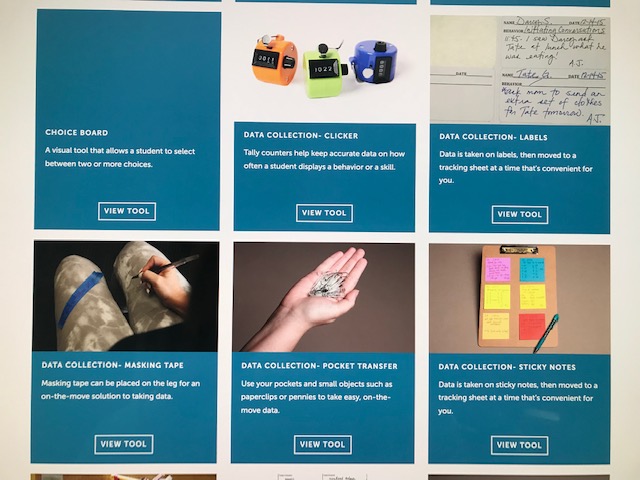
The Texas Autism Circuit might have created tools and techniques for students on the autism spectrum, but I guarantee you that these would be useful in any classroom. They explain how and when to use the tools and give you printable templates and resources.

Here’s a sample of what they have - FREE of course!

Behavior cue cards to reinforce verbal directions or quietly redirect a student.


First/then cards to use as a visual support for transitions.


Take a break card for when students might need a break or if they seem frustrated.


But wait, there’s more!!!

You’ll find ideas for collecting data, 


                           helping children with time management,


                                                                                  and other social skills!


Special thanks to Frost Elementary Pre-K and PPCD teachers!  

Wednesday, August 15, 2018

BRING AND BRAG OR SHOW AND SHARE?

One of the enduring rituals in early childhood has been sharing time. Most children love to be the center of attention and talk in front of their friends. However, you can reinforce important speaking and listening standards with some of these ideas.

Show and Share 

Instead of “bring and brag,” focus show and tell on a specific theme you are studying, such as a letter, science concept, shape, etc.
                                    

Podium
Provide a child-size podium (old music stand) for children to stand behind when they speak.
                                                                             
*Let children stand on a giant block to speak.


Visualize
Have children close their eyes as friends take turns sharing. Can everyone remember one thing at the end of sharing time?

Clues

Ask children to come up with three clues about what they have brought from home. (Parents could write these for young students.) After giving the clues, friends try and guess what it is.

Questions
Let the class ask 20 questions about show and tell items. Tally their answers on the board.

*The person sharing can make three statements about what they have brought. The class then gets to ask them three questions about it.
Show What You Know
Try “show what you know” where children can demonstrate what they have learned about a theme. They could do an art project, make up a song, do a skit, make a video, etc.

Hint! Designate a special shelf or table in your classroom where students can place their show and tell objects for friends to look at later in the day.

Specific Time
Assign students different days of the week for sharing time or designate one day for show and tell.


Here are a few other ideas I found when I searched old blogs.

Rhyme Bag (Hieke Klapwyk)
Send home a brown “rhyme” bag with each student and ask them to fill the bag with two items that rhyme. At show and tell time, each student removes one item from their bag. Classmates must guess what the second item in the bag is by naming objects that rhyme.  


Show and Tell Challenge(Maribel Mohr)
Use gift bags and staple a note with a challenge, such as a letter, three dimensional shape, numeral, etc. Pass out the bags to the students at the beginning of the day. At the end of the day they can share what they've found.
*You could also send these bags home for the children to do with their parents.

Monday, August 6, 2018

TIDY UP

Clean up will be much more successful if you choose a song and sing it consistently when you want the children to tidy up. You really can use any song that you like (country, broadway, college fight song), but use the same song every day and model what you want the children to do.
                                            

I used to sing these songs in my classroom and to my own children at home. (My daughter and son would clean up just to get me to shut up!)

A Helper I Will Be (“The Farmer in the Dell”)
A helper I will be.
A helper I will be.
There’s work to do,
There’s work to do.
A helper I will be.
A picker up I’ll be.
It’s time to put our things away,
A picker up I’ll be.

Hint! Change the words to whatever you want the children to do, such as “pick up the trash,” “push in the chairs,” etc.

Tidy Up (“Jingle Bells”)
Chorus:
Tidy up, tidy up, put your things away.
Tidy up, tidy up, we’re finished for today.
Oh, tidy up, tidy up, put your things away.
For we’ll get them out again another school day.

We’ve had lots of fun as we’ve worked and played.
Now it’s time to all join in and play the clean up game.
Chorus

Can You? (Tune: “Skip to My Lou”)
I can clean quietly, how about you?
How about you, my darlin?

*Change the words to “push in my chair,” “pick up trash,” etc.

Magic Trash
Select one random piece of trash to be the “magic trash.” Have children pick up the room. As they dump the paper and scraps in the trash can, inspect what they have in their hands. The one to find the “magic trash” gets a prize or gets to be the line leader. (Only you and I know there's no special piece of trash!)


Timer
To help prepare children to clean-up or move to another activity, set a timer for five minutes. Explain, “You have five more minutes. When the timer goes
off we will have a whisper clean up.”

Who You Gonna Call?
Send a letter home asking if anyone has an old dust buster to donate to your classroom. Choose one person each day to be the “dust buster.” When there’s a mess shout, “Who you gonna call?” Children respond, “Dust buster!” The designated “dust buster” of the day GETS to clean up the mess.
                                                                 
Classroom Jobs
Assign classroom jobs weekly. Title the jobs by real careers.
Supervisor – Calls the roll.
Maintenance – Picks up the classroom.
Police Officer – Makes sure everyone walks slowly in the hall.
Mail Carrier – Passes out papers.
Librarian – Cleans the classroom library.
Gardener – Waters the plants.
Meteorologist – Gives the morning weather report.
Accountant – Does the lunch count.
UPS – Takes reports to the office.


Saturday, June 25, 2016

DAILY HANG-UPS

Here are a few more easy peasy ideas you can use when school starts.

Daily Hang Ups (Wendy Merrifield)
Draw large T-shirts on poster board. Take photos of students doing daily activities. Write the activity, time, and glue the picture to the T-shirts. Next, hang a clothesline across the top of one of your bulletin boards. Clothespin the T-shirts in order to the line. As you move through the day, turn over each shirt so the students can see their day get shorter and shorter. When you get to the last T-shirt do an “end of the day” dance!!!
                              
Special Helpers (Karen Butler, Brewton, AL)
Have “special helpers” (stuffed animals) who look for good behavior or participation. Children get to keep the stuffed animals at their desk for the rest of the day.

Ketchup Folder
Students keep work they need to finish and “catch up” on.

Letter Substitution
Substitute the letter you are working on for directions at transition times. For example: B –“Bine bup bor bunch.” The kids have to figure out the real directions.

Morning Baskets
Here’s a great idea for “morning baskets” that the children can do each morning when they arrive at school. Each teacher in their kindergarten team makes 7 different buckets with 4 different activities for math and reading. They rotate these each week at the tables in their classrooms. They have a set for the beginning of the year, middle of the year, and end of the year.

Nursery Rhyme Club (Janie Moore)
Challenge your students to learn 8 nursery rhymes and say them in front of the class. Create a poster where they can sign their name and give them a membership card to the “Nursery Rhyme Club.”

Body Spelling
For tall letters put your hands in the air. For midline letters stick your arms out by your sides. If a letter goes in the basement, touch your toes.

Open Mic Friday
Every Friday during “Writer’s Workshop” give children a play microphone and let them read one of their stories to the class.