photo 3am_dj_home_zps919fb85e.png photo 3am_dj_about_zps7cce4c75.png photo 3am_dj_website_zps73051235.png photo 3am_dj_ss_zps6759ec2a.png photo 3am_dj_bs_zps43e27832.png

Sunday, February 20, 2022

TELL A FAIRY TALE EVERY DAY!

Saturday, February 26th, is Tell a Fairy Tale Day.   Here are some tips for using fairy tales as a springboard for teaching next week.
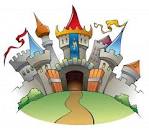
          

Note!  Some people think fairy tales are too violent for young children. And I would agree that some of them are a little twisted and dark. However, most of them aren’t any more violent than Saturday morning cartoons. The bottom line is children have enjoyed these stories for hundreds of years. Proof that a good story is a good story! There is usually a protagonist (good character) that struggles with an evil character. The best part of fairy tales is that they always end happily and good prevails. Many psychologists support fairy tales because they believe children will face “dragons” throughout their lives, and fairy tales give them hope, determination, and strength to defeat their problems.  
    
I love this cartoon I found on the internet!


Discussion 
What is a fairy tale? 

What do children know about fairy tales?

Are they fiction or non-fiction? Why? 


Brainstorm 
How many fairy tales can they name?  
Make a list on the board as they call them out.

Go to the library and search for fairy tale books.


Comprehension
Get a storybook (without pictures) and have the children close their eyes as you read to them. Challenge them to make pictures in their brain.

*Stop before the end of the book and ask them to draw pictures of what they think will happen. Compare their predictions with what actually happened by reading the end of the book.

*Read several different versions of the same fairy tale and compare and contrast.
Compare different illustrations of the same fairy tale.


Creative Activities 
Let children dress up like their favorite character from a fairy tale. Encourage them to retell the story and explain why they chose that character. 

Have children make puppets of favorite fairy tale characters from lunch bags, paper plates, or sticks.

Divide children into small groups and let them act out their favorite scene from a fairy tale.I was a lucky little girl because I grew up before videos and iPads. I do remember my mother reading to us from this storybook every night. Look at the forward I found when I opened the book! 

                                             
This book is my house.
The door is open and I shall enter.
 
I shall be happy here because my house has so many windows and
my companions are men and women who love me.
Here I will find laughter, love, romance, beauty, and happiness.

If you are reading my blog today I know you are the type of teacher that instills the “love and happiness” from books. Thank you for keeping the joy and love of reading alive!

Saturday, February 19, 2022

BUT WAIT - THERE'S MORE IN THE ENVELOPE!

Besides puppets, take a look at all these other crafts and tools using envelopes.


BOOKMARK
Trim off a corner from an envelope. Let children decorate it with their initials or a smiley. 


*Use the bookmark to show the “top” of the page.
*Mark a favorite page they’d like to read to classmates “top” of the page
*Mark the solution or other key element in a story with the bookmark.
*Write a vocabulary word on the bookmark and place it at the top of the page when they find that word in the book.


BRACELET
Cut a 1 1/2” strip from the envelope and use it like a bracelet.
*Write letters, words, numbers, and other skills on the bracelet.


*Make a holiday or seasonal bracelet.
*Collect stickers on the bracelet.
*Get friends’ autographs on the bracelet.

                                 
*Send reminder notes home to parents on the bracelet.
*Use at the beginning of the school year to help children remember lunchroom numbers or bus numbers. 


Pull and Read

Cut the left end off the envelope. Write children’s names on 9 ½” sentence strips. Glue their picture on the right side. Pull out one letter at a time for children to predict whose name it could be.

                                               
*Write sight words, vocabulary words, or sentences for children to pull and read.
*Write math equations with the answer at the end.


Word Puzzles 
Write words (or children’s names) on the front of an envelope. Write the same word on a sentence strip and cut between the letters to make a puzzle. Place the letters in the envelope for the children to put together.


Friday, February 18, 2022

WHAT'S IN THAT ENVELOPE?

You know, there are a lot of great ideas for teaching materials on FB, but many things are costly and time consuming.  Take a look at these simple learning opportunities from envelopes.


PUPPETS
The world keeps changing, but children are the same. They loved puppets over 40 years ago when I started teaching and they still enjoy putting their hand in a puppet and making it come alive. To make an envelope puppet seal the envelope and cut in half as shown. Give children markers, crayons, and other art media and set their creative juices flowing!

Retell a Story
Let children make a puppet of their favorite character from a book and use it to retell the story.

Nursery Rhyme
Make a character from a nursery rhyme and use it to say the rhyme. Encourage children to take the puppet home and say the rhyme to their parents.

Feelings
Make puppets with different expressions (happy, sad, angry, scared, surprised, and so forth). Let children use the puppets to describe when they feel that way.

People Puppets
Have children glue photos of famous historical figures or heroes. Encourage them to use the puppet to talk about why they admire that person.


Animal Puppets
Let children make puppets about animals you are studying about in science. Use puppets to describe animal characteristics.

Thursday, February 17, 2022

WHAT'S THE POINT?

I realize I'm a dinosaur and I don't know much about what's going on with social media.  However, I have felt your stress, frustration, and unhappiness this school year.  It breaks my heart when I read about your schedules, assessments, and expectations. I know it tears you apart when you want to do what's RIGHT for your children and your hands are tied. But, DON'T GIVE UP!!! I think the pendulum is about to swing because there is finally DATA to support what you and I have always believed is BEST for young children.

Please read this article and then pass it on to every administrator, parent, educational decision maker, politician, and everyone else you can think of!!!!

https://www.psychologytoday.com/us/blog/freedom-learn/202201/research-reveals-long-term-harm-state-pre-k-program

For years I have been saying, WHAT ARE WE DOING? WHAT'S THE POINT? WHAT HAPPENED TO THE WHOLE CHILD? Children have one chance in a lifetime to hold hands, sing, dance, paint, make believe, play outside, explore, and have FUN!!! They will have a lifetime to sit in front of a computer, take tests, and be judged!


WHAT’S THE POINT? By Dr. Jean

If you cover every objective in the curriculum, but don’t have time to play outside or take field trips—
What’s the point of Pre-K and K?

If you do every page in the workbook, but don’t have time to laugh, do show and tell, or sing a song—
What’s the point of Pre-K and K?

If you know all your letters and sounds and numbers and sight words, but don’t know how to be a friend or share—
What’s the point of Pre-K and K?

If you score high on the standardized test, but don’t like school and don't feel good about yourself—
What’s the point of Pre-K and K?

If you master every skill and have 2 hours of screen time, but don’t have time to play in the block center or housekeeping or do puzzles or do a finger play -
What’s the point of Pre-K and K?

If teachers are so overwhelmed by the demands, expectations, and assessments they are given that they don’t have time to hug, smile, read, cheer, cherish, and look in the eyes of those wonderful little children in their classroom---
Then what’s the point of being a Pre-K or Kindergarten teacher?


BALANCE is a key to a happy life. We don't have to throw out technology and skills, but we do need to remember what's best for little children and balance academics with play. Slow down and smell the roses!!!


SINGING SIGHT WORDS

Music can be the “dessert” in your curriculum. Try using some of these familiar tunes to practice reading sight words.

Singing the Word Wall
Sing the word wall from a to z with the tune of “Gilligan’s Island.”


Sight Word Cadence
Children echo each line as you sing four word wall words at a time.
There are some words you need...
If you want to learn to read...
A All And Are
Be Book Boy By…etc.


Two Letter Words
Sing two letter words to “If You’re Happy and You Know It.”
If you want to spell he, say “h” “e.”
It’s easy as can be when you sing and spell with me.
If you want to spell he, say “h” “e.”


Three Letter Words
Sing three letter words to “Where Is Thumbkin?”
What spells the? What spells the?
T – h – e (T – h – e)
T-h-e spells the. (T–h–e spells the.)
T – h – e. (T – h – e)
*Sing three letter words to “Three Blind Mice.”

*THE Poem: You can say the, or you can say thee,
but you always have to spell it T- h - e!

Four Letter Words
Learn to spell four 4 letter words with “Happy Birthday.”
T – h – a – t spells that. T – h – a – t spells that.
*Sing four letter words to “My Darlin’ Clementine” or “YMCA.”


Five Letter Words
Five letter words can be sung to “BINGO.”
There is a word that you should know and green is the word-o.
G – r – e – e – n. G – r – e – e – n. G – r – e – e – n.
And green is the word-o.
*Sing five letter words to “Row, Row, Row Your Boat.”


Six Letter Words
The tune of “Ten Little Indians” can be used to spell six letter words.
S-c-h-o-o-l,
S-c-h-o-o-l,
S-c-h-o-o-l,
That spells school.
*The theme song from “The Mickey Mouse Club” can also be used for six letter words.


Seven or Eight Letter Words
*Fit the letters in longer words to “For He’s a Jolly Good Fellow” and “Coming Round the Mountain.”


Chiming Words
Use a xylophone for this activity. Strike keys on letters and the blend.


Here's a link to the video I did a few years ago on sight words:

http://bit.ly/drjean_sightwords


Wednesday, February 16, 2022

ACTIVE LEARNING - SIGHT WORDS

Sight words here, 

Sight words there,

Online or in person,

Sight words are everywhere!

In today's blog you'll find some whole body strategies to help your students learn sight words. Remember, the more senses you activate, the more likely the message will get to the brain.

Note!  These strategies could also be used for spelling words and vocabulary.

Sign Language
Sign language is a wonderful kinesthetic way to “store” words in the brain. Sign language provides a “hook” or connection for children. After teaching children the manual signs for letters, you can finger spell words. You can also go to aslpro.com and click on the “dictionary” to learn signs for the words on the word wall. Practice saying words, reading words, and signing words at the same time. If children can’t recall a word, make the sign and you’ll be surprised what happens!


Say, Spell, Write, Read
Here’s a little formula to help children remember words.
1st Say the word.
2nd Orally spell the word.
3rd Write the word. (You could do this in the air or on your palm.)
4th Read over the word.


We Like to Move It
Stand and make motions as you read high frequency words. You can disco, hula, pony, monkey, jump, hop, march, clap, snap, swim and so forth.


Patty Cake
Let children patty cake high frequency words with a partner. Children face each other and say the word as they clap their hands. They cross and tap right hands and then left hands as they say each letter in the word. Then they put hands in the air and do “high five” as they say the word.

Sports Spell
Pretend to be athletes and spell words for different sports.


Basketball – Dribble the ball on letters and shoot the ball on the word.

Football – Hike the ball on letters and throw a pass as you say the word.

Soccer – Small kicks alternating feet for letters and a big kick for the word.

Swim – Say letters as you stroke and pretend to dive as you say the word.

Let children suggest motions for baseball, golf, volleyball, tennis, kayaking, and so forth.

Cheering Words

Children stand and step from side as they clap and cheer words:
Give me a B. B! I’ve got a B, you’ve got a B.
Give me an E. E! I’ve got an E, you’ve got an E.
Give me a D. D! I’ve got a D, you’ve got a D.
What’s it spell? BED! Say it again. BED!
One more time. BED!


Choral Reading
Read over the word wall in different voices. Say the words loud, soft, underwater, rock and roll, with an attitude, prissy, spooky, etc.

Tuesday, February 15, 2022

ACTIVE LEARNING - COUNT ON!

Exercise those bodies and those brains with these counting games.

Karate Chop Count
Feet out, knees bent, karate chop with your right hand and then your left as you count by ones.
*Do leg curls and chops as you count by 5’s to 100
*Kick front and back as you count by 10’s to 200.
*Wax on, wax off as you count by 100’s to 1000. 

*You can also karate chop spelling words and word wall words. Chop with right hand as you say a letter and then chop with the left hand as you say a letter. Hands folded together and bow as you say the word.

Pump Up to 100
Pretend to hold weights as you count.
1-20 - bicep curls (Elbows in, pretend to hold weights in fists with palms up as you bring forearms up and down.)
21-40 - for overhead press (Fists face forwards as you start at your shoulders and push the weights overhead.)
41-60 – side raises (Elbows at 90% angles as you raise them out to the side.)
61-80 – upright rows (Fists together close to the body and raise elbows out and up until fists are at your heart.)
81-100 – frontal raises - (Fists together and arms stiff as you raise them in front of your body to eye level.)
Whew! (Wipe brow!!!)

*Let children get an imaginary jump rope and jump as they count to 100.


https://www.youtube.com/watch?v=g8eep4x14BI


Silly Voice Counting
Have children count using different voices. For example: robot, opera, pirate, monster, teacher, cowboy, monkey, surprised, worried, silly, excited, happy, sad, mad, confused, whisper, sleepy, and scared.

*Add holiday or seasonal voices like a scarecrow (reads words in a scary voice), ghost (students say “boo” after each word), witch (read with a cackle while stirring a pot), Rudolph (students flash their hands like blinking lights as they read the word), Frosty (students shiver as they read the words) or Santa (students must say the words three times in a “ho,ho,ho” style), or the Easter bunny (students hop after saying each word).

*Count each "ten" with a different voice.


Numbo
Draw the face of a worm (Numbo) on a circle or paper plate. Cut 10-15 circles out of construction paper and number 1-10 or 1-25. Pass the circles out to the children. Place Numbo’s head on the floor and ask the children to help him grow. The child with “1” puts her circle down, followed by “2,” “3,” etc. Ask questions, such as: “What number comes between 7 and 9? What comes before 13? What is 2 more than 4?


Tens and Ones(Ginger McCormick)
(Cadence – Children repeat each line.)
I don’t know but I’ve been told. (Repeat)
Tens are tall and ones are small.
First you count up all the tens.
Then add the ones to the end.

*Pick students to be tens and stand tall. Pick students to be ones and sit criss-cross in front of the tens. Count the tall students by tens. Count the students sitting on the floor by one.


Counting by Two’s (Melanie Hope)
Have students identify body parts what come in sets of two. Stand and county by 2’s as you touch the following body parts:
2 – hands on eyes
4 – hands on ears
6 – hands on elbows
8 – knees
10 – feet
12 – eyes
14 – ears….
You’ll be able to count to 100 by 2’s before you know it!


Whisper Skip Count
One (Touch head as you whisper “one.”)
Two (Touch shoulders and say “two.”)
Three (Touch head and whisper.)
Four (Touch shoulders and say “four.”)
Five (Touch head and whisper.)
Six (Touch shoulders and say “six.”)
Seven (Touch head and whisper.)
Eight (Touch shoulders and say, “eight.”)
Nine (Touch head and whisper.)
Ten (Touch shoulders as you say “ten.”)

*To count by 3’s, touch shoulders and whisper “one,” touch shoulders and whisper “two,” touch waist and say “three.”
*To count by 4’s, whisper on 1-3 and touch knees as you say “four.”
*To count by 5’s, whisper on 1-4 and touch toes as you say “five.”

Shoelace Counting

Write numerals 1-20 on a cotton shoelace with a fabric marker. Slide a bead on the shoelace and move it up and down as you count.
*What’s one more than___? Two less than___?