photo 3am_dj_home_zps919fb85e.png photo 3am_dj_about_zps7cce4c75.png photo 3am_dj_website_zps73051235.png photo 3am_dj_ss_zps6759ec2a.png photo 3am_dj_bs_zps43e27832.png
Showing posts sorted by date for query mirror. Sort by relevance Show all posts

Saturday, September 26, 2026

HOORAY FOR RECESS

Ask any child what their favorite thing at school is and without a moment's hesitation they will say, "RECESS!" Well, those kids in New Jersey should be happy because there is a new law that will "require public school districts to provide a daily recess period of at least 20 minutes for students in grades kindergarten through 5. The recess period would be required to be held outdoors, if feasible." I hope this is a sign that other states will follow!


Here is some valuable information from experts that confirms why recess should be an essential component of the school day.

In “Give Students Time to Play” Debbie Rhea explains:

Kids are built to move. Having more time for unstructured outdoor play is like handing them a reset button. It not only helps to break up their day, but it also allows them to blow off steam, while giving them an opportunity to move and redirect their energy to something more meaningful once they return to the classroom.

When a human sits for longer than about 20 minutes, the physiology of the brain and body changes. Gravity begins to pool blood into the hamstrings, robbing the brain of needed oxygen and glucose, or brain fuel. The brain essentially just falls asleep when we sit for too long. Moving and being active stimulates the neurons that fire in the brain. When you are sitting, those neurons don't fire.

www.edweek.org/ew/articles/2014/02/26/22rhea.h33.html

In another article I found that Anthony Pellegrini, a professor of educational psychology at the University of Minnesota, emphasized that the new science of recess says that recess isn’t a waste of time at all:

Having recess is much, much, much better than not having recess…That’s unequivocal, I feel. That’s a no-brainer.
Pellegrini says, “because attacking recess has got this sort of intuitive feel: If you give kids more time doing something, they’ll do better in school. When in fact the opposite is probably the case.” Repeated studies have shown that when recess is delayed, children pay less andless attention. They are more focusedon days when they have recess. A major study in Pediatrics found that children with more than 15 minutes of recess a day were far better behaved in classthan children who had shorter recess breaks or none at all.

http://www.education.com/reference/article/Ref_Recess_Elementary/


One more fascinating article I found was “Get Tech out of Schools.” Researcher Patricia Greenfield argues that:

Precisely because young people spend so much time with digital media outside of school, schools must offer them a very different kind of education in order to even the cognitive scales. In Greenfield’s view, this means reading copious amounts of old-fashioned literature—just what young people are not doing (according to research) on their own time…. schools could also strive to provide more of the face-to-face contact, the in-person social interaction, that has been largely displaced by young people’s use of Facebook, Twitter, and texting in their off-hours.

http://www.slate.com/articles/technology/future_tense/2014/08/technology_in_the_classr

I’m obviously a believer in play and recess, and you must be as well if read my blogs. This is some powerful information that I hope you can share with your parents, administrators, and legislators!


HOW PARENTS CAN RECOGNIZE AND PROTECT THEIR CHILDREN FROM ANXIETY

Here is a great article by Laura Pearson, and I think you'll agree with me that recess and  playing outside is a wonderful antidote for anxiety.

How Parents Can Recognize and Manage Anxiety to Protect Their Kids

Busy parents with anxiety often work hard to keep daily life steady, yet worry can slip into conversations, routines, and the emotional tone at home. The core tension is painful: protecting children’s emotional well-being while managing a mind that scans for threats and can’t always relax. Anxiety effects in families are rarely loud or obvious, but children notice patterns, absorb tension, and may start reacting in ways that look like “just a phase.” Naming the parental impact on children early makes it easier to protect family mental health.

Understanding How Anxiety Spreads at Home

Parental anxiety can quietly shape the emotional “signal” kids receive each day. When a parent is tense, rushed, or scanning for problems, children often mirror that state and routines can start feeling urgent or fragile. Many kids are emotionally porous, so noticing this pattern is about awareness, not blame.

This matters because anxiety in kids is easier to support when you catch it early, before it turns into daily battles over school, sleep, or separation. The fact that parent stress is a public health concern is helpful here, since your steadiness directly supports their well-being.

Picture a morning where you double-check everything and speak faster without meaning to. Your child might respond with tears, stomachaches, irritability, clinginess, or sudden perfectionism, especially around deadlines, transitions, or conflict. Those signs are clues to a trigger, not proof anyone is failing.

Turn Job Stress Into a Realistic Plan (Not More Pressure)

When work stress is the main “carrier” of anxiety in your home, changing what’s fueling it can be just as important as changing how you cope. If your current job is driving your anxiety, improving your career prospects can create real breathing room, especially when it’s done in a way that doesn’t add more pressure to your days. Online degree programs can make it more realistic to keep working full-time (or keep up with family responsibilities) while you earn a credential, because you’re not forced into a rigid, on-campus schedule. 

The key is choosing a school with strong support systems so you’re not trying to manage everything alone. Many adults balancing work, school, and parenting benefit from emotional support (encouragement and understanding), practical support (help navigating requirements and logistics), and workplace support (communication and flexibility when it’s possible). Paired with proactive planning, mapping a doable schedule and using available university resources, those supports can make the challenges of nontraditional students feel manageable and keep you moving toward your academic goals.

Use a 7-Step Reset to Calm Yourself and Support Your Child

When your anxiety spikes, your child usually feels the ripple, through your tone, pace, and decisions. A simple “reset” helps you steady yourself first, then respond in a way that builds safety and resilience, even on busy work-and-school days.

  1. Name your stress out loud (privately) before you act: Take 10 seconds to label what’s happening: “I’m anxious about tomorrow’s deadline,” or “I’m overwhelmed and rushing.” This small self-reflection tool creates distance between the feeling and your next move, which makes it less likely you’ll snap, catastrophize, or over-control. Research showing that parental anxiety predicts child anxiety is a good reminder that your pause isn’t selfish, it’s protective.
  2. Do a 90-second body reset (breath + shoulders + feet): Inhale for 4, exhale for 6, five times. Drop your shoulders, unclench your jaw, and press both feet into the floor to cue your nervous system that you’re safe right now. Use this before school drop-off, a hard email, or helping with homework, any moment you’re about to “leak” stress into the room.
  3. Run the “Plan, not pressure” check from your work-stress map: If your schedule is already tight, don’t add a new wellness routine, attach the reset to the structure you built in your realistic plan. Ask: “What’s the next doable step, and what can wait 24 hours?” Then take one concrete action (send one message, set one reminder, choose one priority) so your brain gets proof you’re not trapped.
  4. Model a healthy stress script your child can borrow: Say one sentence about your feeling, one sentence about your coping, and one repair if needed: “I’m stressed. I’m going to take three breaths and then we’ll talk. Sorry my voice got sharp.” This teaches kids that big feelings are manageable and relationships can recover, skills they’ll use at school and with friends.
  5. Create a “safe emotional space” with a daily 10-minute check-in: Pick a consistent time (after snack, before bed) and use two prompts: “What was hard today?” and “What helped even a little?” Keep it judgment-free, no fixing unless they ask. If your child shares something small, treat it as practice for the bigger things later.
  6. Coach resilience with the 3-step problem-solving loop: When your child is upset, guide them through: Name the problem, list two options, choose one “try-it” step. Example: “Homework feels too big” becomes “Do the first two problems, then take a 5-minute break.” You’re not removing stress; you’re teaching your child they can move through it.
  7. Set a family “reset cue” for heated moments: Choose a neutral phrase like “reset time” and a simple action everyone recognizes, get a drink of water, hands on belly, then return. Use it when voices rise, especially during morning routines or work-from-home interruptions. It keeps boundaries clear without shame and shows your child that calming down is a normal, shared skill.

Questions Parents Ask About Anxiety and Kids

Q: What signs suggest my anxiety is affecting my child?
A: Watch for new clinginess, irritability, sleep changes, stomachaches, or a sudden need for constant reassurance. You may also notice your child scanning your face to “check” if things are safe. Start by tracking patterns for a week and naming one small change you can make, like speaking slower during transitions.

Q: When should we consider therapy instead of “handling it at home”?
A: Seek support if anxiety causes school refusal, frequent meltdowns, avoidance of normal activities, or lasts more than a few weeks. Therapy is also a good idea if family conflict is rising or you feel stuck in reassurance loops. Asking early can prevent anxiety from becoming your family’s default.

Q: How does treatment like CBT help kids and parents?
A: CBT teaches practical skills for handling worried thoughts, body sensations, and avoidance step by step. Research on CBT treatment shows family factors can strengthen how much child anxiety decreases, so parent involvement often helps.

Q: Can I talk about my anxiety without scaring my child?
A: Yes, if you keep it simple and pair it with a coping plan: “I’m feeling worried, and I’m taking breaths to calm down.” Avoid adult details and make space for your child’s questions. The goal is honesty plus steadiness.

Q: What should I do if I think my child’s well-being is slipping?
A: Start with basics you can influence today: sleep routine, movement, regular meals, and predictable connection time. Then loop in a pediatrician or school counselor if changes persist. Evidence linking parental stress and well-being is a reminder that caring for you is part of caring for them.

Turning Parent Anxiety Into Steady Support for Kids

When anxiety is running in the background, it can be hard to tell what’s protective parenting and what’s simply anxiety taking the wheel. A hopeful parenting approach starts with practical anxiety management: noticing patterns, naming what’s happening, and choosing grounded responses, along with self-care encouragement for parents and professional support when it’s needed. Over time, that steadiness changes the tone at home, kids feel safer, feelings become easier to talk about, and building resilience in families starts to feel possible again. Resilient families are built one steady choice at a time. 



Friday, September 11, 2026

READ AT HOME

Here's an idea for active learning that will involve families and encourage children to read, read, read. You can buy these or just start simple by creating two book bags. You could rotate these through your class for a month so each child would have two turns with different books and animals. Children will anticipate "their turn" and taking the bag home.

BOOK BAGS
Directions: Place a book and coordinating toy in each bag. Add blank paper, crayons, and a pencil. Rotate allowing children to take home “book buddy” bags. Remind them to do each of the activities below before returning the book bag to school.

1. Read the book to yourself.

2. Read the book to your book buddy (stuffed animal).

3. Read the book in the mirror.

4. Read the book to someone in your family.

5. Read the book one more time to your pet, a toy, or something else.

6. Draw a picture of your favorite part of the story.

When children return the book bag to school, invite them to sit in the “teacher’s chair” or "reader's chair" and read a few pages to their classmates.


TAKE HOME TEDDY
Put a stuffed bear (or other animal), spiral notebook, and pencil in a backpack. Choose a different child to take home the backpack each evening. The child writes or dictates a story to their parents about the bear.
*Just for fun add a toothbrush, pajamas, and other items for the bear.


PARENT LETTER
Here is a letter for parents that you can adapt to reinforce the important role that they play in helping their children learn to read.

Dear Parents,

You’ve heard it before, and I’ll say it again. You are your child’s first and most important teacher! The best way to help your child learn to read is to read, read, read!

Model reading in front of your child. Read directions on recipes, the newspaper, labels on clothing, and street signs. Show your child the importance of reading, and also the pleasure we can get from reading.

Set aside a special time each day to read with your child. It might be right before bed, or you could wake your child up each morning with a story.

Point your finger under the words as you read them.

Talk about the title of the book, the author, illustrator, etc. What is the setting? Who are the characters? Could this really happen or is it just pretend? 

Take your child to the library. Help your child get her own library card and take responsibility for books.

Create a special basket or shelf in your home where you keep books and magazines for your child to read. You might also want to keep a backpack filled with books in your car.

Happy reading!


Thursday, September 10, 2026

SHOW ME YOUR DRIVER'S LICENSE

THIS MIGHT NOT BE IN YOUR CURRICULUM, BUT IT'S 

IMPORTANT THAT CHILDREN KNOW SOME BASIC INFORMATION.  

PARENTS ALSO NEED TO KNOW THAT IN SPITE OF TECHNOLOGY, 

 THEIR CHILD NEEDS TO KNOW HIS/HER FULL NAME, 

BIRTHDAY, ADDRESS, AND PHONE NUMBER.

Driver's License
Having children make a driver's license might just be the perfect incentive to encourage them to learn their full name, birthday, and address. Use a small photo of each child and attach it to card stock with information similar to the one pictured. Older children can write in the information and younger children can dictate it to an adult.

Hint! It might be helpful to have a hand mirror so children can identify their eye color.

Here are some tips to remind parents how to help their child learn this information at home.

Full Name
Help children learn their full name “The Wheels on the Bus.”
My full name is (first) (middle) (last),
____, ____, ____,
____, ____, ____,
My full name is (first) (middle) (last),
That’s my full name.

Birthday
Birthdays can be sung to “Happy Birthday to You.”
September 24th,

September 24th,
My special birthday
Is September 24th.

Phone Number

Phone numbers can be learned by singing them to “Michael Row Your Boat Ashore.”
213-297-4308
213-297-4308

Address
Addresses can be sung to “Do You Know the Muffin Man?”
874 Pine Oak Circle,
Cincinnati, Ohio

Zip Code
Learn zip codes by singing them to the tune of “BINGO.”
There is a zip code where I live
And I will sing it to you.
54892,
54892,
54892
Now I know my zip code.

These are good rhymes to transition children, as well as to reinforce birthdays, phone numbers, and addresses.

Apples, pears, peaches, plums,
Tell me when your birthday comes.

Candy, candy, ice cream cone.
Tell me the number of your telephone.

Rabbit, dog, cat, mouse,
Tell me the number on your house.

Hint! Have a “cheat sheet” with the information so you can prompt the children that don’t know.

Friday, August 7, 2026

WASH YOUR HANDS

Washing hands can be an effective way to keep you and your children healthy. It might be wise at the beginning of the year to have a discussion about WHEN you should wash your hands. (You have to remember that children come from different homes with different expectation.)


Practice washing hands following the guidelines and teach children a song to make the task more fun.


Wash, Wash, Wash Your Hands (Tune: "Row, Row, Row Your Boat")
Wash, wash, wash your hands
play the handy game.
Rub and scrub and scrub and rub
Germs go down the drain!

Mirror
Children love to look at themselves in the mirror, so place a mirror above the sink where children clean up. Remind them to sing "Happy Birthday" to yourself twice as you look in the mirror.

Scrub a Dub
(Tune: "Yellow Bird")
Scrub a dub, rub, rub, a scrub a dub.
Germs go down the drain,
And that’s not a shame.
Wash the dirt away,
Get hands clean today.
Soap them up real good,
Rinse them like you should.
And healthy you’ll be!


Potty, Flush, and Wash (Cindy and Tracy)
Several years ago at a workshop two teachers taught us this song to the tune of “London Bridge.”
Potty, flush, and wash your hands,
Wash your hands, wash your hands.
Potty, flush and wash your hands
Everytime!

Tuesday, July 14, 2026

DESIGN ON A DIME

As I was looking through old blogs I found some super simple and inexpensive ideas to add a little BLING to your school.

Mirror, Mirror!
You know how much kids love to look at themselves in a mirror. Each day put a positive word or note on your classroom mirror to remind the children how special they are!

Hint!  Write a different positive character trait on the mirror each week.


What a clever idea to use a real picture frame to display children’s artwork!


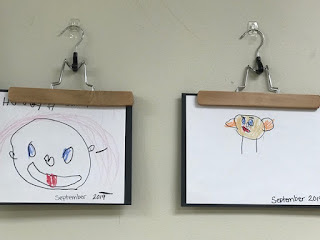
Or how about displaying children's artwork or writing using pants hangers?


I loved this idea from KIRPC Head Start in Indiana. The teacher said she bought sheets, tied the ends with ribbons, and then hung them on hooks around the smart board. Taaa daaa!


Chalk Board Table
Is this cool or what? Ms. Smalls found an old table they were going to throw away. She painted the top with chalkboard paint and let the children write special messages, draw pictures, write sight words, etc. on it. The kids LOVED it!


How about addition facts on the stairs? The science vocabulary leads to the upper grades. Letters, numbers, shapes and so many skills could “step up” learning.

Friday, June 12, 2026

GREAT TEACHERS 109

Bet you can find a few tricks for your new school year on my blog today.


Hallway Hug (Jodi Spakes)
When children see friends in the hall teach them to do the hallway hug. 
You (Hold up index finger.)
Me (Hold up middle finger.)
Hello (Cross middle and index finger and wiggle.)


Air Hug (Mary Katherine Ellis)
Open your arms as if giving a huge hug in the air.
*This is good for when students see a friend in the hall.
*This is also good when someone comes in or leaves the classroom and the kids want to jump up and give them a hug.


Problem Resolution (Carrie Thouvenot)
After students resolve a problem they can follow this routine:
1st - Fist bump 
2nd - Hand shake 
3rd - High five 
4th - Hug 
5th - Walk away happy!


Mirror Talk
If children talk ugly to a friend, then tell them to go talk like that in the mirror and see how it feels.


Class Callbacks (Sara Quinn)
Teacher says: Hands on top. (Students put their hands on their heads.)
Students say: That means stop!
Teacher says: Holy Moly!
Students say: Guacamole!
Teacher says: All set?
Students say: You bet!
*You can go on all day with callbacks. Marco - Polo; Peanut Butter - jelly; Criss cross – sit like a boss, etc.


Looking!

I am looking.
What do I see?
I see (student, class) sitting (standing, whatever you need)
Properly.
Hint! Lower your voice each time you say this until children are quiet.


Hallway Trick
(Meghan Boyle)
Before going in the hallway say, “Hands on your hips. Smile on your lips.”


Hallway Tip (Stacey Keller)
“Zip” – pretend to zip your lips.
“Flip” – fold arms across your chest.
“We’re ready for the hallway trip.”


Self Control (Becky Gilsdorf)
Use this visual cue to help children who are out of control.
Cross hands over your chest. (Self)
Slide both hands down the sides of your body. (Control)
As the child repeats the movements silently it will calm them down.


You Know What to Do
Several years ago I heard an interview on NPR with the Teacher of the Year. She said, “When a child is misbehaving, I stand next to her and quietly say, ‘You know what to do.’” Physical proximity – just getting close – can be a powerful tool.


Thursday, June 11, 2026

GREAT TEACHERS 108

These ideas are almost like seeds that you can take and grow into your own activities. 


Advisors and a WAITING Chair (Melanie Goodwin)
Two children are selected to be “advisors” for the day. During guided reading/workstations students ask a partner or one of the “advisors” before sitting in the “waiting chair” to ask the teacher. “Ask three, then me!” They have to wait until the teacher can get to them and often leave because they figure it out while waiting. This really helps eliminate disruptions during guided reading!


Mr. Tuttles (Karen Campbell)
Take a mirror and put a hat/head on top and add arms and legs to create “Mr. Tuttles.” Children tell Mr. Tuttles their tattles!


End of Year Gift (Julie Bright)
Ask each child to bring in a pillowcase. Use a T-shirt transfer to put this saying on the pillowcases:
Now I lay me down to sleep.
I’ll count hands instead of sheep.
Of all the friends I made
In (teacher’s name) first grade.
The students use fabric paint to put their handprint and write their name on all their friends’ pillowcases.


Insects (Katheryn Lambert)
(Tune: “Head, Shoulders, Knees and Toes”)
Head (point to head)
Thorax (point to chest)
Abdomen, abdomen (rub torso).
Head, thorax, abdomen, abdomen.
Two antennae (wiggle index fingers by temples)
And six legs (three fingers extended on each side)
Head, thorax, abdomen!
*Use the concept of two antennae and six legs to discuss symmetry and odd and even numbers. “We know our insects need six legs. Should I use one leg on this side and 5 legs on the other? No! It would be all lopsided!”


Swat (Whitney Rhyne)
Write letters, words, etc. on chart paper or board. Have 2 children come up at a time to race and find the letter the teacher calls out. Each child is given a fly swatter and the first one to “swat” it wins a point for their team.


Who Let the Letter Out?
(Whitney Rhyne)
Have the class squat down as you begin they song. They get to “pop up” when the letter that their name begins with comes up in the song. This is great for beginning sounds and teaches the kids what letters their friends’ names begin with.


Friendship Tools
(Liz Watras)
Use sign language (aslpro.com) to teach children these words:
Ask
Trade
Wait
Share
Include
Stop
When they have a problem they can use the tools and signs to work through the conflict.


Donut Vowels (Robin Davis)
Make donuts out of foam and decorate with markers. Write letters on each side of the donut. Next, put a vowel in the middle of a small paper plate. Children place the donut hole over the vowel and sound out the word.


Buddy Time (Robin Davis)
Put matching pompoms in a can and let each child draw a pompom. They match pompoms to find their buddy.


Tablecloths (Angie Barnett)
You can use flannel back tablecloths for everything. They are sturdy and won’t slip on the carpet. Just have the kids take off their shoes.
Keypad – If you draw a keypad children can jump their phone number, cafeteria number, or use for number recognition.
Popcorn Words – Write words or letters on popcorn shapes. Children jump around identifying letters or words.
Keyboard – Make a keyboard and use for letter recognition or spelling words.
Graph – Draw out a bar graph and use or comparisons.


Hall Chant (Theresa Malone)
My hands are hanging by my side
I’m standing straight and tall.
My eyes are looking straight ahead.
I’m ready for the hall.


Itsy Bitsy Spider (Sharon Howard)
After singing the “Itsy Bitsy Spider” let children change what kind of spider it is. It could be happy, mad, mean, angry, silly, pretty princess, etc. Then children decide how that spider would go up the waterspout.


Bread and Butter (Sharon Howard)
When you walk down the hall and go around a post or pole say this chant to the tune of “Frere Jacques”:
Bread and butter
Bread and butter
Toast and jam
Toast and jam
Peanut butter jelly
Peanut butter jelly
Cheese and ham
Cheese and ham

Saturday, May 9, 2026

LET'S PLAY A GAME!

People don't stop playing because they grow old -

They grow old because they stop playing!

Stay YOUNG as you play one of these games with your children!


Here's a link to download all of the the activity cards:

file:///Users/jeanfeld/Downloads/ActivityCARDS-DrJeanJuly2015-4.pdf


Check out these games for indoor and outdoor fun.

Play Ball

Juggling and Balance Beam

Follow the Leader and Mirror

Jump the Creek

Camping

Step School

Going on a Trip

Penny-Penny

Tower Topple

Charades


Friday, March 6, 2026

I'M A READER!

Reading is like anything else - the more you do it, the better you will become. Here are some engaging ways to encourage independent reading.


Mirror Reading
Let children read books to themselves in a mirror.


Read to a Star
Frame photographs of sports figures, politicians, or musicians that children are familiar with in the classroom library. Children choose a book and then read it to their favorite star.

Pick a Pal
Place a basket of books and small stuffed animals or puppets in the center. Children choose a book and read it to a toy.


Whisper Phone
Phonics phones are perfect for children to hear themselves read. You can purchase these or make one out of PVC pipe. 

Hint! Teach the children how to make a phone with their hand. If they cup one hand around their ear and the other hand around their mouth they can hear themselves read.

Book Nooks
Here is another "genius" idea from Carolyn Kisloski.


Divide the class into partners for reading. Change the partners often, sometimes matching students with partners on their reading level and sometimes mixing levels. Each pair draws a craft stick with a special reading nook on it which will be their reading spot for the day. Some special places could be underneath tables, by the teacher’s desk, on the rug, in special chairs, or in the hall outside of the classroom. Students can take turns reading one book to each other or take their book bin to their nook and read quietly for the entire independent reading time. After one student reads a book, the partner must ask the reader one question about the book and give the reader one compliment about her reading.

*Invite another class, either at your grade level or another grade level, to read with your students during a special reading time. 

Partner Chant
As children face their partner and begin to read have them repeat this chant:
     Hand to hand (shake hands)
     And feet to feet (touch shoes)
     I’m glad that you
     Are partners with me!


After reading they can close with this chant:
     Hand to hand 
     And feet to feet
     Thank you for
     Reading with me!

Tuesday, December 30, 2025

FAMILIES THAT PLAY TOGETHER STAY TOGETHER!

“Parents are their CHILD’S FIRST AND MOST IMPORTANT TEACHER.”
Dear Parents,

You’ve heard it said that “play is the child’s work.” This is so true! They have a lifetime to be a grown up and work, but only once to be a child. The good news is that as you play with your child you are actually laying the foundation for learning and life. Children don’t need more “stuff.” What they want and need most is time and attention from you! The important thing is to follow your child’s lead as you create special memories! Here are some “play activities” to get you started:


Read a book.                       Tell a joke.

Exercise.                               Sing a song.

Play hide and seek.               Hum.

Say a nursery rhyme.            Play a card game.

Talk.                                       Make a puppet.

Juggle two paper towels.      Swing.

Sit on the floor together.      Build something with blocks.

Blow bubbles.                      Go outside and take a walk.

Cut pictures out of magazines.      Skip.

Play a board game.              Skate on paper plates.

Count.                                  Look out the window.

Go on a nature walk.              Make a wish.

Jump or hop as long as you can.      Do a job together.
    
Play a memory game.          Write a letter.

Cook something together.      Do a finger play.

Work a puzzle.                      Make a band of pots and pans.

Pantomime.                          Guess who I am? Play “I spy.”

Draw a picture.                      Read the funny papers.

Put on a puppet show.          Go to the library.

Make a book.                      Make a card for someone.

Play a rhyming game.          Play with play dough.

String pasta or cereal on      Draw with chalk on the
dental floss.                          sidewalk.

Play follow the leader.          Make silly faces in a mirror.


Draw a picture.                      Put on some music and dance.


*Hint! Cut these suggestions up into strips and place them in a sack. Let your child choose a strip and then do that activity.


Tic Tac Toe at Home
Use a frame similar to the one shown with activities children can do with their families. Can they get three in a row or do they want to do the whole frame?

Tuesday, November 18, 2025

COLOR YOUR DAY HAPPY

Something old...something new!

Did you know that Crayola makes WINDOW MARKERS and WINDOW MARKERS WITH CRYSTAL EFFECTS that are washable and will bring out creativity in anyone. I bet you could think of a dozen more ways to use these in your classroom.  (Yep!  Available on Amazon!)

Reading
Write letters, words, numerals, shapes, or anything you want to reinforce on windows or mirrors.
*Let children wear sunglasses and identify the information with a pointer.

Writing
Let children practice writing letters, numerals, spelling words, etc. on classroom windows.
* How about rainbow writing? Make giant letters, shapes, words, etc. on windows. Children can take the markers and trace around the figures with different colors.

Reward
Use these as a reward or when children finish their work early.

Reminders

Use the classroom mirror as a message board to write words of encouragement, reminders, or to celebrate accomplishments.

Special Days
Let children decorate classroom windows for holidays, seasons, themes, or other special events.

Brainstorm!
Write a word or theme and invite children to add their own thoughts to the window.

Sign In
Children can write their name or a special message when they come to school each morning.

Graffiti
What an open-ended art center this could be throughout the year!

Note! You could even have “window washer” as a classroom job. I found it was best to wipe off the marks with a wet towel before using a window cleaner.


ITSY BITSY SPIDER

How about another new video for your children?


Saturday, September 13, 2025

READ AT HOME

Here's an idea for active learning that will involve families and encourage children to read, read, read. You can buy these or just start simple by creating two book bags. You could rotate these through your class for a month so each child would have two turns with different books and animals. Children will anticipate "their turn" and taking the bag home.

BOOK BAGS
Directions: Place a book and coordinating toy in each bag. Add blank paper, crayons, and a pencil. Rotate allowing children to take home “book buddy” bags. Remind them to do each of the activities below before returning the book bag to school.

1. Read the book to yourself.

2. Read the book to your book buddy (stuffed animal).

3. Read the book in the mirror.

4. Read the book to someone in your family.

5. Read the book one more time to your pet, a toy, or something else.

6. Draw a picture of your favorite part of the story.

When children return the book bag to school, invite them to sit in the “teacher’s chair” or "reader's chair" and read a few pages to their classmates.


TAKE HOME TEDDY
Put a stuffed bear (or other animal), spiral notebook, and pencil in a backpack. Choose a different child to take home the backpack each evening. The child writes or dictates a story to their parents about the bear.
*Just for fun add a toothbrush, pajamas, and other items for the bear.


PARENT LETTER
Here is a letter for parents that you can adapt to reinforce the important role that they play in helping their children learn to read.

Dear Parents,

You’ve heard it before, and I’ll say it again. You are your child’s first and most important teacher! The best way to help your child learn to read is to read, read, read!

Model reading in front of your child. Read directions on recipes, the newspaper, labels on clothing, and street signs. Show your child the importance of reading, and also the pleasure we can get from reading.
Set aside a special time each day to read with your child. It might be right before bed, or you could wake your child up each morning with a story.
Point your finger under the words as you read them.
Talk about the title of the book, the author, illustrator, etc. What is the setting? Who are the characters? Could this really happen or is it just pretend?
Take your child to the library. Help your child get her own library card and take responsibility for books.
Create a special basket or shelf in your home where you keep books and magazines for your child to read. You might also want to keep a backpack filled with books in your car.
Happy reading!

Tuesday, September 9, 2025

TATTLE TALES

O.K. It's important to listen to children, but tattling can be like a fire out of control. To prevent negativity/aka “the squeaky wheel” from getting too much attention, it’s important to have a discussion with your class at the beginning of the year about what is an emergency. If someone is in danger of getting hurt, then it’s an emergency. (One teacher said she used the “3 B Principle” – bathroom, blood, or barf!!!) There are also several good books out now that help children understand when it is appropriate to tell the teacher and what happens when you cry wolf. (A Bad Case of Tattle Tongue by Fran Sandon is adorable!)

Check out some of these ideas that teachers have shared with me. And, never ever forget to have a sense of humor!

Leave a Message
Put an old phone on your desk for children to tell their concerns. Explain that you’ll listen to your messages at the end of the day. You might even want to have a directory.
Press #1 for the teacher.
Press #2 for your parents.
Press #3 for the principal.
Press #4 for the President…etc.


Write It
Get a spiral notebook and write “Things the Teacher Needs to Know” on the cover. When children come to tattle hand them the book and say, “Write it all down and don’t leave out a thing.” If they say, “I can’t write,” respond with, “Well, just draw a picture and don’t leave out a thing!”


Comment Box
Put a box, notepad, and pencil on a shelf. Explain that when they want to complain or make a comment they need to write it on a piece of paper. They must start their sentence with a capital letter and end it with a period if they want the teacher to read it at the end of the day.


Lunch Bag
Open a lunch bag and set it on your desk. When children come up to tattle say, “Go put it in the bag. I’ll listen at the end of the day.” (Yes, trust me! They will go over and talk in the bag.) At the end of the day put the bag next to your ear and pretend to listen for 15-20 seconds. Then wad up the bag and throw it in the trash as you say, “That’s the end of that!”


Tell the Mirror
Place a small mirror on your wall and when the children start to tattle say, "Why don't you go tell that little boy/little girl in the mirror?"


Tattle Time
One of my favorite stories about tattle tales came from a teacher many years ago. When her students tried to tattle she’d smile and say, “I’m sorry. Today’s not tattle tale day. Wait until May 14th and then you can tell me.”


Oreo
Another teacher said she used the concept of an Oreo cookie for tattle tales. The child reporting had to say one nice thing, then the tale, then another nice thing.


Tattle Toy
Choose a stuffed animal or puppet to listen to children’s complaints and tattles. Be sure and name the character. Explain that when you are busy they can always tell Teddy (or whatever) their problems. He’s always there waiting to be their friend.

*You can also let them tell a plant or other inanimate object.


President
Here’s another great idea for tattle tales. Put a photograph of the President on your wall and say, “I’m just your teacher. Why don’t you tell the President?” You won’t believe it, but the children will walk over and talk to the picture!

Sometimes a sense of humor is the best solution to a problem. Keep calm and laugh inside!

Saturday, August 9, 2025

WASH YOUR HANDS AND BACK TO SCHOOL JOKES

Washing hands can be an effective way to keep you and your children healthy. It might be wise at the beginning of the year to have a discussion about WHEN you should wash your hands. (You have to remember that children come from different homes with different expectation.) 


Practice washing hands following the guidelines and teach children a song to make the task more fun.


Wash, Wash, Wash Your Hands (Tune: "Row, Row, Row Your Boat")
Wash, wash, wash your hands
play the handy game.
Rub and scrub and scrub and rub
Germs go down the drain!

Mirror
Children love to look at themselves in the mirror, so place a mirror above the sink where children clean up. Remind them to sing "Happy Birthday" to yourself twice as you look in the mirror.
Scrub a Dub
(Tune: "Yellow Bird")
Scrub a dub, rub, rub, a scrub a dub.
Germs go down the drain,
And that’s not a shame.
Wash the dirt away,
Get hands clean today.
Soap them up real good,
Rinse them like you should.
And healthy you’ll be!

Potty, Flush, and Wash (Cindy and Tracy)
Several years ago at a workshop two teachers taught us this song to the tune of “London Bridge.”
Potty, flush, and wash your hands,
Wash your hands, wash your hands.
Potty, flush and wash your hands
Every time!


BACK TO SCHOOL JOKES


Wednesday, July 23, 2025

SCIENCE CENTER

WHY?

In the science center children are able to explore, observe, solve problems, make decisions, develop concepts about science and nature, improve language, interact socially, and develop sensory skills. Children’s curiosity about the world and their interest in nature will also be extended.

Materials:

Shelves, tables

Lab coats, safety goggles

Magnifying glass

Magnets

Plants

Prism

Aquarium

Balance scale

Science books, magazines

Pictures and posters

Thermometer

Flashlight

Feely box

Terrarium

Sensory materials

Models (dinosaurs, insects)

Mirror

Seeds, leaves, flowers, feathers

Exhibits (nature collections of rocks, shells, bones, insects, etc.)

Field guide books

Clipboard, paper, pencils

Planting area to grow sprouts, flowers, herbs, etc.


Nature Center
Take a plastic tub and fill it with objects from a natural area in your community. It's as simple as that! Invite the children to bring in other interesting items that they find in nature to add to your center.


magnifying glass
clipboard, pencils, paper
ruler
field guide book (leaves, rocks, shells, etc.)


Tuesday, July 15, 2025

DRAMATIC PLAY

WHY?

In the dramatic play area children have the opportunity to role-play real life situations, release emotions, practice language, develop social skills and express themselves creatively. Use shelves or furniture to create a cozy nook for your housekeeping area. A rug, pictures, and curtains will add a homey feel.


Hint! Slowly introduce accessories so the children aren’t overwhelmed and appreciate new items.

Materials

Pretend kitchen equipment made from wood or plastic (stove, refrigerator, sink)

Pots, pans, dishes

Dress-up clothes purses, hats, shoes, jewelry

Full-length mirror

Table and chairs

Dolls and doll clothes

Stuffed animals

Puppets

Doll bed, blankets

Baby carriage

Toy ironing board and iron

Empty food boxes and containers

Toy food

Phone

Broom, mop, carpet sweeter

Paper, pencil

Costumes

*Window - Add a window by attaching a mirror or landscape picture to a wall. Tape construction paper strips to look like a window frame, and then add fabric cut like a curtain.


JUST FOR FUN ADD PROP BOXES!


Vary the dramatic play area with prop boxes that relate to different units of study or to extend children’s interests.

Grocery Store
Empty food boxes and cans, grocery sacks, grocery cart or wagon, shelves, cash register, play money, cardboard boxes , paper and pencils, purses, billfolds

Post Office
Envelopes, paper, pencils and pens, rubber stamps, stamp pad, stickers, partitioned box, cash register, play money, bag or sack for carrying mail, wagon or mail truck

Pet Shop
Stuffed animals, puppets, cardboard boxes for cages, plastic bowls, brush, towel, cash register, pet toys

Restaurant
Paper plates, napkins, plastic cups, silverware, tray, notepad, pencils, apron, chef’s hat, menus, cash register, play food, phone, carry-out food containers, such as a pizza box. 


*Glue pictures of food in pie pans or frozen dinner trays.

Flower Shop
Plastic pots, artificial flowers, gloves, seed catalogs, baskets, watering can, play garden tools, phone, notepad

Doctor’s Office
Stethoscope, tongue depressors, cotton, ace bandages, eye chart, dolls, notepad and pencils, wagon for ambulance, phone, scrub suit and mask

Campsite
Sleeping bag, backpack, canteen, stones and sticks for fire, blankets to make a tent, fishing pole

Birthday Party
Invitations, party plates, cups, napkins, hats, favors, goodie bags, wrapping paper, tape, ribbon, empty boxes, greeting cards

Thursday, July 10, 2025

CLASSROOM MAKEOVER


If you’re stressed about getting your room decorated for the first day of school, I've got a great idea for you!!!! Wrap yellow caution tape around your door and post a sign that says “Under Construction.” Explain to the parents that you are trying to develop a classroom community and you want your students to decorate their own learning environment. Invite parents to come back at the end of the week to see what their children have created!

Clare Ashford has a great idea to take “under construction” one step further.
“Before Meet the Teacher night (before school starts), I wrap all my bookcases, computers, etc. in butcher paper and then put an ‘under construction’ sign on them. It serves 2 purposes. 1- that way kids don't get into things while I'm busy talking to people! and 2- we ‘unwrap’ the items together as a class when we're ready to use whatever it is. It is very helpful and makes for an organized start to the year!”

Here are some crafts your students can make to decorate the classroom.

Welcome to the Neighborhood

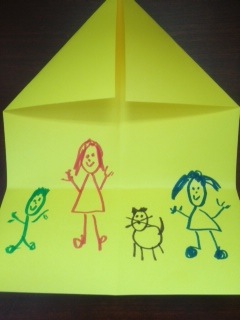
Make a house from construction paper for each child. Fold the paper in half vertically. Open. Fold in the top corners to the middle. Fold up the bottom. Let children write their name on the front of the house. They can open the house and draw their family. You could also ask child to bring in a photograph of their family. Add some trees and a school and you have a great bulletin board.


Class Quilt
Use group art to create a visual representation of the “community” in your classroom. Give each child a 9” square and have them decorate it with pictures of themselves, drawings of their families or favorite things, collage materials, etc. Punch holes in the corner of each square and tie together with yarn to make a quilt to display in the classroom or hallway.


Friendship Chain
Give each child a strip of construction paper to decorate with their name, symbols of favorite things, or designs. Children sit in a circle and one at a time give the teacher their strip to staple and make a chain. Remind the children that your classroom is just like that chain. Everyone must work together to keep it connected and strong. Drape the chain over the doorway.


Banners, Pennants, and Name Plates
Use construction to let children create banners or pennants that reflect them. They might include hobbies, favorite foods, pets, family members, goals, etc.


Fit Like a Puzzle
Take a large sheet of poster board and cut it into puzzle shapes. (You will need one puzzle piece for each child in the room. Mark the back of the piece with an “X” so they will know which side to decorate.) After the children have decorated their piece, challenge them to put their pieces together to make a puzzle. Glue pieces to another sheet of poster board to create a picture puzzle for your classroom.

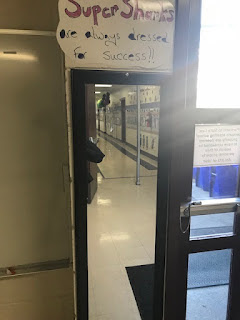
Isn't this a great sign for your classroom door? 

Mirror, Mirror!
You know how much kids love to look at themselves in a mirror. Each day put a positive word or note on your classroom mirror to remind the children how special they are!


Lights, Camera, Action!
I loved this idea from KIRPC Head Start in Indiana. The teacher said she bought sheets, tied the ends with ribbons, and then hung them on hooks around the smart board. Taaa daaa!


P.S. LOOK AT THIS COOL IDEA FOR DISPLAYING CHILDREN'S ARTWORK OR WRITING USING A PANTS HANGER.